By Carlos Corz, Vision 360:
Economy Plans Measures as Dollar Climbs, but Warns: “We Have to Live in This Reality”
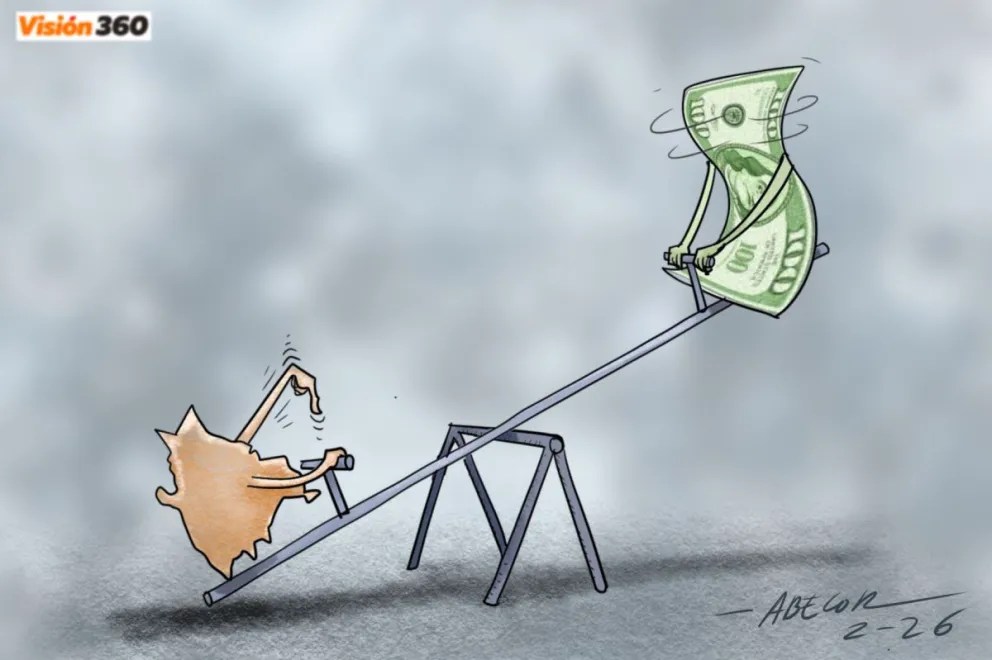
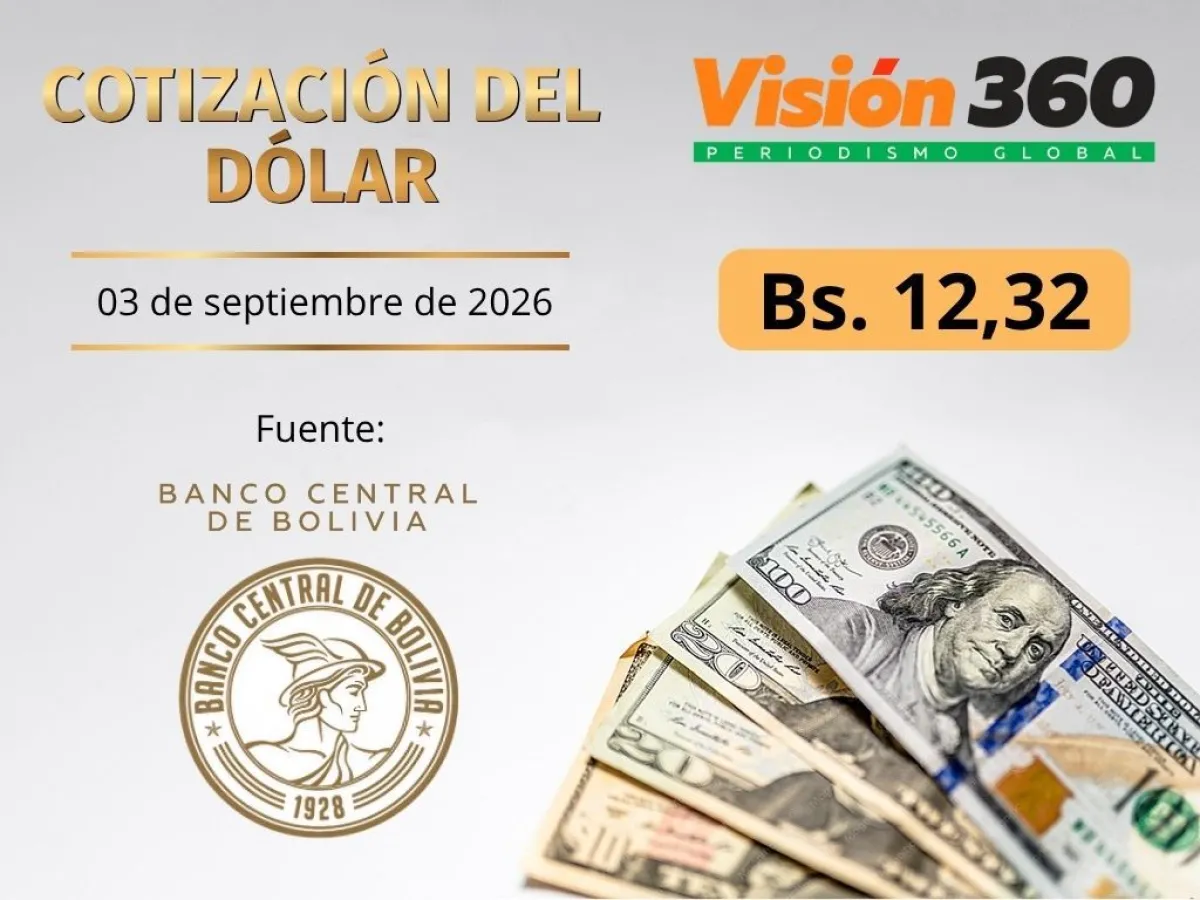
The U.S. dollar continued its upward trend and was quoted at Bs 12.32 on Thursday, as a result of the country’s new exchange-rate policy.
Several U.S. dollar bills. Photo: Canva
Driven by supply and demand, the dollar has maintained an upward trajectory and reached Bs 12.32 on Thursday. Although the Central Bank of Bolivia (BCB) only intervenes during moments of what it calls an “overreaction,” Economy Minister Christian Morales said that mechanisms are being coordinated to “begin controlling it and restore a downward trend.”
“We made a political decision to bring transparency even to the exchange-rate system. We lived inside a bubble for more than 20 years that drained public finances. In that regard, the flexible regime has advantages, but at the same time we know it has certain complexities that we are evaluating,” he explained.
The exchange rate resumed its climb after a couple of weeks of decline. On Monday, August 24, it was set at Bs 11.50; on Tuesday, Bs 11.54; on Wednesday, Bs 11.57; on Thursday, Bs 11.71; and on Friday it closed at Bs 11.83. That same rate was set for the weekend and Monday at Bs 11.92, while it rose to Bs 12.12 on Tuesday, Bs 12.26 on Wednesday, and Bs 12.32 on Thursday.
The increase is the result of the new exchange-rate policy, which operates according to supply and demand—meaning the rate rises when demand is high. The new model was introduced on June 29, after more than 15 years of a fixed exchange rate that led to a foreign-currency shortage crisis and the emergence of a parallel market.
“We have to live in this new reality, with an exchange rate that allows the market to determine its level,” Minister Morales said, echoing remarks made by BCB President David Espinoza, who stated on Wednesday that the public must adapt to this new relationship with the U.S. currency.
Without providing further details, the minister explained that the government is coordinating actions with the central bank to begin managing sustained increases:
“As a government, we will ensure that in moments like the current one, the Central Bank takes a leading role and can begin intervening in the market.”
For Espinoza, “we are actually seeing a fairly controlled evolution of the exchange rate,” although he emphasized that intervention will occur whenever there is what he described as an “overreaction.”
Por Carlos Corz Portillo, Vision 360:
Economía perfila acciones ante la escalada del dólar, pero advierte: “Tenemos que vivir en esta realidad”
El dólar experimentó una tendencia al alza y se situó este jueves en Bs 12,32, como resultado de la nueva política cambiaria.
Varios billetes de la moneta de EEUU. Foto: Canva
Por efecto de la oferta y la demanda, el dólar mantiene una tendencia al alza y llegó a cotizarse en Bs 12,32 este jueves. Si bien el Banco Central de Bolivia (BCB) solo interviene en momentos de una “sobrerreacción”, el ministro de Economía, Christian Morales, informó que se coordinan mecanismos para “empezar a controlarlo y que vuelva esa tendencia a la baja”.
“Nosotros hemos tomado una decisión política de transparentar incluso el sistema cambiario. Vivimos dentro de una burbuja por más de 20 años que nos ha desangrado las finanzas públicas. En esa línea, el régimen flexible tiene virtudes, pero al mismo tiempo sabemos que tiene algunas complejidades que las estamos evaluando”, explicó.
El tipo de cambio retomó la escalada tras un par de semanas de descenso. El lunes 24 de agosto se fijó en Bs 11,50; el martes, en Bs 11,54; el miércoles, en Bs 11,57; el jueves, en Bs 11,71; y el viernes cerró en Bs 11,83. Ese día se fijó para el fin de semana y el lunes en Bs 11,92, en tanto que para el martes subió a Bs 12,12; el miércoles, a Bs 12,26; y para el jueves, a Bs 12,32.
La escalada es resultado de la nueva política cambiaria que se rige en función de la oferta y la demanda; es decir, sube si la demanda es alta. El 29 de junio fue impuesto el nuevo modelo, después de más de 15 años de un dólar fijo que derivó en una crisis de escasez y en la generación de un mercado paralelo.
“Tenemos que vivir en esta nueva realidad, con un tipo de cambio que permita que el mercado determine cuál es su nivel”, afirmó el ministro Morales, en coincidencia con las declaraciones del presidente del BCB, David Espinoza, quien dijo el miércoles que la población debe acostumbrarse a esta nueva relación con la divisa estadounidense.
Sin dar mayores detalles, el ministro explicó que se coordina con el ente emisor acciones para empezar a controlar las escaladas sostenidas: “Como Gobierno vamos a garantizar que en momentos como el de ahora el Banco Central tomará un papel protagónico y pueda empezar a intervenir en el mercado”.
Para Espinoza, “más bien estamos con una evolución del tipo de cambio bastante controlada”, aunque indicó que se intervendrá siempre y cuando haya lo que llamó una “sobrerreacción”.


Leave a Reply