By Fundación Milenio:
Bolivia Seeks a New Economic Direction
Milenio Report 48 describes an economy attempting to overcome years of fiscal, monetary and productive imbalances through reforms aimed at restoring stability and growth.
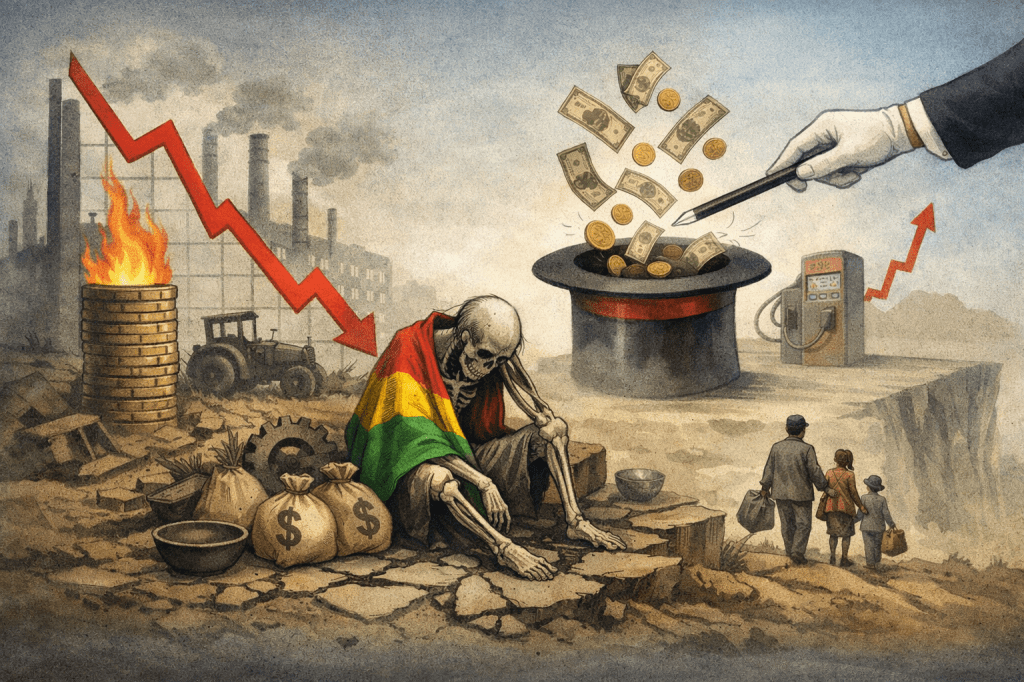
The Milenio Foundation’s Report on the Bolivian Economy No. 48 provides a broad diagnosis of the country’s economic situation and the challenges facing the new government. The document’s central conclusion is that Bolivia is experiencing a structural crisis marked by persistent fiscal deficits, a shortage of dollars, weakened international reserves, high inflation and a sharp economic slowdown. For the institution, the immediate challenge is to stabilize the economy without undermining its prospects for future growth.
The analysis begins with the external sector, where conditions have improved mainly because of higher international mineral prices. This has temporarily strengthened exports and eased some pressure on the external accounts. However, the report warns that declining hydrocarbon production and the persistent shortage of foreign currency remain significant risks for the Bolivian economy, whose capacity to generate dollars continues to be limited.
On fiscal policy, Milenio identifies the public deficit as the main source of macroeconomic imbalances. For several years, government spending has substantially exceeded revenues, forcing the difference to be financed through borrowing and monetary issuance. The report argues that restoring fiscal sustainability will require a gradual reduction of the deficit, rationalization of public spending and stronger institutions responsible for managing the state’s finances.
The chapter on monetary management highlights the change in direction adopted by the economic authorities. The Central Bank has begun limiting monetary financing of the fiscal deficit and adopting a more restrictive policy to contain inflationary pressures. Nevertheless, the report warns that a large volume of accumulated liquidity remains in the economy and could become a threat to exchange-rate and price stability if confidence among economic agents deteriorates.
Regarding inflation and the exchange rate, Milenio considers exchange-rate pressures one of the country’s main challenges. Although inflation is showing signs of moderation compared with the most acute phase of the crisis, the availability of dollars within the financial system remains insufficient. Stability will depend largely on the government’s ability to rebuild international reserves and restore confidence in the foreign-exchange market.
The report also pays particular attention to the financial system. According to Milenio, Bolivia is experiencing a process of disintermediation in which citizens are increasingly using banks to make payments and electronic transfers but are less willing to maintain long-term savings within the system. Economic uncertainty and existing regulations have weakened confidence, reducing the financial system’s ability to channel resources toward productive investment.
Regarding economic activity, employment and productivity, the diagnosis is troubling. Most Bolivian workers are concentrated in low-productivity sectors, while activities that generate greater value added employ only a small share of the workforce. This reality limits income growth, reduces competitiveness and makes it more difficult to generate quality formal employment.
The final chapter examines the agreement reached with the International Monetary Fund. The program provides approximately $1.9 billion in financing and could mobilize additional resources from other multilateral organizations. The proposed reforms include fiscal discipline, stronger institutions, modernization of the financial system, greater exchange-rate flexibility and measures designed to improve the environment for private investment.
The recommendations emerging from the report are clear. Bolivia needs to restore balance to its public finances, strengthen the independence of monetary policy, rebuild confidence in the financial system and ensure a more stable and transparent foreign-exchange market. Without these elements, any progress will remain vulnerable to renewed crises.
In the longer term, Milenio argues that the solution lies in building a more productive and competitive economy. It proposes promoting exports, attracting private investment, improving legal certainty, strengthening institutions and developing policies that raise productivity and the quality of employment. According to the report, only a combination of macroeconomic stability and structural reforms will allow Bolivia to overcome its current political and economic crisis and return to a sustainable path of growth and development.
Por Fundación Milenio:
Bolivia busca un nuevo rumbo económico
El Informe Milenio 48 describe una economía que intenta superar años de desequilibrios fiscales, monetarios y productivos mediante reformas orientadas a recuperar la estabilidad y el crecimiento.
La Fundación Milenio presenta en su Informe sobre la Economía de Bolivia N.º 48 un diagnóstico amplio de la situación económica del país y de los desafíos que enfrenta el nuevo gobierno. El documento parte de una conclusión central: Bolivia atraviesa una crisis estructural caracterizada por déficit fiscales persistentes, escasez de dólares, debilitamiento de las reservas internacionales, inflación elevada y una marcada desaceleración económica. Para la institución, el desafío inmediato consiste en estabilizar la economía sin comprometer las posibilidades de crecimiento futuro.
El análisis comienza con el sector externo, donde se observa una mejora impulsada principalmente por el aumento de los precios internacionales de los minerales. Esta situación permitió fortalecer temporalmente las exportaciones y aliviar parte de la presión sobre las cuentas externas. Sin embargo, el informe advierte que la caída de la producción de hidrocarburos y la persistente escasez de divisas continúan representando riesgos importantes para la economía boliviana, cuya capacidad de generación de dólares sigue siendo limitada.
En materia fiscal, Milenio identifica al déficit público como el principal origen de los desequilibrios macroeconómicos. Durante varios años el gasto estatal superó ampliamente los ingresos, obligando a financiar la diferencia mediante endeudamiento y emisión monetaria. El informe sostiene que recuperar la sostenibilidad fiscal requerirá reducir gradualmente el déficit, racionalizar el gasto público y fortalecer las instituciones encargadas de la administración financiera del Estado.
El capítulo dedicado a la gestión monetaria destaca el cambio de orientación aplicado por las autoridades económicas. El Banco Central ha comenzado a limitar el financiamiento monetario del déficit fiscal y a adoptar una política más restrictiva para contener las presiones inflacionarias. No obstante, el informe advierte que todavía existe un elevado volumen de liquidez acumulada en la economía que podría convertirse en una amenaza para la estabilidad cambiaria y de precios si la confianza de los agentes económicos se deteriora.
Respecto a la inflación y al tipo de cambio, Milenio considera que las tensiones cambiarias siguen siendo uno de los principales desafíos. Aunque la inflación muestra señales de moderación respecto a los niveles observados durante la fase más aguda de la crisis, la disponibilidad de dólares en el sistema financiero continúa siendo insuficiente. La estabilidad dependerá en gran medida de la capacidad del gobierno para reconstruir reservas y restablecer la confianza en el mercado cambiario.
El informe también dedica especial atención al sistema financiero. Según Milenio, el país atraviesa un proceso de desintermediación en el que los ciudadanos utilizan cada vez más los bancos para realizar pagos y transferencias electrónicas, pero muestran menor disposición a mantener ahorros de largo plazo dentro del sistema. La incertidumbre económica y las regulaciones vigentes han debilitado la confianza, reduciendo la capacidad del sistema financiero para canalizar recursos hacia la inversión productiva.
En cuanto a la actividad económica, empleo y productividad, el diagnóstico es preocupante. La mayoría de los trabajadores bolivianos se concentra en sectores de baja productividad, mientras que las actividades que generan mayor valor agregado emplean a una pequeña proporción de la fuerza laboral. Esta realidad limita el crecimiento de los ingresos, reduce la competitividad y dificulta la generación de empleo formal de calidad.
El último capítulo analiza el acuerdo alcanzado con el Fondo Monetario Internacional. El programa contempla financiamiento por aproximadamente 1.900 millones de dólares y podría movilizar recursos adicionales de otros organismos multilaterales. Las reformas propuestas incluyen disciplina fiscal, fortalecimiento institucional, modernización del sistema financiero, mayor flexibilidad cambiaria y medidas destinadas a mejorar el clima para la inversión privada.
Las recomendaciones que emergen del informe son claras. Bolivia necesita restaurar el equilibrio de las finanzas públicas, fortalecer la independencia de la política monetaria, recuperar la confianza en el sistema financiero y garantizar un mercado cambiario más estable y transparente. Sin estos elementos, cualquier avance será vulnerable a nuevas crisis.
A más largo plazo, Milenio plantea que la solución pasa por construir una economía más productiva y competitiva. Para ello propone impulsar las exportaciones, atraer inversión privada, mejorar la seguridad jurídica, fortalecer las instituciones y desarrollar políticas que eleven la productividad y la calidad del empleo. Según el informe, sólo una combinación de estabilidad macroeconómica y reformas estructurales permitirá a Bolivia superar la actual crisis política y económica y retomar una senda sostenible de crecimiento y desarrollo.


Leave a Reply