By Iván Paredes/ Mongabay, Vision 360:
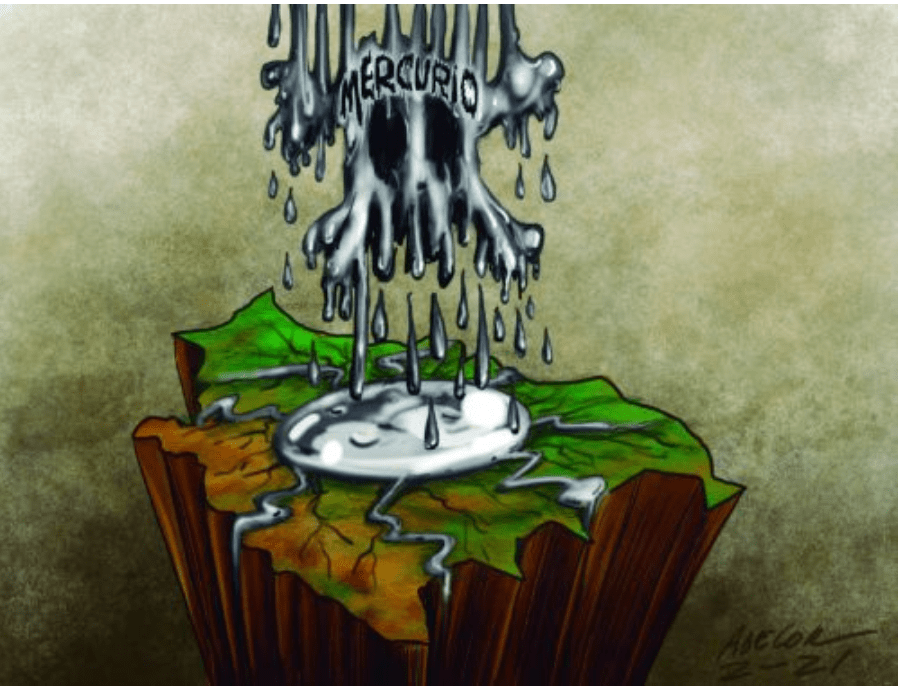
Toxic Gold: Mining Mercury Threatens More Than 160 Communities in the Beni River Basin
Mongabay Latam found that 39 communities already show high mercury levels, while another 125 face a similar risk. These findings emerged from a scientific and geographic analysis of 39 studies published over 27 years, seven of them conducted in Bolivia.
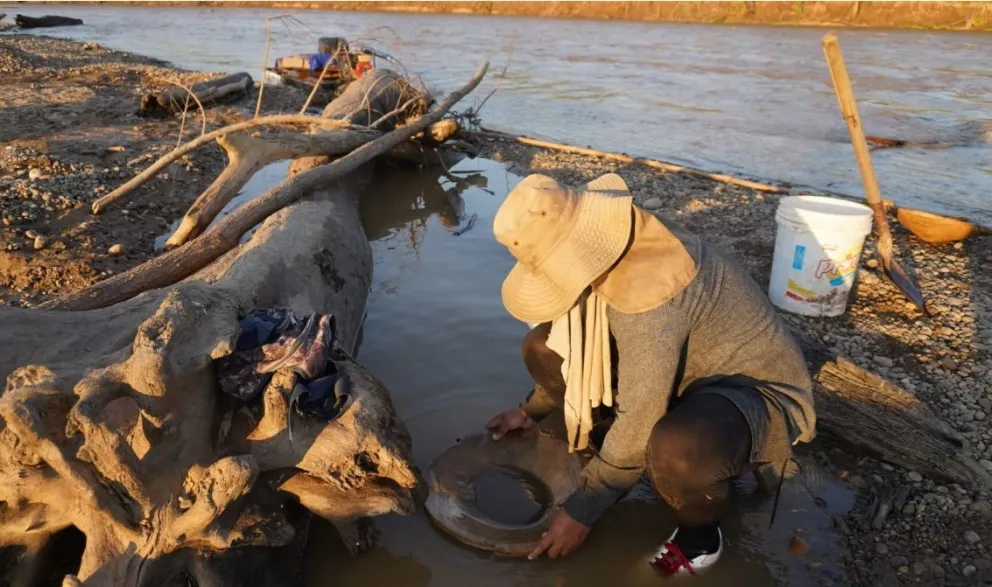
On the Beni River, mining is advancing unchecked. Some local residents practice artisanal mining using mercury. The waters of this tributary are contaminated. Photo: Javier Mamani
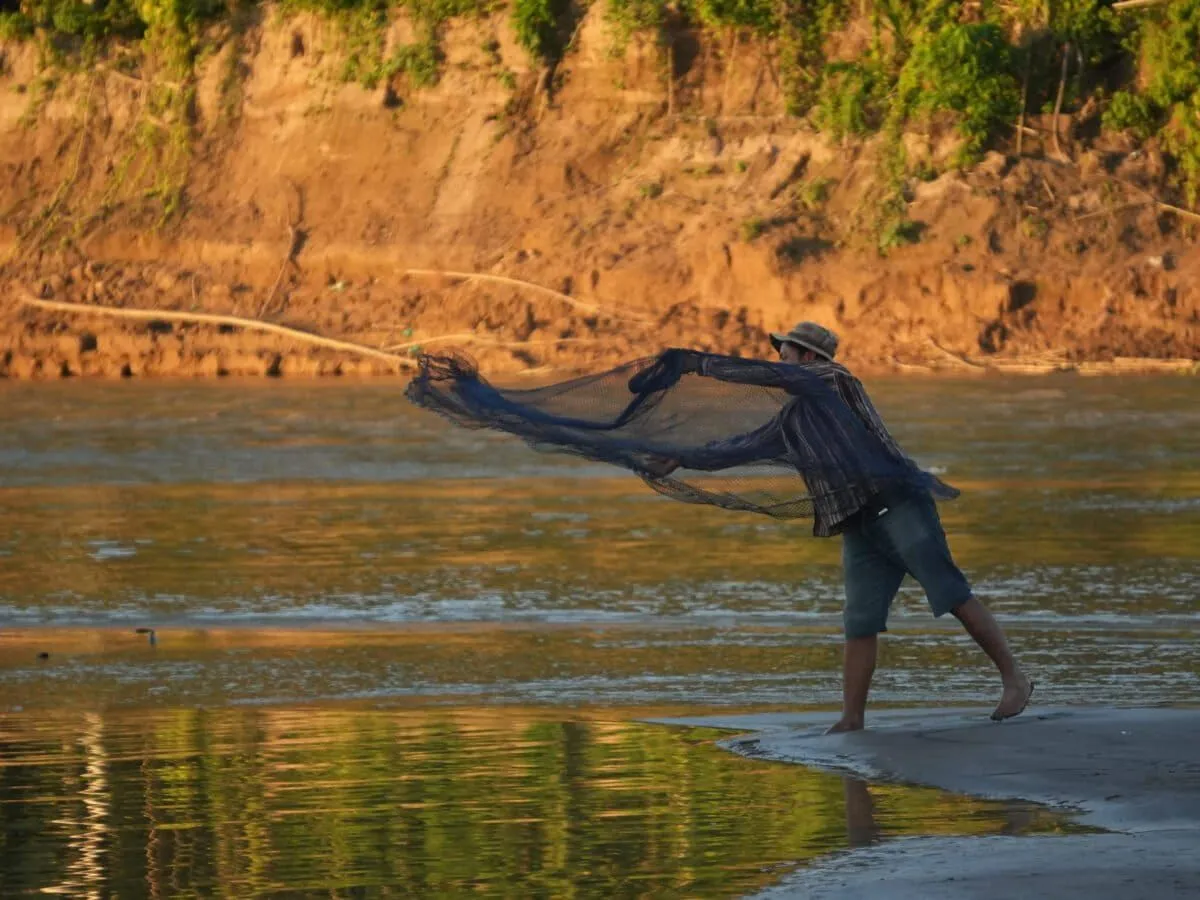
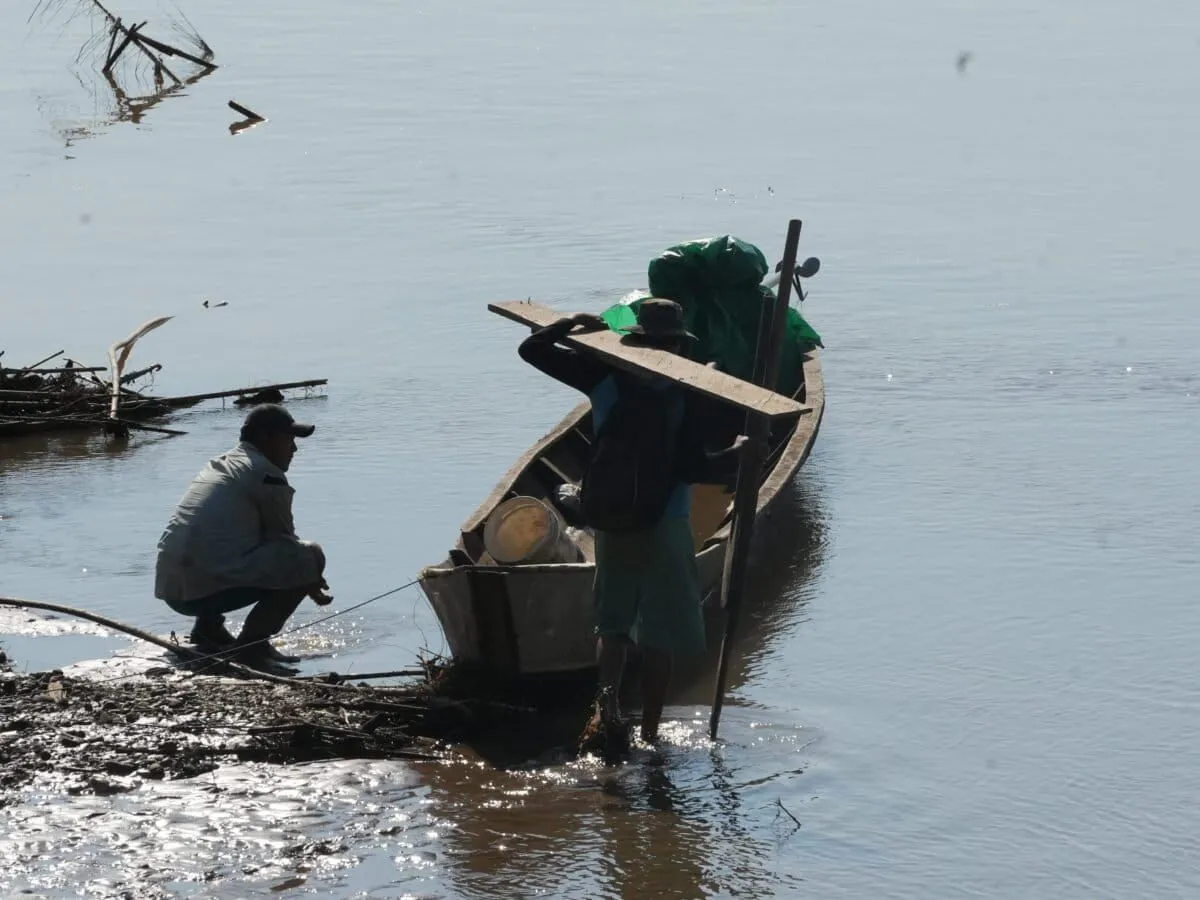
Gilberto Vaca Muiba fears that the mercury flowing through his veins could end his life. That fear, however, does not alter his routine. He takes his old fishing rod, walks to the river and patiently waits for the day’s food. He is kneeling on one of the beaches of the Beni River, in the Bolivian Amazon, waiting for a fish to bite so he can take food home. It is a July afternoon in the community of Puerto Yumani, and he has just caught a small surubí, a fish that is very likely to be contaminated with mercury but that he nevertheless takes home to his table.
Puerto Yumani is one of five Indigenous communities visited by Mongabay Latam along 41 kilometers of the Beni River. The other four are Carmen Soledad and Puerto Motor, in the municipality of Rurrenabaque, in the department of Beni, and Eyiyoquibo and Buena Vista, in the municipality of San Buenaventura, in the north of the department of La Paz. All these territories, which belong to the Tacana, Leco and Ese Ejja Indigenous peoples, are exposed to mercury contamination originating in the river.
That is why they perceive the Beni in two ways: as a source of livelihood for the communities, but also as the center of all their problems.
“We eat fish every day; it is our common diet because buying meat or chicken is too expensive for us. We have our food in the rivers, but that food is contaminated and we are suffering because of it,” says Guido Alfaro, president of the Central Organization of Indigenous Peoples of La Paz (CPILAP), which represents Amazonian communities in the north of the department. “That is why we are asking them to help us, to enforce the law, which says that illegal mining is prohibited.”
Óscar Campanini, director of the Center for Documentation and Information of Bolivia (Cedib), says that “what has already been identified through scientific evidence is the impact mercury has on fish in the rivers of the Bolivian Amazon basin. The miner releases mercury into the river until it reaches people through the fish they eat,” the expert explains.
When residents eat contaminated meat, the expert explains, they absorb the heavy metal, which accumulates in their bodies. “The amount increases as long as the individual continues consuming the source of mercury,” he says.
To understand the magnitude of this problem, Mongabay Latam built a database containing more than 7,000 mercury samples from humans and more than 5,900 from fish, collected along the banks of three interconnected Amazonian rivers: the Madre de Dios in Peru, the Beni in Bolivia, and the Madeira in Brazil. An analysis of 39 scientific studies, seven of them conducted on the Beni and published between 1995 and 2024, revealed that residents of at least 249 Indigenous and riverside communities have been exposed to contamination over a period of 27 years. In addition, 702 more communities are at risk —125 in Bolivia alone— because they are located between illegal mining hotspots and cases involving people who tested positive for mercury exposure.
In Bolivia, researchers collected 533 samples from people in 39 communities, and all of them showed mercury levels above the limit permitted by the World Health Organization (WHO). Of the 186 fish samples collected in 17 communities in the Beni River basin, studies found that 15 species widely consumed by Indigenous and riverside communities contain mercury in their tissues.
“We know that we are contaminated by mercury, but what can we do? There is no money for this crisis, we cannot cultivate because our plots are affected by floods, that land is rotten,” says Grover Yumani, mayor of the Puerto Yumani community, who regrets living in a vicious circle that forces them to work to survive in an activity that is killing them little by little.
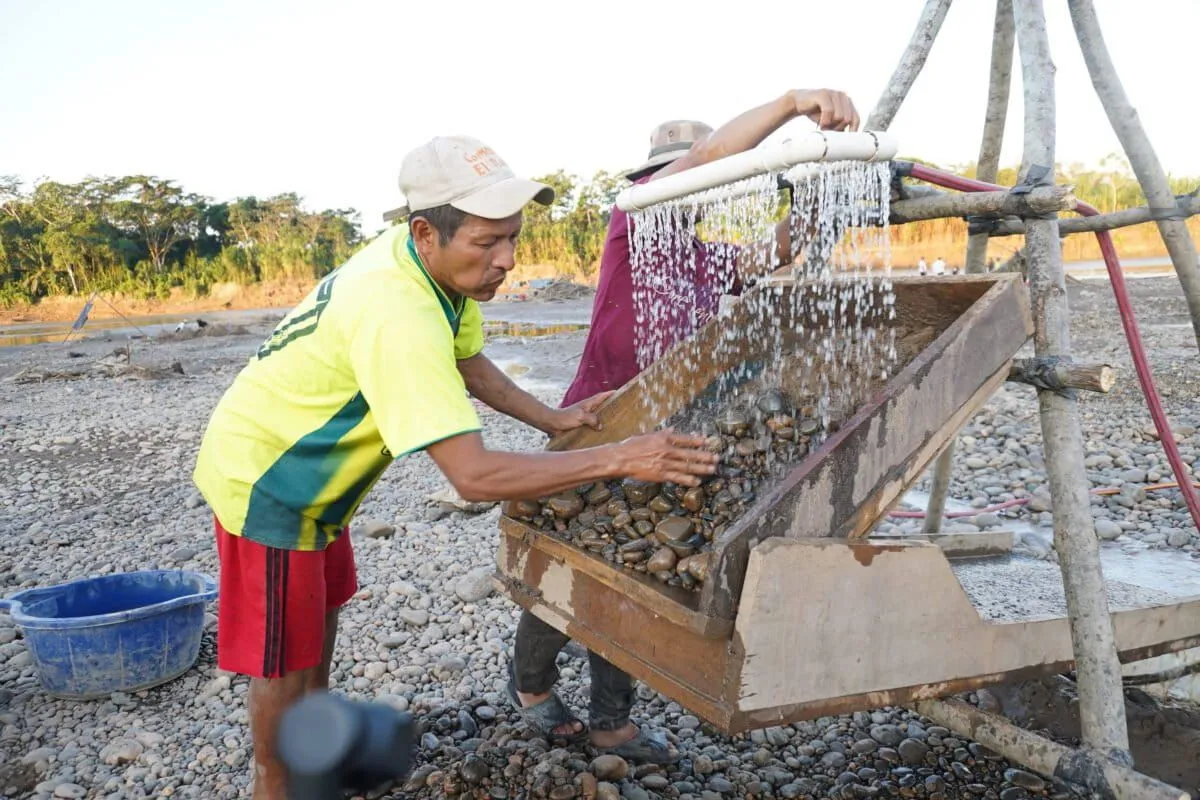
Mercury used in mining, especially gold mining, can cause serious and irreversible damage to human health. According to the WHO, it attacks the central nervous system, the digestive system and the immune system, among other organs. Inhaling toxic fumes from burning amalgams and consuming fish contaminated in the form of methylmercury can cause tremors, memory loss, cognitive disorders, kidney failure and even death.
“We don’t know how mercury harms us, it was never explained to us, but there are many brothers who are vomiting, who have a fever, they have lost their appetite,” adds Guido Alfaro of the CPILAP.
What is life like for those who live with mercury and continue to accumulate the heavy metal in their bodies?
The invisible enemy of Puerto Motor
For the five Amazonian indigenous peoples of the departments of La Paz and Beni, the river is everything. It is the main provider of their food. There they fish for the surubí (Pseudoplatystoma), the shad (Prochilodus lineatus), the boga (Megaleporinus obtusidens)​, the pacú (Myleus pacu), the tucunaré (Cichla ocellaris), the dorado (Brachyplatystoma rousseauxii) and the palometa (Mylossoma aureum).
However, these fish travel kilometers from upstream carrying mercury from mining in their tissues. Heavy metal washes the banks of the river where communities such as Puerto Motor are located, where 28 families live who fear the deterioration of their health.
Edith Guzmán Marupa, corregidora or highest authority of Puerto Motor, rings the bell of the small community to call the residents. He wants them to share their experiences around the river. He takes a glass of water from the table and with a broken voice says: “We know we have mercury in our bodies, but we can’t do anything.”
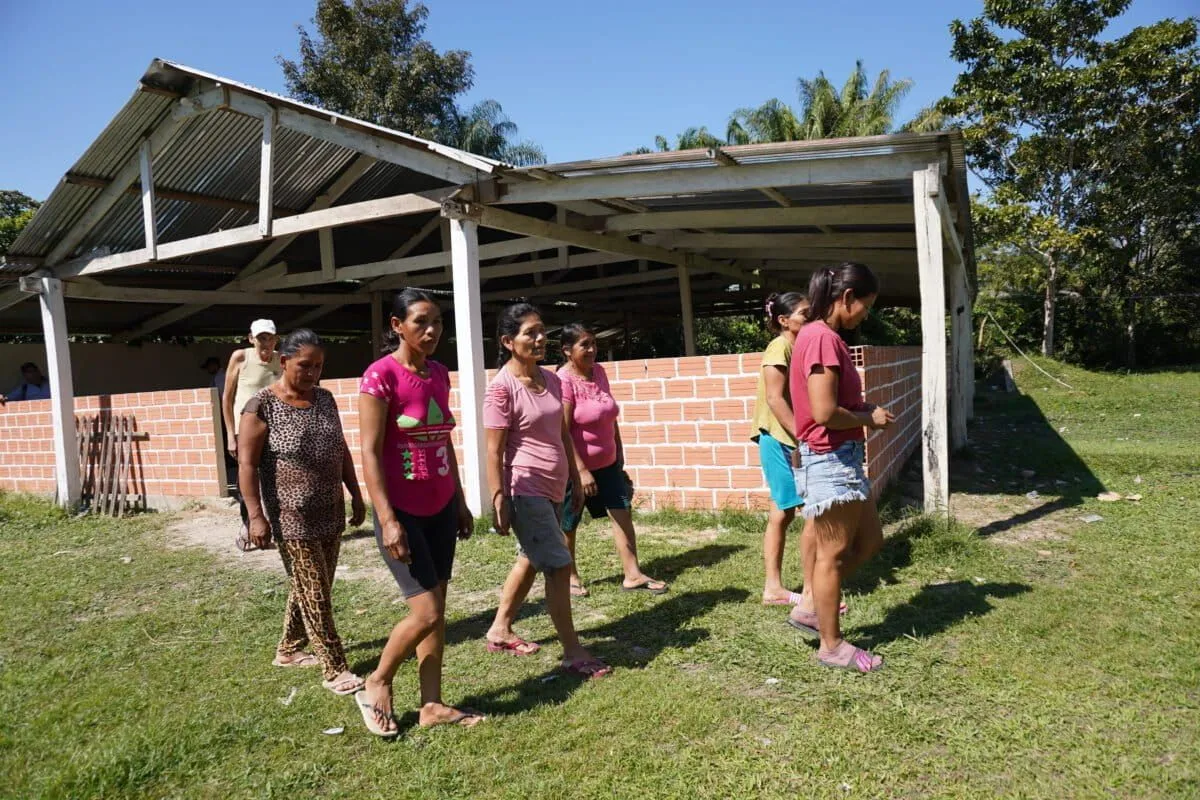
The community leader remembers the visit to her territory, a decade ago, by an organization that collected samples to verify the level of heavy metal in their bodies. “They said we had mercury,” he adds.
Fish is the main food in the daily diet in the community, they eat it “almost every day,” even though they know that it is in contact with mercury, says Edith Guzmán. We asked him if anyone assisted them after confirming the presence of the heavy metal in their bodies: “Only once—in 2019—a medical commission came to visit us, but they only gave us basic medications,” he claims.
Guzmán’s testimony coincides with that of Dora Quispe, who has lived in Puerto Motor for 20 years and says that she prays every day so that the mercury in her body does not affect her daily life or that of the children and community members. “There is nothing to do,” he says.
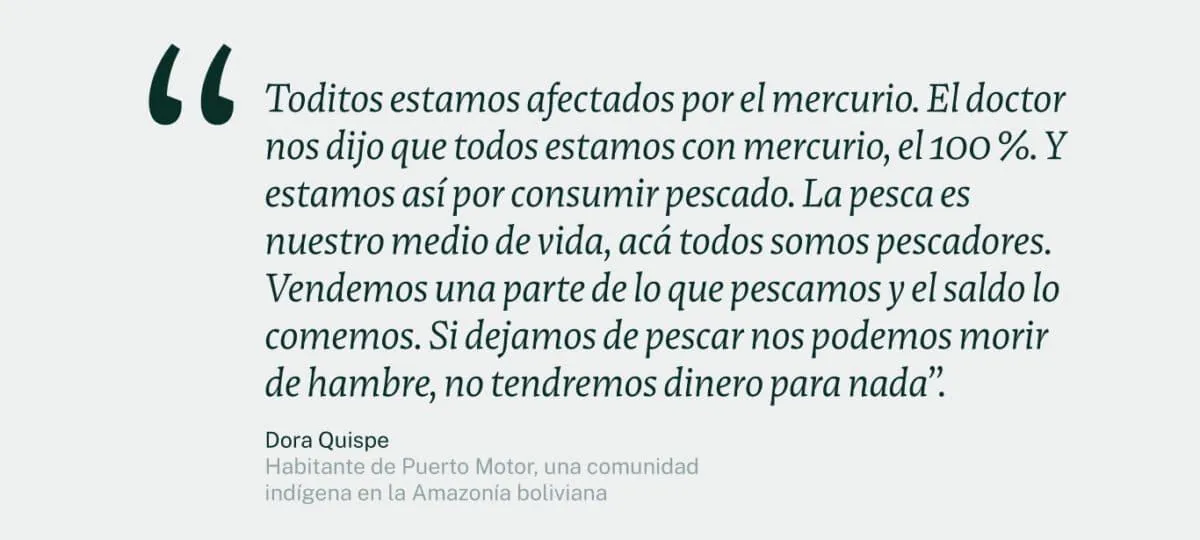
“We are all affected by mercury. The doctor told us that we are all with mercury, 100%. And we are like this because we consume fish. Fishing is our way of life, here we are all fishermen. We sell a part of what we catch and we eat the balance. If we stop fishing we could die of hunger, we will not have money for anything,” says Quispe.
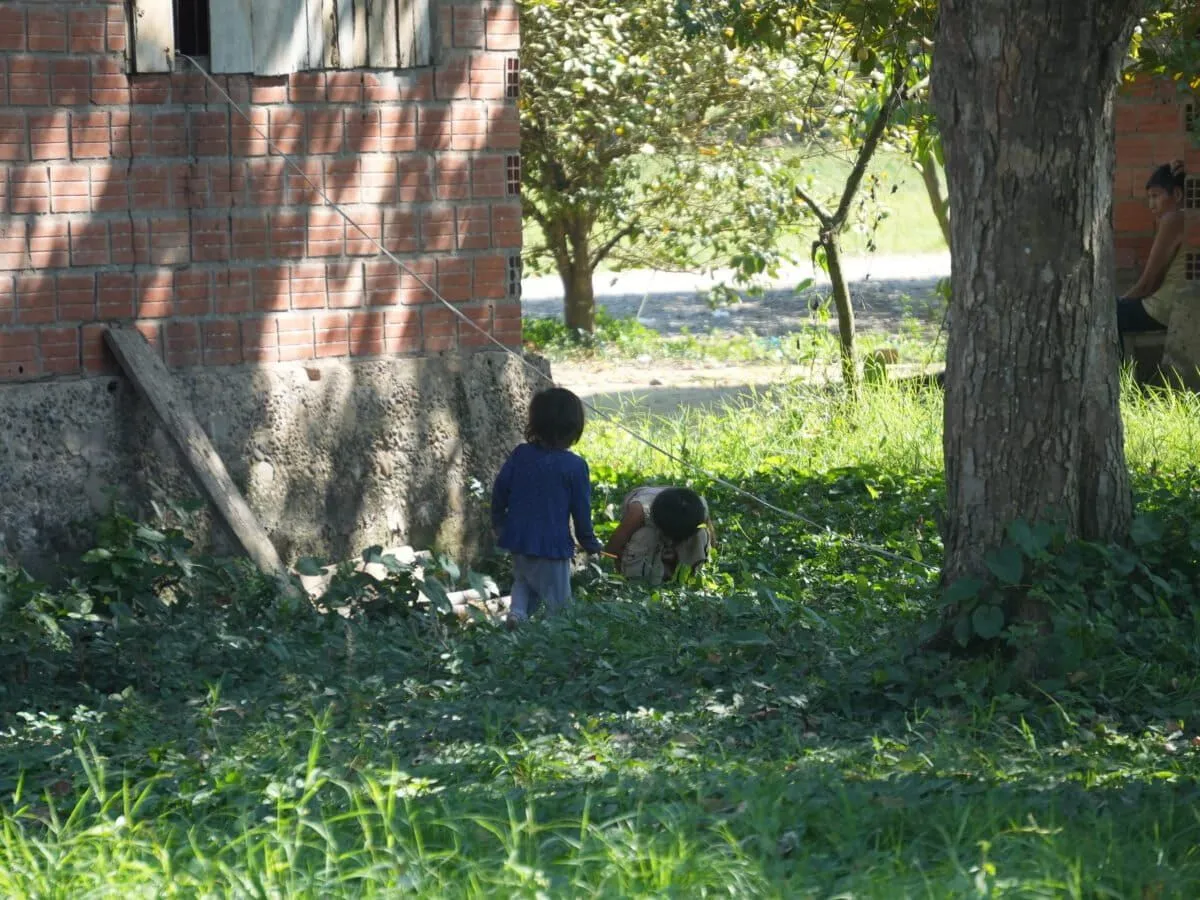
Both residents live stalked by statistics. Nine out of ten indigenous women of the Bolivian Amazon, of childbearing age, have concentrations higher than safe limits. This is one of the findings of a study carried out in 2023 by scientists from the University of Cartagena in Colombia, the Institute of Diagnostic Laboratory Services and Health Research (Seladis) of the Universidad Mayor de San Andrés (UMSA) in La Paz and the Documentation and Information Center of Bolivia (Cedib). The samples were taken from 119 women living in communities near the Beni, Mamoré and Madre de Dios basins.
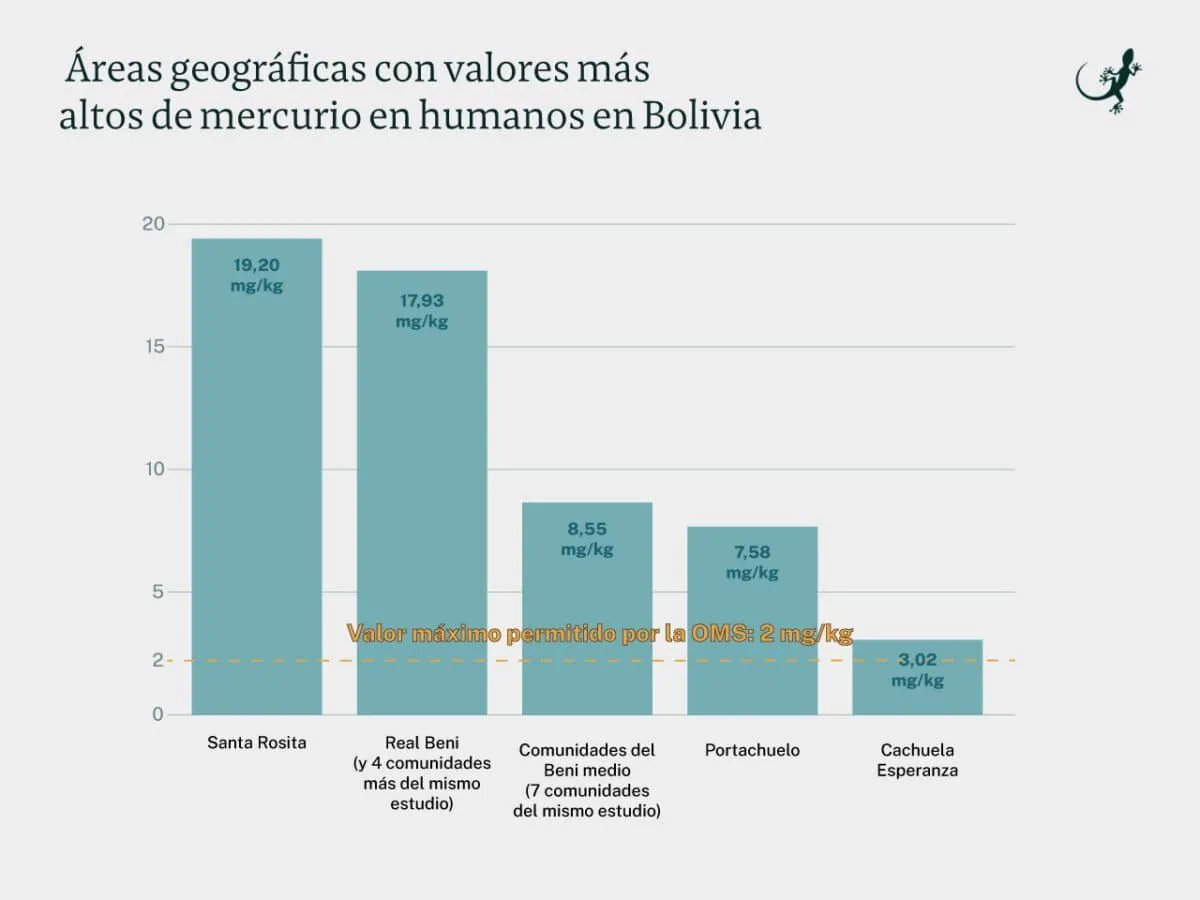
According to the WHO, the acceptable level of mercury in the human body is 2.0 mg/kg (milligrams per kilogram). However, another study, published in 2012, analyzed a more complete picture and established that the levels in the Beni River basin—where Puerto Motor is located and where Edith Guzmán and Dora Quispe live—exceed, in some cases, 19 mg/kg.
Eyiyoquibo: living with your back to the mercury
The ese ejjas are an indigenous population of recent contact, concentrated in the Eyiyoquibo community, which around 80 years ago emerged from the isolation in which it lived.
In this territory the days pass slowly and a calm invades them that leaves no room for worries like that of the mercury. It is a topic that is not talked about because it is not among their priorities. Their attention is focused on other problems that feel closer to them, such as floods, lack of land to cultivate, drought or the absence of resources to live.
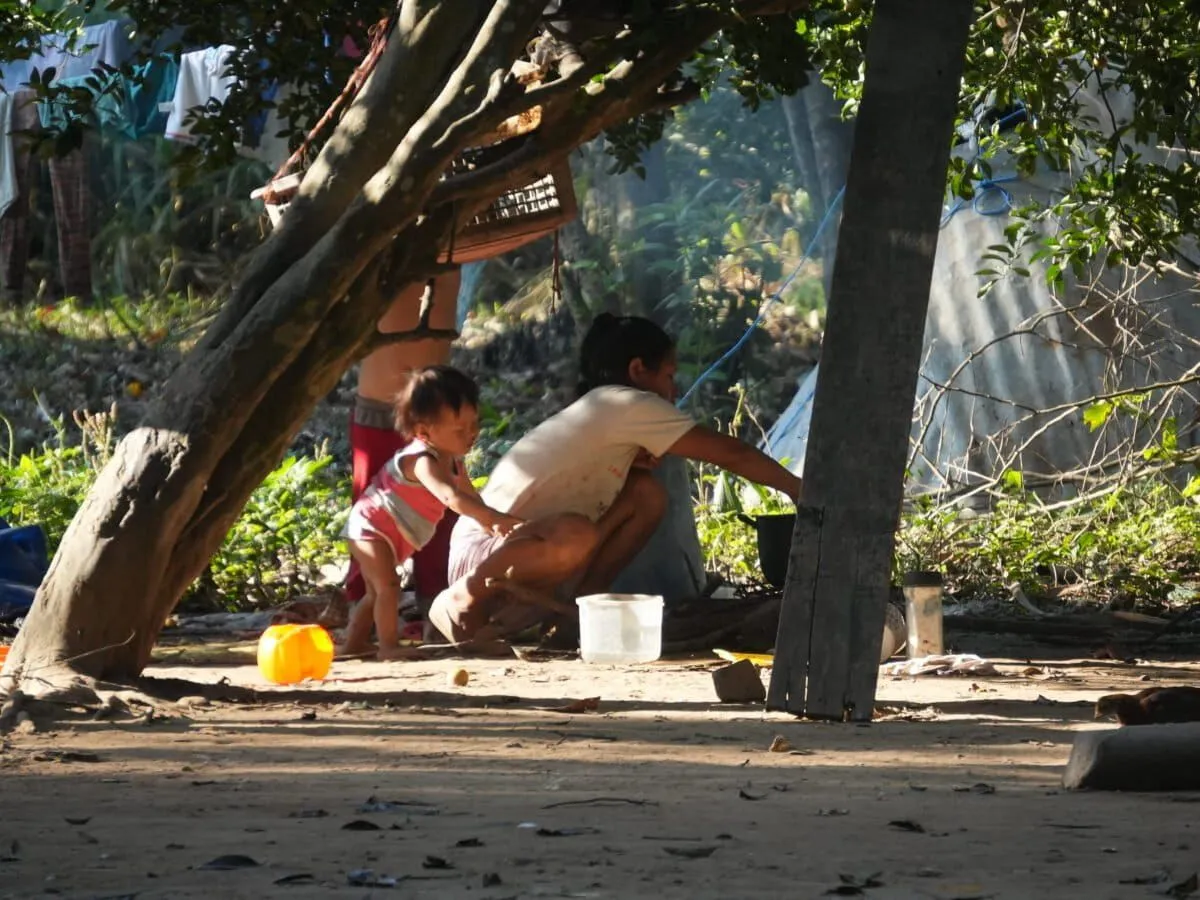
Rosa Juse is one of the elderly women of Eyiyoquibo and tells us that she is not contaminated, or at least that is what she wants to believe. He collects the firewood and places it in a rustic stove in the dirt patio of his precarious home. Light the fire and immediately start cooking. While preparing a fish soup, her grandson, Manuel Noza, says in a low tone to prevent his grandmother from hearing, that she is intoxicated.
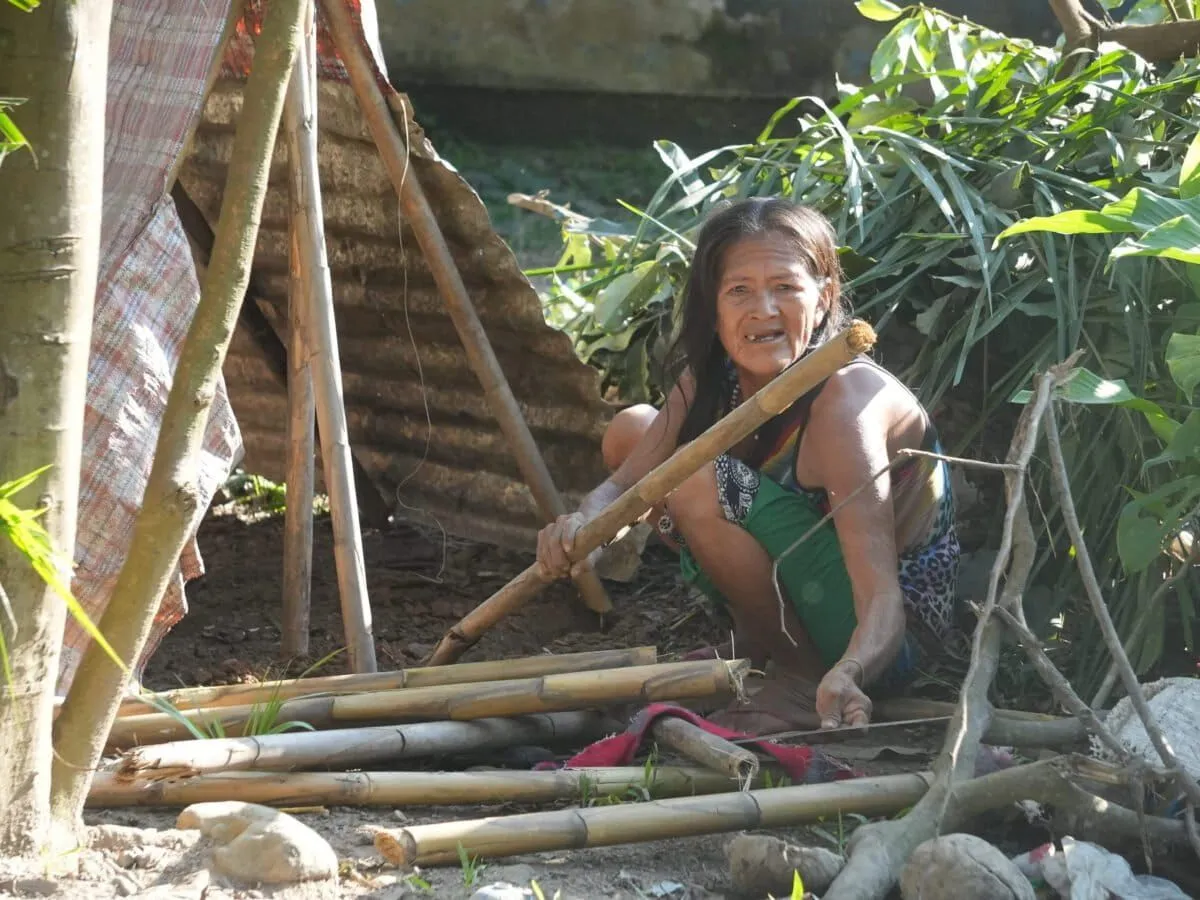
For Manuel, the symptoms don’t lie. He notices it in his grandmother’s tired walk, in the headaches and stomach problems she suffers. Doña Rosa hurries, pours the rice into a pot with raw water while watching the cooking of the cassava in another.
From a black bag he takes out the remains of a fish. They are parts of a tarpon, because the best of the catch went to the Rurrenabaque market or the San Buenaventura market, the closest urban towns. “We eat these parts. We boil them like soup and when there is oil we fry them,” he says in a tired voice.
Upstream are the towns of Mapiri, Tipuani, Teoponte, Mayaya and Guanay, where illegal gold mining is practiced and is contaminating Amazon waters. The currents drag the mercury through the tributaries that then flow into the Beni, and which in turn distributes these contaminated waters to the populations that live along its channel. Among them the residents of Eyiyoquibo.
For Ignacio Julio Monasterio, mayor of this community, the symptoms are evident. “Our eyesight is bad, we don’t look, that’s from eating fish. They say it’s contaminated, but there’s also a headache,” he says.
Monasterio admits that medical brigades visit his community often and bring them generic medicines, but not to treat mercury contamination. “The damage has already been done, we are bad. There are people who cannot work because of these problems, there were also pregnant women who had problems with their children,” he laments.
Samples taken in Eyiyoquibo from 47 people, according to the Mongabay Latam database, revealed that the mercury level in the residents reached 8.1 mg/kg. This is one of the populations studied most affected by pollution, since it far exceeds the level accepted by the WHO.
During the investigation, we had access to other local studies that were carried out in Eyiyoquibo, such as that of the Universidad Mayor de San Andrés (UMSA) in La Paz, which came to that area to take hair samples from the residents. The conclusions are similar to the study included in the Mongabay Latam database: the indigenous people of Ejja are contaminated by consuming fish with mercury.
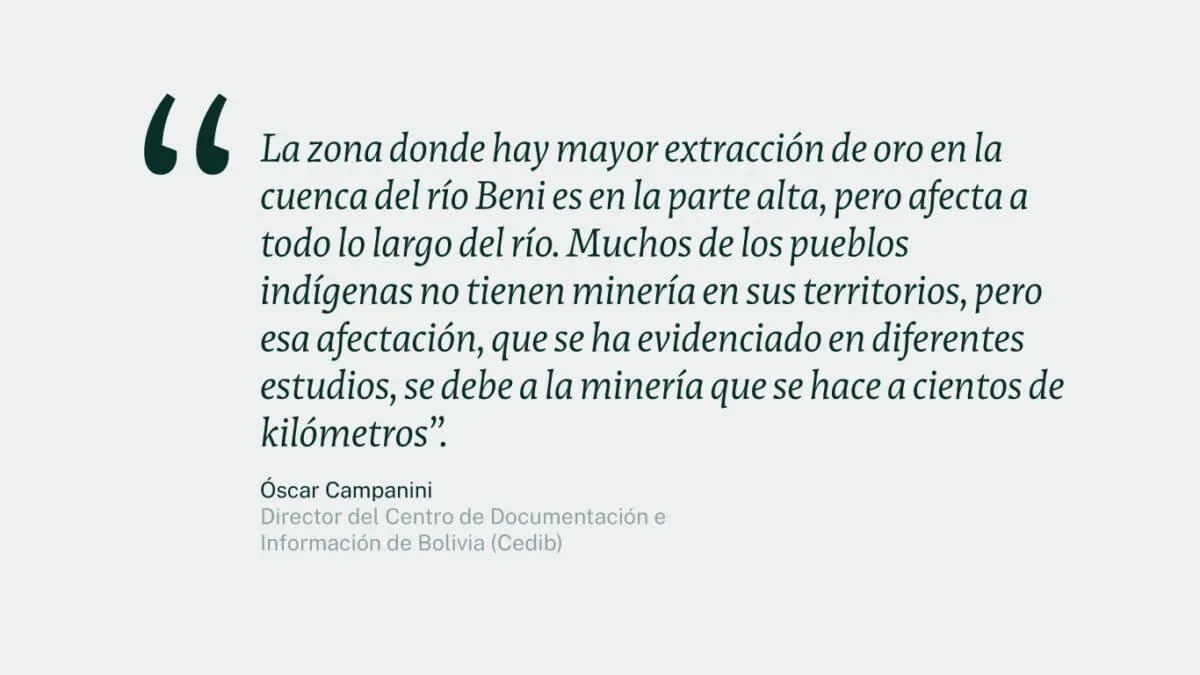
“The area where there is the greatest gold extraction in the Beni River basin is in the upper part, but it affects the entire length of the river. Many of the indigenous peoples do not have mining in their territories, but this impact, which has been evidenced in different studies, is due to the mining that is done hundreds of kilometers away,” explains Campanini of the CEDIB.
Jorge Vásquez, an environmental toxicology expert at UMSA, adds that contamination has spread throughout all the communities in the Amazon basin that live alongside cooperative miners who use mercury to separate and extract gold from rocks and stones in the rivers. “After using it, miners dump the mercury into the rivers, contaminating the fish and disregarding local regulations that require them to recycle this toxic metal,” he laments.
In Bolivia, mercury can be purchased without any special permit, unlike in other countries in the region such as Colombia and Peru, and throughout the European Union (EU). Under the Minamata Convention, to which Bolivia is a party, the use of mercury is restricted because it is one of the ten chemicals that pose the greatest threat to public health, according to the WHO. In the country, however, a one-liter bottle of mercury can be purchased for between 2,000 and 8,000 bolivianos (between $300 and $1,100), although the price varies depending on the type of mercury and its origin.
Medical care that never arrives
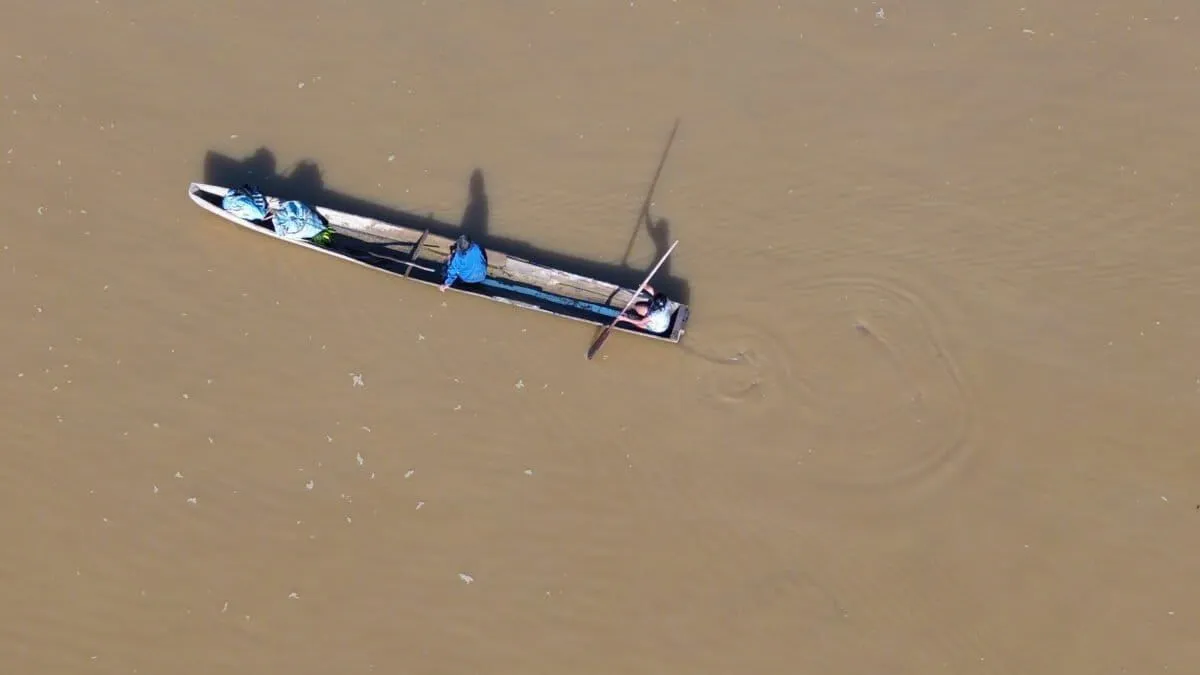
About 40 families live in the Tacana Indigenous community of Carmen Soledad, and residents themselves say there are no more than 200 inhabitants. Since ancestral times, their way of life has been nomadic, moving up and down the river in small wooden boats they build themselves.
Antonio Vilca, the local authority of Carmen Soledad, concentrates on repairing one of the fishing nets he uses every day on the Beni River. It is one of his work tools. The Indigenous leader, who also works in agriculture, says fishing is easier during the dry season, although he knows that these waters carry all the waste generated by mining camps.
“We see the El Español mercury containers that reach us here. We also see dirty water, as if it were mixed with vehicle oil. We are practically the miners’ garbage dump,” Vilca laments. His brother, Freddy, says that 20 years ago they could drink water from the Beni River, but now it is impossible. “The water is dirty, it is contaminated, but we still eat fish,” he laments.
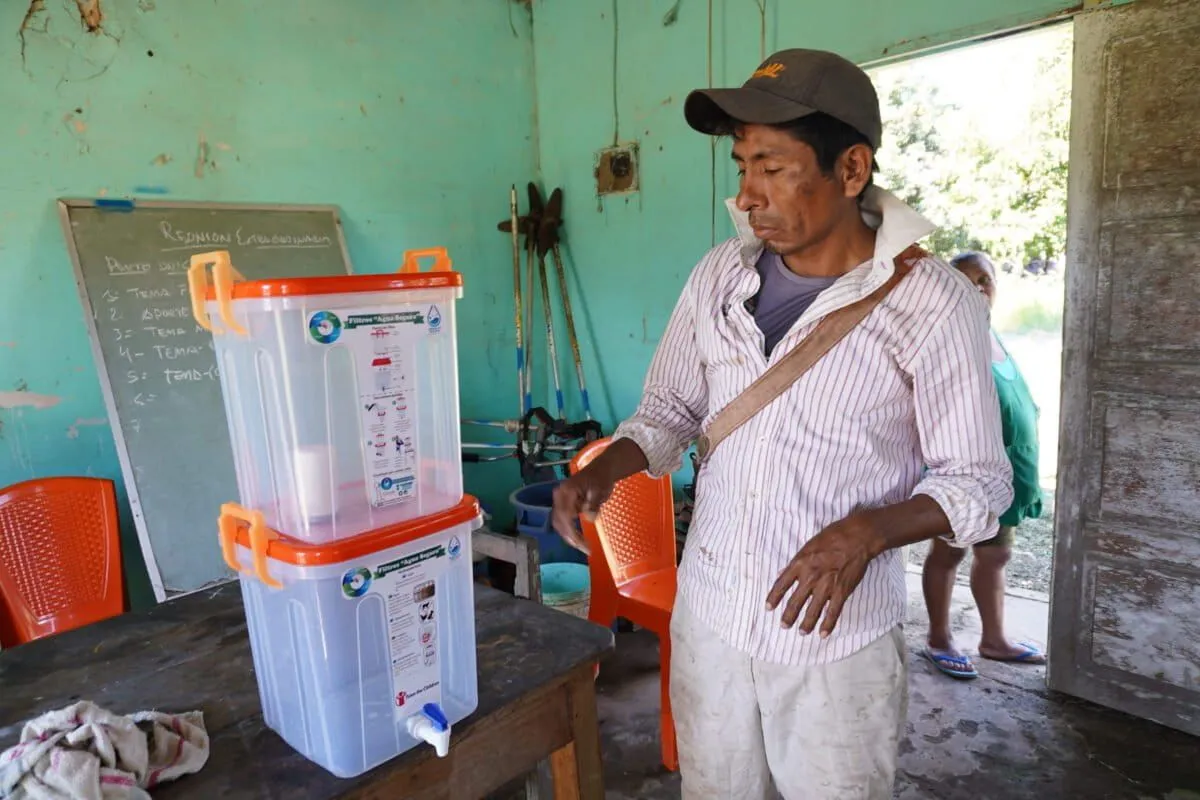
The health center of San Buenaventura, the closest urban area, has a modern building and there are staff working 24 hours a day. However, no indigenous residents have come to this public hospital to seek treatment for any problem of mercury poisoning, according to Mario Chacón, the municipal health official. Even so, the doctor recognizes that both the waters and the fish of the Beni River are contaminated. In fact, it mentions that, in 2021, specialists detected the problem of mercury poisoning in Eyiyoquibo and other communities.
“We don’t know a treatment for these cases, we can only give generic medications, but the diet [of the indigenous people] is also poor. They eat rice, fish and eggs, that is their life. We cannot recommend it to them because it is their way of life: they fish, sell and eat, they do that daily,” highlights Chacón. “We rarely eat fish, they do it daily. That affects them.”
History repeats itself at the Rurrenabaque hospital. The indigenous inhabitants do not go to that medical center to receive treatment. That is why there are medical brigades that visit the communities that are on the banks of the Beni River, according to the municipal director of Health, Marco Lozano.
The doctor assures that they currently cannot attribute specific diseases to mercury contamination, but that in Rurrenabaque there are related health problems, such as childhood cerebral palsy, seizures and other conditions.
“We would like studies to determine if the accumulation of heavy metals in the body could be related to these conditions [mining pollution] or if they are due to other causes,” says Lozano.
Ten kilometers upriver from Carmen Soledad lives Limberth Miquere, the local authority of the Buenavista community. This Tacana leader laments that most residents of his community suffer from “some pains caused by mining” and are unaware that the fish they eat every day contain very high levels of mercury. Like the residents of the other communities visited, he finds no solution to the problem at nearby medical facilities.
“We are tired of asking for medical help. We have to travel very far by land to receive treatment. We go to San Buenaventura, and they don’t know whether our pains are caused by contaminated fish, but obviously they are,” he complains.
According to the database compiled by Mongabay Latam, mercury was detected both in the Carmen Soledad community and in Buenavista, where samples were taken from 45 and 103 residents, respectively.
These results are consistent with an assessment conducted in 2023 by the Central Organization of Indigenous Peoples of La Paz (CPILAP). The laboratory study of 302 residents from 36 communities belonging to six Indigenous peoples —Tacana, Tsimane, Uchupiamona, Leco, Ese Ejja and Mosetén, in the Beni River basin and its tributaries— confirmed that 74.5% of those tested have mercury levels above the limits permitted by global health organizations. The rest remain continuously exposed to contamination from mining cooperatives that extract gold upriver using large dredges.
Plans on paper?
Although Bolivia is one of the 128 countries that signed the Minamata Convention, which prohibits the use of mercury, so far that commitment has not been reflected in a concrete action plan. In fact, the heavy metal continues to be used in alluvial mining, and Bolivia remains the world’s largest buyer of mercury, according to official statistics.
The mercury trade even takes place on social media. The metal is offered without any controls, but there are also streets devoted to this market, such as Tarapacá Street in the city of La Paz, where the sale of the heavy metal is the main economic activity in the area.
In mid-2025, at the beginning of this investigation, the then-current Ministry of Environment and Water told Mongabay Latam that the National Action Plan (NAP) to reduce the use of mercury in gold mining, which had been developed since 2023 by the Bolivian government and the United Nations Industrial Development Organization (UNIDO), was in the process of being implemented.
The government agency reported that the goal is to reduce mercury use in artisanal and small-scale mining by 60% by 2031 and also promote alternative technologies for implementing gold extraction methods without mercury.
In fact, the current Vice Minister of Environment, Biodiversity, Climate Change, and Forest Management and Development, Jorge Ávila, said that by May 2026 at the latest, the plan to reduce the use of mercury in gold mining would be adjusted and the Minamata Convention would be fully implemented.
“We are obligated to comply with that convention, and we have already instructed the Vice Ministry’s departments, especially those dealing with the mercury problem, to redirect the State’s approach,” Ávila said.
The environmental official added that although they cannot solve the problem overnight, they are willing to “act with the greatest responsibility to find a solution, first through persuasion, inviting [gold-mining cooperatives] to formalize their operations, because the vast majority of these activities are not conducted within the framework of the law. The use of mercury remains completely irregular,” he said.
Almost two months have passed since the announced deadline to adjust the NAP for mercury reduction, and that project has yet to see the light of day. In the meantime, the government of Rodrigo Paz, who was sworn in in November 2025, dissolved the Ministry of Environment and reduced it to a vice ministry. So far, this new department has not called on Indigenous peoples to participate in adjustments to the NAP, despite being the most affected by gold mining.
The Ministry of Health and Sports told Mongabay Latam that it created the “Mercury and Health Plan” to address this public health problem, covering everything from risk assessment and management among exposed populations to the reduction, elimination and management of products containing added mercury. They also explained that they had met with Indigenous leaders to coordinate medical actions in affected communities and that these measures are being implemented in coordination with subnational governments and other ministries.
“We have already made visits with medical brigades to different areas, working directly with Indigenous peoples. We take three samples: hair, urine and blood, because we want to know what is happening and understand what they are eating and how they are feeling. Then we return because we want to provide feedback to the population so they know what they need to do and what treatment they should follow,” former Health Minister María Renée Castro told Mongabay Latam.
The then authority of the health sector explained that these brigades arrived at the Beni River and that the results were not optimal. He admitted that the indigenous inhabitants have a certain degree of contamination, but did not provide official results, which must be presented by the new authorities of the Ministry of Health and Sports, but to date they have not provided any information.
Meanwhile, Hermenegildo Leal, mayor of Buena Vista, tours his community on foot until he reaches a path with a natural descent. It is a small passage that leads to the Beni River. There are two fishermen waiting for their reward. Leal yells at them: “Did you catch something?” They respond with “no.” “There is not much fish around here, the little that is caught is for our consumption, and that little fish is contaminated,” he says. Life in the indigenous communities settled on the banks of the Beni continues the same, the pollution is the same and so is the inaction of the Bolivian State.
Por Iván Paredes Tamayo/ Mongabay, Vision 360:
Oro tóxico: el mercurio de la minería amenaza a más de 160 comunidades de la cuenca del río Beni
Mongabay Latam encontró que 39 comunidades tienen altos valores de mercurio y que 125 más enfrentan un riesgo similar. Estos hallazgos fueron parte de un análisis científico y geográfico que abarcó 39 investigaciones publicadas en 27 años, siete de ellas en Bolivia.
En el río Beni la minería avanza sin control. Hay pobladores que realizan una minería artesanal utilizando mercurio. Las aguas de ese afluente están contaminadas. Foto: Javier Mamani
Gilberto Vaca Muiba teme que el mercurio que corre por sus venas acabe con su vida. Ese miedo, sin embargo, no altera su rutina. Toma su vieja caña de pescar, camina hacia el río y aguarda con paciencia por la comida del día. Está arrodillado en una de las playas del río Beni, en la Amazonía boliviana, esperando a que un pez pique para llevar el alimento a casa. Es una tarde de julio en la comunidad Puerto Yumani y acaba de atrapar un surubí pequeño, un pescado que es muy probable que esté contaminado con mercurio pero que igual lleva a su mesa.
Puerto Yumani es una de las cinco comunidades indígenas que recorrió Mongabay Latam a lo largo de 41 kilómetros del río Beni. Las otras cuatro son Carmen Soledad y Puerto Motor, en el municipio de Rurrenabaque, en el departamento de Beni, y Eyiyoquibo y Buena Vista, en el municipio de San Buenaventura, al norte del departamento de La Paz. Todos esos territorios, que pertenecen a los pueblos indígenas tacana, leco y ese ejjas, están expuestos a la contaminación por mercurio que se origina en el río.
Por eso al Beni lo perciben de dos maneras: como una fuente de subsistencia para las comunidades pero también como el centro de todos sus males.
“Nosotros comemos pescado todos los días, es nuestra dieta común, porque comprar carne o pollo es muy caro para nosotros. Tenemos en los ríos nuestro alimento, pero ese alimento está contaminado y estamos sufriendo por eso”, dice Guido Alfaro, presidente de la Central de Pueblos Indígenas de La Paz (CPILAP), que representa a las comunidades amazónicas del norte del departamento. “Por eso pedimos que nos atiendan, que hagan cumplir la ley, que dice que está prohibida la minería ilegal”.
Óscar Campanini, director del Centro de Documentación e Información de Bolivia (Cedib), asegura que “lo que ya se ha identificado con evidencia científica es el impacto que tiene el mercurio sobre los peces en los ríos de la cuenca de la Amazonía boliviana. El minero bota el mercurio al río hasta que llega a las personas a través de los pescados que consumen”, detalla el experto.
Cuando los pobladores comen carne contaminada, explica el experto, absorben el metal pesado y este se acumula en sus organismos. “La cantidad va en aumento mientras el individuo sigue consumiendo la fuente de mercurio”, dice.
Para entender la magnitud de este problema, Mongabay Latam construyó una base de datos que reúne más de 7000 muestras de mercurio en humanos y más de 5900 en peces, tomadas a orillas de tres ríos amazónicos que se conectan: el Madre de Dios en Perú, el Beni en Bolivia y el Madeira en Brasil. El análisis de los 39 estudios científicos, siete de ellos en el Beni y publicados entre 1995 y 2024, reveló que los habitantes de al menos 249 comunidades indígenas y ribereñas han estado expuestas a la contaminación a lo largo de 27 años. Además que 702 comunidades más están en riesgo —125 solo en Bolivia—, por estar situadas entre los focos de minería ilegal y los casos de personas que dieron positivo a la presencia de mercurio.
En el caso de Bolivia, los investigadores tomaron 533 muestras a personas de 39 comunidades y todas ellas presentaron niveles de mercurio por encima del límite permitido por la Organización Mundial de la Salud (OMS). En el caso de las 186 muestras en peces, tomadas en 17 comunidades de la cuenca del río Beni, los estudios revelaron que 15 especies de alto consumo para los pobladores indígenas y ribereños tienen mercurio en sus tejidos.
“Sabemos que estamos contaminados por el mercurio pero, ¿qué podemos hacer? No hay dinero por esta crisis, no podemos cultivar porque nuestras parcelas están afectadas por las inundaciones, esa tierra está como podrida”, dice Grover Yumani, corregidor de la comunidad Puerto Yumani, quien lamenta vivir en un círculo vicioso que los obliga a trabajar para subsistir en una actividad que los va matando de a pocos.
El mercurio utilizado en la minería, especialmente en la de oro, puede causar daños graves e irreversibles a la salud humana. Según la OMS, ataca el sistema nervioso central, el aparato digestivo y el sistema inmunitario, entre otros órganos. La inhalación de vapores tóxicos, al quemar amalgamas, y el consumo de pescado contaminado en forma de metilmercurio, pueden provocar temblores, pérdida de memoria, trastornos cognitivos, fallas renales e incluso la muerte.
“No sabemos cómo nos daña el mercurio, nunca nos explicaron, pero hay muchos hermanos que están vomitando, que tienen fiebre, se les perdió el apetito”, añade Guido Alfaro de la CPILAP.
¿Cómo es la vida de quienes viven con mercurio y siguen acumulando el metal pesado en sus cuerpos?
El enemigo invisible de Puerto Motor
Para los cinco pueblos indígenas amazónicos de los departamentos de La Paz y Beni, el río lo es todo. Es el proveedor principal de su alimentación. Allí pescan el surubí (Pseudoplatystoma), el sábalo (Prochilodus lineatus), la boga (Megaleporinus obtusidens)​, el pacú (Myleus pacu), el tucunaré (Cichla ocellaris), el dorado (Brachyplatystoma rousseauxii) y la palometa (Mylossoma aureum).
Sin embargo, esos peces viajan kilómetros desde aguas arriba transportando en sus tejidos el mercurio de la minería. El metal pesado baña las orillas del río en las que están asentadas comunidades como Puerto Motor, donde viven 28 familias que temen por el deterioro de su salud.
Edith Guzmán Marupa, corregidora o máxima autoridad de Puerto Motor, toca la campana de la pequeña comunidad para llamar a los pobladores. Quiere que compartan sus vivencias alrededor del río. Toma de la mesa un vaso con agua y con la voz entrecortada dice: “Sabemos que tenemos mercurio en nuestros cuerpos, pero no podemos hacer nada”.
La lideresa de la comunidad recuerda la visita a su territorio, hace una década, de una organización que recogió muestras para verificar el nivel del metal pesado en sus cuerpos. “Dijeron que teníamos mercurio”, añade.
El pescado es el alimento principal de la dieta diaria en la comunidad, lo comen “casi todos los días”, a pesar de que saben que está en contacto con el mercurio, cuenta Edith Guzmán. Le preguntamos si alguien los asistió luego de confirmar la presencia del metal pesado en sus cuerpos: “Solo una vez vino —en 2019— una comisión médica a visitarnos, pero solo nos dieron medicamentos básicos”, reclama.
El testimonio de Guzmán coincide con el de Dora Quispe, que vive hace 20 años en Puerto Motor y cuenta que reza todos los días para que el mercurio que tiene en su cuerpo no afecte su vida cotidiana ni la de los niños y comuneros. ”No hay nada que hacer”, asegura.
“Toditos estamos afectados por el mercurio. El doctor nos dijo que todos estamos con mercurio, el 100 %. Y estamos así por consumir pescado. La pesca es nuestro medio de vida, acá todos somos pescadores. Vendemos una parte de lo que pescamos y el saldo lo comemos. Si dejamos de pescar nos podemos morir de hambre, no tendremos dinero para nada”, dice Quispe.
Ambas pobladoras viven acechadas por las estadísticas. Nueve de cada diez mujeres indígenas de la Amazonía de Bolivia, en edad fértil, presentan concentraciones superiores a los límites seguros. Este es uno de los hallazgos de un estudio realizado en 2023 por científicos de la Universidad de Cartagena de Colombia, el Instituto de Servicios de Laboratorio de Diagnóstico e Investigación en Salud (Seladis) de la Universidad Mayor de San Andrés (UMSA) de La Paz y el Centro de Documentación e Información de Bolivia (Cedib). Las muestras se tomaron a 119 mujeres que viven en comunidades cercanas a las cuencas del Beni, Mamoré y Madre de Dios.
Según la OMS, el nivel aceptable de mercurio en el cuerpo humano es de 2,0 mg/kg (miligramos por kilogramo). Sin embargo otro estudio, publicado en 2012, analizó un panorama más completo y estableció que los niveles en la cuenca del río Beni —donde queda Puerto Motor y viven Edith Guzmán y Dora Quispe— superan, en algunos casos, los 19 mg/kg.
Eyiyoquibo: vivir de espaldas al mercurio
Los ese ejjas son una población indígena de reciente contacto, concentrada en la comunidad Eyiyoquibo, que hace alrededor de 80 años salió del aislamiento en el que vivía.
En este territorio los días pasan lento y los invade una calma que no da cabida a preocupaciones como la del mercurio. Es un tema del que no se habla porque no está entre sus prioridades. Su atención está puesta en otros problemas que sienten más cercanos como las inundaciones, la falta de campo para cultivar, la sequía o la ausencia de recursos para vivir.
Rosa Juse es una de las ancianas de Eyiyoquibo y nos dice que no está contaminada, o al menos así lo quiere creer. Recoge la leña y la coloca en un fogón rústico en el patio de tierra de su precaria vivienda. Prende fuego y de inmediato se pone a cocinar. Mientras prepara una sopa de pescado, su nieto, Manuel Noza, dice en tono bajo para evitar que su abuela escuche, que ella está intoxicada.
Para Manuel, los síntomas no mienten. Lo nota en el andar cansado de su abuela, en los dolores de cabeza y los problemas estomacales que sufre. Doña Rosa se apura, vierte el arroz en una olla con agua cruda mientras vigila en otra la cocción de la yuca.
De una bolsa negra saca los restos de un pescado. Son partes de un sábalo, porque lo mejor de la pesca fue a parar al mercado de Rurrenabaque o al de San Buenaventura, las poblaciones urbanas más cercanas. “Estas partes comemos. Hacemos hervir como sopa y cuando hay aceite lo freímos”, dice con voz cansada.
Río arriba están las localidades de Mapiri, Tipuani, Teoponte, Mayaya y Guanay, donde se practica la minería aurífera ilegal que está contaminando las aguas amazónicas. Las corrientes arrastran el mercurio por los afluentes que luego desembocan en el Beni, y que a su vez reparte esas aguas contaminadas a las poblaciones que viven a lo largo de su cauce. Entre ellas los residentes de Eyiyoquibo.
Para Ignacio Julio Monasterio, corregidor de esta comunidad, los síntomas son evidentes. “Estamos mal de la vista, no miramos, eso es por comer pescado. Dicen que está contaminado, pero también hay dolor de cabeza”, relata.
Monasterio admite que las brigadas médicas visitan su comunidad a menudo y que les llevan medicinas genéricas, pero no para tratar la contaminación por mercurio. “El daño ya está hecho, estamos mal. Hay personas que no pueden trabajar por estos problemas, también hubo mujeres embarazadas que tuvieron problemas con sus hijos”, lamenta.
Las muestras tomadas en Eyiyoquibo a 47 personas, según la base de datos de Mongabay Latam, revelaron que el nivel de mercurio en los pobladores llegó a 8.1 mg/kg. Esta es una de las poblaciones estudiadas más afectadas por la contaminación, ya que supera ampliamente el nivel aceptado por la OMS.
Durante la investigación, se tuvo acceso a otros estudios locales que se realizaron en Eyiyoquibo, como el de la Universidad Mayor de San Andrés (UMSA) de La Paz, que llegaron a esa zona para tomar muestras de cabello de los pobladores. Las conclusiones son similares al estudio incluido en la base de datos de Mongabay Latam: los indígenas ese ejjas están contaminados por consumir pescado con mercurio.
“La zona donde hay mayor extracción de oro en la cuenca del río Beni es en la parte alta, pero afecta a todo lo largo del río. Muchos de los pueblos indígenas no tienen minería en sus territorios, pero esa afectación, que se ha evidenciado en diferentes estudios, se debe a la minería que se hace a cientos de kilómetros”, explica Campanini del CEDIB.
Jorge Vásquez, experto en toxicología ambiental de la UMSA, añade que la contaminación está extendida a todas las comunidades de la cuenca amazónica que conviven con mineros cooperativistas que utilizan el mercurio para separar y extraer el oro de las rocas o piedras de los ríos. “Después de utilizarlo, los mineros tiran el mercurio a los ríos, contaminando a los peces y desatendiendo normas locales que los obliga a reciclar este tóxico metal”, lamenta.
En Bolivia, el mercurio se puede comprar sin ningún permiso especial, al contrario de lo que sucede en otros países de la región como Colombia y Perú, y en toda la Unión Europea (UE). Según el Convenio de Minamata, del que Bolivia es parte, el uso del mercurio está limitado, ya que es una de las diez sustancias químicas que más amenazan la salud pública, de acuerdo a la OMS. En el país, sin embargo, un frasco de un litro de mercurio se puede conseguir entre 2000 a 8000 bolivianos (entre 300 y 1100 dólares), aunque el precio varía de acuerdo al tipo de mercurio y su procedencia.
La atención médica que no llega
En la comunidad indígena tacana de Carmen Soledad viven cerca de 40 familias y ellos mismos dicen que no pasan de 200 habitantes. Desde tiempos ancestrales su vida ha sido nómada, desplazándose río arriba y río abajo en pequeños botes de madera construidos por ellos mismos.
Antonio Vilca, corregidor de Carmen Soledad, se concentra en reparar una de las redes con las que sale a pescar a diario al río Beni. Es uno de sus instrumentos de trabajo. El líder indígena, que también se dedica a la agricultura, dice que en la época seca la pesca es más fácil, aunque sabe que esas aguas arrastran toda la basura que generan los campamentos mineros.
“Vemos los recipientes de mercurio, de marca El Español, que llegan hasta acá. También vemos el agua sucia, como con aceite de vehículo. Prácticamente somos el basurero de los mineros”, lamenta Vilca. Su hermano, Freddy, comenta que hace 20 años podían tomar el agua del río Beni, pero ahora es imposible. “El agua está sucia, está contaminada, pero igual comemos pescado”, lamenta.
El centro de salud de San Buenaventura, el casco urbano más cercano, tiene un edificio moderno y hay personal que trabaja las 24 horas del día. Sin embargo, a este hospital público no ha llegado ningún poblador indígena para hacerse atender por algún problema de intoxicación por mercurio, según explica Mario Chacón, el responsable municipal de salud. Aún así, el médico reconoce que tanto las aguas como los peces del río Beni están contaminados. De hecho menciona que, en 2021, especialistas detectaron el problema de la intoxicación por mercurio en Eyiyoquibo y otras comunidades.
“No conocemos un tratamiento para estos casos, solo podemos dar medicamentos genéricos, pero también la alimentación [de los indígenas] es deficiente. Comen arroz, pescado y huevo, esa es su vida. No se les puede recomendar porque es su modo de vida: pescan, venden y comen, eso lo hacen a diario”, resalta Chacón. “Nosotros comemos pescado pocas veces, ellos lo hacen a diario. Eso les afecta”.
La historia se repite en el hospital de Rurrenabaque. Los pobladores indígenas no van a ese centro médico para hacerse atender. Es por eso que hay brigadas médicas que visitan las comunidades que están a orillas del río Beni, según el director municipal de Salud, Marco Lozano.
El médico asegura que actualmente no pueden atribuir enfermedades específicas a la contaminación por mercurio, pero que en Rurrenabaque sí existen problemas de salud relacionados, como la parálisis cerebral infantil, convulsiones y otras afecciones.
“Nos gustaría que los estudios determinen si la acumulación de metales pesados en el organismo podría estar relacionada con estas condiciones [contaminación por minería] o si se deben a otras causas”, dice Lozano.
A diez kilómetros río arriba de Carmen Soledad vive Limberth Miquere, corregidor de la comunidad de Buenavista. Este líder tacana lamenta que la mayoría de los residentes de su comunidad padezcan de “algunos dolores por la minería” y que ignoren que los pescados que comen cada día tengan niveles muy altos de mercurio. Al igual que los habitantes de las otras comunidades visitadas, no encuentra una solución al problema en los establecimientos médicos cercanos.
“Estamos cansados de pedir ayuda médica, debemos trasladarnos muy lejos por tierra para que nos atiendan. Vamos a San Buenaventura y no saben si nuestros dolores se deben a la contaminación de los pescados, pero es obvio que sí”, reniega.
Según la base de datos que construyó Mongabay Latam, tanto en la comunidad Carmen Soledad como la de Buenavista, donde se tomaron muestras a 45 y 103 pobladores respectivamente, se detectó la presencia de mercurio.
Estos resultados coinciden con la evaluación realizada en 2023 por la Central de Pueblos Indígenas de La Paz (CPILAP). El estudio de laboratorio realizado a 302 habitantes de 36 comunidades de seis pueblos indígenas —tacanas, tsimanes, uchupiamonas, lecos, ese ejjas y mosetenes en la cuenca del río Beni y sus afluentes— confirmó que el 74,5 % de los pobladores evaluados tienen niveles de mercurio por encima de lo permitido por las organizaciones globales de salud. El resto se encuentra expuesto continuamente a la contaminación por la actividad de las cooperativas mineras que explotan oro río arriba con grandes dragas.
¿Planes de papel?
Aunque Bolivia es uno de los 128 países que firmó el Convenio de Minamata que prohíbe el uso de mercurio, hasta la fecha ese compromiso no se ha visto reflejado en un plan de acción concreto. De hecho, se sigue utilizando el metal pesado en la minería aluvial y Bolivia sigue siendo el mayor comprador de mercurio del mundo, según las estadísticas oficiales.
El negocio del mercurio se da incluso en redes sociales. Ofrecen el metal sin ningún control, pero también hay calles dedicadas a este mercado, como la Tarapacá, en la ciudad de La Paz, donde la oferta del metal pesado es la principal actividad económica de esa zona.
A mediados de 2025, al inicio de esta investigación, el aún vigente Ministerio de Medio Ambiente y Agua respondió a Mongabay Latam que el Plan de Acción Nacional (PAN) para la reducción del uso de mercurio en la minería aurífera, que fue elaborado desde 2023 por el gobierno boliviano y la Organización de las Naciones Unidas para el Desarrollo Industrial (ONUDI), estaba en proceso de implementación.
La entidad pública informó que se busca reducir en un 60 % el uso de mercurio en la minería artesanal y de pequeña escala para el año 2031 y también que se impulsaría tecnologías alternativas para la implementación de métodos de extracción de oro sin mercurio.
De hecho, el actual viceministerio de Medio Ambiente, Biodiversidad, Cambios Climáticos y de Gestión y Desarrollo Forestal, Jorge Ávila, dijo que a más tardar en mayo de 2026 se ajustaría el plan para reducir el uso de mercurio en la minería aurífera y se implementaría en su totalidad el Convenio de Minamata.
“Nosotros tenemos la obligación de cumplir con ese convenio y ya hemos dado la instrucción a las instancias del Viceministerio, especialmente a las que atienden la problemática del mercurio, para que reconduzcamos la conducta del Estado”, afirmó Ávila.
La autoridad ambiental añadió que si bien no pueden resolver el problema de la noche a la mañana, están dispuestos a “actuar con la mayor responsabilidad para encontrar una solución, primero en un marco de persuasión, invitando a que se formalice el trabajo de [las cooperativas auríferas], porque la gran mayoría de estas actividades no están enmarcadas en la ley. La utilización de mercurio sigue siendo absolutamente irregular”, dijo.
Han pasado casi dos meses de la fecha anunciada para ajustar el PAN para la reducción del mercurio y ese proyecto no ha visto la luz. En el camino, el gobierno de Rodrigo Paz, que juró en noviembre de 2025, disolvió el Ministerio de Medio Ambiente y lo redujo a un viceministerio. Esta subcartera no convocó hasta el momento a los pueblos indígenas para realizar los ajustes al PAN, a pesar de ser los más afectados por la minería aurífera.
El Ministerio de Salud y Deportes informó a Mongabay Latam que creó el “Plan Mercurio y Salud” para combatir este problema de salud pública que abarca desde la evaluación y gestión de riesgo en la población expuesta hasta la reducción, eliminación y gestión de productos con mercurio añadido. Además, precisaron que se reunieron con dirigentes indígenas para coordinar acciones médicas en las comunidades afectadas y que esas medidas se aplican en coordinación con gobiernos subnacionales y otros ministerios
“Hemos tenido ya visitas con brigadas médicas a diferentes espacios tratando directamente con los pueblos indígenas. Nosotros tomamos tres muestras: de cabello, de orina y de sangre, porque queremos saber qué es lo que está pasando y queremos conocer qué están comiendo, cómo se sienten. Luego volvemos a ingresar porque queremos retroalimentar a la población para que sepan qué es lo que tienen que hacer, qué tratamiento deben seguir”, le dijo a Mongabay Latam la exministra de Salud, María Renée Castro.
La entonces autoridad del sector salud detalló que esas brigadas llegaron al río Beni y que los resultados no fueron óptimos. Admitió que los pobladores indígenas tienen cierto grado de contaminación, pero no brindó resultados oficiales, los cuales deben ser expuestos por las nuevas autoridades del Ministerio de Salud y Deportes, pero hasta la fecha no han brindado información alguna.
Mientras tanto, Hermenegildo Leal, corregidor de Buena Vista, recorre su comunidad a pie hasta llegar a un camino con descenso natural. Es un pasaje pequeño que lleva al río Beni. Ahí están dos pescadores que esperan su recompensa. Leal les grita: “¿Pescaron algo?”. Ellos responden con un “no”. “No hay mucho pescado por acá, lo poco que se pesca es para nuestro consumo, y ese poco de pescado está contaminado”, dice. La vida en las comunidades indígenas asentadas a orillas del Beni continúa igual, la contaminación es la misma y la inacción del Estado boliviano también.


Leave a Reply