By Yenny Escalante, Mongabay; Brújula Digital:
The first impacts of the lack of rainfall, attributed to the El Niño climate phenomenon now emerging in Bolivia, are being felt mainly in agriculture and livestock production.

A woman tends her livestock on drought-stricken land in the Altiplano.
As of August 24, 26 municipalities across Bolivia had declared a state of emergency or red alert due to extreme drought, affecting six of the country’s nine departments. The most critical situation is in the Altiplano region, while the Amazon and Chaco are still experiencing moderate dryness, although forecasts point to a severe season of wildfires and scarce rainfall.
Experts attribute these conditions to the arrival of El Niño, the climate phenomenon associated with warming Pacific Ocean temperatures. The first effects of the rainfall deficit, still in its early stages in Bolivia, are already impacting crops and livestock.
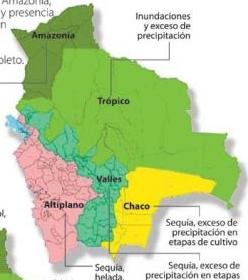
Oruro is the department most affected by water shortages, with 17 municipalities under emergency status because of severe to extreme drought, according to Bolivia’s Drought Monitor, operated by the National Meteorology and Hydrology Service (Senamhi). Other affected municipalities are located in La Paz, Potosí, and Chuquisaca. In parts of the Amazon, drought conditions remain moderate for now, but forecasts indicate worsening conditions. The same outlook applies to the Chaco region.
According to Senamhi’s July 2026 assessment, the most complex situation is in the Altiplano, where nearly the entire region is experiencing water deficits, ranging from mild and moderate drought to multiple severe drought hotspots.
Jorge Molina, professor and researcher at the Hydraulics and Hydrology Institute of the Universidad Mayor de San Andrés (UMSA) and a specialist in hydroclimatic variability and climate change, told Mongabay Latam that droughts across different regions are linked to El Niño. He warned that Bolivia faces a critical scenario, with potentially catastrophic drought levels in Potosí and a high risk of forest fires in the Amazon.
“The problem in Potosí is that this is where the strongest droughts occur, potentially reaching catastrophic levels. In the Amazonian lowlands, drought is uncommon during December, January, and February—the core rainy season—but it can occur beforehand, in September, October, and November,” Molina explained.
He added that the combination of drought and high temperatures during those months creates ideal conditions for wildfires, particularly in the Amazon.
According to Senamhi, Bolivia will feel the impact of a “very strong” El Niño during the final quarter of the year, bringing higher temperatures nationwide, limited rainfall, and drought conditions in the western regions, especially the Altiplano and valleys. In contrast, eastern Bolivia may experience torrential rains and flooding.
Wildfires and Drought
Bolivia has already begun to burn. Fires are consuming forested areas in the Chiquitania and Chaco and threaten to spread into the Amazon. The country is undergoing one of the most complex climate transitions in its recent history, and indigenous and rural communities are already feeling the effects of drought, according to the Center for Research and Promotion of the Peasantry (Cipca).
Jean Carla Rivero, from Cipca’s Northern Amazon regional office, told Mongabay Latam that farmers in the valleys and Altiplano are witnessing deep cracks opening in the soil, water sources shrinking dramatically, and crops being lost because of water shortages.
Rivero noted that Bolivia is entering a drought phase. Regions including the Altiplano, valleys, Yungas-Chapare, Chiquitania, and parts of the Amazon now have “extremely dry” soils, meaning soil moisture is far below normal levels. As a result, vegetation, trees, shrubs, and grasslands contain very little water.
“In the Amazon, communities face an equally critical reality. Rivers that threatened to overflow during the rainy season are now experiencing hydrological drought. Pando, Beni, and northern La Paz are witnessing drought and humidity alternating so rapidly that ecosystems have little time to recover,” Rivero said.
Senamhi’s forecast for August and September is alarming. The agency projects zero millimeters of rainfall in critical regions and maximum temperatures reaching 36°C (97°F). Relative humidity could fall to 30% in the valleys of Tarija, while northwestern winds may exceed 30 kilometers per hour in the Integrated North region of Santa Cruz.
Óscar Paz Rada, emeritus researcher at UMSA’s Institute of Sanitary and Environmental Engineering and a specialist in climate change and resilience, warned that El Niño is occurring in a significantly warmer climate than during past events. The last 11 years have been the warmest on record, increasing the severity of droughts across the country.
He also highlighted another challenge: glaciers, which historically served as strategic water reserves during El Niño-related droughts, have been shrinking for decades. Their decline reduces the country’s ability to buffer water shortages and maintain resilience.
Meanwhile, Mónica Guzmán Rojo, a hydrogeologist and researcher at the Bolivian Catholic University (UCB) in Santa Cruz, explained that drought lowers soil and vegetation moisture while drying out organic matter that serves as natural fuel for fires.
“Therefore, although ignition is often caused by human activities—as is common in much of the Chiquitania—drought conditions allow a fire to spread more easily and reach greater intensity,” she said.
A Feedback Loop
Guzmán Rojo added that drought and fire can create a dangerous feedback cycle.
“In a study we published on wildfires and groundwater recharge, we found that after a fire, reduced soil moisture can encourage future fires by further drying organic fuels. In other words, drought creates conditions favorable for fire, but fires themselves can later degrade hydrological conditions and increase future vulnerability,” she explained.
In a study conducted in the municipality of San José de Chiquitos, Santa Cruz Department, researchers estimated that a severe wildfire could reduce groundwater recharge by approximately 39.5% during the first year after the event.
“This does not mean that all fires produce that reduction, but it demonstrates that in areas already exposed to water scarcity, severe fires can deepen water vulnerability,” Guzmán Rojo said.
In San José de Chiquitos, municipal authorities have already deployed water trucks to supply drinking water after pressure in the local distribution system dropped. Officials attributed the shortage to reduced well output caused by drought and said water deliveries will continue while infrastructure projects aimed at increasing potable water supplies are completed.
Similar situations are occurring in municipalities across Oruro, Chuquisaca, Potosí, and La Paz. In Chuquisaca alone, nine municipalities are transporting water by tanker trucks to serve residents. According to the Association of Autonomous Municipal Governments of Chuquisaca (Agamdech), around 40,000 families have been affected.
Vice Minister of Water Resources, Irrigation, Drinking Water, and Basic Sanitation Viviana Mariscal stated that the government of Rodrigo Paz is working to establish a national agenda for drought management and water resilience. The initiative seeks to coordinate efforts among all levels of government to address drought, wildfires, and, in some regions, flooding.
“We need to build on experience and avoid working in isolation. Strengthening coordination among institutions is essential. We must not focus only on emergencies; we need stronger monitoring systems, early-warning mechanisms, and the capacity to take timely action,” Mariscal said.
BD/Red
Por Yenny Escalante / Mongabay-Sumando Voces; Brújula Digital:
Los primeros efectos por la ausencia de lluvias, atribuida al fenómeno de El Niño que está en fase inicial en Bolivia, llegan principalmente a cultivos y ganado.
Una mujer cuida su ganado en un terreno afectado por la sequía en el altiplano / UMSA
Al 24 de agosto, 26 municipios del país se declararon en estado de emergencia o de alerta roja por sequías extremas, fenómeno que ya golpea a seis de los nueve departamentos. La situación crítica está en el altiplano, y aunque en la Amazonia y el Chaco la sequedad todavía es moderada, la previsión apunta a una época dura de incendios y falta de lluvias.
Los expertos pronostican que estos escenarios se deben a la llegada de El Niño, el fenómeno climático que provoca el aumento de la temperatura del océano Pacífico. Los primeros efectos de la sequía por la ausencia de lluvias, fenómeno que está en fase inicial en Bolivia, afectan principalmente a cultivos y ganado.
Oruro es el departamento más afectado por la escasez de agua; ya son 17 municipios que están en emergencia por la sequía entre severa y extrema, según la herramienta Monitor de Sequías de Bolivia, del Servicio Nacional de Meteorología e Hidrología (Senamhi). Los otros municipios afectados están en La Paz, Potosí y Chuquisaca. En la Amazonia hay zonas donde la sequía todavía tiene un grado moderado, pero el pronóstico es que empeore. Lo mismo para el Chaco.
Esta herramienta detalla a julio de 2026 que la situación más compleja está en la región del Altiplano, “donde se observa una cobertura casi total de condiciones de déficit hídrico, con una fuerte concentración de sequía débil, es en los sectores este y norte; entre sequía moderada y múltiples núcleos de sequía”.
Jorge Molina, docente, investigador del Instituto de Hidráulica e Hidrología de la Universidad Mayor de San Andrés (UMSA) de La Paz y especialista en Variabilidad y Cambio Hidroclimático, explicó a Mongabay Latam que las sequías en diferentes zonas están asociadas con el fenómeno de El Niño. Debido a este factor, dijo que el escenario es crítico para Bolivia con sequías de “niveles catastróficos” en el departamento de Potosí y un “alto riesgo” de incendios forestales en la Amazonia. “El problema con Potosí es que en esa región es donde se manifiestan las sequías más fuertes, podrían llegar a ser hasta catastróficas. En los llanos amazónicos generalmente no hay sequía en diciembre, enero, febrero, que es el núcleo de la temporada de lluvias, pero sí puede haber sequía antes, en septiembre, octubre, noviembre”, detalló Molina.
El experto afirmó que la combinación de sequía con altas temperaturas en los meses de septiembre, octubre y noviembre crea condiciones favorables para los incendios, puntualmente en el caso de la Amazonia.
Según el Senamhi, en el último trimestre de este año, Bolivia sentirá el impacto de El Niño con una categoría “muy fuerte”, con incremento de la temperatura de forma general, lluvias escasas y sequías en el occidente, en las regiones del altiplano y los valles. Pero los impactos de este fenómeno climático podrían ser muy diferentes en el oriente del país: se pronostican torrenciales aguaceros e inundaciones.
Incendios y sequías
Bolivia ya empezó a arder. El fuego consume hectáreas de bosque en la chiquitania, Chaco y amenaza con extenderse hacia la Amazonia. El país atraviesa una de las transiciones climáticas más complejas de su historia reciente y las comunidades indígenas y campesinas empiezan a sentir los efectos de las sequías, según detalló el Centro de Investigación y Promoción del Campesinado (Cipca). Jean Carla Rivero, del equipo de Cipca Regional Norte Amazónico, afirmó a Mongabay Latam que quienes cultivan la tierra en los valles y el altiplano están presenciando cómo las grietas se abren en el suelo, cómo las fuentes de agua se reducen drásticamente y cómo los cultivos se pierden por el déficit hídrico.
Rivero detalló que, de acuerdo al Senamhi, Bolivia ingresa a una etapa de sequía. La experta explicó que las regiones del altiplano, los valles, Yungas-Chapare, la chiquitania y sectores de la Amazonia presentan suelos “extremadamente secos” y esto significa, dijo, que la humedad del suelo está muy por debajo de lo normal. “Ahora, la vegetación, los árboles, arbustos, pastizales, tienen un contenido de agua mínimo”, remarcó.
“En la Amazonia enfrentan una realidad igualmente crítica: los ríos, que en la temporada de lluvia amenazaban con desbordarse, ahora enfrentan una sequía hidrológica. Pando, Beni y el norte de La Paz son testigos de cómo la sequía y la humedad se alternan con una velocidad que no deja tiempo para la recuperación”, resaltó Rivero.
El pronóstico del Senamhi para agosto y septiembre de este año es alarmante. La entidad pública, según Rivero, reporta “cero milímetros de lluvia” en todas las regiones críticas y temperaturas máximas de hasta 36 °C. También se pronostica humedad relativa que desciende hasta el 30 % en los valles de Tarija, al sur de Bolivia, y vientos en el noroeste que pueden superar los 30 kilómetros por hora en el Norte Integrado de Santa Cruz.
Óscar Paz Rada, investigador emérito del Instituto de Ingeniería Sanitaria y Ambiental de la UMSA y experto en cambio climático y resiliencia, explicó que la presencia de El Niño en Bolivia genera preocupación debido a que ocurriría en un contexto de cambio climático más cálido que el experimentado durante eventos históricos anteriores. El experto detalló que los últimos 11 años fueron los más cálidos registrados, lo que implica sequías más graves en varios puntos del país.
“Una complejidad adicional a considerar es que, durante períodos de sequía asociados a El Niño, los glaciares funcionaron históricamente como reservas estratégicas de agua. Sin embargo, su reducción ya denunciada desde hace muchos años por importantes investigaciones de la UMSA tendería a limitar cada vez más esta capacidad de amortiguación y resiliencia”, destacó Paz Rada.
Mientras, Mónica Guzmán Rojo, hidrogeóloga con doctorado en Ciencias de la Ingeniería por la Vrige Universiteit Brussel, profesora e investigadora de la Universidad Católica Boliviana (UCB), sede Santa Cruz de la Sierra, afirmó que la sequía reduce la humedad del suelo y de la vegetación y seca la materia orgánica que funciona como combustible natural del fuego. “Por eso, aunque la ignición tenga muchas veces un origen humano –como ocurre en buena parte de la chiquitania–, en condiciones de sequía un foco [de incendio] puede propagarse con mayor facilidad y alcanzar mayor intensidad”, detalló.
Un círculo de retroalimentación
La experta añadió que existe la posibilidad de generar una especie de círculo de retroalimentación entre fuego y escasez de agua. “En un artículo que publicamos sobre incendios y recarga de aguas subterráneas encontramos que, después de un incendio, la disminución de la humedad del suelo puede favorecer incendios posteriores al secar aún más los combustibles orgánicos. Es decir, la sequía favorece condiciones para el fuego, pero el propio incendio puede deteriorar después las condiciones hidrológicas del territorio y aumentar su vulnerabilidad futura”, explicó Guzmán Rojo.
La hidrogeóloga boliviana detalló que, en un estudio realizado en el municipio de San José de Chiquitos, departamento de Santa Cruz, se estimó que mediante modelación un incendio hipotético de alta severidad podría reducir la recarga de agua subterránea aproximadamente en un 39,5 % durante el primer año posterior al incendio. “Esto no significa que todos los incendios produzcan esa reducción, pero muestra que en un territorio ya expuesto a escasez de agua incendios severos pueden profundizar la vulnerabilidad hídrica”, dijo.
Justamente en San José de Chiquitos, el gobierno municipal activó el envío de camiones cisternas para proveer agua potable ante el descenso de la presión en los grifos. La alcaldía atribuyó la escasez de agua a la pérdida de caudal en los pozos como consecuencia de la sequía. Esa entidad informó a medios locales que continuará con el abastecimiento mediante camiones cisterna mientras concluyen los trabajos destinados a incrementar la provisión de agua potable.
Lo mismo sucede en algunos municipios de los departamentos de Oruro, Chuquisaca, Potosí y La Paz. En Chuquisaca, por ejemplo, hay nueve municipios que trasladan agua en camiones cisternas para la población. Según la Asociación de Gobiernos Autónomos Municipales de Chuquisaca (Agamdech), en ese departamento hay 40 000 familias afectadas.
La viceministra de Recursos Hídricos, Riego, Agua Potable y Saneamiento Básico, Viviana Mariscal, informó que el gobierno de Rodrigo Paz trabaja en la consolidación de una “agenda nacional para la gestión de sequías y la resiliencia hídrica” con el fin de unir esfuerzos entre los tres niveles del Estado para enfrentar la época de sequedad, incendios y, en algunos puntos, inundaciones”. “Es necesario construir experiencias y no trabajar de manera aislada, sino fortalecer la coordinación entre las instituciones. No hay que mirar solamente la emergencia, necesitamos fortalecer nuestros sistemas de monitoreo, alertas tempranas y capacidad de tomar acciones oportunas”, afirmó Mariscal.
BD/Red


Leave a comment