By Los Tiempos:
Spider Monkey Declared Endangered in Bolivia as Baby Trafficking Continues Unabated
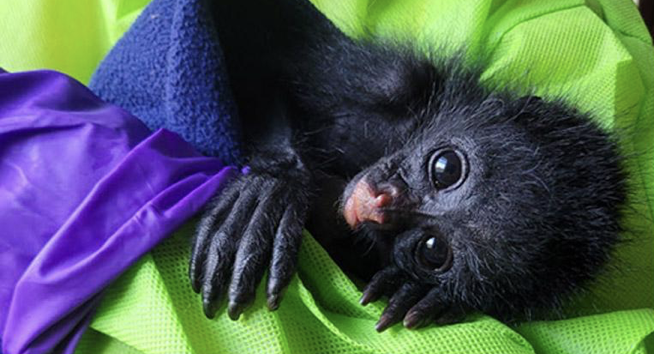
 The spider monkey or marimono (Ateles chamek). | Social media
The spider monkey, or marimono (Ateles chamek), Bolivia’s largest primate, was reclassified this year from Vulnerable (VU) to Endangered (EN) in the latest edition of the Red Book of Bolivian Vertebrates. While scientific evidence points to an increasingly critical outlook for the species, victims of illegal wildlife trafficking continue to mount.
In less than a week, two baby spider monkeys arrived at the Senda Verde wildlife refuge in Coroico, in the Yungas region of La Paz. Although they were rescued in different locations, two additional reports have surfaced, meaning that within fewer than ten days, four infant monkeys may have fallen victim to wildlife trafficking—a crime punishable under Bolivia’s Environmental Law (Law 1333) and Supreme Decree 4489, which regulates measures for the welfare, conservation, and protection of wildlife.
An Increasingly Threatened Species
The 2026 edition of the Red Book notes that the marimono has moved from the Vulnerable category, where it remained from 1996 to 2009, to Endangered status in Bolivia, matching its classification on the global list of the International Union for Conservation of Nature (IUCN).
The assessment warns that populations of the species have declined by at least 50 percent over the past 45 years and are expected to continue shrinking unless major threats are reduced. These include habitat destruction caused by wildfires, deforestation, road construction, mining, agricultural expansion, hunting, and the capture of wild animals as pets.
Experts note that the marimono has an extremely low reproductive rate. Females reach sexual maturity between four and six years of age and typically give birth to only one offspring every three to four years. As a result, populations require decades to recover from hunting or removal from the wild.
Two Baby Monkeys Rescued in Two Days
One of the most recent cases occurred in El Alto, where a baby monkey less than three months old was found abandoned inside a fabric pet carrier, exposed to the harsh temperatures of the high-altitude winter.
In another rescue, Vicky Ossio, co-founder of Senda Verde, reported that an even younger spider monkey was delivered by park ranger Marcos Uzquiano of the Beni Biological Station. This infant weighs only 900 grams, while the monkey rescued in El Alto weighs 1.5 kilograms.
For Ossio, both rescues highlight the ongoing damage that wildlife trafficking is inflicting on Bolivia’s biodiversity.
“We rescued another baby, even smaller, and we have reports from Rurrenabaque and San Ignacio de Moxos. They are wiping out the spider monkeys,” the environmentalist warned.
Ossio also reported recent cases involving the trafficking of capuchin monkeys in the Beni region, confirming that illegal wildlife trade networks remain highly active. The decline of the marimono is already visible in the field.
“Tour guides in San Buenaventura and Madidi say they no longer see them. Last year alone, we received nine baby spider monkeys from that area,” Ossio lamented.
The Hidden Cost of Keeping Wild Animals as Pets
The Red Book identifies the keeping of wild animals as pets as one of the most destructive threats facing primates and other wildlife. To capture an infant, hunters typically kill the mother as she attempts to defend her young, meaning that every trafficked baby usually represents the death of at least one adult animal.
Beyond the pet trade, subsistence hunting remains active in several regions. Recent seizures and rescues provide real-world evidence of the factors that have pushed the marimono onto Bolivia’s list of endangered species.
Por Los Tiempos:
El mono araña entra en peligro de extinción en Bolivia, pero el tráfico de crías no da tregua
El mono araña o marimono (Ateles chamek). | RRSS
El mono araña o marimono (Ateles chamek), el primate más grande de Bolivia, fue recategorizado este año de Vulnerable (VU) a En Peligro (EN) en el Libro Rojo de los Vertebrados de Bolivia. Mientras la evidencia científica confirma un escenario cada vez más crítico para la especie, las víctimas del tráfico ilegal de fauna suman.
En menos de una semana, dos monitas araña llegaron al refugio Senda Verde, situado en Coroico, zona de los Yungas de La Paz. Las rescataron en distintos puntos, pero existen dos nuevas denuncias, con lo cual, en menos de diez días, cuatro crías serían víctimas de este delito tipificado en la Ley de Medio Ambiente (1133) y el Decreto Supremo 4489, que reglamenta las medidas relativas al bienestar, conservación y preservación de la fauna silvestre.
Una especia cada vez más amenazada
La nueva edición del Libro Rojo (2026) señala que el marimono dejó atrás la categoría de Vulnerable, en la que permaneció desde 1996 hasta 2009, para pasar a la categoría “En Peligro” (EN), en Bolivia, equiparándose a la lista global de la Unión Internacional para la Conservación de la Naturaleza (UICN).
La evaluación advierte que las poblaciones de esta especie han disminuido en, al menos, un 50 por ciento en los últimos 45 años, y que la tendencia continuará a la baja si no se reducen sus principales presiones. Entre los factores identificados en el documento, figura la destrucción de su hábitat por incendios, deforestación, apertura de carreteras, minería y expansión agropecuaria, además de la caza y el mascotismo.
Según los expertos, el marimono posee una tasa reproductiva extremadamente baja: las hembras alcanzan la madurez sexual entre los cuatro y seis años y tienen, en promedio, una sola cría cada tres o cuatro años. Por ello, sus poblaciones requieren décadas para recuperarse tras episodios de cacería o extracción.
Dos crías rescatadas en dos días
Uno de los casos más recientes ocurrió en El Alto, donde una cría de menos de tres meses fue encontrada abandonada dentro de un canil de tela, expuesta a las temperaturas extremas del invierno altiplánico.
Además de ese caso, Vicky Ossio, cofundadora del refugio Senda Verde, informó sobre un nuevo rescate: otra monita araña, todavía más pequeña, fue entregada por el guardaparque Marcos Uzquiano, de la Estación Biológica del Beni (EBB). Este ejemplar pesa apenas 900 gramos, mientras que la encontrada en El Alto registra 1,5 kilogramos.
Para Ossio, ambos rescates son una señal de que el tráfico de fauna continúa afectando gravemente a la biodiversidad boliviana.
“Rescatamos una bebé más, más pequeña aún, y tenemos denuncias en Rurrenabaque y San Ignacio de Moxos. Están acabando con los monos araña”, advirtió la ambientalista.
Ossio también alertó sobre reportes recientes de tráfico de monos capuchinos en el Beni, lo que confirma que la red de comercio ilegal permanece muy activa. La disminución del marimono ya es evidente sobre el terreno. “Los guías de turismo de San Buenaventura y del Madidi dicen que ya no los ven. Tan solo el año pasado recibimos nueve monitos araña bebés procedentes de esa zona”, lamentó Ossio
El costo invisible del mascotismo
El Libro Rojo identifica al mascotismo como una de las amenazas más destructivas para la fauna silvestre, como los primates. Para arrebatar una cría, los cazadores habitualmente matan a la madre que intenta defenderla, por lo que cada ejemplar comercializado representa la muerte previa de al menos un individuo adulto.
Además del tráfico de mascotas, la cacería de consumo continúa activa en varias regiones. Los decomisos de estos días confirman sobre el terreno las razones por las cuales el marimono acaba de ingresar a la lista de especies en peligro crítico de conservación en Bolivia.


Leave a Reply