By Brújula Digital:
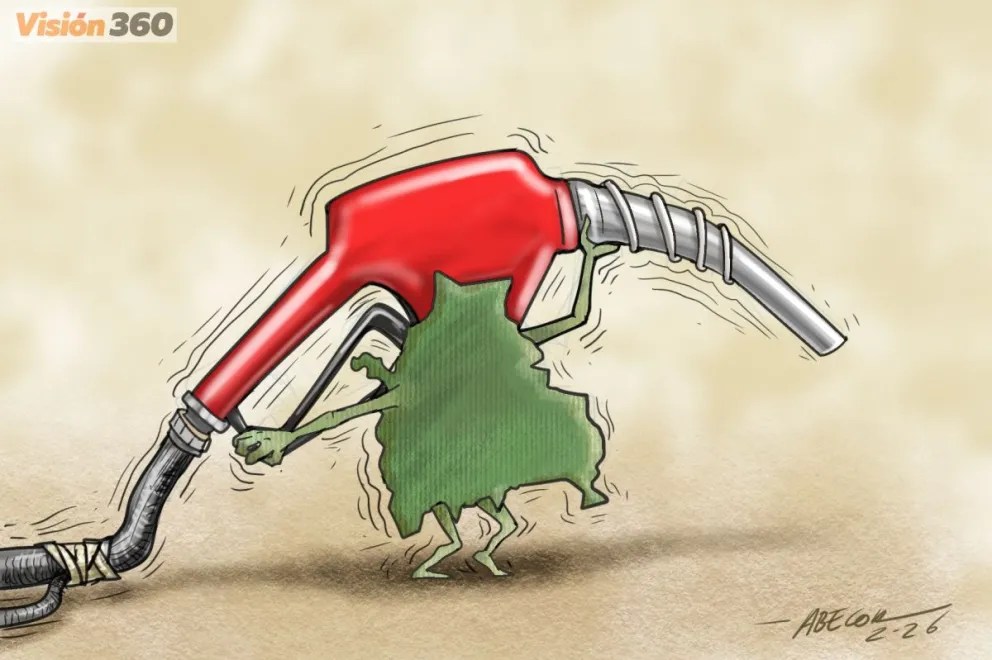
The Chronic Fuel Problem in Bolivia: Variables, Factors, and Possible Solutions
With the help of two specialists, a detailed multi-level framework was developed to help illustrate the scale of the gasoline and diesel shortage crisis.

A long line of vehicles at a fuel station stretches along the La Paz–El Alto highway / APG archive
Beyond the 53 days of road blockades, could the fuel problem be the national government’s main Achilles’ heel? While the conflicts of May and June generated a severe economic and social crisis whose effects are still being felt, the ongoing gasoline and diesel shortages—and the various consequences and scenarios stemming from them—have been a constant throughout the first nine months of the administration.
Based on a compilation of events and news related to the sector in recent months, and with the analysis and opinions of two renowned specialists—Francesco Zaratti and Álvaro Ríos—Brújula Digital prepared the following framework, which seeks to reflect the different components, levels, causes, and effects of this issue.
Schematic Summary of the Fuel Problem
Causes and Origins: Declining crude oil production (caused by limited exploration) forces Bolivia to import a large share of the diesel and gasoline it requires.
Underlying Problems: The State is facing a significant economic crisis marked, among other factors, by a shortage of foreign currency reserves. A large portion of available U.S. dollars is spent on fuel imports.
Key Factor: Until December of last year, fuel prices were heavily subsidized by the State. The subsidy has been reduced, but not eliminated.
Secondary and Derived Problems: The subsidy has generated—and still generates, though to a lesser extent—two serious issues:
- Speculation and excess demand (domestic black market)
- Fuel smuggling to neighboring countries
Current Scenario
- There is a chronic fuel shortage, and total demand cannot be met due to the lack of dollars.
- Major damage is being caused to key sectors:
- Transportation
- Agriculture (which requires large volumes of diesel)
- To a lesser extent, mining and other industries
As a result, social unrest remains constant, including protests, road blockades, and threats of further mobilizations.
Parallel Crises
- Poor-quality gasoline
- Large-scale corruption within YPFB
Government Measures
So far, the government has implemented one main measure: a partial reduction of fuel subsidies.
Since last December:
- Gasoline price: Bs 6.96 per liter
- Diesel price: Bs 9.80 per liter
Previously, for nearly two decades:
- Gasoline: Bs 3.74 per liter
- Diesel: Bs 3.72 per liter
And the Solutions?
Given this reality, Francesco Zaratti and Álvaro Ríos propose what they consider the only definitive solution—that is, a structural, long-term one: the complete elimination of fuel subsidies.
They also agree on a second key need: a new hydrocarbons law.
Zaratti
- “The subsidy needs to be eliminated completely, while compensating the most vulnerable sectors.”
- “A new hydrocarbons law is urgently needed, or at least a modification of the tax framework.”
Ríos
- “The subsidy must be fully removed sooner or later, whatever the cost, because fuel prices still are not aligned with international market prices.”
- “An effective hydrocarbons law is needed to attract investment into the country.”
- “YPFB needs a thorough restructuring.”
The Root Problem
Beyond potential solutions, the experts helped build the broader picture of Bolivia’s fuel challenge.
Zaratti
- “The main problem is the lack of foreign currency to import sufficient quantities of fuel.”
- “Private-sector imports have not succeeded because there is no exchange-rate stability. And that instability is itself a consequence of insufficient foreign currency reserves.”
Ríos
- “Bolivia’s structural problem is that hydrocarbon production has been declining rapidly since 2015.”
- “We are already importing around 90%–95% of diesel and about 70%–75% of gasoline.”
- Because so much fuel must be imported, “the country has run short of dollars.”
Future Outlook
Both specialists agree that temporary measures may buy time, but only at the cost of worsening the underlying problem.
Zaratti
“We are wasting time by not taking action. Oil and gas production keeps declining, fields are being depleted, and export revenues continue to fall. I have read that Bolivia currently receives more money each month from remittances sent by Bolivians abroad than from gas exports to Brazil. That says it all.”
Ríos
“We have to finish removing the subsidy sooner or later, whatever the cost. Although such a measure could bring down Rodrigo Paz’s government—and perhaps the next one as well.”BD/MZS
Por Brújula Digital:
El problema crónico de los combustibles en Bolivia: variables, factores y posibles soluciones
Con la ayuda de dos especialistas, se armó un esquema detallado y a diversos niveles que ayuda a dimensionar la crisis de escasez de gasolina y diésel.
Una larga fila en un surtidor se extiende por la autopista La Paz-El Alto / archivo APG
Más allá de los 53 días de bloqueos, ¿será el problema de los combustibles el principal talón de Aquiles del gobierno nacional? Si bien los conflictos de mayo y junio generaron una aguda crisis económica y social que aún repercute, las ideas y vueltas en torno a la escasez de gasolina y diésel –y los diferentes efectos y escenarios derivados– fueron una constante en los nueve meses de gestión.
A partir de una recopilación de hechos y noticias ligadas al rubro en los últimos meses, y con el análisis y opinión de dos reconocidos especialistas –Francesco Zaratti y Álvaro Ríos– Brújula Digital trabajó el siguiente esquema que busca reflejar los diferentes componentes, niveles, causas y efectos de esta problemática.
Síntesis esquemática del problema del combustible
– Causas y orígenes: la baja producción de crudo (causada por la poca exploración) obliga a importar gran parte de los volúmenes requeridos de diésel y gasolina.
– Problemas de fondo: el Estado atraviesa una crisis económica marcada, entre otros factores, por la falta de divisas. Gran parte de los dólares se van, precisamente, a la compra de combustibles.
– Factor clave: hasta diciembre del año pasado, el precio de los combustibles tenía una fuerte subvención del Estado, que fue rebajada pero no eliminada.
– Problemas derivados y secundarios: la subvención generó y aún genera, en menor medida, dos problemas serios:
* Especulación y sobredemanda (mercado negro interno)
* Contrabando a la inversa a otros países
– Escenario: hay una escasez crónica y no se puede cubrir toda la demanda por falta de dólares. Hay serios perjuicios a dos sectores clave: transporte, agro (que requiere diésel en grandes cantidades) y en menor medida minería y otras industrias.
De esta manera, hay una constante conflictividad social: protestas, bloqueos y amenazas.
– Crisis paralelas: gasolina de mala calidad y corrupción a gran escala en YPFB.
– Acciones: hasta el momento el gobierno definió dos medidas: quitar parcialmente la subvención (desde diciembre pasado se fijó el precio de la gasolina en Bs 6,96 por litro y el del diésel a Bs 9,80 por litro; antes, por casi dos décadas, los costos fijos eran de Bs 3,74 y Bs 3,72, respectivamente.
¿Y las soluciones?
A partir de esta realidad, Francesco Zaratti y Álvaro Ríos plantean lo que a su juicio es la única salida definitiva; es decir, estructural y a largo plazo: eliminar por completo la subvención. Aunque, en segundo lugar, también coinciden con otra necesidad: una nueva ley de hidrocarburos.
– Zaratti:
– “Se necesita eliminar la subvención” de manera total “compensando a los sectores más vulnerables”.
– “Urge una nueva ley de hidrocarburos, o por lo menos la modificación de la sección tributaria”.
– Ríos
– “Hay que terminar de quitar la subvención, tarde o temprano, cueste lo que cueste”, porque “hasta ahora solo se ha elevado los precios de los combustibles, pero aún no están alineados con los precios internacionales”.
– “Hacer una ley de hidrocarburos efectiva que traiga inversión al país”.
– “Hacer una reingeniería a fondo de YPFB”.
El problema de fondo
Más allá de las soluciones, como se vio arriba, los expertos ayudaron a armar el esquema de los combustibles en Bolivia.
– Zaratti
– “El problema principal de la falta de divisas para importar cantidades suficientes”.
– “La importación por parte de privados no se da (con éxito) porque no hay estabilidad cambiaria. Y esta estabilidad cambiaria es consecuencia de no tener divisas suficientes”.
– Ríos
– “El problema estructural de Bolivia es que la producción de hidrocarburos está declinando rápidamente desde 2015. Ya estamos importando cerca del 90 % al 95 % de diésel y cerca del 70 % al 75 % de gasolina”.
– Como hay que importar tanto combustible, “el país quedado ilíquido de dólares”.
¿Proyecciones?
Los especialistas también coinciden en que, con medidas paliativas, a lo sumo se ganará tiempo, pero a costa de empeorar el problema.
– Zaratti: “estamos perdiendo el tiempo en no tomar medidas. La producción (de petróleo y gas) va bajando, los campos se agotan. Recibimos menos dinero de la exportación. He leído que, en este momento, recibimos mensualmente más dinero de las remesas de los bolivianos en el exterior que de la venta de gas a Brasil. Esto lo dice todo”.
– Ríos: “tenemos que terminar de quitar la subvención tarde o temprano, cueste lo que cueste… Aunque (esta acción) tal vez se lleve al gobierno de Rodrigo Paz, y tal vez se lleve al próximo también”.
BD/MZS


Leave a comment