By Ernesto Estremadoiro, El Deber:
The Other Side of Chapare: 30,000 Families Export Bananas and Generate Foreign Currency
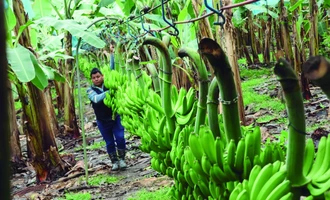
Each bunch begins a journey that will end in international markets. In Chimoré, the banana harvest supports thousands of families. Photo: Juan Carlos Torrejón.
While Bolivia’s Tropical Region (Chapare) continues to be associated with coca, thousands of producers sustain an agro-export chain that supplies Argentina, Uruguay, and Chile. The sector generates thousands of jobs but faces road blockades, lack of financing, and limited government support
The first banana bunch drops onto the harvester’s shoulders while the morning humidity still covers the plantation leaves. A few meters away, another group carefully selects fruit that will travel more than 2,000 kilometers, from Chimoré to supermarkets in Argentina, Uruguay, and Chile. The activity never stops. Every bunch must undergo an almost surgical protocol before leaving the Tropics of Cochabamba. In this industry, there is no room for improvisation.
Yet this everyday scene remains overshadowed by the image that has defined the region for decades: coca.
Chapare carries a stigma that obscures another reality. Far from political debates and headlines associated with drug trafficking, more than 30,000 families have built, with pride, a legal economy that exports products, earns foreign currency, and supports thousands of jobs. Bananas have become one of the region’s most important calling cards and, according to producers and specialists, their true potential is only beginning to emerge.
An Industry Growing Quietly
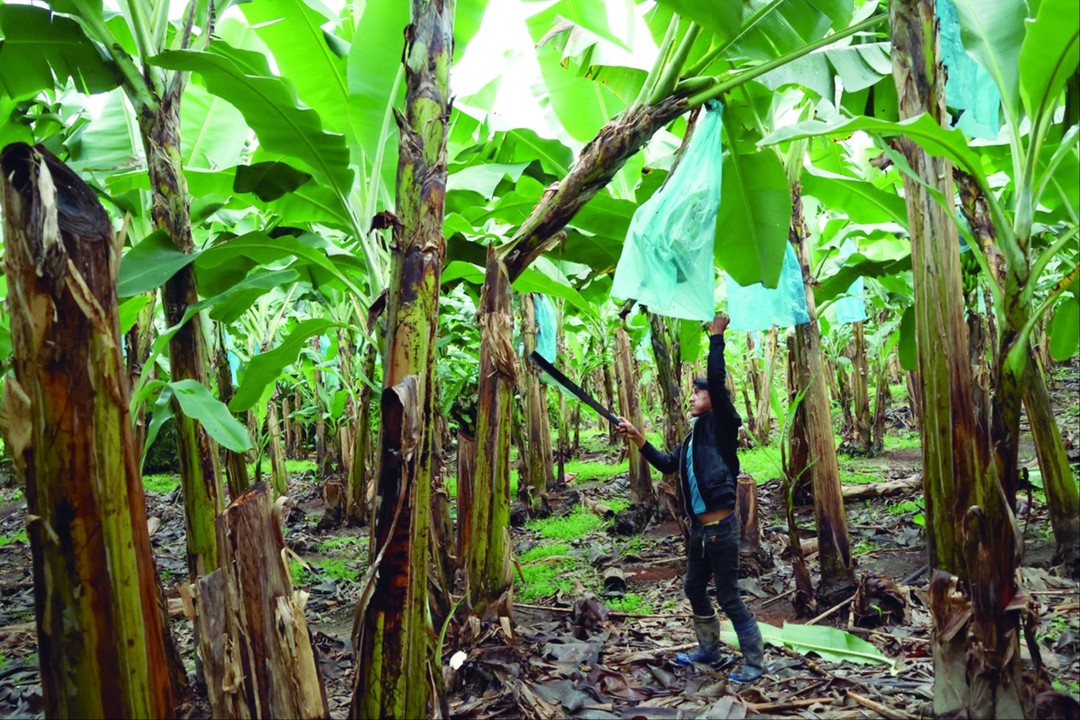
The production process follows strict quality standards. Photo: Juan Carlos Torrejón.
The Association of Banana Producers (Asproban) lies at the root of this story. It began in 1990, when a group of farmers decided to invest in a crop that at the time seemed only a modest alternative. More than three decades later, that effort led to the creation of Expaca, an export company currently made up of 22 producers cultivating about 130 hectares and shipping fruit every week to Argentina, Uruguay, and Chile.
[Opinion from Bolivian Thoughts: The first banana export was sent to a supermarket in Chile. The Alternative Development Program discovered that a truck arriving from Chile brought tires into Bolivia and then returned empty. That unused cargo space presented an export opportunity. With financing and technical assistance from USAID for local farmers, the first shipment was organized. The buyer requested boxes of a specific size and a weight of 22 kilograms each. After more than 48 hours of nonstop work, the shipment was dispatched. Upon arrival at the buyer’s warehouse, two boxes were found to contain leaves and mud inserted simply to reach the required weight. The incident revealed the inexperience with which those farmers initially handled exports of fresh produce. They had added mud and leaves as though nothing were wrong. Looking back on those early days, it is fair to say that bananas became the flagship success of USAID’s support efforts in the region. The fight against drug trafficking began there.]
However, Expaca represents only part of a much larger industry. According to Javier Vilcaez, president of both Asproban and Expaca, approximately 30,000 families depend on the banana production chain in the Tropics of Cochabamba.
“We need people to understand that the Tropics are not only coca,” he says.
According to the producer, that perception limits recognition of an industry that has spent years opening international markets by complying with strict quality standards.
“The main force behind banana exports is in the Tropics. We bring foreign currency into the country,” he summarizes.
At a time when Bolivia faces a severe shortage of U.S. dollars, exports have taken on strategic importance. Every container crossing the border represents fresh foreign currency entering the national economy, a contribution that producers believe is not sufficiently valued in public policy.
Yet the sector remains far from reaching its productive ceiling.
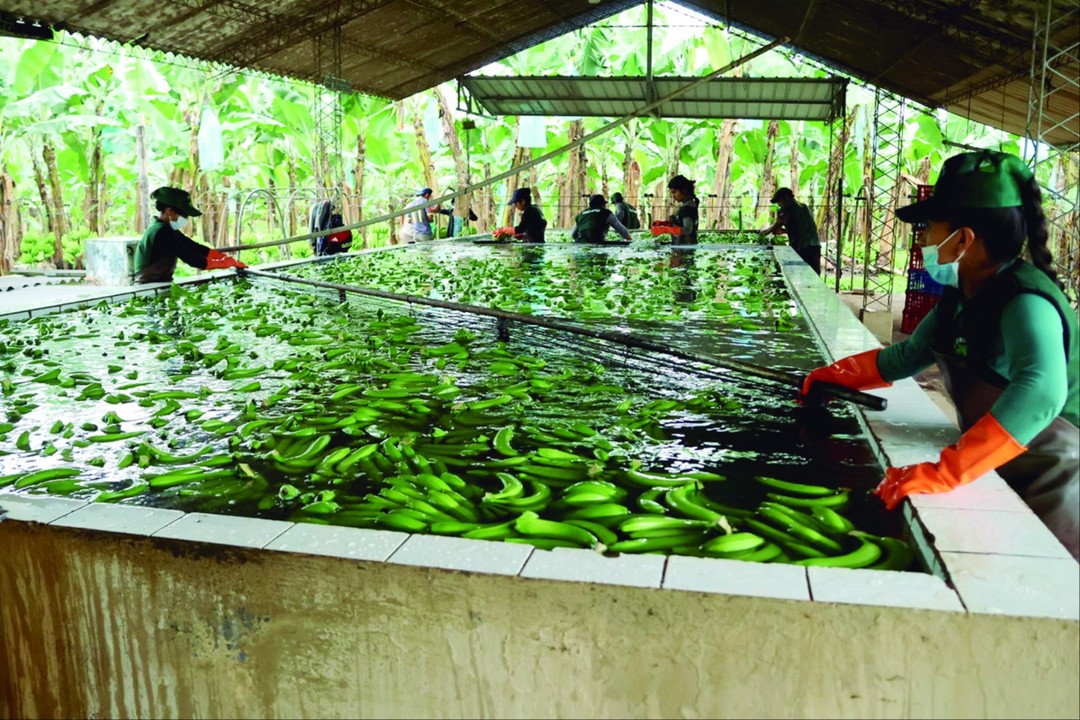
Bananas from the Tropics go through a rigorous harvesting and selection process. Photo: Juan Carlos Torrejón.
Vilcaez argues that the main barrier is not a lack of land or suitable climate conditions, but insufficient financing. With adequate credit and incentive programs, he says, cultivated areas could expand significantly, increasing export volumes as well.
This view is shared by Ecuadorian agronomist José Fernando Espinosa, who has spent years working in one of the world’s most developed banana industries.
His assessment is blunt: Bolivia’s problem is not fruit quality.
“Bolivia has the same quality as Ecuador,” he says.
He goes even further:
“We have better bananas, even sweeter than Ecuador’s.”
The difference lies in the environment surrounding producers. While Ecuador transformed bananas into one of the pillars of its export economy—with annual exports ranging from $2.5 billion to $2.8 billion—Bolivia faces obstacles that restrict growth.
Among them are limited government support, difficulties accessing financing, high logistics costs, road blockades, and the small number of international markets open to Bolivian bananas.
Even so, Espinosa believes the potential is enormous.
He notes that Ecuador has approximately 200,000 hectares devoted to banana production, while Bolivia currently has about 7,000 hectares.
If the country succeeds in strengthening support policies and opening new export destinations, particularly in Europe and Russia, production could potentially triple.
“If that happens, the country could easily reach the same number of hectares as Ecuador,” he said.
Employment
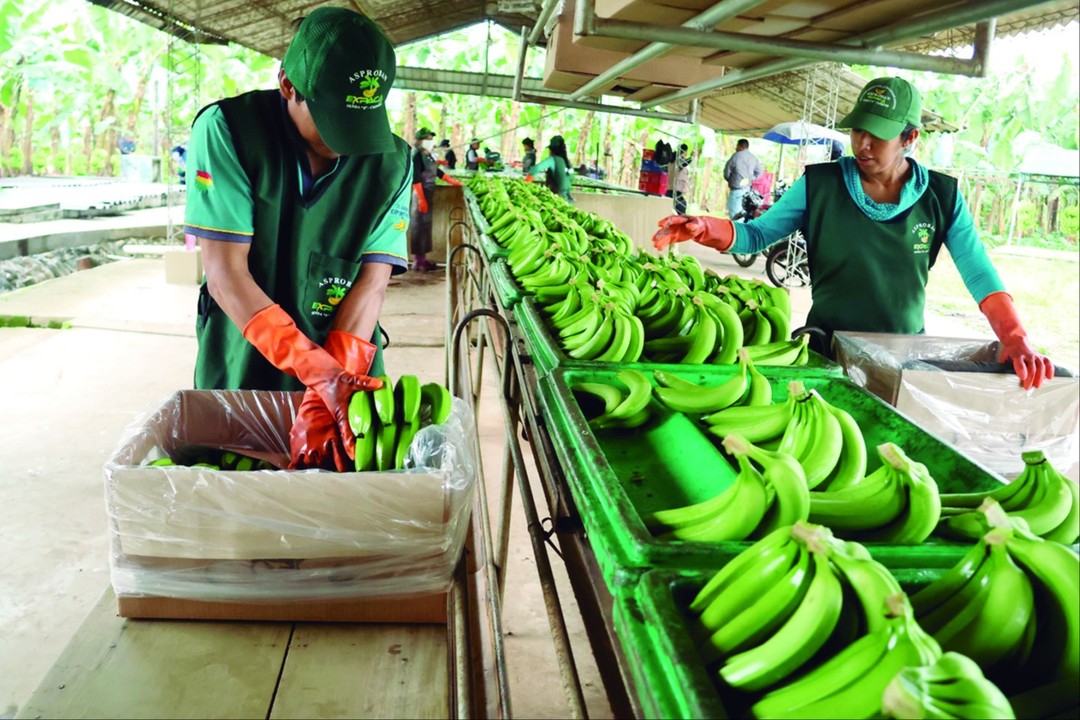
Argentina, Chile, and Uruguay are the main markets for Bolivian bananas. Photo: Juan Carlos Torrejón.
The economic impact of bananas extends well beyond the farms themselves.
According to producer Néstor Chura, nearly 18,000 families depend directly on banana cultivation, while approximately 17,000 producers participate in the industry.
Employment does not stop at the plantations.
Each hectare requires permanent labor for maintenance, fertilization, pest and disease control, and harvesting.
In addition, the industry employs day laborers, packing-house workers, transport operators, graders, exporters, logistics personnel, and traders.
For example, a single 1,000-hectare banana plantation can generate around 800 direct jobs and more than 1,500 jobs across the entire production chain, from the field to export operations.
Harvesting Process
The journey of a banana bunch does not end when it is cut. The process is highly industrialized.
Every fruit undergoes a rigorous inspection before being approved for export.
Technicians verify that the fruit has a minimum grade caliber of 39 and a minimum length of 19 centimeters. They even inspect the maturity of the pulp and reject any fruit showing bruises, scratches, or cosmetic defects.
Only then does the post-harvest stage begin.
The bunches are separated into clusters, classified again, treated with products authorized by Bolivia’s National Service for Agricultural Health and Food Safety (Senasag), and carefully packed.
Each container carries 1,000 boxes, equivalent to roughly 22 metric tons of bananas.
During international transport, the fruit travels refrigerated at 13°C (55°F) to preserve quality until reaching markets in Argentina, Uruguay, and Chile.
The Obstacles
Although global demand exists, growth faces challenges beyond producers’ control.
Road blockades are among the most serious threats.
Vilcaez estimates that recent disruptions caused losses of between $6 million and $8 million due to breached contracts, logistical delays, and fruit that never reached its destination.
For a perishable product, every day of road closures represents losses that are difficult to recover. According to producers, losing a bunch because of blockades is equivalent to losing an entire year of work.
Néstor Chura points to additional factors.
Flooding and overflowing rivers periodically damage plantations, while fuel shortages complicate both agricultural operations and transportation to export centers.
“Road blockades have harmed us considerably,” he says.
These challenges are compounded by deteriorating road infrastructure and the lack of new trade routes that could reduce dependence on only a handful of markets.
Ecuador’s experience demonstrates that bananas can become a major engine of economic growth.
While Ecuador earns billions of dollars every year from this product, Bolivia is still utilizing only a fraction of its potential.
The real challenge is to transform that potential into a development policy capable of multiplying production, creating more jobs, and increasing foreign-currency earnings for a country that urgently needs them.
Because while the world continues to associate Bolivia’s Tropical Region with coca leaves, another story is unfolding in the banana plantations of Chimoré: the story of a quiet industry striving to become one of the leading forces in Bolivia’s export future.
Por Ernesto Estremadoiro Flores, El Deber:
La otra cara del Chapare: 30.000 familias exportan banana y generan divisas
Cada racimo inicia un recorrido que culminará en mercados internacionales. En Chimoré, la cosecha de banana sostiene a miles de familias /FOTO: JUAN CARLOS TORREJÓN
Mientras el Trópico sigue asociado a la coca, miles de productores sostienen una cadena agroexportadora que abastece a Argentina, Uruguay y Chile. El sector genera miles de empleos, pero enfrenta bloqueos, falta de financiamiento y escaso apoyo
El primer racimo cae sobre los hombros del cosechador mientras la humedad de la mañana aún cubre las hojas del bananal. A pocos metros, otro grupo selecciona cuidadosamente la fruta que recorrerá más de 2.000 kilómetros, desde Chimoré los supermercados de Argentina, Uruguay y Chile. El movimiento es constante no falta trabajo. Y cada racimo debe cumplir un protocolo casi quirúrgico antes de abandonar el Trópico de Cochabamba. En esta industria no hay improvisaciones. Sin embargo, esta escena cotidiana permanece opacada por una imagen que durante décadas definió a la región: la coca.
El Chapare carga con un estigma que opaca otra realidad. Pero lejos del debate político y de los titulares asociados al narcotráfico, más de 30.000 familias han construido, con orgullo, una economía legal que exporta, genera divisas y sostiene miles de empleos. La banana se ha convertido en una de las principales cartas de presentación de esta región y, según productores y especialistas, su verdadero potencial apenas comienza a vislumbrarse.
Industria que crece en silencio
El proceso de producción responde a altos estándares de calidad / JUAN CARLOS TORREJÓN
La Asociación de Productores de Banano (Asproban) es la raíz de esta historia que comenzó en 1990, cuando un grupo de agricultores decidió apostar por un cultivo que entonces parecía una alternativa modesta. Más de tres décadas después, ese esfuerzo derivó en Expaca, una empresa exportadora integrada actualmente por 22 productores que cultivan alrededor de 130 hectáreas y envían fruta cada semana a Argentina, Uruguay y Chile.
[Opinión de Bolivian Thoughts: La primera exportación de bananos fue a un supermercado en Chile. El Programa de Desarrollo Alternativo descubrió que un camión procedente de Chile traía llantas a Bolivia y regresaba por más vacío. Había que aprovechar ese espacio para exportar. Así, con financiamiento y asistencia técnica de USAID para los agricultores, se organizó el primer envío. El comprador solicitó cajas de un tamaño específico y con un peso de 22 kg. Tras más de 48 horas de trabajo ininterrumpido, se envió el cargamento. En la bodega del comprador, al recibir la carga, se encontraron dos cajas con hojas y barro insertados para igualar el peso requerido. Esto demostró la ingenuidad con la que aquellos agricultores manejaban la exportación de este producto fresco. Insertaron barro y hojas como si nada. Al recordar aquellos primeros días, podemos afirmar que el producto estrella del apoyo de USAID fue crucial para el presente. La lucha contra el narcotráfico comenzó entonces.]
Pero la empresa solo representa a una parte de una actividad mayor. De acuerdo con Javier Vilcaez, presidente de Asproban y Expaca, alrededor de 30.000 familias dependen de la cadena bananera en el Trópico de Cochabamba.
“Tenemos que hacer conocer que el Trópico no es solamente coca”, afirma. Para el dirigente, esa percepción limita el reconocimiento de una actividad que durante años ha logrado abrir mercados internacionales gracias al cumplimiento de estrictos estándares de calidad.
“La primera fuerza de exportación de banano está en el Trópico. Traemos divisas para el país”, resume el productor.
En un momento en que Bolivia enfrenta una marcada escasez de dólares, la importancia de las exportaciones adquiere un peso estratégico. Cada contenedor que cruza la frontera representa ingreso de divisas frescas para la economía nacional, un aporte que el sector considera insuficientemente valorado por las políticas públicas.
Pero el sector aún está lejos de alcanzar su techo productivo.
La banana del Trópico recorre un riguroso proceso de cosecha y selección / JUAN CARLOS TORREJÓN
Vilcaez sostiene que la principal barrera no es la falta de tierra ni de condiciones climáticas, sino el poco financiamiento. Con créditos adecuados y programas de incentivo, asegura que la superficie cultivada podría ampliarse de forma considerable, incrementando también la oferta exportable.
Esa visión es compartida por el ingeniero agrónomo ecuatoriano José Fernando Espinosa, quien durante años ha trabajado en una de las industrias bananeras más desarrolladas del mundo.
Su diagnóstico es contundente: el problema de Bolivia no está en la calidad de la fruta.
“Bolivia tiene la misma calidad que Ecuador”, sostiene. Y va más allá: “Tenemos mejor banano, incluso más dulce que Ecuador”.
La diferencia, radica en las condiciones que rodean al productor. Mientras Ecuador convirtió al banano en uno de los pilares de su economía exportadora —con ventas externas que oscilan entre $us 2.500 y 2.800 millones al año—, Bolivia enfrenta limitaciones que restringen su crecimiento.
Entre ellas identifica el escaso apoyo estatal, las dificultades para acceder a financiamiento, los elevados costos logísticos, los bloqueos de carreteras y la reducida cantidad de mercados internacionales abiertos para la fruta boliviana.
Aun así, considera que el potencial es enorme. Menciona que en Ecuador existen 200.000 hectáreas de producción bananera, mientras que en Bolivia la producción alcanza a 7.000.
Si el país logra consolidar políticas de apoyo y abrir nuevos destinos comerciales, especialmente hacia Europa y Rusia, la producción podría incluso triplicarse.
“Si eso pasa el país tranquilamente puede llegar a las mismas hectáreas de Ecuador”, dijo.
Empleos
Argentina, Chile y Uruguay son los principales mercados de la banana boliviana / JUAN CARLOS TORREJÓN
El impacto económico del banano trasciende las parcelas agrícolas.
Según el productor Néstor Chura, cerca de 18.000 familias viven directamente del cultivo y alrededor de 17.000 productores participan en la actividad.
Pero el empleo no termina en las plantaciones de bananas.
Cada hectárea requiere mano de obra permanente para labores de mantenimiento, fertilización, control fitosanitario y cosecha.
A ello se suman jornaleros, trabajadores de plantas de empaque, transportistas, clasificadores, exportadores, operadores logísticos y comerciantes.
Por ejemplo, una sola plantación bananera de 1.000 hectáreas puede generar alrededor de 800 empleos directos y más de 1.500 puestos de trabajo si se considera toda la cadena productiva, desde el campo hasta la exportación.
Proceso de cosecha
El recorrido de un racimo de banana no concluye cuando es cortado. El proceso es industrial.
Cada fruta atraviesa un riguroso proceso de selección antes de ser autorizada para la exportación.
Los técnicos verifican que el fruto tenga un calibre mínimo de 39 y que la longitud alcance al menos 19 centímetros. Incluso inspeccionan el estado de maduración de la pulpa y descartan cualquier fruta que presente golpes, rayaduras o defectos estéticos.
Solo entonces comienza la etapa de postcosecha.
Los racimos son desmanados, nuevamente clasificados, fumigados con productos autorizados por el Servicio Nacional de Sanidad Agropecuaria e Inocuidad Alimentaria (Senasag) y cuidadosamente empacados.
Cada contenedor transporta 1.000 cajas, equivalentes a unas 22 toneladas de banana.
Durante el trayecto internacional la fruta viaja refrigerada a 13 grados centígrados para preservar su calidad hasta llegar a los mercados de Argentina, Uruguay y Chile.
Los obstáculos
Aunque la demanda de esta fruta existe en el mercado global, el crecimiento enfrenta obstáculos ajenos al control de los productores.
Los bloqueos de vías figuran entre las principales amenazas.
Vilcaez calcula que las últimas interrupciones provocaron pérdidas de entre $us 6 y 8 millones debido a contratos incumplidos, retrasos logísticos y fruta que no logró llegar a destino.
Para un producto perecedero, cada día de cierre representa pérdidas difíciles de recuperar. Según los productores, perder un racimo por los bloqueos equivale a perder un año de trabajo.
Néstor Chura añade otros factores igualmente determinantes.
Las inundaciones y los desbordes de ríos afectan periódicamente las plantaciones, mientras la escasez de combustible dificulta tanto las labores agrícolas como el transporte hacia los centros de exportación.“Los bloqueos nos han perjudicado bastante”, resume.
A ello se suma el deterioro de la infraestructura vial y la falta de nuevas rutas comerciales que permitan reducir la dependencia de pocos mercados.
La experiencia ecuatoriana demuestra que el fruto puede convertirse en un motor de crecimiento.
Mientras Ecuador genera miles de millones de dólares cada año gracias a este producto, Bolivia aún aprovecha solo una fracción de su potencial.
El verdadero reto consiste en transformar ese potencial en una política de desarrollo capaz de multiplicar la producción, generar más empleo y aumentar el ingreso de divisas para un país que hoy las necesita con urgencia.
Porque, mientras el mundo sigue asociando al Trópico con la hoja de coca, en los bananales de Chimoré se cultiva otra historia: la de una industria silenciosa que busca convertirse en una de las grandes protagonistas del futuro exportador de Bolivia.


Leave a Reply