By Oscar Antezana, El Dia:
The Chiru Chiru and the Race Bolivia Doesn’t See
Is Bolivia ready, or will it miss the train once again? While Bolivia’s energy debate still revolves around natural gas, the rest of the world is already competing for a far more strategic resource: electricity. Not just any electricity, but abundant, affordable, and reliable power capable of fueling the most important technological revolution since the Industrial Revolution: artificial intelligence (AI).
Economic history shows that great powers never emerged by chance. Britain dominated the 19th century thanks to coal. The United States built its leadership on oil and hydropower. Today, the new source of power is the electricity that runs data centers, supercomputers, and AI systems.
Most people associate AI with programs like ChatGPT. Yet behind every response lies a vast computing infrastructure that consumes enormous amounts of energy. The real bottleneck is no longer only advanced microchips, but the electricity required to run them. June Yoon, the Financial Times’ investment editor for Asia, captures this shift with a warning that should resonate with any government: artificial intelligence has moved from being constrained by chip availability to being constrained by power supply. A single model such as GPT-4 can consume energy equivalent to the annual usage of roughly 35,000 American households. And that is only one model.
Global electricity demand is rising at a pace few anticipated. Thousands of new data centers are being built across the United States, China, Europe, and Asia to support the AI boom. The implications are clear: countries capable of producing large volumes of clean, competitive energy will attract billions of dollars in investment, while those that cannot will be left behind in the knowledge economy. Bolivia still has time to decide which group it wants to join.
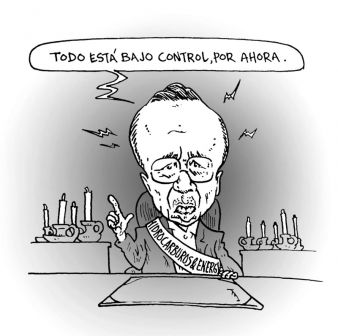
Yet in Bolivia, no meaningful reform bill or economic strategy has even been presented. Instead, the government spends its time pleading for dialogue, waiting, and making daily announcements, while other politicians—provincial in outlook and lacking a national vision—argue over whether a native of Santa Cruz or Cochabamba should chair the board of ENDE, the state electricity company. Meanwhile, China is adding renewable energy capacity at an unprecedented pace and strengthening its technological leadership. The United States is accelerating investments to ensure electricity shortages do not slow AI development. Even attracting data centers, something that seemed far-fetched just a few years ago, is becoming a realistic possibility. Chile is already moving in that direction. Malaysia is as well. Other Latin American countries are actively competing.
This transformation is also reshaping the strategic significance of lithium. For years, it was discussed as a potential source of wealth. Today, its importance is even greater because AI, transportation electrification, and energy storage are driving a surge in global battery demand. But simply possessing lithium is no longer enough. Investors will favor countries that can offer abundant electricity, modern infrastructure, clear rules, legal certainty, and efficient processes. If Bolivia fails to create that environment, lithium will remain another missed opportunity while other nations capture the real value added.
Bolivia still possesses extraordinary resources: sunlight, water, lithium, and the space to build a new energy-based economy. But this window of opportunity will not remain open forever. Major economic revolutions do not wait for those who hesitate. It happened during the Industrial Revolution. It happened during the digital revolution. It could happen again with artificial intelligence.
Bolivia has no national strategy to respond to this new reality; in fact, it seems to have no strategy at all. The discussion should no longer focus solely on generating enough electricity to meet domestic demand. The real challenge is turning energy into a competitive advantage—one capable of attracting industry, driving lithium industrialization, developing new manufacturing supply chains, and securing a place in the global digital economy. That means generating dollars—lots of dollars—and taking a step into a new era.
Today, talking about these issues may sound unrealistic, even demagogic, because Bolivia’s situation is so deteriorated and so little is being done beyond making announcements. There is some truth to that perception. Yet a remark by French President Emmanuel Macron feels more relevant than ever: “We must be bold enough not to assume that decline is inevitable… The spirit of defeat does two things: you get used to it, and you stop fighting.” Bien dit—well said.
Por Oscar Antezana, El Dia:
El Chiru Chiru y la carrera que Bolivia no ve
¿Está Bolivia preparada o volverá a perder el tren? Mientras en Bolivia el debate energético sigue girando en torno al gas, el resto del mundo ya está compitiendo por otro recurso mucho más estratégico: la electricidad. No cualquier electricidad. Se trata de energía abundante, barata y confiable, capaz de alimentar la revolución tecnológica más importante desde la Revolución Industrial: la inteligencia artificial (IA).
La historia económica demuestra que las grandes potencias nunca surgieron por casualidad. Gran Bretaña dominó el siglo XIX gracias al carbón. Estados Unidos construyó su liderazgo sobre el petróleo y la hidroelectricidad. Hoy, la nueva fuente de poder es la electricidad que alimenta centros de datos, supercomputadoras y sistemas de inteligencia artificial.
La mayoría de las personas asocia la IA con programas como ChatGPT. Sin embargo, detrás de cada respuesta existe una gigantesca infraestructura informática que consume cantidades colosales de energía. El verdadero cuello de botella ya no son únicamente los microchips más sofisticados, sino la electricidad necesaria para hacerlos funcionar. La editora de inversiones para Asia del Financial Times, June Yoon, resume esta transformación con una frase que debería llamar la atención de cualquier gobierno: la inteligencia artificial ha pasado de depender de la disponibilidad de chips a depender del suministro eléctrico. Un solo modelo como GPT-4 puede consumir el equivalente al consumo anual de aproximadamente 35.000 hogares estadounidenses. Y ese es apenas un modelo.
La demanda mundial de electricidad está creciendo a un ritmo que pocos anticipaban. Miles de nuevos centros de datos están siendo construidos en Estados Unidos, China, Europa y Asia para sostener la explosión de la inteligencia artificial. La consecuencia es evidente: los países capaces de producir grandes volúmenes de energía limpia y competitiva atraerán inversiones multimillonarias, mientras que quienes no puedan hacerlo quedarán relegados de la economía del conocimiento. Bolivia todavía tiene la posibilidad de elegir en qué grupo quiere estar.
Mientras en Bolivia ni siquiera se presenta una ley de reforma o una política económica y, más bien, el Gobierno se ocupa de suplicar y esperar diálogos, emitir anuncios cada día, mientras el resto de los políticos, cual provincianos y sin visión de país, discuten si un cruceño o un cochabambino debería presidir el directorio de ENDE, China instala capacidad renovable a una velocidad sin precedentes y consolida su liderazgo tecnológico. Estados Unidos acelera inversiones para evitar que la falta de electricidad frene su desarrollo en inteligencia artificial. Incluso la posibilidad de atraer centros de datos, que hace pocos años parecía lejana, comienza a ser real. Chile ya avanza en esa dirección. Malasia también. Otros países latinoamericanos están compitiendo activamente.
Esta transformación también cambia por completo el significado estratégico del litio. Durante años se habló de este mineral como una riqueza potencial. Hoy su importancia es mucho mayor porque la inteligencia artificial, la electrificación del transporte y el almacenamiento de energía están multiplicando la demanda mundial de baterías. Pero poseer litio ya no constituye una ventaja suficiente. Los inversionistas buscarán países capaces de ofrecer electricidad abundante, infraestructura moderna, reglas claras, estabilidad jurídica y procesos ágiles. Si Bolivia no construye ese entorno, el litio seguirá siendo una oportunidad desaprovechada, mientras otros países capturan el verdadero valor agregado.
Bolivia todavía dispone de recursos extraordinarios: sol, agua, litio y espacio para construir una nueva economía energética. Pero esa ventana de oportunidad no permanecerá abierta indefinidamente. Las grandes revoluciones económicas no esperan a quienes dudan. Pasó con la Revolución Industrial. Pasó con la revolución digital. Puede volver a ocurrir con la inteligencia artificial.
Bolivia no tiene una estrategia nacional que responda a esta nueva realidad; es más, no tiene estrategia para nada. La discusión ya no debería centrarse únicamente en producir más electricidad para cubrir la demanda doméstica. El verdadero desafío consiste en convertir la energía en una ventaja competitiva capaz de atraer industrias, impulsar la industrialización del litio, desarrollar nuevas cadenas manufactureras y participar en la economía digital global. Y esto genera dólares, muchos dólares, además de representar un paso hacia una nueva era.
En la actualidad, parecería que hablar de estos temas es demagógico, porque Bolivia está tan estropeada y se hace tan poco —más allá de anuncios— que cualquier propuesta suena irreal. Puede haber bastante de razón en esa percepción, pero una afirmación del presidente francés Emmanuel Macron resulta hoy más pertinente que nunca: «Debemos ser lo suficientemente audaces como para no pensar que su ascenso es inevitable… El espíritu de derrota implica dos cosas: te acostumbras a él y dejas de luchar». Bien dit.
https://eldia.com.bo/2026-07-17/opinion/tribuna/el-chiru-chiru-y-la-carrera-que-bolivia-no-ve.html


Leave a Reply