By Juan Jose Toro, Brujula Digital:
We have already established that Spain did not have colonies in America, but rather viceroyalties. That truth is as undeniable as the fact that the viceregal authorities committed abuses against the Indians.
Although it may sound redundant, the first Spanish governmental entities in the Americas were the governorships. These were the first to define relations with the indigenous peoples. In the case of the Governorship of New Castile, it was granted to Francisco Pizarro, who managed to take control of most of the Tawantinsuyu through alliances with the mallkus and caciques of nations that disagreed with Inca rule.
These alliances were established on the basis of respect for the rights of the mallkus and caciques, who were initially allowed to retain possession of their lands and to maintain groups of Indians who remained subject to tributary obligations.
However, as the years passed, Spanish rulers disregarded these agreements and began seizing lands and imposing additional obligations, such as the mita labor system.
Within this context, it was only natural that descendants of the Inca nobility would long for the Inca regime and consider the possibility of its restoration. What followed was a transformation of historical memory: the mistakes of the Inca Empire were forgotten, while its positive aspects were idealized. In particular, the supposed moral character of the Tawantinsuyu, based on the trilogy of ama swa (do not steal), ama llulla (do not lie), and ama qilla (do not be lazy), was preserved.
There was another element in this transformation: all memory of the pre-Inca cultures disappeared, leaving only the ruins of Tiwanaku as a distant reference. This explains the ideal that inspired the great indigenous uprisings and that mestizos embraced throughout history.
During the wars of independence, the restoration of the Inca Empire, or the establishment of a government based on it, was advocated by figures such as Francisco de Miranda, Manuel Belgrano, Juan José Castelli, and José de San Martín. Castelli even commemorated the first anniversary of the May Revolution with a ceremony at Tiwanaku.
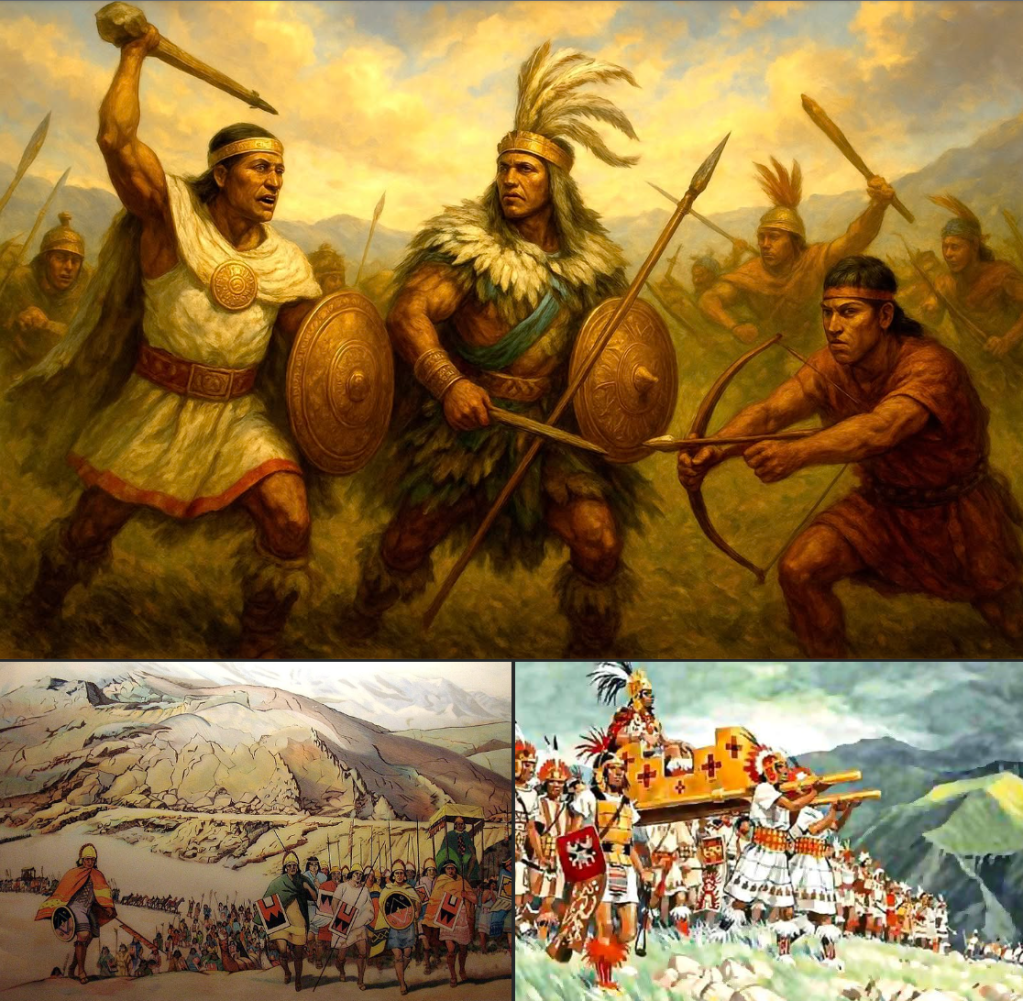
By that time, historical memory had already been transformed. The Indians and mestizos who lived under the viceroyalties never knew that the Inca Empire had been built through invasions, many of them so violent that entire settlements were wiped out, as happened to the village of Nasavacollo in the Chichas region.
The Inca Empire was a theocratic monarchy that did not distribute the benefits of agricultural production equitably. One of the authors who pointed this out was the revolutionary thinker Liborio Justo, who wrote that “the mass of the population of the Tahuantinsuyu, as a whole, was enslaved to the Inca and his tiny ruling caste, and neglecting that mass was contrary to the interests of the enslavers themselves.”
So yes, we were slaves in the past—but not of the Spaniards. We were slaves of the Incas. Their armies invaded us, we went to war, they defeated us, and they turned us into tributaries. Interpreting the chroniclers, Justo stated that agricultural production was divided into three parts: the lands of the Sun, the lands of the Inca, and the lands of the ayllus. That was how production was distributed: the masses were entitled only to the third portion.
The subjugated nations were dissatisfied with Inca rule, and that is why, when the Spaniards arrived, many saw them as liberators. That is why agreements were made with them. That is why Pizarro’s armies included thousands of indigenous allies with whom he brought down the Inca Empire.
But that is not what we are taught in schools. Perhaps now they even teach how to organize blockades instead of teaching true history.
Juan José Toro is a National Prize winner in the History of Journalism.
Por Juan Jose Toro, Brujula Digital:
Hemos dejado establecido que España no tuvo colonias en América, sino virreinatos. Esa es una verdad tan grande como el hecho de que las autoridades virreinales cometieron abusos contra los indios.
Aunque suene redundante, las primeras instancias de gobierno español en América fueron las gobernaciones. Estas fueron las primeras en fijar las relaciones con los indios. En el caso de la Gobernación de Nueva Castilla, esta fue concedida a Francisco Pizarro, quien logró apoderarse de la mayor parte del Tawantinsuyo mediante alianzas con los mallkus y caciques de las naciones que no estaban de acuerdo con el gobierno del inca.
Las alianzas se establecieron sobre la base del respeto a los derechos de los mallkus y caciques a quienes, al principio, se les dejó en posesión de sus tierras y con asignaciones de indios que estaban sometidos a obligaciones tributarias.
Pero, con el paso de los años, los gobernantes españoles desconocieron los acuerdos y comenzaron a apoderarse de tierras y establecer más obligaciones, como la mita.
En ese marco, resultó lógico que los descendientes de la nobleza incaica añoraran el régimen de los incas y se plantearan la posibilidad de su restitución. Ocurrió, entonces, un fenómeno de transformación de memoria histórica: se olvidaron de los errores del incario y se sublimó sus aspectos positivos. Se mantuvo, especialmente, el supuesto carácter moral del Tawantinsuyu basado en la trilogía del ama swa, ama llulla y ama qilla.
Hubo un elemento más en esta conversión: se perdió todo recuerdo de las culturas preincaicas y solo quedaron las ruinas de Tiwanaku como remota referencia. Eso explica el ideal que inspiró los grandes levantamientos indígenas, al que se adhirieron los mestizos a lo largo de la historia.
Durante las guerras de independencia, la restitución del incario, o la instauración de un gobierno basado en él, fueron planteamientos de personajes como Francisco de Miranda, Manuel Belgrano, Juan José Castelli o José de San Martín. Castelli, incluso, conmemoró el primer aniversario de la Revolución de Mayo con una ceremonia en Tiwanaku.
Y es que, para esos tiempos, la memoria histórica ya estaba transformada. Los indios y mestizos que vivieron en los virreinatos nunca supieron que el incario se formó sobre la base de invasiones, muchas de ellas tan violentas que arrasaron pueblos enteros, como ocurrió con el poblado de Nasavacollo, en los Chichas.
El imperio incaico fue una monarquía teocrática que no distribuía equitativamente los beneficios de la explotación de la tierra. Uno de los autores que lo hizo notar era considerado revolucionario, Liborio Justo, quien publicó que “la masa de la población del Tahuantinsuyu, en su conjunto, era esclava del Inca y de su minúscula casta gobernante y, no atender a esa masa era ir contra los propios intereses de los esclavizadores”.
Entonces, sí fuimos esclavos en el pasado, pero no de los españoles, sino de los incas. Sus ejércitos nos invadieron, entramos en guerra, nos derrotaron y nos convirtieron en sus tributarios. Interpretando a los cronistas, Justo dijo que la producción agrícola se dividía en tres: las tierras del sol, las del inca y las de los ayllus. Esa era la forma de distribuir la producción: las masas solo tenían derecho a la tercera parte.
Las naciones sometidas no estaban conformes con el gobierno del inca y, por eso, cuando llegaron los españoles, muchas los vieron como libertadores. Por eso fue que se hizo pactos con ellos. Por eso fue que los ejércitos de Pizarro estaban integrados por miles de indios con los que tumbó al imperio incaico.
Pero eso no nos enseñan en las escuelas y colegios. Tal vez ahora hasta enseñen a bloquear, en lugar de la verdadera historia.
Juan José Toro es Premio Nacional en Historia del Periodismo.
https://brujuladigital.net/opinion/mentiras-sobre-los-indios-el-incario
 Bolivian Thoughts | Pensamientos Bolivianos (Bilingual/Bilingüe)
Leave a comment