By Erika Segales, El Deber:
Was It the Right Time? Economists Disagree Over the Flexible Dollar Exchange Rate
Some experts view the flexible exchange rate as a necessary adjustment to acknowledge an economic reality that already existed, while others warn that implementing it without addressing underlying imbalances could shift pressures to other sectors of the economy.
Bolivia’s decision to abandon the fixed dollar exchange rate and move toward a flexible regime has sparked debate among economists over whether the measure was introduced at the right time. While some consider it a necessary adjustment to correct a distortion that already existed in the economy, others warn that it comes at a time when the country remains vulnerable due to a shortage of foreign currency, a fiscal deficit, and a lack of conditions needed to sustain a new exchange-rate framework.
For economist Darío Monasterio, the change represents an important signal of a new economic direction and responds to a situation in which, in practice, the official exchange rate of 6.96 bolivianos per dollar had already ceased to reflect reality.
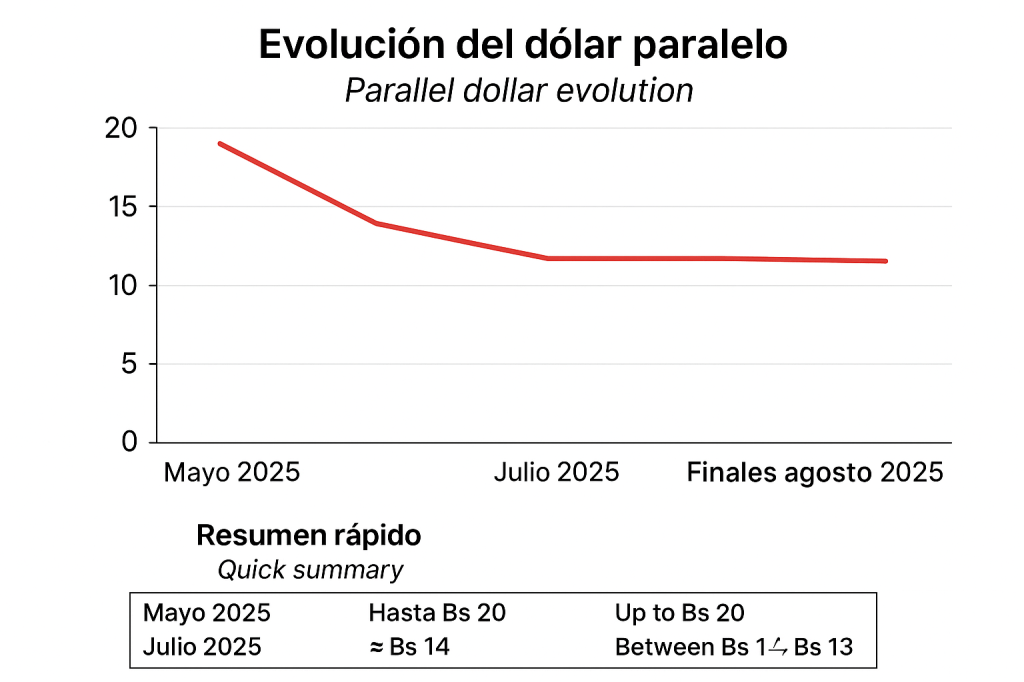
“I consider it a very important and powerful sign of a new direction for the Bolivian economy after a very long period of a fixed exchange rate, which eventually led to a black market and a parallel dollar market. This created a great deal of uncertainty, fueled speculation, and clearly failed to generate incentives for foreign investment, external financing, or even exports,” Monasterio said on EL DEBER’s program Qué Semana.
However, Monasterio noted that several factors raise questions about the timing of the measure. He explained that the current context contains both favorable and unfavorable elements for implementing a change of this magnitude. Among the negative factors, he cited the recent economic and social difficulties, as well as international reserve levels that remain below what would be desirable. Net International Reserves (NIR) fell from $15.122 billion in 2014 to $3.713 billion in 2025.
Despite these concerns, the economist argued that the step was necessary to restore confidence and address accumulated imbalances. Monasterio maintained that the central problem was continuing to uphold an official exchange rate that no longer reflected real market conditions.
“We need to unify prices, even if the measure affects some sectors negatively and benefits others. In the end, it will be the honest interaction of supply and demand that creates certainty for both investors and consumers,” Monasterio said.
From a different perspective, economist Germán Molina questioned both the way and the timing in which the measure was implemented. According to his analysis, a flexible exchange-rate regime requires macroeconomic conditions that Bolivia has not yet resolved.
Molina observed that the change is taking place amid low foreign-currency inflows, limited reserves, and a large fiscal deficit. In the revised 2026 General State Budget (PGE), the government projected a fiscal deficit of 9% for 2026.
“A flexible exchange-rate regime is not sustainable with such a high fiscal deficit, and it implies a 43.10% devaluation of our currency, the boliviano,” he stated.
The economist also raised institutional concerns regarding the approval of the new framework, arguing that a decision of this magnitude required broader analysis because of its economic and social implications. Molina noted that the measure would be approved at the ministerial level rather than by the president and cabinet.
Meanwhile, economist Fernando Romero considered the exchange-rate flexibilization to be a response to the exhaustion of the previous system, but warned that its success will depend on additional economic measures.
He explained that the fixed exchange rate had become unsustainable due to declining international reserves, lower external revenues, and growing demand for dollars. Nevertheless, he emphasized that while the new regime may reduce distortions, it will not by itself solve the shortage of foreign currency.
“Bolivia currently faces a combination of structural factors: international reserves below $4 billion, of which only about $700 million are liquid foreign-currency reserves; lower production and exports of natural gas; a high fiscal deficit; declining foreign investment; and stronger expectations of dollarization. A flexible regime can manage this reality more effectively, but it does not eliminate the shortage of dollars on its own,” he said.
Economist Carlos Aranda agreed that the change corrects an accumulated distortion, but warned about risks to the financial system if other imbalances are not addressed.
“The exchange rate is not the disease; it is the symptom. Its long-term value is determined by macroeconomic balance: a controlled fiscal deficit that does not fuel excessive money creation and that allows the rebuilding of international reserves to strengthen the balance sheet of the Central Bank of Bolivia (BCB), together with the elimination of distortions accumulated in the financial system. Moving the price of the dollar without addressing the underlying causes merely shifts the pressure from one place to another,” he said.
The Central Bank of Bolivia established that the flexible exchange-rate regime will take effect on Monday, June 29, with an exchange rate of 9.73 bolivianos per dollar. The BCB will publish the exchange rate on its website every business day at 8:00 p.m.
Por Erika Segales, El Deber:
¿Fue el momento correcto? Economistas discrepan sobre el cambio flexible del dólar
Algunos de los expertos observan el cambio flexible como un ajuste necesario para reconocer una realidad económica que ya existía, otros advierte que hacerlo sin resolver los desequilibrios de fondo puede trasladar las presiones hacia otros sectores de la economía.
La decisión de Bolivia de abandonar el tipo de cambio fijo del dólar y avanzar hacia un régimen flexible abrió un debate entre economistas sobre si la medida llegó en el momento adecuado. Mientras algunos consideran que era un ajuste necesario para corregir una distorsión que ya existía en la economía, otros advierten que llega en un escenario todavía frágil por la escasez de divisas, el déficit fiscal y la falta de condiciones para sostener un nuevo esquema cambiario.
Para el economista Darío Monasterio, el cambio representa una señal importante de un nuevo rumbo económico y responde a una situación que, en la práctica, ya había dejado atrás el dólar oficial de 6,96 bolivianos.
“Yo lo considero un signo muy importante y muy fuerte de un nuevo rumbo que toma la economía boliviana, después de muchísimo tiempo con un tipo de cambio fijo, que después derivó en obviamente un mercado negro del dólar, un dólar paralelo, que generaba muchísimas incertidumbres, generaba muchísima especulación y obviamente que no generaba incentivos para inversión extranjera, para financiamiento externo, incluso para exportaciones”, afirmó Monasterio en el programa “Qué Semana”, de EL DEBER
Sin embargo, Monasterio señaló que existen factores que generan dudas sobre la oportunidad de la medida. Explicó que el contexto actual tiene elementos favorables y desfavorables para implementar un cambio de esta magnitud. Entre los aspectos negativos mencionó un escenario reciente de dificultades económicas y sociales, además de un nivel de reservas que todavía no sería el esperado. Las Reservas Internacionales Netas (RIN), descendieron de 15.122 millones de dólares en 2014 a 3.713 millones de dólares en 2025.
Pese a esas observaciones, el economista consideró que el paso era necesario para recuperar confianza y ordenar los desequilibrios acumulados. Monasterio sostuvo que el problema central era mantener una cotización oficial que ya no reflejaba las condiciones reales del mercado.
“Necesitamos unificar precios, aunque sea una medida que a algunos sectores les pueda afectar y a otros les pueda beneficiar, pero al final de cuentas va a ser el sinceramiento de la oferta y la demanda lo que va a generar una certidumbre tanto para los inversionistas como para los que consumen bienes”, apuntó Monasterios.
Desde otra perspectiva, el economista Germán Molina cuestionó la forma y el momento en que se aplicó la medida. Según su análisis, un régimen flexible requiere condiciones macroeconómicas que Bolivia todavía no tiene resueltas.
Molina observó que el cambio ocurre con un escenario de bajo flujo de divisas, reservas limitadas y un déficit fiscal elevado. En la reformulación del PGE 2026, el Gobierno proyectó un déficit fiscal de 9% para la gestión 2026.
“No es sostenible un régimen cambiario flexible con elevado déficit fiscal y significa una devaluación de 43,10% de nuestra moneda el boliviano”, afirmó.
El economista también planteó cuestionamientos institucionales sobre la aprobación del nuevo esquema y señaló que una decisión de esta magnitud requería un análisis más amplio por sus efectos económicos y sociales. Molina observó que la medida se aprobará a nivel de un ministerio y no por el presidente y su gabinete.
En tanto, el economista Fernando Romero consideró que la flexibilización cambiaria responde a un agotamiento del esquema anterior, pero advirtió que sus resultados dependerán de otras medidas económicas.
Explicó que el tipo de cambio fijo perdió sostenibilidad por la reducción de reservas internacionales, la caída de ingresos externos y el aumento de la demanda de dólares; no obstante, enfatizó que el nuevo régimen puede reducir distorsiones, pero no resolver por sí solo la falta de divisas.
“Actualmente, Bolivia enfrenta una combinación de factores estructurales: RIN inferiores a 4.000 millones de dólares, de las cuales alrededor de 700 millones de dólares corresponden a divisas líquidas; menor producción y exportación de gas natural; déficit fiscal elevado; caída de la inversión extranjera y mayores expectativas de dolarización. El régimen flexible puede administrar mejor esta realidad, pero no elimina por sí mismo la falta de dólares”, señaló.
Por su parte el economista Carlos Aranda coincidió en que el cambio corrige una distorsión acumulada, aunque alertó sobre los riesgos que puede enfrentar el sistema financiero si no se corrigen otros desequilibrios.
“El tipo de cambio no es la enfermedad, es el síntoma. Su valor a largo plazo lo determina el equilibrio macroeconómico: un déficit fiscal bajo control que no presione la expansión del dinero en la economía y permita una reconstrucción de las reservas internacionales que saneen el balance del Banco Central de Bolivia (BCB), sumado a la eliminación de las distorsiones acumuladas en el sistema financiero. Mover el precio del dólar sin atacar las causas de fondo solo traslada la tensión de un lado a otro”, expresó.
El BCB estableció el tipo de cambio flexible entre en vigencia a partir del lunes 29 de junio, con una cotización de 9,73 bolivianos. El BCB publicará en su página web el Tipo de Cambio cada día hábil a las 20:00.


Leave a Reply