
By Lourdes Molina, El Deber:
The BCB Establishes That the Flexible Exchange Rate Will Take Effect Starting Monday, June 29
The Ministry of Economy and Public Finance officially established this Friday Bolivia’s transition to a flexible exchange rate regime
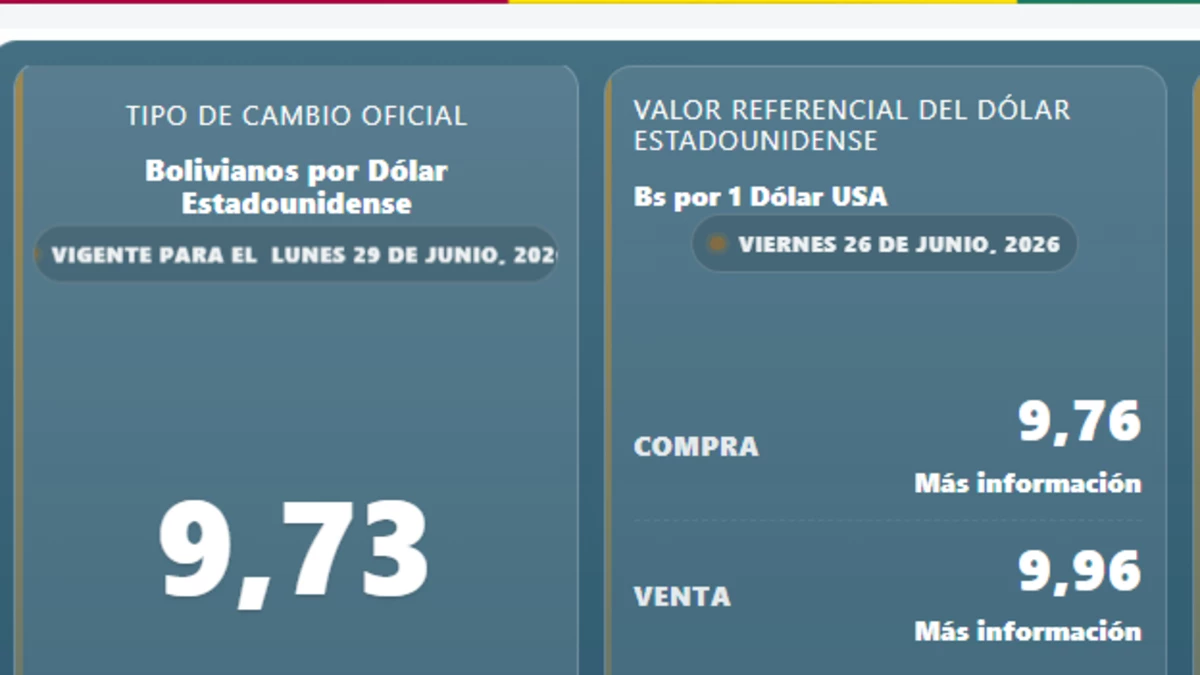
Through its official website, the Central Bank of Bolivia (BCB) determined that, starting Monday, June 29, the flexible exchange rate will come into effect, setting the dollar exchange rate at Bs 9.73. Until 6:00 p.m. this Friday, June 26, the official dollar exchange rate remained at Bs 6.96.
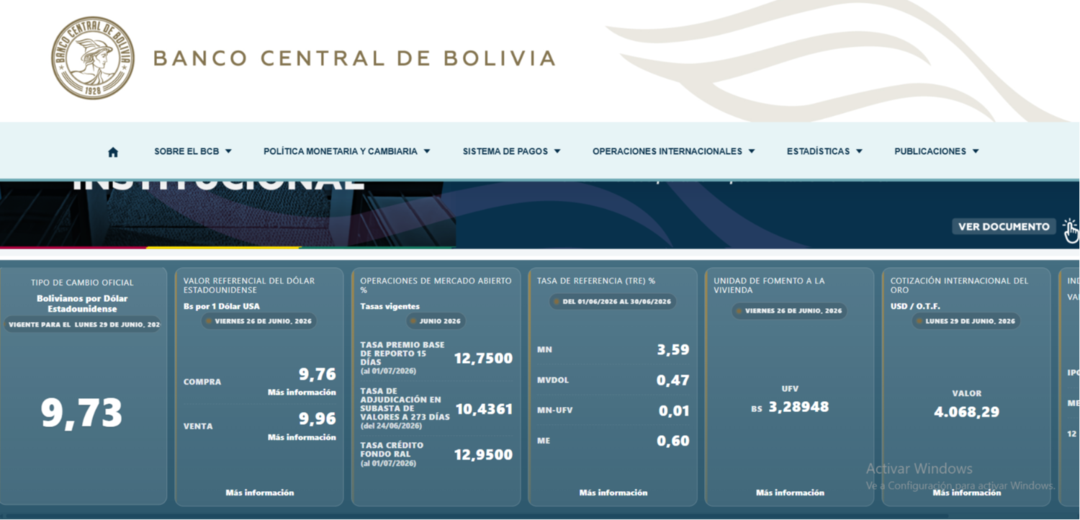
Meanwhile, the issuing institution itself indicates that the reference rate for this Friday is Bs 9.76 for buying and Bs 9.96 for selling. In the parallel market, the dollar was quoted this Friday at Bs 9.95 for buying and Bs 9.94 for selling.
Every Day at 8:00 p.m.
According to Article 5 of the BCB Operations Regulation, “on each business day, at 8:00 p.m., the BCB will publish on its website the Official Exchange Rate that will be in effect the following day for public sector and BCB operations, as well as for accounting and valuation records.”
The Regulation also specifies that, in order to determine the exchange rate, the Financial System Supervisory Authority (ASFI) will instruct multiple banks, SME banks, and the public bank to submit all foreign exchange transactions carried out up to 5:00 p.m. each day.
Background
The Ministry of Economy and Public Finance officially established this Friday Bolivia’s transition to a flexible exchange rate regime, a measure that opens the possibility for the official value of the dollar to be determined according to the supply and demand of foreign currency within the financial system.
The decision is contained in Ministerial Resolution 245, issued on June 26, 2026, which instructed the Central Bank of Bolivia (BCB) to implement the process and define its operational characteristics.
“Establish a flexible exchange rate regime, with the purpose of strengthening macroeconomic stability, preserving external competitiveness, and contributing to the balance of payments equilibrium,” states the first article of the regulation.
The Minister of Economy, José Gabriel Espinoza, reiterated a few days ago that the Government’s objective is to unify the exchange rate and put an end to the coexistence of different dollar prices within the Bolivian economy.
Por Lourdes Molina Rea, El Deber:
El BCB establece que a partir del lunes 29 de junio entra en vigencia el tipo de cambio flexible
El Ministerio de Economía y Finanzas Públicas estableció oficialmente este viernes el tránsito de Bolivia hacia un régimen cambiario flexible
A través de su página oficial, el Banco Central de Bolivia (BCB) determinó que a partir del lunes, 29 de junio, entra en vigencia el tipo de cambio flexible; cotizando el precio del dólar en Bs 9,73. Hasta las 18:00 de este viernes, 26 de junio, el precio del dólar oficial se mantenía en Bs 6,96.
Entre tanto, la misma entidad emisora indica que el precio referencial para este viernes para la compra es de Bs 9,76 y para la venta Bs 9,96. Mientras que el mercado paralelo el precio para la compra se cotizaba, este viernes, en Bs 9,95 para la compra y Bs 9,94 para la venta.
Todos los días a las 20:00
De acuerdo con el artículo 5 del Reglamento de Operaciones del BCB, “cada día hábil, a horas 20:00, el BCB publicará en su página web el Tipo de Cambio Oficial que será vigente al día siguiente para las operaciones del sector público y del BCB y para los registros contables y de valoración”.
El Reglamento también detalla que para definir el tipo de cambio, la Autoridad del Sistema Financiero (ASFI) instruirá a los bancos múltiples, los bancos pyme y el banco público, remitir todas las operaciones cambiarias que hayan realizado hasta las 17:00 de cada día.
Contexto
El Ministerio de Economía y Finanzas Públicas estableció oficialmente este viernes el tránsito de Bolivia hacia un régimen cambiario flexible, una medida que abre la posibilidad de que el valor oficial del dólar sea determinado de acuerdo con la oferta y demanda de divisas en el sistema financiero.
La decisión está contenida en la Resolución Ministerial 245, emitida el 26 de junio de 2026, que encargó al Banco Central de Bolivia (BCB) ejecutar el proceso y definir sus características operativas.
“Establecer un régimen cambiario flexible, a efectos de fortalecer la estabilidad macroeconómica, preservar la competitividad externa y contribuir al equilibrio de la balanza de pagos”, señala el primer artículo de la norma.
El ministro de Economía, José Gabriel Espinoza, ratificó hace algunos días que el propósito del Gobierno es unificar el tipo de cambio y terminar con la coexistencia de diferentes precios del dólar en la economía boliviana.


Leave a Reply