By Milton Condori, Vision 360:
Analysts Say It Is Delegitimized and Discredited
It led protests for 50 days without achieving its main demand. Experts consulted say the organization emerges with a damaged image. Meanwhile, its executive leader, Mario Argollo, has not yet commented.
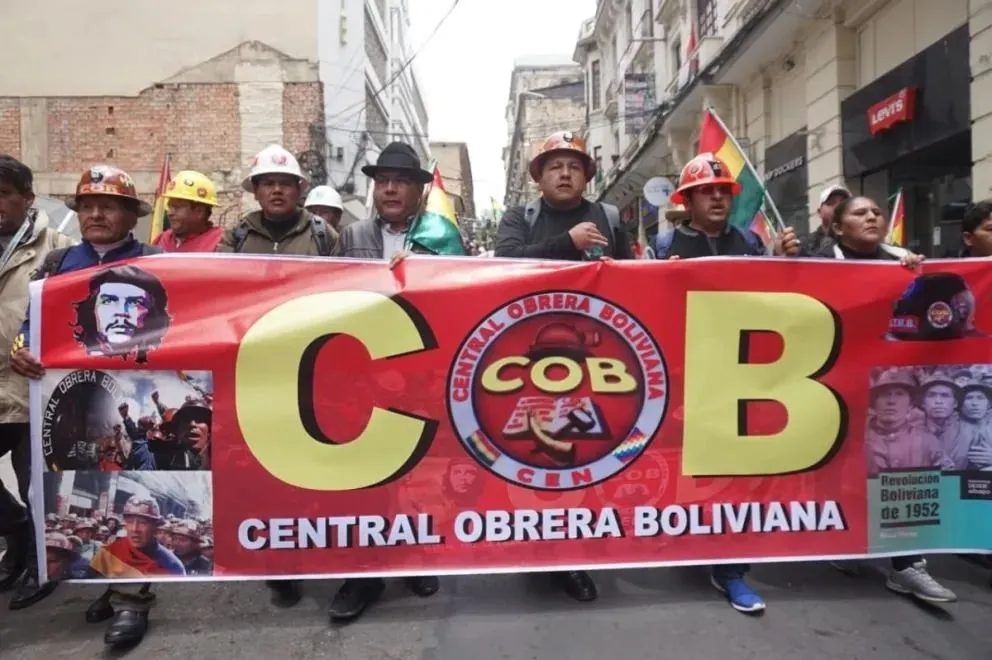
Mario Argollo, COB leader, during a protest march. Photo: APG
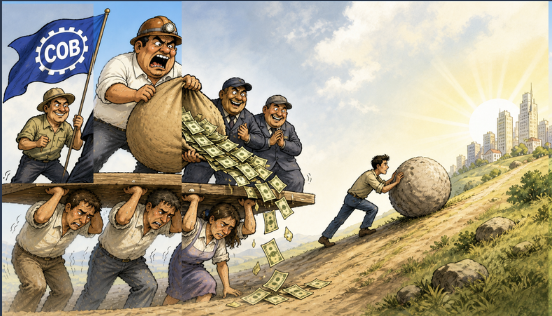
After 50 days of mobilization, the Bolivian Workers’ Central (COB) signed an agreement with the government on Friday night containing eight points aimed at restoring peace in the country. However, according to analysts Paul Cocaand Rodolfo Eróstegui, the labor organization is left with a delegitimized and discredited image and institution, both among the sectors that make it up and among its critics.
“First, the COB was already discredited among its detractors for carrying out these pointless mobilizations—let’s be honest, they made no sense whatsoever. Second, among the people who supported it, the labor federation is now also discredited because it signed an agreement and called for the lifting of the state of emergency. And at this point it has not made any statement regarding the state of emergency,” Coca told Visión 360.
The COB, together with peasant groups from La Paz and supporters of Evo Morales, carried out a campaign of road blockades that for 50 days caused severe shortages of food, medicines, supplies, and fuel, in addition to deaths.
Coca argued that, having lost credibility with both supporters and opponents, the COB will struggle to rebuild its image, which he said has already been in decline for several administrations. “And the COB’s strategy has backfired badly. It lacked political flexibility, and in future mobilizations against the government—which are certain to come—it will no longer receive support from sectors that view the agreement with the government as a betrayal.”
The labor federation had called on its affiliated sectors to begin phased blockades following the May 1 assembly, demanding a 20% wage increase for workers along with other demands. However, that demand was eventually sidelined. COB affiliates, social organizations, the La Paz Departmental Federation of Peasant Workers “Tupac Katari,” and groups aligned with Evo Morales rallied around a single objective: the resignation of President Rodrigo Paz, who has been in office for seven months.
The blockades lasted more than 50 days across five departments. In May, the department of La Paz was the region most affected by the pressure tactics, while in early June Cochabamba became the area with the highest number of blockade points.
For analyst Rodolfo Eróstegui, both the COB and its executive secretary, Mario Argollo, have ended up “very poorly regarded by society in general,” and the organization “has become completely delegitimized during these 50 days.”
“It entered this conflict already lacking legitimacy. For years the COB had been viewed negatively, accused of being aligned with the MAS, of receiving favors and privileges, and of benefiting from hotels, vehicles, and office facilities. All of that had already severely worn down its credibility,” the analyst said.
Eróstegui believes Argollo bears much of the responsibility for this loss of prestige because he showed “complete naivety by entering this kind of conflict without knowing how to get out of it,” apparently believing he would emerge victorious.
“He wanted to come out triumphant, but since he failed to do so, he could not claim victory. Naturally, he is now heavily defeated and unable to recover politically, which is why he accepted the agreement,” he said.
On that point, Coca added that Argollo is one of the main figures responsible for the COB’s deterioration because he has “politically buried it” before a society that “wants nothing to do with it anymore.”
As of now, the top COB leader has not made any public statement on the matter.
Por Milton Condori Apaza, Vision 360:
Analistas dicen que está deslegitimada y desprestigiada
Lideró las movilizaciones durante 50 días sin lograr su principal demanda. Los expertos consultados afirman que el ente queda con una imagen golpeada. Al respecto, Mario Argollo, su ejecutivo, aún no se pronunció.
Mario Argollo, líder de la COB, en la marcha de protesta. Foto: APG
Tras 50 días de movilización, la Central Obrera Boliviana (COB) firmó un acuerdo con el Gobierno la noche del viernes, que contiene ocho puntos con el fin de pacificar el país. Sin embargo, la institución obrera queda, según los analistas Paul Coca y Rodolfo Eróstegui, con una imagen y una institucionalidad deslegitimadas y desprestigiadas tanto ante los sectores que la conforman como ante sus detractores.
“Primero, la COB ya estaba desprestigiada ante sus detractores por haber realizado estas movilizaciones sin sentido, hay que ser muy honestos y sin ningún tipo de sentido. Segundo, ahora la central obrera ante las personas que eran sus seguidores ha quedado también desprestigiada por firmar un acuerdo y pedir que se levante el estado de excepción. Y en este momento no se ha pronunciado sobre el estado de excepción”, indicó Coca en contacto con Visión 360.
La COB, junto a campesinos de La Paz y evistas, llevó adelante una movilización con bloqueos de carreteras que durante 50 días provocó una aguda escasez de alimentos, medicinas, insumos y combustibles, además de decesos.
Coca sostuvo que, al quedar desprestigiada frente a sus adeptos y detractores, a la COB le costará levantar su imagen, que desde gestiones pasadas está por el suelo. “Y ese juego de la COB le ha salido muy mal, no ha tenido juego de cintura y obviamente en futuras movilizaciones que la COB va a realizar contra el Gobierno, dalo por hecho, que ya no va a tener nada de apoyo de sectores que consideran que el acuerdo con el Gobierno ha sido traición”.
El ente de los obreros convocó a sus componentes a iniciar bloqueos escalonados tras el cabildo del 1 de mayo, en razón de exigir un aumento salarial del 20% para los trabajadores y otras demandas; sin embargo, ese pedido quedó a un lado y tanto afiliados de la COB, sectores sociales, como la Federación Departamental Única de Trabajadores Campesinos de La Paz “Tupac Katari” y afines a Evo Morales apuntalaron una única demanda: la renuncia del presidente Rodrigo Paz, quien lleva siete meses en el poder.
Los bloqueos duraron más de 50 días en cinco departamentos. En mayo, el departamento de La Paz resultó ser el más afectado por las medidas de presión; en tanto, a inicios de junio, Cochabamba se convirtió en la región con más puntos de bloqueo.
Para el analista Rodolfo Eróstegui, la COB y su ejecutivo, Mario Argollo, quedaron “ante la sociedad en general muy mal vistos” y el ente “se ha deslegitimado completamente en estos 50 días”.
“Ya entraba deslegitimado a todo este conflicto, ya venía de muchos años que la COB era mal vista, era acusada de vendida al MAS, era acusada de recibir prebendas, de haber sido favorecidos con hoteles, con vehículos, con oficinas, y eso los había desgastado muchísimo”, indicó el analista.
Para Eróstegui, el culpable de este desprestigio es Argollo porque demostró “una inocencia total al meterse en este tipo de conflictos sin saber cómo salir” porque, al parecer, pensó que iba a salir triunfante.
“Quería salir triunfante, pero como no ha salido triunfante, no ha podido triunfar. Lógicamente está altamente derrotado y no puede recuperar, por eso aceptó el acuerdo”, dijo.
Sobre ese punto, Coca manifestó que Argollo es uno de los culpables del deterioro de la COB porque “lo ha enterrado políticamente” ante una sociedad “que no quiere saber nada”.
Al respecto, el máximo dirigente cobista aún no se ha pronunciado.
 Bolivian Thoughts | Pensamientos Bolivianos (Bilingual/Bilingüe)
Leave a comment