
By Nicole Laura, Erbol:
Kewiña Woman: The Story of a Rural Leader Who Plants Forest and Dignity
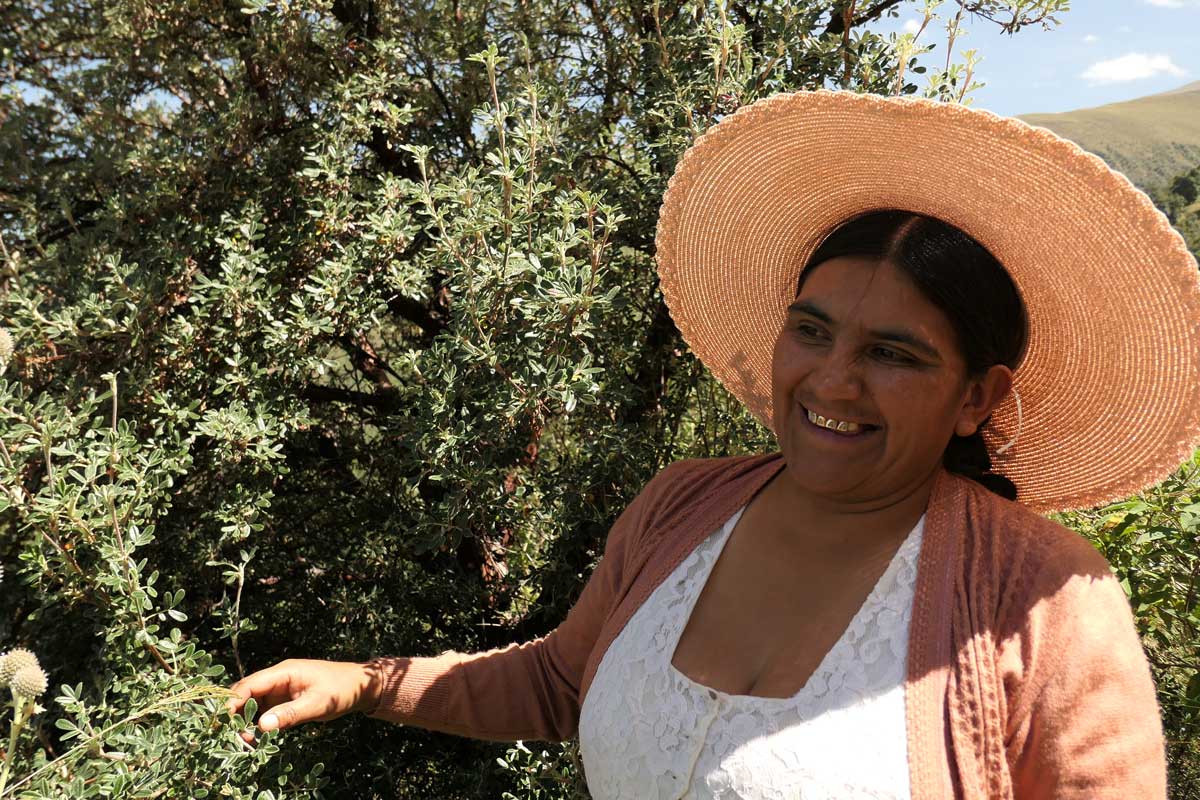
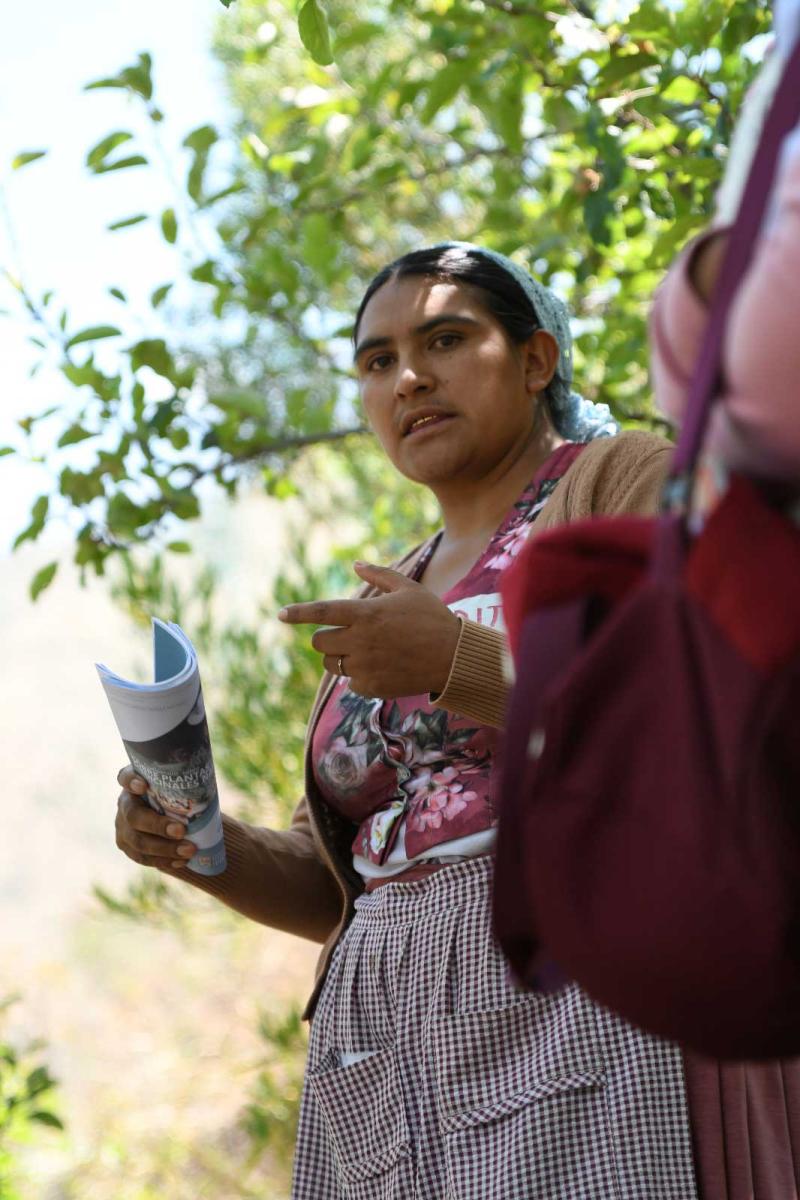
Judith Gonzales López, in the kewiña forest of Tunari Park. Photo: Eneida Zurita (Armonía)
It was a July afternoon in 2008 and Judith Gonzales López, 19, was carefully cleaning her “bosses’” desk. The room was packed with books that she lifted one by one to dust them off. Suddenly, a small text about potato cultivation caught her curiosity. When she opened it, she saw drawings about the diseases of the tuber and, for a few minutes, she abandoned her present.
Time was not the only thing she forgot: she also forgot it was Wednesday, the day the “bosses” were home. Suddenly, someone walked in and a voice abruptly pulled her out of that brief moment.
“You are on work hours, you cannot be reading. I do not pay you for that.”
Judith listened in silence and said nothing. She closed the book, put it back in its place, and continued cleaning.
“That day I felt that I was not even free to think,” she would say years later. That idea kept bouncing in her mind for several days, while she took refuge in a less painful thought: “at some point there has to be an opportunity for me, to move forward.”
A long time would pass before Judith found that opportunity.
Germinating amid adversities
In the Andes mountain range, the second highest chain after the Himalayas, the ancient kewiña tree, with its thick crown and chameleon-like trunk, grows against the current of extreme climates or difficult terrain. Its hallmark is resistance.
Judith, now 37, was born in Lajra Cueva, a community in the municipality of Tiquipaya, north of Cochabamba. However, it was between Thola Phujru and Totora, on the southern slope of Tunari National Park, where she spent most of her life with her parents and four siblings, surrounded by rivers, mountains, and kewiñas.
There, a small hut sheltered them from the cold or extreme heat. They cooked with cow dung, and, like many families in the area, survived on what the land could offer. They were dedicated to potato farming. And the girls and boys, who could only access education up to fifth grade, learned from a very young age everything related to field work.
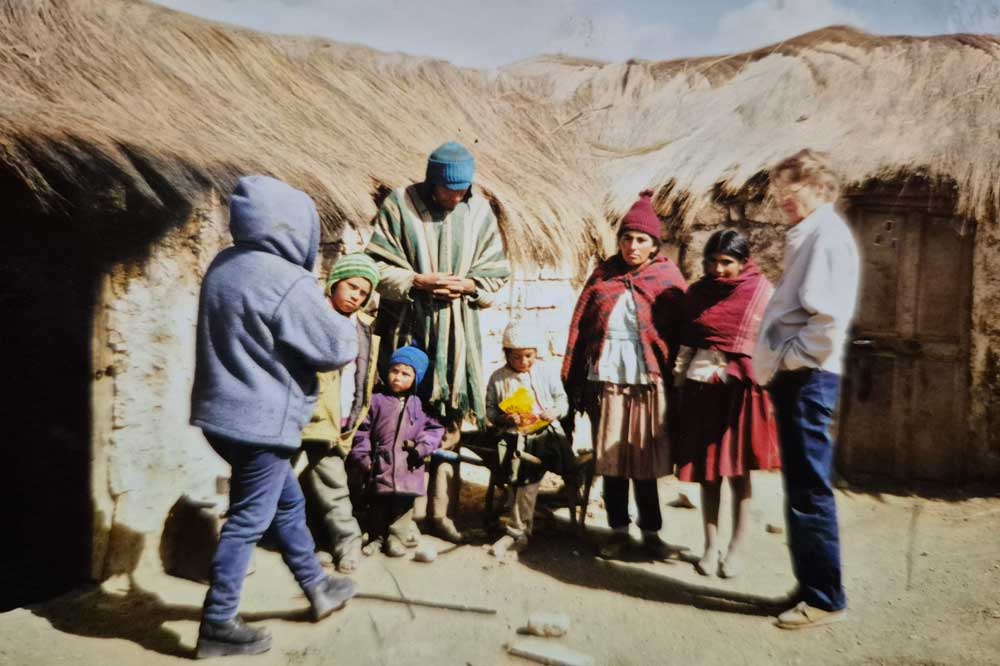
From those days, what Judith remembers most are the afternoons when, clinging to her little pickaxe, she accompanied her mother to till the land in the potato fields. She also recalls the times when her father taught her about the benefits of the kewiña while they planted them together on the riverbanks and on the upper parts of the mountains. Or her deep desire to study, finish school, go to university, and become a dentist.
However, in her village it was not very common for girls to go to school. Most families usually assigned them to household care, raising younger siblings, and cultivation.
Judith was twelve when, for the first time, she confronted that destiny that seemed reserved for the women of her community. At that time, the family truck, with which they marketed their potato production, had suffered two serious traffic accidents and the profits from the business had gone to hospital expenses and repairs of the vehicle, which had been left in tatters. There was no longer enough money to sustain studies.
Judith had no choice but to obey her parents’ decision and replaced school hours with caring for her younger siblings and house chores. However, at times, something inside her resisted accepting that unequal future.
“I remember that while I was cooking in the q’onchita with firewood, my brothers would start playing, and I would go out with them, I did not care whether the food was cooking or not.”
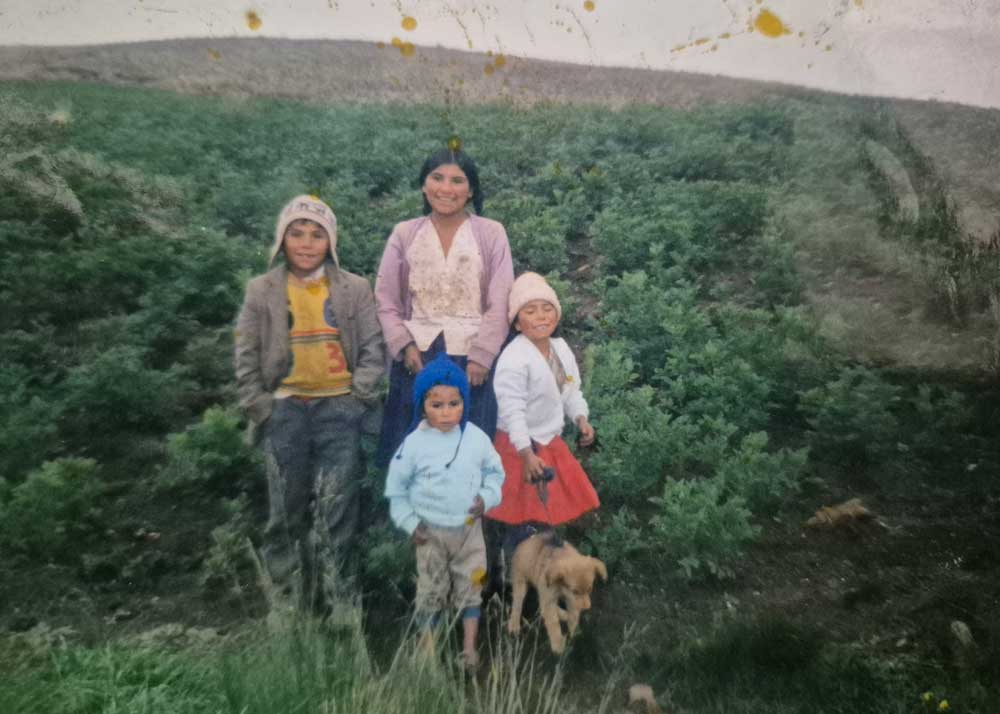
The days went by and the only thing Judith thought about was returning to school. Two years later, she was able to do so and despite her mother’s opposition she finished fifth grade at age 15.
“My mother did not want me to because I was the only girl, among eight boys in my class, who had entered to study fifth basic. I did not care whether I was the only one or not. The thing was to study. So I launched myself toward success and I finished it.”
But that joy was brief. Soon after, her mother became ill due to complications following the birth of her last pregnancy, and once again Judith had to put her dreams on hold. “We all started to work because we no longer had what to eat, we had almost nothing. The only thing I will never forget is that we did not lack dry wheat, broad beans, peas, corn, potatoes and chuño, because my father always planted and stored.”
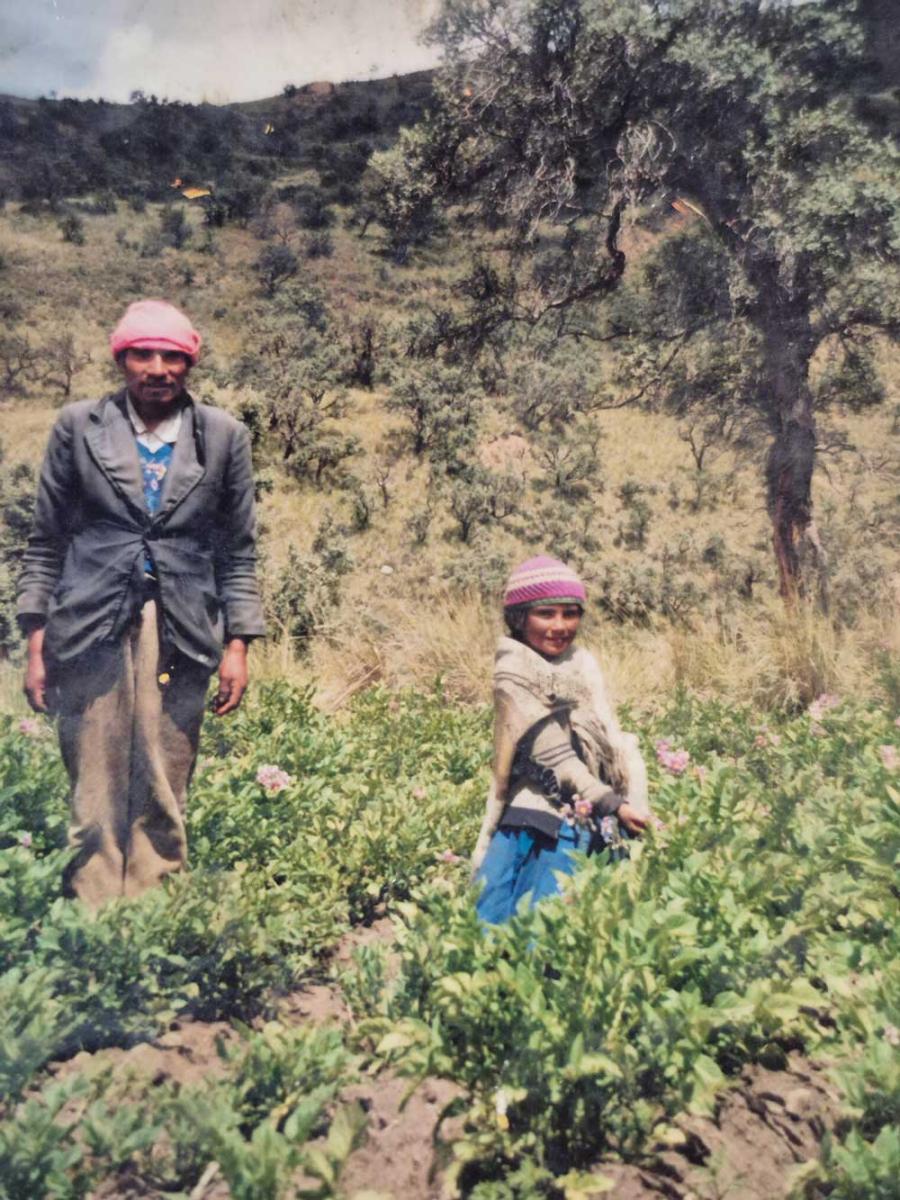
In the midst of those responsibilities, her father assigned her another role: attending the assemblies of her village in his place. For Judith, that was not a minor thing. In those spaces, where decisions were made out loud and almost always by men, she barely dared to speak.
“At first I was afraid. I felt that I knew nothing. I went to the meetings and sat in a corner; I only said ‘present’ and nothing more. Sometimes, the community members even got upset. My mother was sick and, for that reason, they made me count. Many women were not made to count, unless they were alone. If their husbands delegated them, they still were not taken into account.”
But Judith, who from childhood had learned to resist, knew that this did not fit, that she had to do something to change that reality. “I thought: this cannot continue like this. We women have to educate ourselves a little more to be valued.”
Putting down roots in the city
There was a time when it was uprooted from the mountains and rocky ground. They made charcoal from its trunk. Then the earth lost its ally, the only one capable of retaining water even in the driest forests.
During that period scarcity was suffocating her home, and Judith thought that the only possible path out was to go to the city. So she came of age and left for the cement capital in search of better days for herself and her family.
“As I had stopped studying, I was frustrated, I had lost hope, so I said: I will go to the city, I will earn a little money, there will always be something.”
And yes, there was. A few days after her arrival, she found employment as a live-in domestic worker and nanny in a house near Jorge Wilstermann International Airport. There she came to know a world very different from hers.
“I took care of two girls and saw how they had everything, and how they did not value it. Inside myself I would say, those of us who do not have, we value, and those who have cannot value, why is life like this?, I asked myself.”
She also wondered whether her parents were in good health, whether the exhausting field days weighed more on them now that they no longer had her.
“How is my father managing alone? My mother must be herding her sheep all alone, I could be there, helping, that was what worried me most.”
That is how two years went by, between sporadic jobs and brief visits to her village. Meanwhile, one question drilled into her mind, especially when she saw her co-workers, also domestic employees, going to study in their free time: “When will it be my turn?” she asked herself.
One day she mentioned that concern to her boss and the answer did not please her at all. “She told me: what do you want to study for?, you are going to waste your time, I can enroll you in some pastry courses. And I asked myself, but what am I going to do with pastry? For me that was not the right answer, I wanted her to tell me, at night I will give you permission, you can go take classes.”
The first shoot of resilience
Its strength lives in its bark, an armor of layers that every so often undergoes a metamorphosis to protect it from cold, heat, or fire.
A few weeks later, what we already know happened: after the scolding she received for reading a book about potato cultivation during work hours, Judith resigned from that job and went in search of what she most desired: to study. She got a room under anticrético and enrolled in a night school in the urban area of Tiquipaya. “Her words hurt me so much, I mean one is not free of anything. If I were not here, this house would not be clean. I am leaving. How much am I even earning anyway, I said. A weekend came, I grabbed some of my little things and quietly left.”
She was without work for nearly a month. Then, between coming and going, she returned to her village and began to work in flower and fruit production — for which she earned between 5 and 10 bolivianos a day — and at night she attended classes.
Do men and women earn the same in the countryside?, I ask her.
No, they are still paid less. By day labor, a man is paid between Bs 100 and 120, and a woman, 20 or 30 bolivianos less, depending also on the awareness they have, she answers.
In communities such as Thola Phujru inequality between men and women becomes evident, above all, in agricultural labor. In these territories, rural women obtain between 60 and 70% of the day wage received by a man, despite both doing the same tasks, according to the study Sowing water to harvest life: community watershed management in Tiquipaya (Cochabamba) prepared by biologist and anthropologist Daniela Aguirre (co-author).
And this is not only a local reality: on a global scale, female labor in the agri-food sector earns on average about 18% less than male labor, according to the Food and Agriculture Organization of the United Nations (FAO).
Growing at a slow pace
It holds a Guinness record: it is one of the slowest-growing trees in the world, barely one centimeter per year.
Little by little, Judith was transforming. One day, almost without realizing it, she lost the fear of taking the floor in her community meetings, where almost always the care of water — a resource increasingly scarce because of climate change and agricultural expansion — occupied the center of discussions.
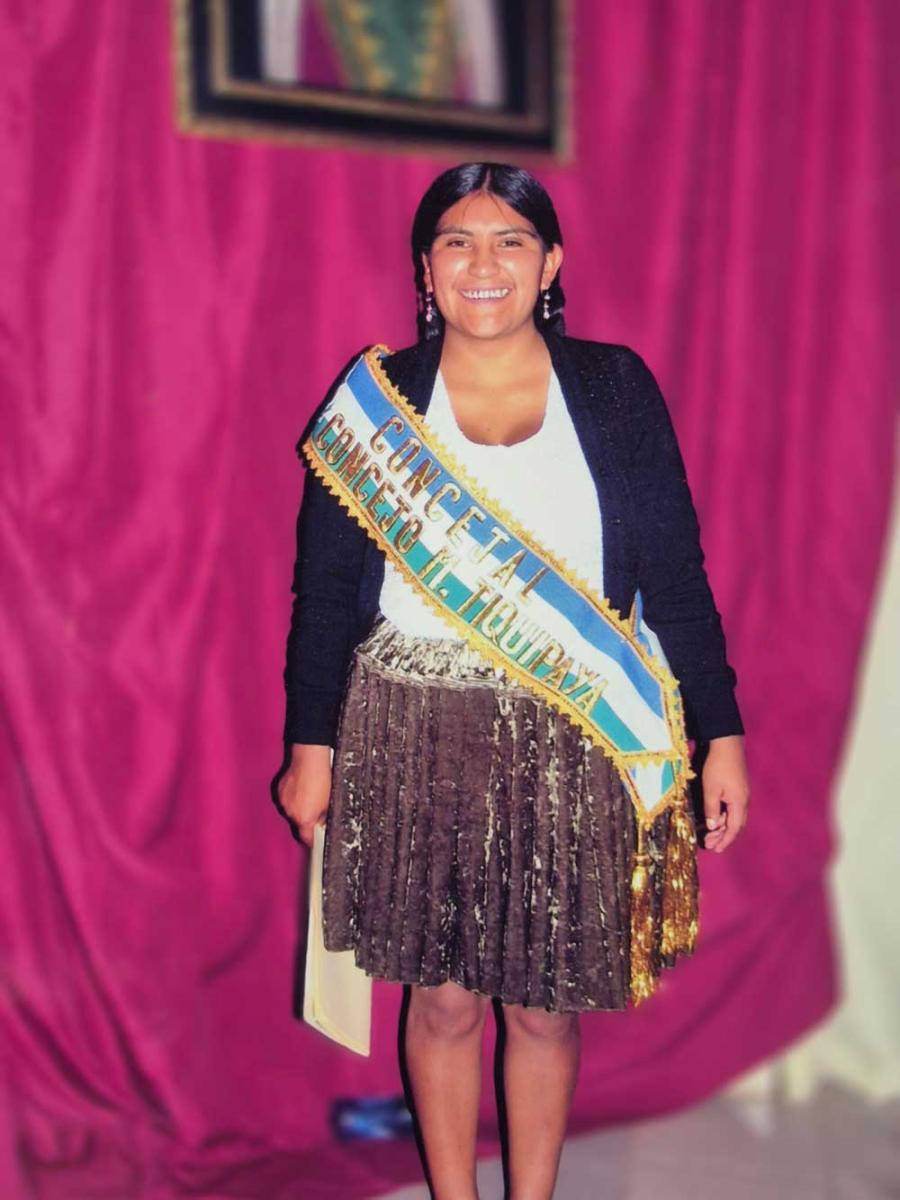
From that moment on, things began to align for Judith. She ventured into decision-making spaces and her leadership rose. First she was named Recording Secretary of her community’s women’s organization. Later she assumed the Executive Secretariat of the 13 de Agosto Subcentral and of the Provincial Central of Quillacollo, in Cochabamba, becoming the first woman to occupy that post. Between 2010 and 2013, she served as councilwoman of the municipality of Tiquipaya. And, in 2015, she was elected Submayor of District 3, a jurisdiction that covers five communities: La Phia, Cruzani, Thola Phujru, Totora, and Linkho Pata.
But none of those achievements came immediately; each one was conquered with patience and effort. Her growth was slow, due to a successive chain of misfortunes that delayed, but did not prevent, her from achieving what she had most wanted since she was a child: to study.
After two intense years as councilwoman, Judith finally completed high school at age 21. She then obtained a scholarship from the Bartolina Sisa Federation of Peasant Women to study Law at San Simón Major University (UMSS).
However, after three months, she lost that opportunity because of administrative problems. The educational unit where she finished secondary school misplaced her report cards and other documents, so she could not present her humanities high school diploma on time to the university.
Some time later, during a trip to Chile to participate in a gathering of Andean knowledge, she met people who encouraged her to study a career linked to caring for the land. Driven by that encouragement, she returned to Bolivia, took the Agronomy entrance exam, and passed.
However, her time at the university was full of interruptions. She had to step away several times to work and support her family, although she never stopped learning nor promoting community processes in her village.
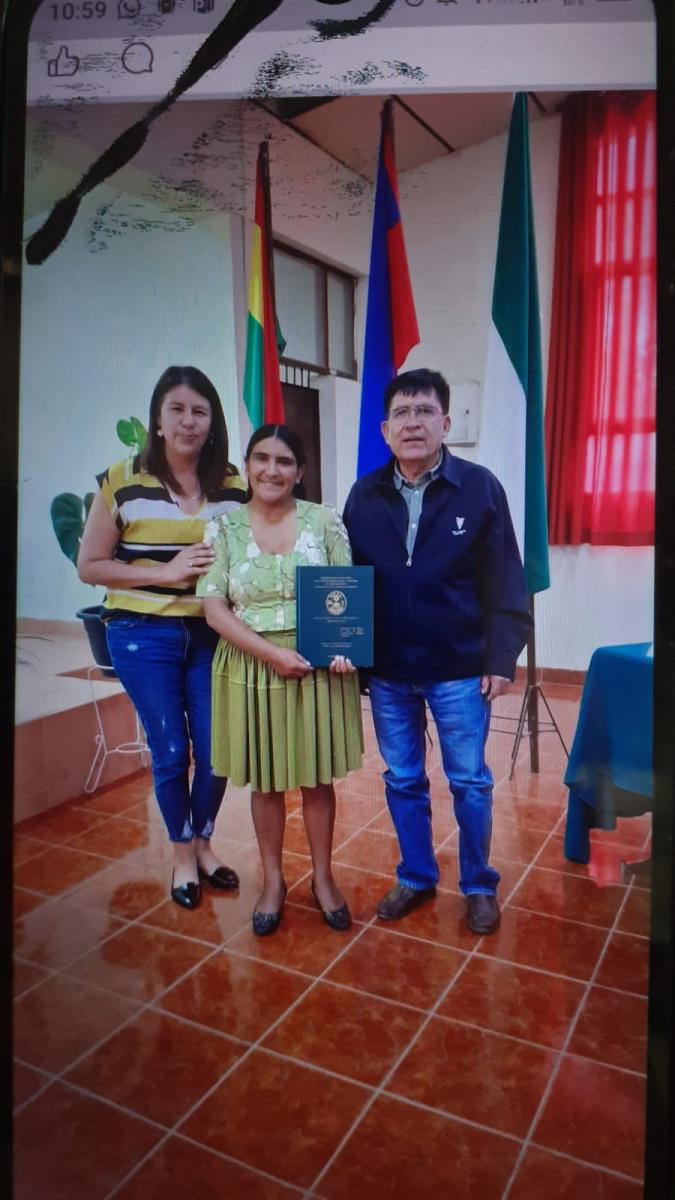
Years later, with the financial support of Sonia Salas, director of Redar Peru, whom she met at an event in Chile, she was able to resume her studies with greater stability. She then held on to the university, advanced courses, and after research on medicinal plants of her community, presented a monograph that obtained 95 points, which allowed her to graduate as a higher technician in Agronomy.
Environmental leadership, the greatest fruit
Its roots advance in silence, anchor to the mountain and extend beyond what is visible, sustaining moisture, soil, and life.
Every decision-making space that Judith conquered, from community leadership to the Submayor’s Office, allowed her to consolidate her knowledge about water management and strengthen a deep conviction in defense of the environment.
“If we do not care for the environment, if we do not care for our water recharge zones, our water, what are we going to live on? That is where I say that the earth also has life like me. If we do not care for it, it will not be able to respond either. So we have to begin to care for it, because by it we live.”
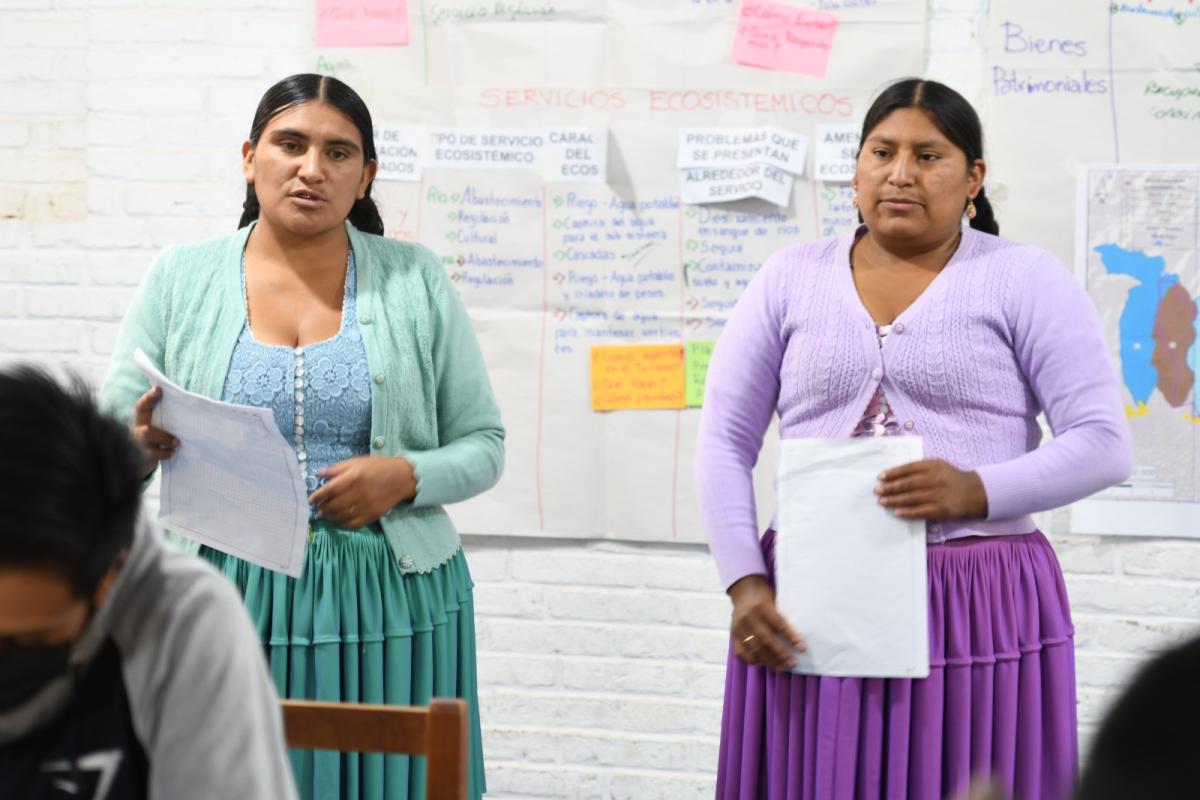
In those years, one of Judith’s most important contributions to water preservation was the formation and later unification of the Watershed Management Organization (OGC) 13 de Agosto, of District 3 of Tiquipaya, whose objective is to bring together the families of the 13 de Agosto Subcentral with public and private institutions to care for water, manage natural resources, and make decisions about the district’s three micro-watersheds.
Later, on August 6, 2016, a voracious fire devastated the community of La Phia in District 3. The inhabitants lost everything: their animals died charred and the crops were reduced to ashes.
But far from breaking, the community turned tragedy into a new beginning. Women and men organized to reforest the southern slope of Tunari National Park with kewiñas, kiswaras, and other native species.
They first did so through the Khora Tiquipaya Pedagogical Watershed, where Judith also participated, contributing the experience she had accumulated since childhood in working with land and water.
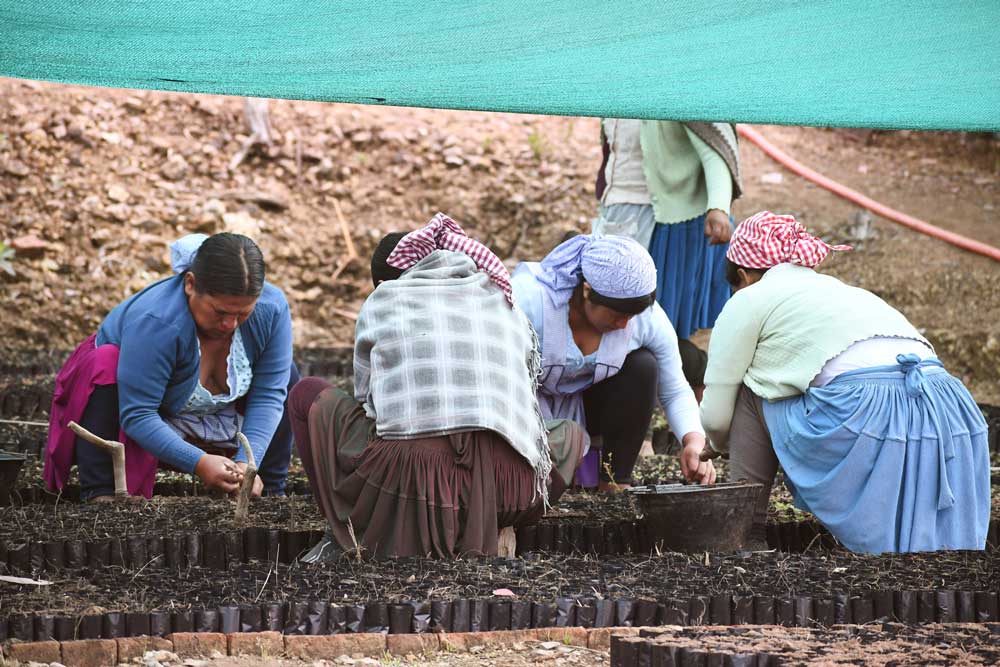
Over time, the Association Armonía through the Tunari Program joined that community effort and helped consolidate it. Between 2020 and 2025, entire families planted more than one million seedlings of 12 native species, among them the kewiña, recovering not only the forest, but also the habitat of the Cochabamba Mountain Finch, an endemic bird of the region.
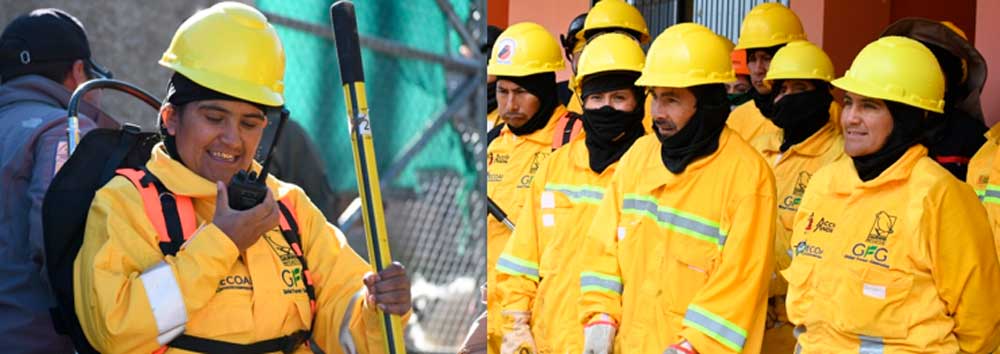
This process also transformed community life: many women assumed leadership roles in the nurseries, in decision-making spaces, and in fire brigades. Among them is Judith, who continued training alongside Armonía to confront fire, and working for the recovery of Tunari National Park.
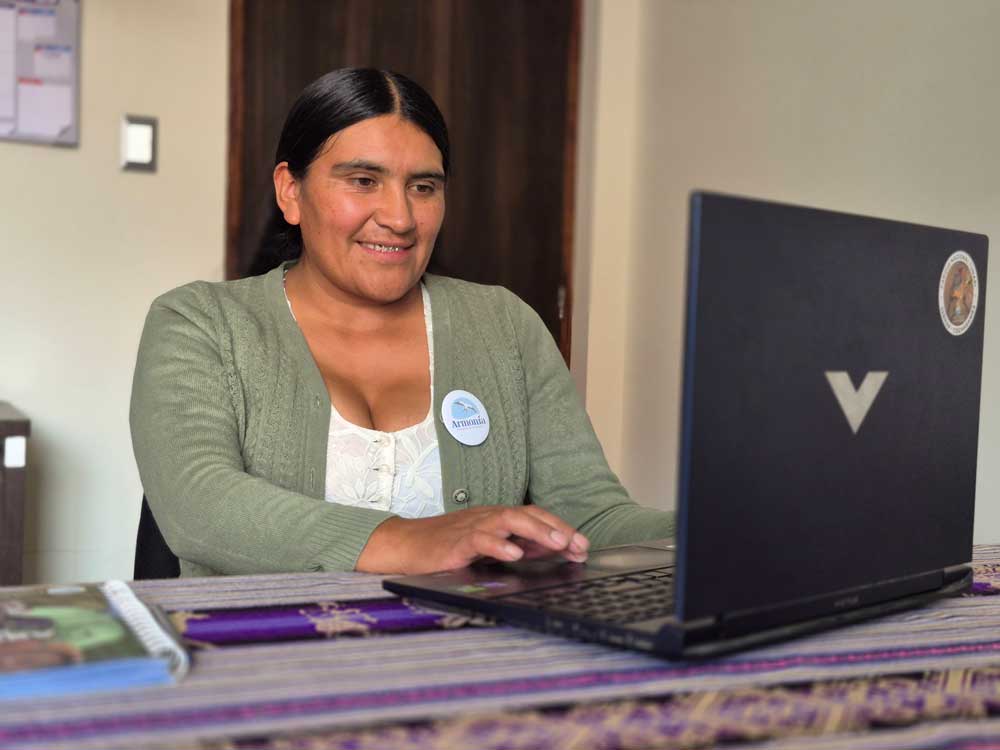
It is March 4, 2026, and the scene from 18 years ago is completely different. Judith Gonzales López no longer fears that someone will catch her reading during work hours. Today she works in a bright office as Community Watershed Management facilitator at Asociación Armonía. When she is not there, she carries her knowledge to other communities, like a kewiña seed that expands beyond its territory to return life to the forest and sow in other women the dream of a life without inequalities.
Por Nicole Denise Laura Vallejos, Erbol:
Mujer de kewiña: la historia de una lideresa rural que siembra bosque y dignidad
Judith Gonzales López, en el bosque de kewiñas del Parque Tunari. Foto: Eneida Zurita (Armonía)
Era una tarde de julio de 2008 y Judith Gonzales López, de 19 años, limpiaba con esmero el escritorio de sus “jefes”. La habitación estaba repleta de libros que levantaba uno a uno para quitarles el polvo. De pronto, un pequeño texto sobre el cultivo de papa atrajo su curiosidad. Al abrirlo observó unos dibujos sobre las enfermedades del tubérculo y, por unos minutos, abandonó su presente.
El tiempo no fue lo único que olvidó: también que era miércoles, el día en que los “jefes” estaban en casa. De repente, alguien entró y una voz la sacó de golpe de aquel breve momento.
“Estás en horario de trabajo, no puedes estar leyendo. No te pago por eso”.
Judith escuchó en silencio y no dijo nada. Cerró el libro, lo puso en su lugar y continuó limpiando.
“Aquel día sentí que no era libre ni siquiera de pensar”, diría años después. Esa idea quedó rebotando en su mente durante varios días, mientras se refugiaba en un pensamiento menos doloroso: “en algún momento tendrá que haber una oportunidad para mí, para salir adelante”.
Pasaría un tiempo largo antes de que Judith encontrara esa oportunidad.
Germinar entre adversidades
En la cordillera de Los Andes, la segunda cadena montañosa más alta después del Himalaya, el árbol milenario de la kewiña, de copa espesa y tronco camaleónico, crece a contracorriente de climas extremos o terrenos difíciles. Su marca es la resistencia.
Judith, de 37 años, nació en Lajra Cueva, una comunidad del municipio de Tiquipaya, al norte de Cochabamba. Sin embargo, fue entre Thola Phujru y Totora, en la ladera sur del Parque Nacional Tunari, donde pasó la mayor parte de su vida junto a sus padres y sus cuatro hermanos, rodeada de ríos, montañas y kewiñas.
Allí, una pequeña choza los resguardaba del frío o el calor extremo. Cocinaban con bosta de vaca, y, como muchas familias del lugar, subsistían de lo que la tierra podía ofrecerles. Ellos se dedicaban al cultivo de papa. Y las niñas y los niños, que sólo podían acceder a la educación hasta quinto grado, aprendían desde muy pequeños todo lo relacionado con las labores del campo.
De aquellos días, lo que Judith más recuerda son las tardes en las que aferrada a su pequeña picota acompañaba a su mamá a labrar la tierra en los sembradíos de papa. También rememora las veces en las que su padre le enseñaba sobre los beneficios de la kewiña mientras las plantaban juntos en las orillas de los ríos y en las partes altas de las montañas. O sobre su profundo deseo de estudiar, terminar la escuela, ir a la universidad y convertirse en dentista.
Sin embargo, en su pueblo no era muy común que las niñas fueran a la escuela. La mayoría de las familias solían destinarlas al cuidado del hogar, la crianza de los hermanos menores y el cultivo.
Judith tenía doce años cuando, por primera vez, se enfrentó a ese destino que parecía reservado para las mujeres de su comunidad. Por aquel entonces, el camión familiar, con el que comercializaban la producción de papa, había sufrido dos graves accidentes de tránsito y las ganancias del negocio se habían ido en gastos hospitalarios y reparaciones de la movilidad que quedó hecha jirones. El dinero ya no alcanzaba para sostener los estudios.
Judith no tuvo más remedio que acatar la decisión de sus padres y reemplazó las horas escolares por el cuidado de sus hermanos menores y las tareas de la casa. Sin embargo, por momentos, algo en ella se resistía a aceptar ese porvenir desigual.
“Me acuerdo que mientras yo cocinaba en q´onchita con leña, mis hermanos se ponían a jugar, y yo me salía junto con ellos, no me importaba si estaba cociendo o no la comida”.
Los días pasaban y en lo único en que Judith pensaba era en volver a la escuela. Dos años después, pudo hacerlo y pese a la oposición de su mamá terminó el quinto grado a los 15.
“Mi mamá no quería porque yo era la única mujer, entre ocho varones de mi curso, que había entrado a estudiar el quinto básico. A mí no me importaba si era la única o no. La cosa era estudiar. Entonces me he lanzado al éxito y lo he terminado”.
Pero aquella alegría fue breve. Al poco tiempo, su madre enfermó a raíz de complicaciones posteriores al parto de su último embarazo, y otra vez tuvo que poner en pausa sus sueños. “Todos empezamos a trabajar porque ya no teníamos qué comer, casi no teníamos nada. Lo único que nunca voy a olvidar es que no nos faltaba trigo seco, haba, arveja, maíz, papa y chuño, porque mi papá siempre sembraba y guardaba”.
En medio de esas responsabilidades, su padre le asignó otro rol: asistir a las asambleas de su pueblo en reemplazo de él. Para Judith, aquello no era menor. En esos espacios, donde las decisiones se tomaban en voz alta y casi siempre por hombres, ella apenas se atrevía a hablar.
“Al principio tenía miedo. Sentía que no sabía nada. Iba a las reuniones y me sentaba en un rincón; solo decía ‘presente’ y nada más. A veces, incluso, los comunarios se molestaban. Mi mamá estaba enferma y, por esa razón, me hacían valer a mí. A muchas mujeres no les hacían valer, a menos que estuvieran solas. Si sus esposos les delegaban, igual no las tomaban en cuenta”.
Pero Judith, que desde pequeña había aprendido a resistir, supo que aquello no encajaba, que debía hacer algo para cambiar esa realidad. “Yo pensaba: esto no puede seguir así. Las mujeres tenemos que educarnos un poquito más para ser valoradas”.
Echar raíces en la ciudad
Hubo una época en la que la arrancaron de las montañas y los roquedales. Produjeron carbón con su tronco. Entonces la tierra perdió a su aliada, la única capaz de retener agua incluso en los bosques más secos.
Durante esa época la escasez asfixiaba su hogar, y Judith pensó que la única vía posible para salir de ella era irse a la ciudad. Así que alcanzó la mayoría de edad y se fue a la capital del cemento en busca de mejores días para ella y su familia.
“Como había dejado de estudiar, estaba frustrada, había perdido las esperanzas, así que dije: iré a la ciudad, ganaré algo de platita, algo siempre va a haber”.
Y sí lo hubo. A los pocos días de su llegada, se empleó como trabajadora del hogar y niñera, cama adentro, en una casa cercana al Aeropuerto Internacional Jorge Wilstermann. Entonces conoció un mundo muy distinto al suyo.
“Cuidaba a dos niñas y veía cómo tenían todo, y cómo no lo valoraban. Dentro de mí nomás decía, los que no tenemos valoramos, y los que tienen no pueden valorar, ¿por qué es así la vida?, me preguntaba”.
También se preguntaba si sus padres estarían bien de salud, si las extenuantes jornadas en el campo no les pesaban más ahora que ya no contaban con ella.
“¿Cómo estará haciendo mi papá solo? Mi mamá estará pasteando solita sus ovejas, yo podría estar ahí, ayudando, eso era lo que más me preocupaba”.
Así transcurrieron dos años, entre trabajos esporádicos y breves visitas a su pueblo. Mientras tanto, una pregunta taladraba su mente, sobre todo cuando veía a sus compañeras, también empleadas domésticas, ir a estudiar en sus tiempos libres “¿Cuándo será mi turno?”, se cuestionaba.
Un día le comentó a su jefa sobre esa inquietud y la respuesta no le agradó para nada. “Me dijo: ¿para qué quieres estudiar?, vas a perder tu tiempo, yo te puedo poner en unos cursos de repostería. Y yo me preguntaba, pero ¿qué voy a hacer con repostería? Para mí esa no era la respuesta correcta, yo quería que me diga, en las noches te voy a dar permiso, puedes ir a pasar clases”.
El primer brote de resiliencia
Su fuerza habita en su corteza, una coraza de láminas que de tanto en tanto se somete a una metamorfosis para protegerlo del frío, el calor o el fuego.
Unas semanas después, ocurrió lo que ya sabemos: tras el llamado de atención que recibió por leer un libro sobre el cultivo de papa en horario laboral, Judith renunció a ese trabajo y se fue en busca de lo que más deseaba: estudiar. Consiguió un cuarto en anticrético y se inscribió en un colegio nocturno de la urbe de Tiquipaya. “Sus palabras me dolieron muchísimo, o sea uno no está libre de nada. Si yo no estuviera aquí, esta casa no estaría limpia. Yo me voy. Cuánto siempre estoy ganando, dije. Llegó un fin de semana, agarré algunas de mis cositas y de callado me fui”.
Estuvo sin trabajo cerca de un mes. Luego, entre idas y venidas, regresó a su pueblo y empezó a trabajar en la producción de flores y fruta —por el que ganaba entre 5 y 10 bolivianos por día— y por las noches iba a clases.
¿Ganan lo mismo hombres y mujeres en el campo?, le pregunto.
No, todavía les pagan menos. Por jornal, a un hombre le pagan entre Bs 100 y 120, y a una mujer, 20 o 30 bolivianos menos, dependiendo también de la conciencia que tengan, responde.
En comunidades como Thola Phujru la desigualdad entre hombres y mujeres se hace evidente, sobre todo, en las labores agrícolas. En estos territorios, las mujeres rurales obtienen entre el 60 y el 70 % del jornal que recibe un hombre, pese a que ambos realizan las mismas tareas, según el estudio Sembrando agua para cosechar vida: gestión comunitaria de cuencas en Tiquipaya (Cochabamba) elaborado por la bióloga y antropóloga Daniela Aguirre (coautora).
Y esta no es solo una realidad local: a escala mundial, la mano de obra femenina en el sector agroalimentario percibe en promedio cerca de un 18 % menos que la masculina, de acuerdo con la Organización de las Naciones Unidas para la Alimentación y la Agricultura (FAO).
Crecer a paso lento
Ostenta un récord Guinness: es uno de los árboles de crecimiento más lento del mundo: apenas un centímetro por año.
Poco a poco, Judith fue transformándose. Un día, casi sin darse cuenta, perdió el miedo a tomar la palabra en las reuniones de su comunidad, donde casi siempre el cuidado del agua —un recurso cada vez más escaso a causa del cambio climático y el avance agrícola— ocupaba el centro de las discusiones.
A partir de ese momento, las cosas comenzaron a alinearse para Judith. Incursionó en espacios de decisión y su liderazgo fue en ascenso. Primero fue nombrada Secretaria de Actas de la organización de mujeres de su comunidad. Más adelante asumió la Secretaría Ejecutiva de la Subcentral 13 de Agosto y de la Central Provincial de Quillacollo, en Cochabamba, convirtiéndose en la primera mujer en ocupar ese cargo. Entre 2010 y 2013, ejerció como concejal del municipio de Tiquipaya. Y, en 2015, fue elegida Subalcaldesa del distrito 3, una jurisdicción que abarca cinco comunidades: La Phia, Cruzani, Thola Phujru, Totora y Linkho Pata.
Pero ninguno de esos logros llegó de inmediato; cada uno fue conquistado con paciencia y esfuerzo. Su crecimiento fue lento, debido a una cadena sucesiva de infortunios que le retrasaron, más no le impidieron, lograr lo que más había querido desde que era una niña: estudiar.
Tras dos intensos años como concejal, Judith finalmente concluyó el bachillerato a los 21. Después consiguió una beca de la Federación de Mujeres Campesinas Bartolina Sisa para estudiar Derecho en la Universidad Mayor de San Simón (UMSS).
Sin embargo, luego de tres meses, perdió esa oportunidad debido a problemas administrativos. La unidad educativa en la que terminó la secundaria extravió sus boletines de notas y otros documentos, por lo que no pudo presentar a tiempo su título de bachiller en humanidades ante la universidad.
Tiempo después, durante un viaje a Chile para participar en un encuentro de saberes andinos, conoció a personas que la animaron a estudiar una carrera vinculada al cuidado de la tierra. Impulsada por ese aliento, regresó a Bolivia, rindió el examen de ingreso a Agronomía y aprobó.
Sin embargo, su paso por la universidad estuvo lleno de interrupciones. Tuvo que alejarse varias veces para trabajar y sostener a su familia, aunque nunca dejó de aprender ni de impulsar procesos comunitarios en su pueblo.
Años después, con el apoyo económico de la directora de Redar Perú, Sonia Salas, a quien conoció en un evento en Chile, pudo retomar sus estudios con mayor estabilidad. Se aferró entonces a la universidad, adelantó materias y, tras una investigación sobre plantas medicinales de su comunidad, presentó una monografía que obtuvo 95 puntos, lo que le permitió graduarse como técnica superior en Agronomía.
Liderazgo ambiental, el fruto mayor
Sus raíces avanzan en silencio, se anclan a la montaña y se extienden más allá de lo visible, sosteniendo la humedad, la tierra y la vida.
Cada espacio de decisión que Judith fue conquistando, desde la dirigencia comunal hasta la Subalcaldía, le permitió consolidar sus conocimientos sobre el manejo del agua y afianzar una convicción profunda en defensa del medioambiente.
“Si no cuidamos el medioambiente, si no cuidamos nuestras recargas hídricas, nuestra agua, ¿de qué vamos a vivir? Ahí es donde yo digo que la tierra también tiene vida como yo. Si no la cuidamos, tampoco va a poder responder. Entonces hay que empezar a cuidarla, porque por ella vivimos”.
En esos años, uno de los aportes más importantes de Judith para la preservación del agua fue la conformación y posterior unificación de la Organización de Gestión de Cuencas (OGC) 13 de Agosto, del Distrito 3 de Tiquipaya, cuyo objetivo es reunir a las familias de la Subcentral 13 de Agosto con instituciones públicas y privadas para cuidar el agua, gestionar los recursos naturales y tomar decisiones sobre las tres microcuencas del distrito.
Más tarde, el 6 de agosto de 2016, un incendio voraz arrasó la comunidad de La Phia del distrito 3. Los pobladores lo perdieron todo: sus animales murieron carbonizados y los cultivos quedaron reducidos a cenizas.
Pero lejos de quebrarse, la comunidad convirtió la tragedia en un nuevo comienzo. Mujeres y hombres se organizaron para reforestar la ladera sur del Parque Nacional Tunari con kewiñas, kiswaras y otras especies nativas.
Primero lo hicieron a través de la Cuenca Pedagógica Khora Tiquipaya, donde Judith también participó aportando con la experiencia que había acumulado desde la infancia en el trabajo con la tierra y el agua.
Con el tiempo, la Asociación Armonía a través del Programa Tunari se sumó a ese esfuerzo comunitario y contribuyó a consolidarlo. Entre 2020 y 2025, familias enteras plantaron más de un millón de plantines de 12 especies nativas, entre ellas la kewiña, recuperando no solo el bosque, sino también el hábitat de la Monterita cochabambina, un ave endémica de la región.
Este proceso, además, transformó la vida comunitaria: muchas mujeres asumieron roles de liderazgo en los viveros, en los espacios de decisión y en las brigadas contra incendios. Entre ellas está Judith, quien continuó formándose junto a Armonía para enfrentar el fuego, y trabajando para la recuperación del Parque Nacional Tunari.
Es 4 de marzo de 2026 y la escena de hace 18 años es completamente distinta. Judith Gonzales López ya no teme que alguien la sorprenda leyendo en horario laboral. Hoy trabaja en una oficina luminosa como facilitadora de Gestión Comunitaria de Cuencas en la Asociación Armonía. Cuando no está allí, lleva su conocimiento a otras comunidades, como una semilla de kewiña que se expande más allá de su territorio para devolverle vida al bosque y sembrar en otras mujeres el sueño de una vida sin desigualdades.
 Bolivian Thoughts | Pensamientos Bolivianos (Bilingual/Bilingüe)
Leave a comment