
By Carlos Lara, ANABolivia.org; Eju.tv:
The Bolivian River Dolphin: A Freshwater Treasure Struggling to Survive
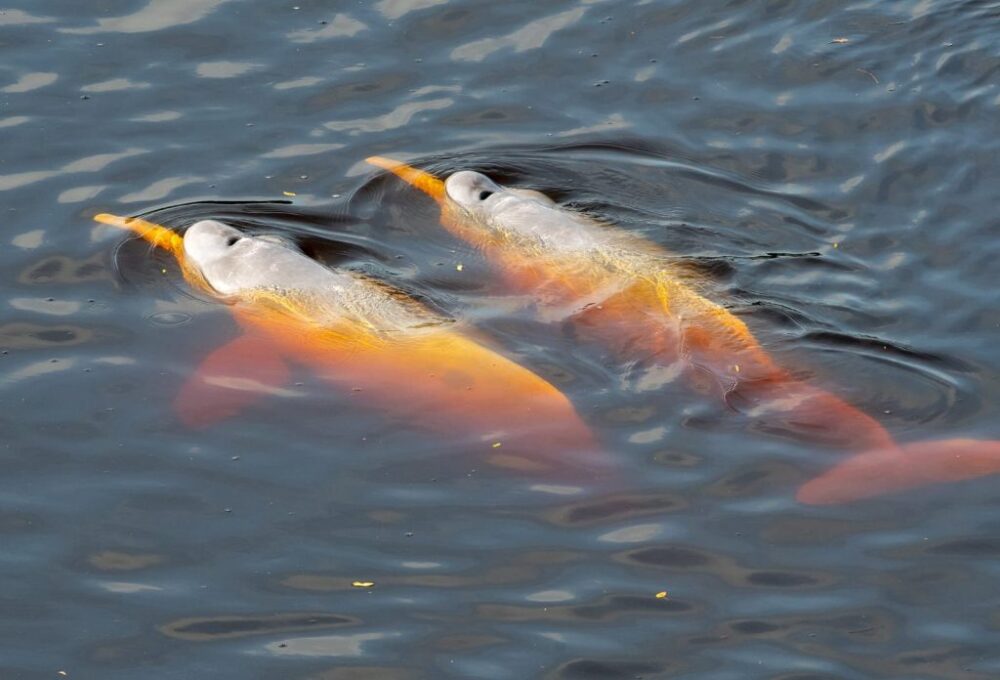
This endemic cetacean mainly inhabits the basins of the Mamoré, Iténez, Tijamuchi rivers, and other Amazonian tributaries.

Source: anabolivia.org
La Paz, February 24 (ANA).– The Bolivian river dolphin (Inia boliviensis) is the country’s only endemic river dolphin. Unfortunately, it faces growing threats that endanger its survival; therefore, significant efforts are being made to protect it and ensure its permanence in Bolivia’s rivers.
This cetacean mainly inhabits the basins of the Mamoré, Iténez, Tijamuchi rivers, and other Amazonian tributaries. It can exceed 2 meters in length and weigh between 80 and 120 kilograms. Cranial and genetic differences clearly distinguish it from the Amazon river dolphin (Inia geoffrensis).
The bufeo prefers slow-moving waters, lagoons, and meanders. It is an opportunistic carnivore that feeds on fish of various sizes, crustaceans, and other aquatic organisms. It is considered a key indicator of river health, since its presence reflects the quality of the aquatic ecosystem.
Juan Carlos Gómez, PhD in Ecology, explains that the bufeo mainly interacts with:
• Prey: Characiformes (piranhas, pacús), Silurids (catfish), and Cichlids.
• Competitors: Giant otter (Pteronura brasiliensis) and piscivorous birds such as herons and cormorants.
• Parasites and symbionts: European studies (Wageningen University) have identified specific helminths and protozoa associated with the species.
However, its reproductive biology makes it vulnerable: gestation lasts between 11 and 12 months and only a single calf is born.
Shadows Threatening Its Aquatic Environment
Among the main threats facing the bufeo are incidental fishing, mercury contamination and solid waste pollution, as well as habitat degradation caused by dams, deforestation, and extractive activities. These factors fragment populations and limit genetic exchange.
The decline of these specimens may bring serious consequences. Gómez states that “the reduction of bufeo populations generates trophic imbalances in aquatic systems, such as the overpopulation of dominant fish, the loss of functional diversity, and serves as an indicator of environmental deterioration.”
Conserving It Means Protecting River Life
Gómez, a specialist in Natural Resource Management, Protected Areas, and Environment, maintains that conserving the bufeo requires a multidimensional approach:
Protection of critical habitats: Establish protected areas in the Mamoré, Iténez, and Abuná rivers, ensuring ecological corridors.
Sustainable water resource management: Evaluate dam impacts and promote less disruptive energy alternatives.
Population monitoring and bioindicators: Implement monitoring programs with participation from universities and local communities.
Education and culture: Strengthen recognition of the bufeo as biocultural heritage, integrating Indigenous knowledge and awareness campaigns.
International cooperation: Coordinate efforts with Brazil and Peru to protect transboundary basins and share scientific information.
Currently, some organizations have developed various applications that allow the recording of sightings, presence of calves, and water quality, with voluntary contributions from fishermen and local community members. Additionally, satellite transmitters and scientific expeditions are being used to assess movements and populations, with the goal of strengthening conservation strategies.
The Law Seeking to Protect the Bolivian River Dolphin
Law 284, dated September 21, 2012, declared the bufeo or freshwater dolphin (Inia boliviensis) as Natural Heritage of Bolivia. Article 2 states that “The Executive Branch of the Central Level of the State, in coordination with the Autonomous Territorial Entities, shall prioritize the protection or conservation of the Bufeo or freshwater dolphin and its habitat through policies, programs, and projects in the short, medium, and long term.”
Today, the survival of the Bolivian river dolphin depends on joint work between science and society. Its protection guarantees the preservation of river life—heritage as rich as it is fragile within the Amazon.
Por Carlos Lara, ANABolivia.org; Eju.tv:
El bufeo boliviano: un tesoro de agua dulce que lucha por sobrevivir
Este cetáceo endémico habita principalmente en las cuencas de los ríos Mamoré, Iténez, Tijamuchi y otros afluentes amazónicos.
Fuente: anabolivia.org
La Paz, 24 febrero (ANA).– El bufeo boliviano (Inia boliviensis) es el único delfín de río endémico del país. Lamentablemente, enfrenta crecientes amenazas que ponen en riesgo su supervivencia; por ello, se realizan grandes esfuerzos para protegerlo y garantizar su permanencia en los ríos de Bolivia.
Este cetáceo habita principalmente en las cuencas de los ríos Mamoré, Iténez, Tijamuchi y otros afluentes amazónicos. Puede superar los 2 metros de longitud y pesar entre 80 y 120 kilogramos. Diferencias craneales y genéticas lo distinguen claramente del delfín amazónico (Inia geoffrensis).
El bufeo prefiere aguas de curso lento, lagunas y meandros. Es un carnívoro oportunista que consume peces de diversos tamaños, crustáceos y otros organismos acuáticos. Se le considera un indicador clave de la salud de los ríos, pues su presencia refleja la calidad del ecosistema acuático.
Juan Carlos Gómez, doctor en Ecología, explica que el bufeo interactúa principalmente con:
• Presas: Characiformes (pirañas, pacús), Silúridos (bagres) y Cíclidos.
• Competidores: Nutria gigante (Pteronura brasiliensis) y aves piscívoras como garzas y cormoranes.
• Parásitos y simbiontes: Estudios europeos (Wageningen University) han identificado helmintos y protozoarios específicos asociados a la especie.
Sin embargo, su biología reproductiva lo hace vulnerable: la gestación dura entre 11 y 12 meses y nace una sola cría.
Sombras que amenazan su entorno acuático
Entre las principales amenazas que se ciernen sobre el bufeo, se encuentran la pesca incidental, la contaminación por mercurio y residuos sólidos, así como la degradación de su hábitat debido a represas, deforestación y actividades extractivas. Estos factores provocan la fragmentación de sus poblaciones y limitan su intercambio genético.
La disminución de estos ejemplares puede traer graves consecuencias. Gómez afirma que “la reducción de las poblaciones de bufeos genera desequilibrios tróficos en los sistemas acuáticos, como la sobrepoblación de peces dominantes, la pérdida de diversidad funcional y es un indicador de deterioro ambiental”
Conservarlo es proteger la vida de los ríos
Gómez, especialista en gestión de Recursos Naturales, Áreas Protegidas y Medio Ambiente, sostiene que la conservación del bufeo requiere un enfoque multidimensional:
Protección de hábitats críticos: Establecer áreas protegidas en ríos Mamoré, Iténez y Abuná, garantizando corredores ecológicos.
Gestión sostenible de recursos hídricos: Evaluar impactos de represas y promover alternativas energéticas menos disruptivas.
Monitoreo poblacional y bioindicadores: Implementar programas de seguimiento con la participación de universidades y comunidades locales.
Educación y cultura: Fortalecer la valoración del bufeo como patrimonio biocultural, integrando saberes indígenas y campañas de sensibilización.
Cooperación internacional: Articular esfuerzos con Brasil y Perú para proteger cuencas transfronterizas y compartir información científica.
Actualmente, algunas organizaciones han desarrollado diversas aplicaciones que permiten registrar avistamientos, presencia de crías y calidad del agua, con el aporte voluntario de pescadores y comunarios. Por otra parte, se emplean transmisores satelitales y expediciones científicas para evaluar sus movimientos y poblaciones, con el objetivo de fortalecer las estrategias de conservación.
La ley que busca proteger al bufeo boliviano
La Ley 284, del 21 de septiembre de 2012, declaró al bufeo o delfín de agua dulce (Inia boliviensis) como Patrimonio Natural de Bolivia. En su artículo 2, señala que “El Órgano Ejecutivo del Nivel Central de Estado, en coordinación con las Entidades Territoriales Autónomas, priorizarán la protección o conservación del Bufeo o Delfín de agua dulce y su hábitat, a través de políticas, programas y proyectos a corto, mediano y largo plazo”.
La supervivencia del bufeo boliviano depende hoy del trabajo conjunto entre la ciencia y la sociedad. Su protección garantiza la preservación de la vida en los ríos, un patrimonio tan rico como frágil en la Amazonia.
https://eju.tv/2026/02/el-bufeo-boliviano-un-tesoro-de-agua-dulce-que-lucha-por-sobrevivir/

 Bolivian Thoughts | Pensamientos Bolivianos (Bilingual/Bilingüe)