
By EFE, Red Uno:
Jaguar Rescued from 2024 Fires to Be Returned to Its Natural Environment
The feline was rescued in 2024 after fleeing wildfires in Santa Cruz and spent two years in rehabilitation before her upcoming reintroduction.
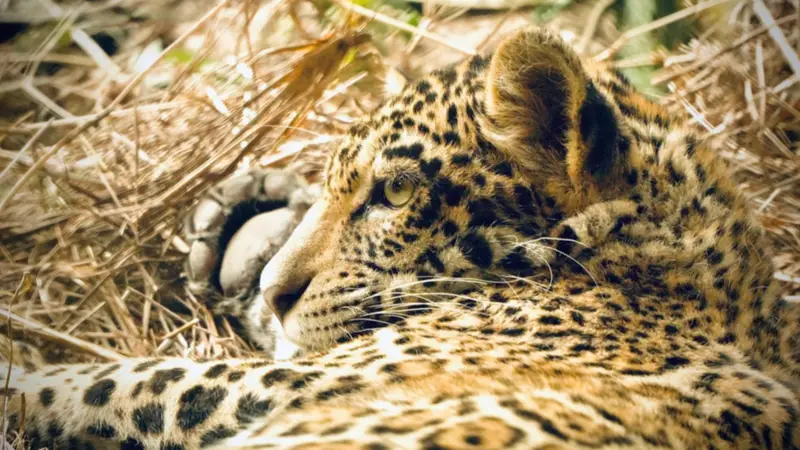
The jaguar Yaguara in Santa Cruz. File photo: EFE
For the first time in Bolivia, a jaguar rescued in 2024 from the forest fires in the Amazon will be released and returned to its habitat after two years of rehabilitation, marking “a milestone” in the history of the Andean country and its wildlife, activist Tania Baltazar told EFE on Monday.
The jaguar Yaguara was rescued after she and her brother fled in May 2024 from the forest fires that were devouring the forests in the eastern region of Santa Cruz.
The Inti Wara Yassi Community (CIWY) rescued her from a ranch where she was being kept tied up and in a cage, while her brother escaped.
“The jaguar is an umbrella species in the ecosystem, and Yaguara’s release opens a milestone in Bolivia’s history,” said Baltazar, who is responsible for her rehabilitation and the process of returning Yaguara to her habitat.
The jaguar was “completely dehydrated” and always “on the defensive,” so work first had to focus on her health.
A team of veterinarians determined that she was a “fully wild” feline, with no contact with humans and not a victim of wildlife trafficking, meaning Yaguara has the opportunity to return to her territory. CIWY therefore added experts from other South American countries to its team and began the rehabilitation process, Baltazar explained.
Initially, they prepared a small enclosure of about 2,000 square meters inside Ambue Ari Park for her movement and adaptation. Later, with “good guidance and other experts,” she was placed in a 10,000-square-meter enclosure with abundant flora and fauna, as well as a lagoon, in which about $70,000 was invested.
The activist noted that over these two years Yaguara “has grown considerably,” and it was observed through camera traps that “she has already entered the lagoon, swam, grabbed a log to hold onto, and has already hunted.”
“She has been sedated twice and it was determined that she is completely healthy, without any illness,” Baltazar added.
The activist emphasized that while Yaguara’s rehabilitation “has been a challenge” that provides lessons for the care of other felines, the release also “has to be responsible.”
“It will be in the coming months; post-release monitoring must be carried out, and a (monitoring) collar is required, which is being made in order to collect data after her release,” Baltazar said.
The jaguar is a species at risk in Bolivia due to habitat destruction caused by agricultural and cattle expansion, as well as illegal trafficking.
In April of last year, for the first time in Bolivia, the Agro-Environmental Court ruled that the relevant authorities must take protective measures for the jaguar and its habitat, after decades of illegal hunting, international trafficking, and other threats that led to the death of at least 95 specimens in recent years.
It is the first time that a Bolivian court has accepted a collective complaint filed by activists, NGOs, journalists, politicians, environmentalists, and citizens in order to protect the jaguar.
The jaguar is the largest feline in the Americas and a key regulator of ecosystems. Its disappearance would affect the balance of biodiversity in our forests, water systems, and the overall health of the continent, according to data from the collective “Llanto del jaguar.”
Por EFE, Red Uno:
Jaguar rescatado de incendios en 2024 será devuelto a su entorno natural
La felina fue rescatada en 2024 tras huir de incendios en Santa Cruz y pasó dos años en rehabilitación antes de su próxima reintroducción.
La jaguar Yaguara en Santa Cruz. Foto archivo: EFE
Por primera vez en Bolivia, un jaguar rescatado en 2024 de los incendios forestales en la Amazonía será liberado y devuelto a su hábitat después de dos años de rehabilitación, lo que marca “un hito” para la historia del país andino y su fauna, dijo este lunes a EFE la activista Tania Baltazar.
La jaguar Yaguara fue rescatada después de que esta y su hermano huyeron en mayo de 2024 de los incendios forestales que devoraban los bosques en la región oriental de Santa Cruz.
La Comunidad Inti Wara Yassi (CIWY) la rescató de una hacienda donde la tenían retenida amarrada y en una jaula, mientras que su hermano huyó.
“El jaguar es una paraguas en el ecosistema y la liberación de Yaguara abre un hito en la historia de Bolivia”, indicó Baltazar, responsable de su rehabilitación y del proceso para que Yaguara regrese a su hábitat.
La jaguar estaba “completamente deshidratada” y siempre “a la defensiva”, por lo que se tuvo que trabajar primero en su salud.
Un equipo de veterinarios estableció que se trataba de un felino “totalmente salvaje”, sin contacto con el ser humano ni víctima de tráfico de animales, lo que significa que Yaguara tiene la oportunidad de regresar a su territorio, por lo que CIWY sumó a su equipo a otros expertos de otros países de Suramérica y comenzaron el proceso de rehabilitación, contó Baltazar.
En un principio acondicionaron un recinto pequeño de unos 2.000 metros cuadrados dentro del parque Ambue Ari para su desplazamiento y convivencia, pero después con “un buen asesoramiento y otros expertos” la pusieron en un recinto de 10.000 metros cuadrados, con mucha flora y fauna, y además con una laguna, en el cual se invirtió unos 70.000 dólares.
La activista señaló que en estos dos años Yaguara “creció bastante” y se pudo observar a través de cámaras ‘trampa’ que “ya entró a la laguna, nadó, agarró un tronco para sujetarse y ya cazó”.
“Ha sido sedada dos veces y se estableció que está completamente sana, sin ninguna enfermedad”, añadió Baltazar.
La activista destacó que si bien la rehabilitación de Yaguara “ha sido un reto” que deja aprendizajes para el cuidado de otros felinos, la liberación también “tiene que ser responsable”.
“Será en los próximos meses, se tiene que hacer un monitoreo posliberación, se requiere un collar (de monitoreo) que se lo está haciendo para poder sacar datos después de liberarla”, indicó Baltazar.
El jaguar es una especie que corre peligro en Bolivia por la destrucción de su hábitat debido a la expansión agrícola y ganadera, además del tráfico ilegal.
En abril del año pasado, por primera vez en Bolivia el Tribunal Agroambiental determinó que las instancias correspondientes tomen medidas de protección al jaguar y a su hábitat, después de décadas de caza ilegal, tráfico internacional y otras amenazas que representaron la muerte de al menos 95 ejemplares en los últimos años.
Es la primera vez que un tribunal boliviano acepta una denuncia colectiva que fue presentada por activistas, ONG, periodistas, políticos, ambientalistas y ciudadanos con el fin de proteger el jaguar.
El jaguar es el mayor felino de América y un regulador clave de los ecosistemas. Su desaparición afectaría el equilibrio de la biodiversidad en nuestros bosques, del agua y toda la salud del continente, según datos del colectivo ‘Llanto del jaguar’.

 Bolivian Thoughts | Pensamientos Bolivianos (Bilingual/Bilingüe)