
By El Diario:
- “Power that is not exercised is lost. You are still in time to assert authority, regain control of the State, and break the double obedience that weakens you today. In Aymara logic, one who hesitates too much ceases to be chief. And when that happens, the community seeks another path,” the political scientist advised the President of the State.
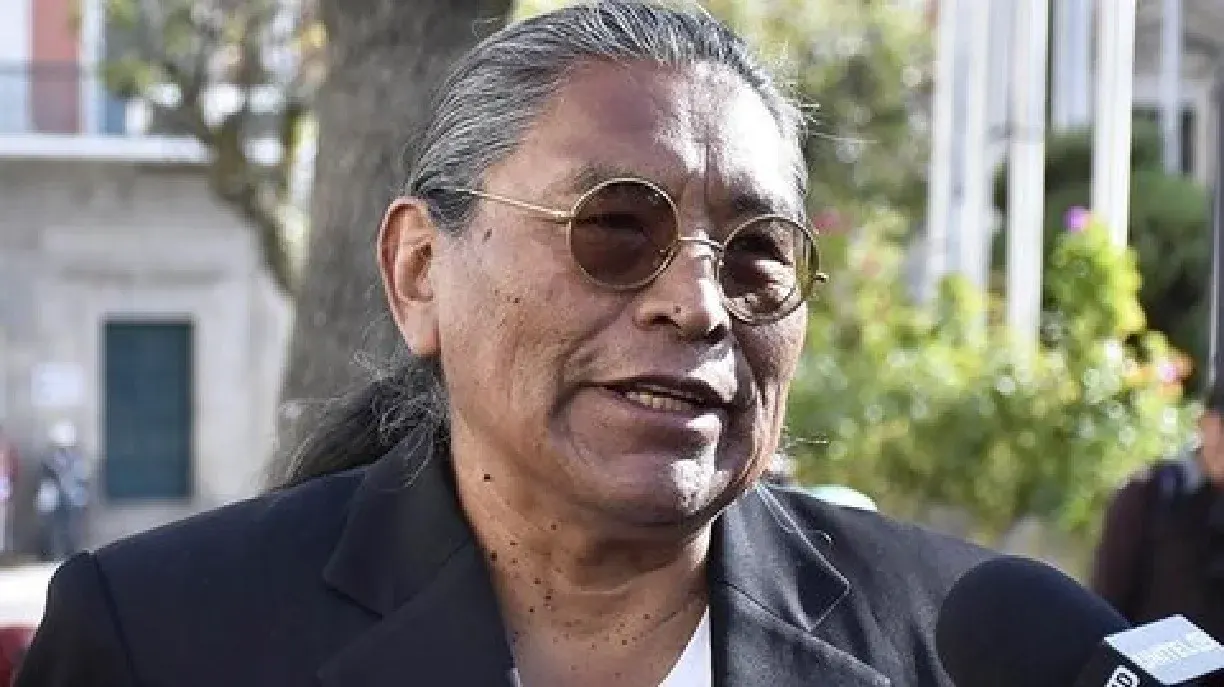
At 100 days into the government of Rodrigo Paz, economist and political scientist Fernando Untoja described an administration that “put the surface in order” but avoided touching the core of power, warning that the Bolivian State remains governed by a bureaucracy of the Movimiento al Socialismo (MAS) that, far from enabling governability, keeps the country in conflict, even though the “threats” are no longer permanent.
Offering a critical analysis of the current administration through an “Aymara lens,” Untoja acknowledges progress in the initial stabilization of problems that were urgent for the country, though he warns that the Government has yet to consolidate command over the state structure.
In the former congressman’s words, “the leak was patched before the house collapsed, but no one confuses containment with leadership.” His diagnosis comes amid a political context marked by internal tensions, especially following an ephemeral relationship between the president and his vice president, Edman Lara, just weeks after their rise to power.
As the third month of the new administration begins, and after an agonizing electoral defeat of the MAS following two decades of political hegemony under Evo Morales (2005–2019) and Luis Arce (2020–2025), Untoja stated that the debate over the direction of Paz’s government is not confined to the economic and political spheres, but also extends into the symbolic realm.
“Ninety days are enough to know whether the one in command understands the weight of the staff. Today, from this perspective, the assessment is severe: the Government ordered the surface, but did not touch the core of power,” he posted on his social media.
The academic acknowledges that the Executive succeeded in reducing the sense of fear that prevailed among sectors of the citizenry and in containing pockets of economic disorder, particularly regarding U.S. dollars and hydrocarbons: “It is true, fear receded, the citizen no longer lives under permanent threat, restoring a basic balance.”
However, warning that containment is not the same as leadership, he explained that the structural problem lies in the Government’s failure to consolidate full authority over the state apparatus, which would remain in the hands of a sector that, although no longer officially appearing on Executive or Assembly lists, has not ceased exercising power.
“The State remains captured by a MAS bureaucracy that does not obey; it delays, blocks, and sabotages. In Aymara terms, that is clear: there are two authorities, and the false one continues to operate,” he stated.
“INCOMPLETE COMMAND”
Drawing an analogy to the Aymara community, which is governed by a “mallku,” Untoja believes the population tends to divide when authority does not exercise power clearly. In his words, “the government hesitates by allowing subversive discourse to keep breathing, by failing to clearly define the meaning of the transition, and by tolerating ambiguities that cause erosion.”
In this sense, Untoja assesses the current situation as a country under a command that “does not feel complete” and is not exercised forcefully, which could cause the people’s trust to dissolve and the vacuum of authority to be filled by “another” who will not bring positive days for the country.
Although the current rift between the two top men of State dates back to the first days of government, recently Lara has adopted more confrontational positions toward the Head of State, even announcing that he will “fight from the streets” against corruption and against sectors promoting interests contrary to those of the population, indirectly alluding to Paz’s ministerial cabinet.
For his part, although Paz usually refrains from responding to the attitudes and statements of the ex officio president of the Legislative Assembly, his latest actions have shown a clear distancing from Lara and an intention to strip him of executive powers. For example, with the inauguration of the virtual presidential office, Paz will be able to govern remotely even while outside the country, preventing the Vice President from exercising constitutional succession of command.
Several analysts agree that these differences do not amount to a formal rupture, but they do reveal a strategic tension between the two leaders. In that context, Untoja’s warning resonates: “A State where the administration does not respond to political power is a State without hierarchy. And without hierarchy there is no investment, no trust, no future.”
GOVERNING IS NOT ENDLESS DIALOGUE
The article also questions the “maximalism” of sectors demanding immediate transformations in a weakened State. For Untoja, demanding total results within short timeframes can reproduce political logics of the socialist past, when disorder reigned in the State.
“Demanding immediate solutions in a destroyed State is to ignore reality or manipulate it (and) ends up speaking the same language as the previous socialism: everything now, everything free, everything possible. Thus the balance is broken and the return of disorder is prepared. In our logic, promising what cannot be fulfilled is breaking one’s word, and whoever breaks his word loses respect.”
In Andean terms, the political scientist stressed that the staff of command is not merely an ornamental symbol, but a responsibility that must be materialized. In that sense, he delivers a direct message to the President: exercise authority or risk the erosion of legitimacy, because in Aymara logic, whoever doubts his authority ultimately loses it.
“Mr. President, the staff is heavy. Whoever takes it must bring order or return it. Governing is not endlessly dialoguing with those who resist; it is cleaning, cutting, and deciding. Power that is not exercised is lost. And time, once lost, does not return. You are still in time to assert authority, regain control of the State, and break the double obedience that weakens you today,” he recommended.
Por El Diario:
- “El poder que no se ejerce, se pierde. Usted aún está a tiempo de marcar autoridad, recuperar el control del Estado y romper la doble obediencia que hoy lo debilita. En la lógica aymara, el que duda demasiado deja de ser jefe. Y cuando eso pasa, la comunidad busca otro camino”, recomendó el politólogo al Presidente del Estado.
A 100 días del gobierno de Rodrigo Paz, el economista y politólogo, Fernando Untoja, describió un gobierno que “ordenó la superficie” pero omitió tocar el núcleo del poder, al advertir que el Estado boliviano permanece gobernado por una burocracia del Movimiento al Socialismo (MAS) que, lejos de permitir gobernabilidad, mantiene al país en conflictividad, pese a que las “amenazas” ya no son permanentes.
Ofreciendo un análisis crítico de la actual administración bajo una “mirada aymara”, Untoja reconoce avances en la estabilización inicial de problemas que eran urgentes para el país, aunque advierte que el Gobierno aún no consolida el mando sobre la estructura estatal.
En palabras del exdiputado, “se tapó la gotera antes de que caiga la casa, pero nadie confunde contención con conducción”. Su diagnóstico ocurre en medio de un contexto político marcado por tensiones internas, especialmente tras una efímera relación entre el mandatario y su vicepresidente, Edman Lara, a pocas semanas de su ascensión al poder.
Iniciado el tercer mes de la nueva gestión y tras una agónica derrota electoral del MAS luego de dos décadas de hegemonía política a la cabeza de Evo Morales (2005-2019) y Luis Arce (2020-2025), Untoja manifestó que el debate sobre el rumbo del gobierno de Paz no se instala solamente en el terreno económico y político, sino también en el simbólico.
“Noventa días son suficientes para saber si quien está al mando entiende el peso del bastón. Hoy, desde esta mirada, el balance es severo: el Gobierno ordenó la superficie, pero no tocó el núcleo del poder”, publicó en sus redes sociales.
El académico reconoce que el Ejecutivo logró reducir la sensación de temor que predominaba en sectores ciudadanos y contener focos de desorden económico, particularmente en torno a las divisas norteamericanas y los hidrocarburos: “Es cierto, el miedo retrocedió, el ciudadano ya no vive bajo amenaza permanente, restableciendo un equilibrio básico”.
Sin embargo, advirtiendo que la contención no equivale a conducción, explicó que el problema estructural radica en que el Gobierno no ha logrado consolidar autoridad plena sobre el aparato estatal, el cual permanecería en manos de un sector que, aunque ya no figura oficialmente en listas del Ejecutivo o en la Asamblea, no dejó de ejercer poder.
“El Estado sigue capturado por una burocracia masista que no obedece, (sino que) retrasa, bloquea y sabotea. Eso, en términos aymaras, es claro: hay dos autoridades, y la falsa sigue operando”, afirmó.
“MANDO INCOMPLETO”
En analogía a la comunidad aymara, que es gobernada por un “mallku”, Untoja considera que la población suele dividirse cuando la autoridad no ejerce el poder de manera clara. En sus palabras, “el gobierno duda al permitir que discursos subversivos sigan respirando, al no fijar con claridad el sentido de la transición y al tolerar ambigüedades que desgastan”.
En este sentido, Untoja evalúa la situación actual como un país bajo un mando que “no se siente completo” y no se ejerce de manera contundente, lo que puede provocar que la confianza del pueblo se disuelva y el vacío de autoridad sea ocupado por “otro” que no traerá días positivos para el país.
Aunque el actual divorcio entre los dos primeros hombres de Estado vino desde los primeros días de gobierno, recientemente Lara ha adoptado posiciones más confrontativas hacia el Jefe de Estado, anunciando incluso que “peleará desde las calles” contra la corrupción y contra sectores que propugnen intereses contrarios al de la población, aludiendo indirectamente al gabinete ministerial de Paz.
Por su lado, aunque Paz suele abstenerse de responder a las actitudes y declaraciones del presidente nato de la Asamblea Legislativa, sus últimas acciones han evidenciado un claro alejamiento de Lara y una intención de restarle atribuciones ejecutivas. Por ejemplo, con la inauguración del despacho presidencial virtual, Paz podrá gobernar a distancia aún fuera del país, impidiendo al Vice ejercer la sucesión constitucional del mando.
Varios analistas coinciden en que estas diferencias no configuran una ruptura formal, pero sí revelan una tensión estratégica entre ambos gobernantes. En ese marco, la advertencia de Untoja resuena: “Un Estado donde la administración no responde al poder político es un Estado sin jerarquía. Y sin jerarquía no hay inversión, no hay confianza, no hay futuro”.
GOBERNAR NO ES DIALOGAR ETERNAMENTE
El artículo también cuestiona el “maximalismo” de sectores que exigen transformaciones inmediatas en un Estado debilitado. Para Untoja, demandar resultados totales en plazos breves puede reproducir lógicas políticas del pasado socialista, donde el desorden del Estado campeaba.
“Exigir soluciones inmediatas en un Estado destruido es desconocer la realidad o manipularla (y) termina hablando el mismo idioma del socialismo anterior: todo ahora, todo gratis, todo posible. Así, se rompe el equilibrio y se prepara el retorno del desorden. En nuestra lógica, prometer lo que no se puede cumplir es faltar a la palabra, y quien falta a la palabra pierde respeto”.
En términos andinos, el politólogo subrayó que el bastón de mando no es un mero símbolo ornamental, sino una responsabilidad que debe materializarse. En tal sentido, plantea un mensaje directo al Presidente: ejercer autoridad o arriesgar la erosión de legitimidad, pues en la lógica aymara, quien duda de su autoridad, la termina perdiendo.
“Presidente, el bastón pesa. Quien lo toma, debe ordenar o devolverlo. Gobernar no es dialogar eternamente con quienes resisten; es limpiar, cortar y decidir. El poder que no se ejerce se pierde. Y el tiempo, cuando se pierde, no regresa. Usted aún está a tiempo de marcar autoridad, recuperar el control del Estado y romper la doble obediencia que hoy lo debilita”, recomendó.
https://www.eldiario.net/portal/2026/02/18/estado-sigue-capturado-por-burocracia-masista/

 Bolivian Thoughts | Pensamientos Bolivianos (Bilingual/Bilingüe)