
By Sumando Voces:
Study Warns of the Expansion of Illegal Mining in Bolivia and Raises Alarm Over Environmental and Economic Impacts
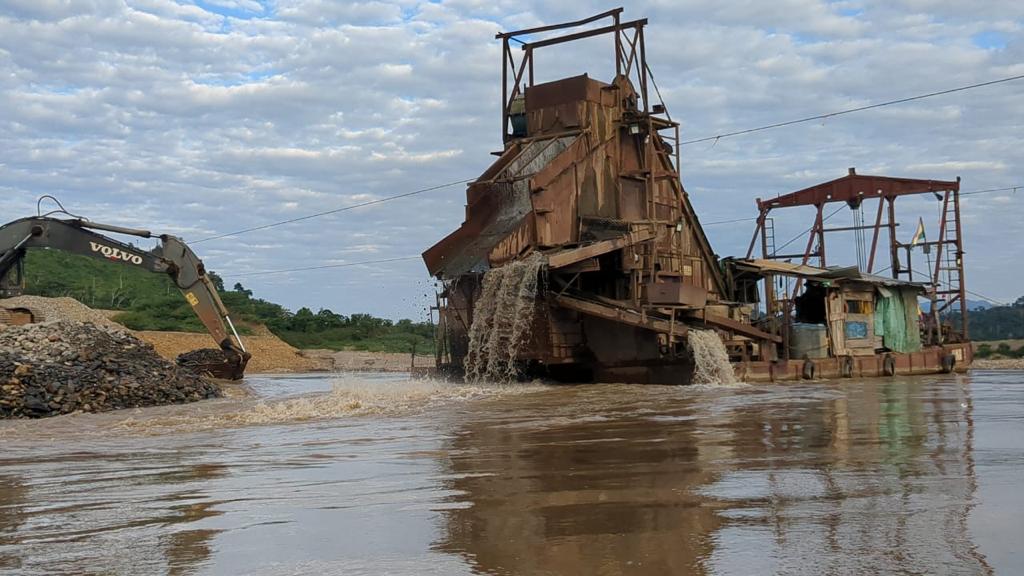
Mining dredges. Photo: CPILAP
A recent investigation warns that illegal mining has ceased to be a marginal phenomenon and has become a structural threat that compromises the economy, the ecosystem, and national security. The study “Presence and Impact of Illegal Mining in Bolivia,” by researcher Alfredo Zaconeta, reveals a complex network of impunity that stretches from the basins of the northern Amazon to the shafts of the western Andes.
Over the past decade, the departments of La Paz, Beni, and Pando have consolidated their position as the epicenter of illegal gold mining. Under the façade of cooperatives, hundreds of dredges and rafts operate without environmental controls in critical rivers such as the Madre de Dios and within protected areas like Madidi National Park.
The environmental cost is devastating, as the indiscriminate use of mercury for gold amalgamation is irreversibly contaminating water sources, affecting the health of riverside Indigenous communities with toxicity levels that far exceed health limits. According to the document, this activity is fueled by foreign capital — from Chinese, Colombian, and Peruvian sources — that supplies technology and financing, systematically evading regulatory frameworks.
“Jukeo” and the Social Drama in the West
While the north gleams with gold, in the traditional mining districts of Oruro and Potosí illegality takes the form of tin and zinc. The phenomenon of “jukeo” (systematic theft of mineral ore) has severely hit state-owned companies such as Huanuni and Colquiri, generating losses that in Huanuni alone are estimated at 20 million dollars annually.
However, the most alarming impact is human. The report documents the persistence of child and adolescent labor in mining cooperatives. This situation has already had international repercussions: in 2018, the technology giant Apple excluded Metalúrgica Vinto from its list of suppliers amid suspicions of child labor in its supply chain.
Although the mining sector accounted for 52.4% of the country’s total exports in 2024, its contribution to Gross Domestic Product (GDP) fell from 7.6% in 2009 to 5.1% in 2023. This paradox is explained, in part, by the massive evasion of royalties and taxes fostered by the illegal market.
The investigation points to the institutional weakness of entities such as the AJAM and Senarecom as a key factor. The lack of logistical capacity, corruption, and the political weight of cooperative sectors have stalled legislative attempts to toughen the fight against illegal mining.
The Challenge: Beyond Punitive Measures
Zaconeta’s conclusion is forceful: combating illegality requires genuine political will that goes beyond repression. The report suggests that illegal mining is, to a large extent, a symptom of the State’s inability to generate decent employment in mining areas, turning “jukeo” into a survival strategy in the face of poverty.
To curb this extractive model that “mortgages the natural and social heritage,” the study proposes the urgent implementation of a robust mineral traceability system, the simplification of formalization processes for small miners, and a deep regulatory reform to restore the rule of law in the affected territories.
Por Sumando Voces:
Estudio advierte expansión de la minería ilegal en Bolivia y alerta por impactos ambientales y económicos
Dragas mineras. Foto: CPILAP
Una reciente investigación advierte que la minería ilegal ha dejado de ser un fenómeno marginal para convertirse en una amenaza estructural que compromete la economía, el ecosistema y la seguridad nacional. El estudio «Presencia e incidencia de la minería ilegal en Bolivia», del investigador Alfredo Zaconeta, revela un complejo entramado de impunidad que abarca desde las cuencas del norte amazónico hasta los socavones del occidente andino.
En la última década, los departamentos de La Paz, Beni y Pando se han consolidado como el epicentro de la minería aurífera ilegal. Bajo la fachada de cooperativas, cientos de dragas y balsas operan sin control ambiental en ríos críticos como el Madre de Dios y dentro de áreas protegidas como el Parque Nacional Madidi.
El costo ambiental es devastador, ya que el uso indiscriminado de mercurio para la amalgamación del oro está contaminando irreversiblemente las fuentes de agua, afectando la salud de las comunidades indígenas ribereñas con niveles de toxicidad que superan ampliamente los límites sanitarios. Según el documento, esta actividad es alimentada por capitales extranjeros —de origen chino, colombiano y peruano— que suministran tecnología y financiamiento, evadiendo sistemáticamente los marcos regulatorios.
El «Jukeo» y el drama social en el Occidente
Mientras el norte brilla por el oro, en los distritos mineros tradicionales de Oruro y Potosí la ilegalidad tiene el rostro del estaño y el zinc. El fenómeno del «jukeo» (robo sistemático de mineral) ha golpeado duramente a empresas estatales como Huanuni y Colquiri, generando pérdidas que solo en Huanuni se estiman en 20 millones de dólares anuales.
Sin embargo, el impacto más alarmante es el humano. El informe documenta la persistencia del trabajo infantil y adolescente en las cooperativas mineras. Esta situación ya ha tenido repercusiones internacionales: en 2018, la gigante tecnológica Apple excluyó a la Metalúrgica Vinto de su lista de proveedores ante la sospecha de uso de mano de obra infantil en su cadena de suministro.
A pesar de que el sector minero representó el 52,4% del total de las exportaciones del país en 2024, su aporte al Producto Interno Bruto (PIB) ha caído del 7,6% en 2009 al 5,1% en 2023. Esta paradoja se explica, en parte, por la evasión masiva de regalías y tributos que fomenta el mercado ilegal.
La investigación apunta a la debilidad institucional de entidades como la AJAM y el Senarecom como un factor clave. La falta de capacidad logística, la corrupción y el peso político de los sectores cooperativistas han frenado intentos legislativos para endurecer la lucha contra la minería ilegal.
El desafío: Más allá de lo punitivo
La conclusión de Zaconeta es contundente: el combate a la ilegalidad requiere una voluntad política real que trascienda la represión. El informe sugiere que la minería ilegal es, en gran medida, un síntoma de la incapacidad del Estado para generar empleo digno en las zonas mineras, convirtiendo al «jukeo» en una estrategia de supervivencia ante la pobreza.
Para frenar este modelo extractivo que «hipoteca el patrimonio natural y social», se propone la implementación urgente de un sistema robusto de trazabilidad del mineral, la simplificación de la formalización para pequeños mineros y una reforma normativa profunda que devuelva el Estado de Derecho a los territorios afectados.

 Bolivian Thoughts | Pensamientos Bolivianos (Bilingual/Bilingüe)