
By Visión 360:
From the plato paceño to api with pastel: the flavors that never miss at Alasita
Each dish, both sweet and savory, is a hope that nothing will be missing from the table in the coming year.
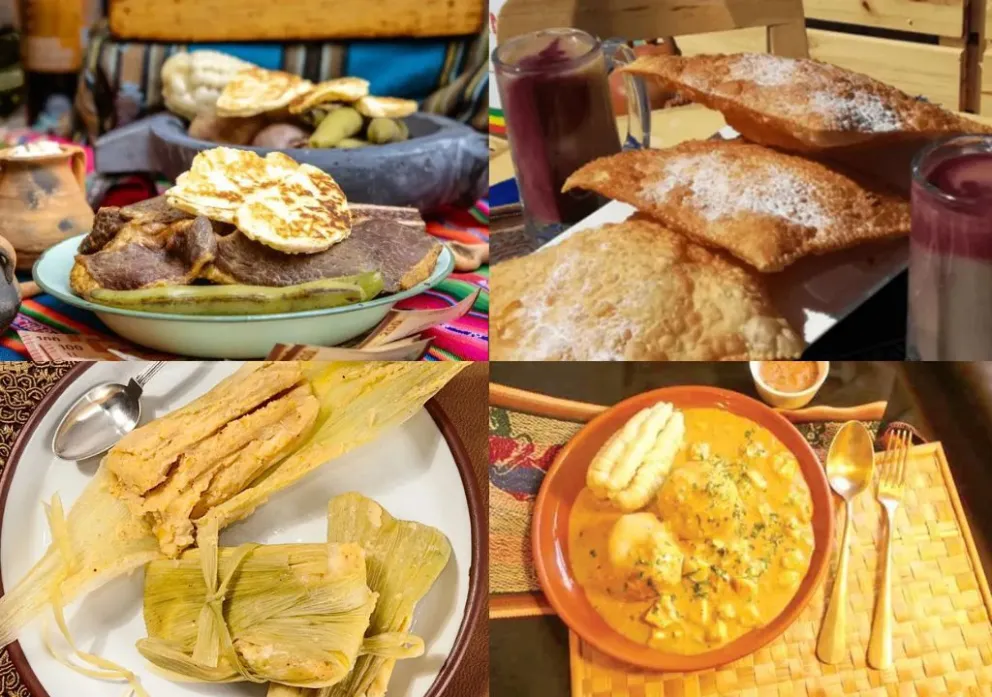
The foods eaten at Alasita. Photos: Red Uno, Opinión, and social media.
Alasita, declared Intangible Cultural Heritage of Humanity by UNESCO, is one of Bolivia’s most important festivities, where wishes and miniatures come together, accompanied by a diversity of flavors found along its route.
Each dish, sweet or savory, represents the hope that in the year ahead nothing will be lacking at the table. Here are some of the most representative foods of this festivity in honor of Ekeko, the god of abundance, in a roundup prepared by the Vice Ministry of Gastronomy:
Plato paceño
The traditional plato paceño is one of the most representative dishes of Alasita, since it is customary to eat it at midday on January 24 as part of the traditions of this festivity. This dish includes qhati potatoes, corn on the cob, cooked fava beans, and cheese. All these ingredients are cooked with their skins on because in the Andean world “there was no custom of peeling food, since it was believed that ingredients ‘suffered’ when they were peeled,” explains historian Sayuri Loza.
Legend has it that in 1781, during the siege of La Paz against the Spanish Crown, people were starving and many families were desperate to get food. Some supplies such as potatoes, fava beans, cheese, and corn reached the family of Brigadier Sebastián Segurola, corregidor of La Paz. It was said that the family had a little man of short stature wearing a hat who brought them the ingredients. Others say that a household servant maintained a relationship with a man who was part of the Tupac Katari army and sent them food, and who had features very similar to Ekeko, the god of abundance of Alasita.
During that siege, the plato paceño is described as having been born out of the scarcity of basic products in the family food basket, notes historian and cultural manager Juan Pablo de Rada.
This dish is cooked in markets, street stalls, and family kitchens in La Paz on January 24 as part of the tradition of this festivity. At the end of the 20th century, beef began to be added to this carbohydrate-rich plate, Loza recounts.
On this date it is also customary to eat chairo, a traditional soup characterized by chuño and chalona, or dried lamb meat. It includes shoestring potatoes, carrot, fava beans or peas, and aromatic herbs such as huacataya. This soup has a thick consistency and was declared Intangible Cultural Heritage of the municipality of La Paz by the Autonomous Municipal Government of La Paz, as was the plato paceño along with 22 other foods.
Queso humacha
It is one of the dishes that form part of this festivity. It consists of a creamy stew of local cheese, fava beans, corn, and potatoes, seasoned with yellow ají and aromatic herbs such as quirquiña. It is also common to find vendors selling corn with cheese, a must at the Alasita fair, and in the afternoons women come out to sell humintas, either baked or boiled, made with corn, cheese, and raisins.
Most traditional Alasita foods use the same ingredients—corn, potatoes, and cheese—because, according to the agricultural calendar, this is the season for those products, Loza explained.
Masitas
The diversity of miniature pastries is one of the delights found along the route. Vendors offer cones with a dozen of these sweet doughs. Some are as traditional as the teta de monja, a sweet pastry whose recipe dates back to the 17th century and still endures at this festivity, or the cocadas, made with grated coconut.
Api with pastel
It is highly sought after at Alasita: a hot drink made from purple corn flour, cinnamon, and cloves, accompanied by pastel, an inflated fried turnover filled with cheese and dusted with powdered sugar, or by buñuelos, fried dough topped with sugarcane syrup.
Humintas
Vendors are spread throughout the fair selling humintas boiled or baked, usually in the afternoons for tea time. The star ingredient is corn, to which anise and cheese are added. In both versions the preparation is wrapped in chala, the corn husk. Huminta was declared Intangible Cultural Heritage of the Municipality of La Paz by the Autonomous Municipal Government of La Paz in 2012.
Churros
They cannot be missing from the walk: fried dough coated in sugar, some filled with dulce de leche, and highly sought after by visitors during this festivity.
“Gastronomy at Alasita goes beyond flavors; it has to do with memory,” concluded historian Loza.
Por Visión 360:
Del plato paceño al api con pastel: los sabores que no faltan en la Alasita
Cada comida tanto dulce y salada es una esperanza de que el año venidero no falte nada en la mesa.
Los platos que se consumen en Alasita. Fotos: Red Uno, Opinión y RRSS
La Alasita, declarada Patrimonio Inmaterial de la Humanidad por la Unesco, es una de las festividades más importantes de Bolivia en el que el deseo y las miniaturas se juntan y le acompaña una diversidad de sabores que se pueden encontrar en su recorrido.
Cada comida tanto dulce y salada es una esperanza de que el año venidero no falte nada en la mesa. Conoce algunas de las comidas más representativas de esta festividad en honor al Ekeko, el dios de la abundancia, en un recuento realizado por el Viceministerio de Gastronomía:
Plato paceño
El tradicional plato paceño es uno de los más representativos de la Alasita, ya que se acostumbra comer a mediodía del 24 de enero como parte de las tradiciones de esta festividad. Este plato lleva papa qhati, choclo, habas cocidas y queso, todos estos ingredientes son cocinados con sus cáscaras porque en el mundo andino “no se tiene la costumbre de pelar los alimentos, ya que se consideraba que los ingredientes ‘sufrían’ al ser pelados”, comenta la historiadora Sayuri Loza.
Cuenta la leyenda que en 1781 durante el cerco a La Paz en rechazo a la corona española, las personas morían de hambre y muchas familias estaban desesperadas por conseguir comida. A la familia del brigadier Sebastián Segurola, corregidor de La Paz, le llegaban algunos alimentos como la papa, las habas, el queso y choclo, se decía que la familia tenía un diocesillo de baja estatura y con sombrero que les dejaba los ingredientes, otros señalan que una empleada del hogar mantenía una relación con este hombre que era parte del ejército Tupac Katari que le enviaba alimentos y que tenía rasgos muy parecidos al Ekeko, el dios de la abundancia de la Alasita.
En ese cerco, se describe que el plato paceño nació fruto de la escasez de productos básicos en la canasta familiar, señala el historiador y gestor cultural, Juan Pablo de Rada.
Este plato es cocinado en los mercados, en los puestos callejeros y las cocinas de las familias de La Paz el 24 de enero como parte de la tradición de esta festividad. A finales del siglo XX se comenzó a añadir la carne de res al platillo cargado de carbohidratos, cuenta Loza.
También en esta fecha se acostumbra a comer Chairo, una sopa tradicional caracterizada por el chuño, la chalona o carne seca de cordero, lleva papas al hilo, zanahoria, habas o arvejas y hierbas aromáticas como la huacataya. Esta sopa tiene una alta consistencia y fue declarado Patrimonio Cultural Intangible del municipio de La Paz por el Gobierno Autónomo Municipal de La Paz, al igual que el Plato Paceño junto a otros 22 alimentos.
El Queso Humacha
Es uno de los platillos que es parte de esta festividad que consiste en un guiso cremoso de queso criollo, habas, choclo y papas que son sazonadas con ají amarillo y hierbas aromáticas como la quirquiña. También es característico encontrar caseras que venden choclo con queso, un infaltable en la feria de la Alasita, al igual que en las tardes salen las señoras a vender humintas ya sea al horno o a la olla que son hechas de choclo, queso, pasas.
La mayoría de las comidas tradicionales de la Alasita llevan los mismos ingredientes como el choclo, la papa, el queso porque de acuerdo con el calendario agrícola es la época de estos ingredientes, comentó Loza.
Las masitas
La diversidad de masitas en miniatura es una de las delicias que se puede encontrar en el recorrido, las vendedoras ofrecen en conos una docena de estas masas dulces, algunas son tan tradicionales como la ‘teta de monja’ una masa dulce y su receta es del siglo XVII que aún perdura en esta festividad o las cocadas, una masa con coco rallado.
El api con pastel
Es muy requerido en la Alasita para degustar esta bebida caliente hecha de harina de maíz morado, canela y clavo de olor acompañada del pastel, una empanada frita inflada que lleva queso adentro y que se le espolvorea azúcar impalpable o el buñuelo que es una masa frita que se le echa miel de caña.
Humintas
Las caseras están en diferentes espacios de la feria vendiendo humintas a la olla o al horno usualmente salen en las tardes para la hora del té. La preparación tiene como ingrediente estrella al choclo que se le añade anís y queso. Ambas versiones se envuelve la preparación en la chala, que es la envoltura de los choclos. La huminta fue declarada Patrimonio Cultural Intangible del Municipio de La Paz por el Gobierno Autónomo Municipal de La Paz en 2012.
Los churros
No pueden faltar en el recorrido, se trata de una masa frita cubierta de azúcar, algunos rellenos de dulce de leche que son muy requeridos por los comensales en esta festividad.
“La gastronomía en Alasita va más allá de sus sabores, tiene que ver con la memoria”, concluyó la historiadora Loza.

 Bolivian Thoughts | Pensamientos Bolivianos (Bilingual/Bilingüe)