
By Wara Arteaga, Vision 360:
From yuca to cañahua: a sustainable pastry shop bets on Bolivia’s native ingredients
Beyond promoting native ingredients, supporting wildlife conservation, and a policy of avoiding plastic materials, the pastry shop embraces the concept of sustainability, which ranges from supporting suppliers to fostering a circular economy.
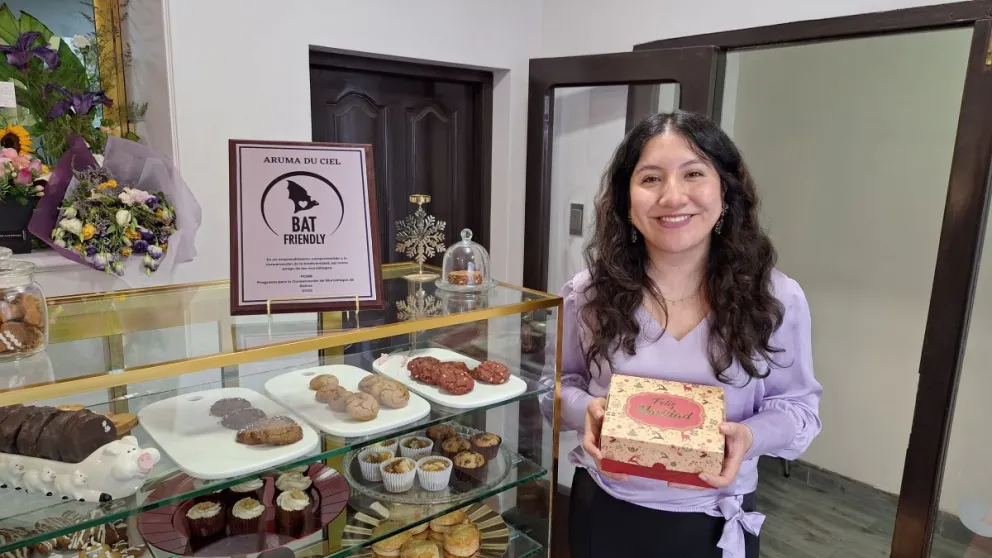
The newly inaugurated pastry shop, Aruma du Ciel. / Photo: Wara Arteaga, Visión 360.
Bolivian ingredients such as yuca, cañahua, tarwi, corn, algarrobo, or quinoa are the protagonists in the kitchen of Aruma du Ciel. This space, now part of a physical store, was born with the aim of being a sustainable business and of bringing, in a small dessert, the country’s traditional flavors to people’s palates.
Aruma, which in Quechua and Aymara means “dawn,” and du ciel, which translates as “from the sky,” was born back in 2018 as an idea that took shape as a virtual store on Facebook.
“In 2018 I had only launched the page. There I posted the things I prepared for my family, for friends. I received likes, because sometimes food generates a lot of interaction on social networks, especially I think before the pandemic and during the pandemic. At that time I didn’t really take orders as such; I offered things for a family member, a friend, but with a very limited menu at first,” recalls Liz Marquez, CEO of the pastry shop.
Marquez, a professional pastry chef and business administrator, developed the business virtually after taking a diploma in entrepreneurship management that led her to create a business plan. “In 2020 I launched myself, let’s say, with new recipes right in the middle of the pandemic. Around July, after the worst part had passed. Well, at the beginning I sold a few cookies and then, in September, we started with the first Aruma Box.”
From its beginnings to the present, Marquez has built a recipe collection in which native ingredients stand out. Aruma Box, for example, included six types of cupcakes with different flavors: quinoa, purple corn, sultana, among others. “Every week I moved forward, I would do the delivery to each person, ask them what they thought and, well, I’ve always liked having that contact with clients, getting to know them, knowing their names, their tastes,” she emphasizes.
Although at first the business model was that of a “dark kitchen” (a kitchen that only prepares takeout orders), in December of this year, after more than five years of virtual sales, Marquez inaugurated a physical store right in Miraflores (Genaro Gamarra Street No. 1869). “Little by little we saw the need to have a physical place to offer this experience, the Aruma experience, where they can try the different pastry options without having to place an order. It was a very well-thought-out decision,” she confesses.
“Bat-friendly”
Another of the promotions launched by Aruma was the “Murcibox,” boxes with a variety of pastries whose main ingredients were chocolate, orange, fig, or tarwi. The package also included two illustrated adhesive cards; one of them was an illustration highlighting three bat species in La Paz. Since then, every year in September or October, the “Murcibox” are launched with new proposals and educational posters.
This initiative, which allocates 10% of the boxes to the Bat Conservation Program of Bolivia, was launched together with Murcielagueando La Paz. And for this support, Aruma was recognized with the “Bat friendly” seal.
Watch the interview: https://www.youtube.com/embed/xnhsyHXl_B8?si=y8YXHVqUdcjIa3r5
Sustainable pastry shop
In addition to promoting Bolivia’s native ingredients, supporting wildlife conservation, and a policy of avoiding plastic materials, the pastry shop embraces the concept of sustainability, which ranges from supporting suppliers to fostering a circular economy.
“We work at the environmental, social, and economic levels. From the environmental side, we have alliances with different wildlife conservation programs, and we also make sure that our packaging is plastic-free. From the social side, we care that the staff are happy in their workplace, well paid, as are our suppliers. At the economic level, we aim to generate a circular economy, where the money stays here (in Bolivia); we do not use imported products, only purely Bolivian products,” explains Marquez.
That vision is also reflected in the relationship with suppliers. She meets them on the trips she makes around the country. “We work with valleys, in the eastern region also with yuca. We are also exploring savory ingredients.” One of the new ingredients she incorporated from the Andean area of La Paz is Illimani cheese.
“We work with producers from Kollasuyo, with producers from Copacabana. We have suppliers from Monteagudo (…). We look for different suppliers whom we know, with whom we have a relationship, and whose products we can offer and give proper transformation so that our clients enjoy them and receive all the nutritional value,” she emphasizes.
Por Wara Arteaga Very, Visión 360:
De yuca a cañahua, una pastelería sostenible apuesta por ingredientes nativos de Bolivia
Además de la promoción a los ingredientes nativos, el apoyo al cuidado de la fauna y la política de evitar el uso de material plástico, la pastelería maneja el concepto de sostenibilidad, que va desde el apoyo a los proveedores, hasta impulsar la economía circular.
La pastelería recién inaugurada, Aruma du Ciel. / Foto: Wara Arteaga, Visión 360.
Ingredientes bolivianos como la yuca, cañahua, tarwi, maíz, algarrobo, o la quinua, son los protagonistas en la cocina de Aruma du Ciel. Ese espacio, que ahora es parte de una tienda física, nació con el objetivo de ser un negocio sostenible, y de llevar, en un pequeño postre, los sabores tradicionales del país al paladar de la gente.
Aruma, que en quechua y aymara significa “amanecer”, y du ciel, que se traduce como “del cielo”, nació allá por 2018, como una idea que se plasmó en una tienda virtual en Facebook.
“El 2018 solamente había lanzado la página. Ahí publicaba las cosas que organizaba para mi familia, para amigos. Recibía likes, porque a veces la comida genera bastante interacción en las redes sociales, sobre todo creo que antes de la pandemia y durante la pandemia. En ese entonces no hacía pedidos como tal, ofrecía para algún familiar, algún amigo, pero con un menú bastante reducido primero”, recuerda Liz Marquez, CEO de la pastelería.
Marquez, pastelera de profesión y administradora de empresas, desarrolló el negocio vía virtual luego de tomar un diplomado de gerencia de emprendimientos que la llevó a desarrollar un plan de negocios. “El 2020 me he lanzado, digamos, con nuevas recetas ya en plena pandemia. En julio, más o menos, después de que pasó la parte fuerte. Bueno, a inicios vendí unas cuantas galletitas y después, en septiembre, hemos empezado con la primera Aruma Box”.
Desde sus inicios, hasta la fecha, Marquez nutre un recetario en el que destacan los ingredientes nativos. Aruma Box, por ejemplo, comprendía seis tipos de cupcakes con diferentes sabores: quinua, maíz morado, de sultana, entre otros. “Cada semana avanzaba, iba a hacerles el delivery a cada persona, les preguntaba qué les parecía y bueno, siempre me ha gustado tener ese contacto con los clientes, conocerles, saber sus nombres, sus gustos”, destaca.
Aunque en un inicio el modelo de negocio era de “dark kitchen” (cocina oscura), que solo realiza pedidos para llevar, en diciembre de este año, luego de más de cinco años de ventas virtuales, Marquez inauguró una tienda física en pleno Miraflores (Calle Genaro Gamarra Nro.1869). “Poco a poco hemos visto la necesidad de tener un lugar físico para ofrecer esta experiencia, la experiencia Aruma, donde puedan probar las diferentes opciones de pasteles sin tener que realizar un pedido. Ha sido una decisión bastante pensada”, confiesa.
“Amigable con los murciélagos”
Otra de las promociones que Aruma lanzó fueron las “Murcibox”, unas cajas con variedad de pasteles, cuyos principales ingredientes eran el chocolate, la naranja, el higo o el tarwi. El paquete contenía también dos cartas adhesivas ilustrativas, una de ellas era una ilustración que destacaba tres especies de murciélagos en La Paz. Desde entonces, cada año, en septiembre u octubre, se lanzan las “Murcibox”, con nuevas propuestas y carteles educativos.
Esa iniciativa, que destina el 10% de las cajitas al Programa de Conservación de Murciélagos de Bolivia, se lanzó junto Murcielagueando La Paz. Y por el apoyo, Aruma fue reconocida con el sello “Bat friendly” o amigable con los murciélagos.
Vea la entrevista: https://www.youtube.com/watch?v=xnhsyHXl_B8&t=2s
Pastelería sostenible
Además, de la promoción a los ingredientes nativos de Bolivia, el apoyo al cuidado de la fauna, y la política de evitar el uso de material plástico, la pastelería maneja el concepto de sostenibilidad, que va desde el apoyo a los proveedores, hasta impulsar la economía circular.
“Trabajamos a nivel ambiental, social y económico. Desde lo ambiental tenemos alianzas con diferentes programas de conservación de fauna, además nos preocupamos para que nuestros envases sean libres de plásticos. Desde lo social, nos preocupamos para que el personal se encuentre feliz, en su área de trabajo, bien remunerado, al igual que nuestros proveedores. A nivel económico, poder generar una economía circular, donde el dinero se quede acá (Bolivia), no usamos productos importados, solamente productos netamente bolivianos”, explica Marquez.
Esa visión también se refleja hacia los proveedores. Ella los conoce en los viajes que realiza alrededor del país. “Trabajamos con valles, en el oriente también con el tema yuca. Vamos explorando también con ingredientes salados”. Uno de los nuevos ingredientes que incorporó del área andina de La Paz es queso del Illimani.
“Trabajamos con productores de Kollasuyo, con productores de Copacabana. Tenemos proveedores de Monteagudo (…).Vamos buscando diferentes proveedores donde los conozcamos, tengamos una relación con ellos y podamos ofrecer sus productos y darle una transformación adecuada para que nuestros clientes disfruten y reciban todo a nivel nutricional”, destaca.
https://www.vision360.bo/noticias/2025/12/15/37020-de-yuca-a-canahua-una-pasteleria-sostenible-apuesta-por-ingredientes-nativos-bolivide-bolivia

 Bolivian Thoughts | Pensamientos Bolivianos (Bilingual/Bilingüe)