
By Unitel:
Former Hydrocarbons Minister:
“The country cannot afford to import $3 billion annually and then subsidize fuel that, on top of everything, ends up going across our borders,” Álvaro Ríos said.
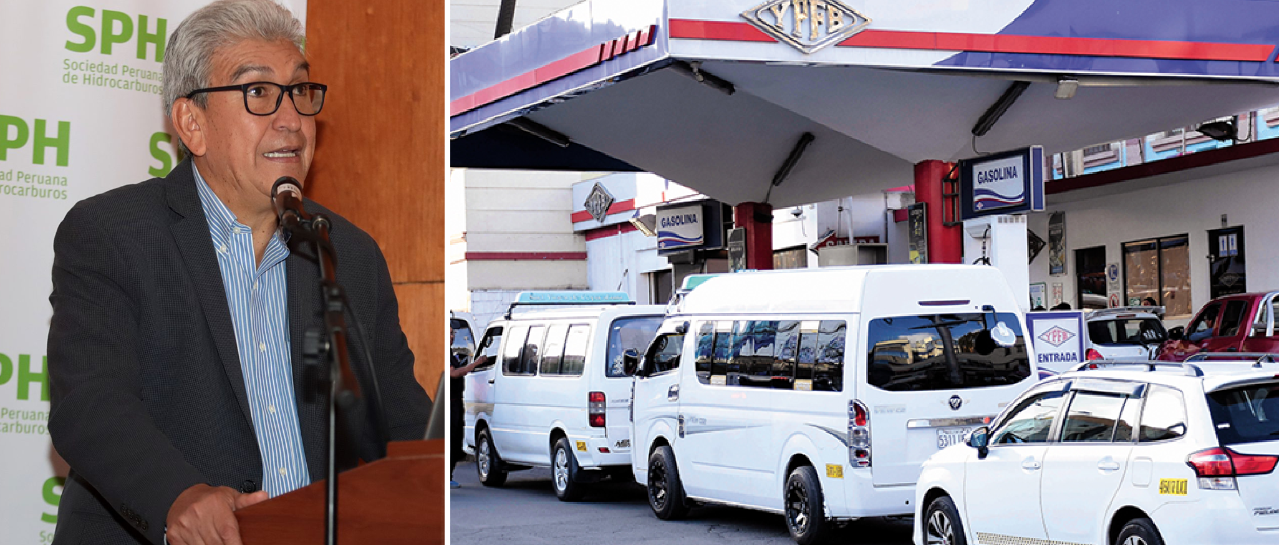
Ríos stated that “Bolivia has no choice but to remove subsidies”
Former Hydrocarbons Minister Álvaro Ríos warned that maintaining fuel subsidies will lead to greater shortages, after a period of long lines at gas stations that persisted under Luis Arce’s government during the final months of his administration.
In his view, the country is facing a situation where the current subsidized model no longer guarantees stable or sustainable supply, compounded by allegations of diversion to smuggling networks and heavy fiscal pressure.
“The most expensive energy is the one you don’t have, and this (removing the subsidy) is something we have been requesting for a long time. And if it is not done, I believe the consequences will be more shortages and without energy, well, there is no economy,” he said in an interview with UNITEL.
In this context, concerns also relate to recent allegations made by President Rodrigo Paz, who stated that part of the fuel intended for the domestic market was diverted and that this “caused shortages and multimillion-dollar losses,” affecting producers, transport workers, and employees across the country.
Ríos stressed that “Bolivia has to remove subsidies, there is no other way,” and reiterated that swift action is needed to prevent the energy shortage from worsening. He recommended starting with lifting subsidies on diesel and gasoline, while LPG and natural gas should undergo a gradual adjustment process.
As for mitigating measures, he suggested that certain targeted support could remain to reduce the impact on the most vulnerable households, at least regarding LPG. In the case of diesel and gasoline, he insisted that adjustments will be necessary and that efforts must be made to keep inflation “as low as possible.”
“The country cannot afford to import $3 billion annually and then subsidize fuel that, on top of everything, ends up going across our borders,” the former minister added, also stressing the urgent need for the Government to allow private-sector participation in supply.
Por Unitel:
Exministro de Hidrocarburos:
“El país no puede darse el lujo de importar $us 3.000 millones anualmente y tener que subvencionar para que, encima, el combustible se vaya por nuestras fronteras”, dijo Álvaro Ríos
Ríos señaló que “Bolivia tiene que quitar los subsidios, no le queda otra”
El exministro de Hidrocarburos, Álvaro Ríos, advirtió que mantener la subvención a los combustibles generará más desabastecimiento, tras un periodo de filas en los surtidores que arrastró el Gobierno de Luis Arce durante los últimos meses de gestión.
Según su criterio, el país enfrenta una situación en la que el modelo vigente con subvención ya no garantiza un abastecimiento estable ni sostenible, a lo que se suma también un contexto de denuncias de desvíos hacia el contrabando y elevada presión fiscal.
“La energía más cara es la que no hay y esto (eliminar la subvención) venimos pidiendo hace mucho tiempo. Y si no se hace, creo que las consecuencias van a ser de más desabastecimiento y sin energía, pues, no hay economía”, señaló la exautoridad en entrevista con UNITEL.
En ese marco, las alertas también se relacionan con recientes denuncias del presidente Rodrigo Paz, quien sostuvo que parte del combustible destinado al mercado interno era desviado y que ello “causó desabastecimiento y pérdidas millonarias”, afectando a productores, transportistas y trabajadores del país.
Ríos señaló que “Bolivia tiene que quitar los subsidios, no le queda otra” y reiteró que se debe actuar con rapidez para evitar que la falta de energía se agrave, recomendando así iniciar el retiro con el diésel y la gasolina, mientras que el GLP y el gas natural deberían afrontar un proceso gradual.
En cuanto a medidas de alivio, planteó que ciertos apoyos podrían mantenerse de manera focalizada para reducir el impacto en los hogares más vulnerables, al menos en lo que respecta al GLP. En el caso del diésel y la gasolina, insistió en que habrá que enfrentar ajustes y procurar que la inflación “sea la menor posible”.
“El país no puede darse el lujo de importar $us 3.000 millones anualmente y tener que subvencionar para que, encima, el combustible se vaya por nuestras fronteras”, agregó el exministro al considerar también urge que el Gobierno habilite la participación privada en el abastecimiento.

 Bolivian Thoughts | Pensamientos Bolivianos (Bilingual/Bilingüe)