
By El Diario:
New Government Sets Three Tasks to Begin Stabilizing the Economy
- Fuel supply is an immediate task after inauguration, but also ensuring U.S. dollars so that prices stop rising.
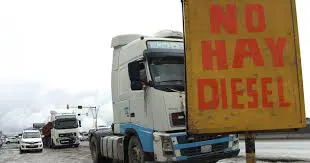
The new government, led by Rodrigo Paz, has outlined three measures to be implemented immediately after taking office: ensuring fuel supply, injecting foreign currency into the national market, and curbing inflation. The goal is to stabilize the national economy within a period of three to six months.
Gabriel Espinoza, economic advisor to the Christian Democratic Party (PDC), told the media that their immediate priorities are fuel supply, currency injection, and inflation control, while structural changes will follow later.
He explained that the team is working on international agreements, with meetings still pending with some countries. Next week, President-elect Rodrigo Paz will announce the results and the resources available for the country.
Espinoza posted on his account @g_espinoza:
“With the firm conviction to restore #Bolivia’s leadership in the region, under the leadership of President-elect @RodrigoPazP, we are witnessing support and openness from major international organizations. The meeting with @igoldfajn, president of the @el_BID, confirms the change of course our country demands: the world recognizes the seriousness of our project and responds by opening doors. After years of diplomatic isolation and loss of credibility, today we begin a new phase of integration, investment, and strategic alliances.”
Initially, the PDC economic advisor told the press that fuels will be supplied from neighboring countries—Peru, Paraguay, and Argentina—instead of by sea, since maritime shipments take 45 to 60 days. Once Rodrigo Paz takes office, fuel deliveries will begin.
He noted that this will be a temporary solution, followed by structural reforms to reorganize the entire fuel supply chain and remove Yacimientos Petrolíferos Fiscales Bolivianos (YPFB) from direct control, replacing it with a more transparent model involving national and foreign private participation.
As recalled, Rodrigo Paz’s economic team recently traveled to the United States to meet with international financing organizations, seeking to bring U.S. dollars into the country, stabilize the exchange rate, and end the shortage of foreign currency in the national market.
The sharp decline in natural gas exports to Brazil and Argentina reduced revenues from $6 billion to under $2 billion, causing both a foreign currency and fiscal deficit, as government spending was not reduced.
Economic analyst Fernando Romero said that the shortage of fuels, dollars, and inflation must be addressed simultaneously. He expects financial support from the U.S. government soon, while loans approved by the Legislative Assembly will also help. However, it may take three to six months for foreign currency to circulate in the Bolivian market due to administrative and financial processes, among other factors.
Like other analysts, Romero believes that Paz’s administration will be a transitional one but will lay the foundation for the next government to relaunch the national economy and generate added value.
He emphasized that stabilization will not be possible without a significant injection of resources—specifically, U.S. dollars needed to buy fuels and meet financial obligations—so state spending in foreign currency will not be reduced.
Romero suggested that adjustments be made to current balances in U.S. dollars, as gaining liquidity will only provide temporary relief. Therefore, structural change will be necessary due to the drop in dollar income caused by the primary-export model followed by the outgoing government.
He lamented that the executive branch had increasingly depended on domestic credit in recent years and warned that improving the national economy will be a complex process involving political, economic, and social factors, with governance playing a key role.
Confusion
Meanwhile, economist Gonzalo Chávez told Radio Panamericana that the government mistook a consumption bubble for genuine development, and now must implement shock measures to stabilize the economy, prioritizing the supply of fuels and U.S. dollars.
Economist Alberto Bonadona, speaking on the same station, estimated that between $1.5 billion and $2.5 billion would be needed to stabilize the economy.
Numbers Game
Jorge Quiroga’s party had announced that $1 billion would initially be required to ensure fuel supply, plus another similar amount to return dollars to savers and restore confidence in the financial system.
Later, the total estimate for the entire period rose to $12 billion, while PDC supporters mentioned a figure of $4 billion under negotiation. The leader of the economic team has not yet confirmed this, noting that a full report on the concluded negotiations will be presented at the end of the tour.
Data
Bolivia has recorded 11 consecutive years of fiscal deficit, averaging 8%, which is estimated to amount to around $5 billion in relation to the Gross Domestic Product (GDP). The country has also faced a trade deficit due to the decline in natural gas exports.
Additionally, by August, inflation had risen above 18%, with projections indicating it could surpass 20% by the end of the year—and some estimates suggesting it might reach 25% or even 30%.
The drop in gas and liquid hydrocarbons production also poses a threat to the national economy, raising the possibility of imports to meet domestic demand, which would represent annual expenditures of around $5 billion.
Por El Diario:
Nuevo gobierno se plantea tres tareas para comenzar a estabilizar la economía
- Abastecimiento de carburantes, una tarea inmediata luego de la posesión, pero también de dólares para que los productos no sigan subiendo de precio.
El nuevo gobierno electo, a la cabeza de Rodrigo Paz, plantea tres tareas a implementar inmediatamente después de su posesión, como garantizar abastecimiento de carburantes, inyectar divisas al mercado nacional y frenar la inflación, con el objetivo de estabilizar la economía nacional, pero el tiempo demorará entre tres a seis meses.
El asesor económico del Partido Demócrata Cristiano (PDC), Gabriel Espinoza, en contacto con medios de comunicación, informó que trabajan para abastecer combustibles, en la inyección de divisas y en frenar la inflación, tareas principales, luego vendrán los cambios estructurales.
Afirmó que para ello trabajan en acuerdos internacionales y todavía falta reunirse con algunos países, la próxima semana el presidente electo Rodrigo Paz hará conocer los resultados, así como los recursos que estarán disponibles para el país.
Una muestra de ello es lo que Espinoza escribió en su cuenta @g_espinoza: “Con la firme convicción de recuperar el protagonismo de #Bolivia en la región, bajo el liderazgo del presidente electo @Rodrigo PazP, estamos siendo testigos del respaldo y la apertura de importantes organismos internacionales. El encuentro con @igoldfajn, presidente del @el_BID, confirma el cambio de rumbo que el país exige: el mundo reconoce la seriedad de nuestro proyecto y responde abriéndonos las puertas. Tras años de enclaustramiento diplomático y pérdida de credibilidad, hoy iniciamos una etapa de integración, inversión y alianzas estratégicas”.
En primera instancia, el asesor económico del PDC indicó a los medios que los combustibles llegarán de países vecinos, Perú, Paraguay y Argentina, y no en barcos, ya que demoran entre 45 a 60 días, una vez posesionado Rodrigo Paz, el combustible empezará a llegar.
Dijo que la solución es parcial, luego empezarán a trabajar en una estructural, reordenando toda la cadena de provisión de combustibles y sacar a Yacimientos Petrolíferos Fiscales Bolivianos (YPFB), aplicando una más transparente, con participación del sector privado nacional y extranjero.
Como se recordará una gira a Estados Unidos del equipo económico a la cabeza de Rodrigo Paz fue para reunirse con todos los organismos internacionales de financiamiento, con el objetivo de traer dólares al país, de estabilizar el tipo de cambio y dejar atrás la falta de divisas en el mercado nacional.
La caída de las exportaciones de gas natural a Brasil y Argentina, provocó la disminución de los ingresos de 6.000 millones de dólares a menos de 2.000 millones, lo que ha provocado un déficit de divisas, así como fiscal, ya que el Gobierno no bajó los gastos y los mantuvo.
Al respecto, el analista económico Fernando Romero sostuvo que se debe atacar paralelamente la falta de carburantes, dólares e inflación. Se espera que el apoyo financiero del gobierno de Estados Unidos sea lo antes posible; mientras tanto, los créditos en la Asamblea Legislativa también ayudarán, pero el período de maduración para que la divisa esté en el mercado boliviano puede demorar entre 3 a 6 meses, debido a los plazos administrativos y financieros, entre otros que hay que tomar en cuenta.
Al igual que otros analistas económicos, Romero opina que la administración de Paz será de transición, pero sentará las bases para que el próximo que llegue empiece a hacer despegar la economía nacional y generar valor agregado.
Apuntó que no se podrá estabilizar la economía si no hay una inyección importante de recursos, como dólares, que se necesita para comprar carburantes y cumplir con sus obligaciones financieras, por lo tanto, no se va reducir el gasto estatal en divisas.
Sugiere que se debe aplicar un reajuste en los saldos corrientes en moneda estadounidense, la obtención de liquidez será una solución paliativa, por ello deberán avanzar en un cambio estructural, debido a que bajaron los ingresos en dólares por el modelo primario exportador aplicado por el partido en función de Gobierno.
El Ejecutivo dependió del crédito interno, en los últimos años, lamentó y reflexionó que el proceso de mejorar la economía nacional será complejo, pues está involucrado el tema político, económico y social, la gobernanza jugará un papel importante.
Confusión
Por otro lado, el analista económico Gonzalo Chávez, en declaraciones en Radio Panamericana, aseguró que el Gobierno confundió la burbuja de consumo con desarrollo y ahora toca aplicar medidas de shock para estabilizar la economía; la provisión de combustibles y dólares son medidas prioritarias.
Mientras, el analista económico Alberto Bonadona, en la misma emisora, estimó que se necesitaría entre 1.500 millones a 2.500 millones de dólares para estabilizar la economía.
Danza de cifras
El partido de Jorge Quiroga anunciaba que de entrada requeriría 1.000 millones de dólares para asegurar la provisión de carburantes, y otro tanto para devolver los dólares a los ahorristas para que la confianza vuelva al sistema financiero.
Posteriormente subió la cifra que para todo el período la suma alcanzaría a 12.000 millones de dólares; mientras partidarios del PDC mencionaron la cifra de 4.000 millones, que se estaría financiando, aunque el líder del equipo económico no confirmó, ya que al final de la gira se dará un informe sobre las negociaciones arribadas.
Datos
Bolivia registra un déficit fiscal consecutivos, de 11 años, en promedio de 8%, que en cifras estiman que bordea los 5.000 millones de dólares respecto al Producto Interno Bruto (PIB); pero también se registró déficit comercial por la caída de las exportaciones de gas natural.
A eso hay que sumar que hasta agosto la cifra de la inflación subió por encima del 18% y se proyecta que hasta finales de gestión pase los 20% e inclusive otros señalan que llegaría a 25% o 30%.
También la caída de la producción de gas y de líquidos amenaza a la economía nacional, hay posibilidad de importar para cubrir la demanda interna, lo que significaría gastos por alrededor de 5.000 millones de dólares anuales.

 Bolivian Thoughts | Pensamientos Bolivianos (Bilingual/Bilingüe)