By Rocio Chavez, Radio Fides:

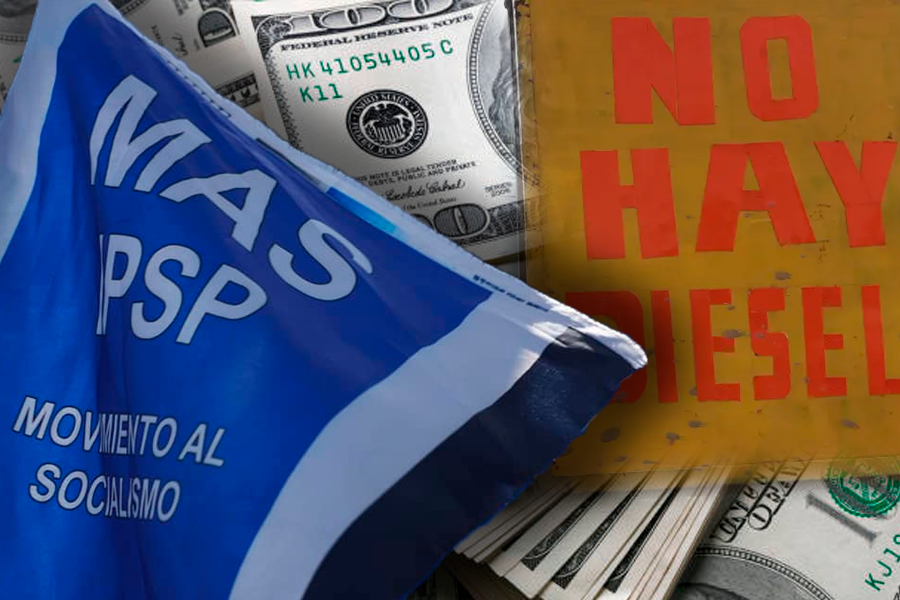
Movement Toward Socialism MAS Diesel and dollar shortages /Illustrative Image/
After 20 years of hegemony by the Movement Toward Socialism (MAS), the country is facing a deep economic crisis that will define the start of the next government. The new leadership will have the challenge of stabilizing the economy in the shortest possible time. The significant drop in international reserves, together with the minimal inflow of foreign currency, has triggered rising inflation in basic food products and a clear fuel shortage, visible in long lines at gas stations.
Adding to this scenario is a high fiscal deficit, which led the government to request loans from the Plurinational Legislative Assembly (ALP), increasing the external debt without addressing structural problems. These measures generated further inflationary pressure, sending the parallel dollar soaring and causing up to a 200% increase in imported products. In addition, the slowdown of the Gross Domestic Product (GDP) and policies such as export restrictions discouraged the productive sector, reducing the generation of foreign currency and deepening the recession.
/// ED // SANTA CRUZ ///
Por Rocio Chavez, Radio Fides:
Movimiento Al Socialismo MAS Escasez de Diesel y de dólares /Imagen Ilustrativa/
Tras 20 años de hegemonía del Movimiento al Socialismo (MAS), el país atraviesa una profunda crisis económica que marcará el inicio del próximo gobierno. El nuevo liderazgo tendrá el reto de estabilizar la economía en el menor tiempo posible. La significativa caída de las reservas internacionales, junto al ingreso mínimo de divisas, provocó un aumento en la inflación de productos de la canasta básica y una notoria escasez de carburantes, visible en las largas filas en los surtidores.
A este escenario se suma un elevado déficit fiscal, que llevó al gobierno a solicitar créditos a la Asamblea Legislativa Plurinacional (ALP), lo que incrementó la deuda externa sin resolver los problemas estructurales. Estas medidas generaron mayor presión inflacionaria, disparando el dólar paralelo y provocando un alza de hasta el 200% en productos importados. Además, la desaceleración del Producto Interno Bruto (PIB) y políticas como la restricción a las exportaciones desincentivaron al sector productivo, reduciendo la generación de divisas y profundizando la recesión.
/// ED // SANTA CRUZ ///

 Bolivian Thoughts | Pensamientos Bolivianos (Bilingual/Bilingüe)