
By Unitel:
“The excessive use of pretrial detention was a problem,” states the report, citing executive interference and open cases against opponents. The government rejects the findings
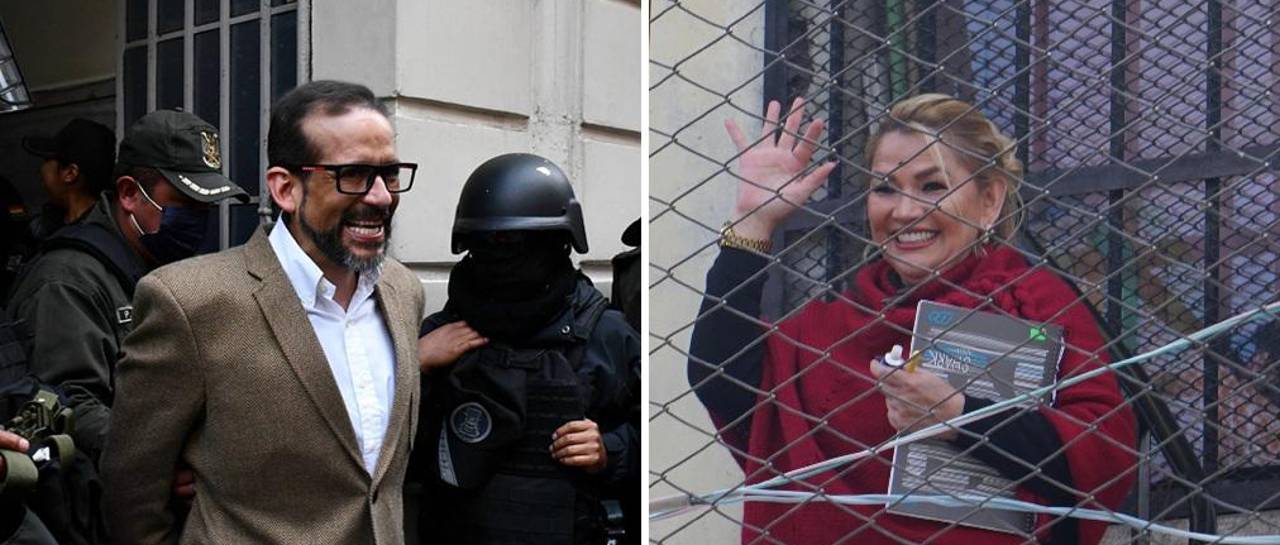
The human rights report highlights the cases of Camacho and Áñez
The U.S. State Department denounced that prolonged pretrial detention was a problem in Bolivia during 2024, pointing to factors such as executive interference, judicial inefficiency, and the use of court cases against opponents.
“Excessive pretrial detention was a problem,” reads the Bolivia chapter of the 2024 Country Reports on Human Rights Practices. The Bolivian government dismissed the document, calling it interventionist.
The report explains that while the law prohibits arbitrary detention, the government “did not always comply,” noting that many detainees remained imprisoned beyond the legal deadlines to receive charges or sentencing due to judicial delays, lack of defense lawyers, and poor case management.
On the use of judicial processes against opponents, the report says lawsuits were often used to intimidate opposition legislators. Observers noted a clear pattern: opponents who spoke out against the government were soon accused or summoned to court.
Situation of opponents
The document mentions the case of former president Jeanine Áñez, who faced eight cases while in detention, and former civic leader Rómulo Calvo, who faced nine. It also recalls Áñez’s complaint to the IACHR over the denial of her right to a special trial as a former president.
Another highlighted case is that of Santa Cruz governor Luis Fernando Camacho, detained since 2022. The report notes that his health has deteriorated while imprisoned in the Chonchocoro maximum-security facility, and that Penitentiary authorities suspended his transfer to Santa Cruz despite a court order.
Camacho’s allies argued that the U.S. report confirms “human rights violations” committed against the governor and vowed to denounce these abuses before national and international bodies so that “those responsible are held accountable.”
In response, Bolivia’s Ministry of Foreign Affairs rejected the U.S. report, calling it a document “without rigor, objectivity, or validity,” drafted without consultation and with a “unilateral and interventionist vision” aimed at interfering in internal politics.
Por Unitel:
”La prisión preventiva prolongada fue un problema”, indica el informe, citando interferencia del Ejecutivo y procesos abiertos contra opositores. Desde el Gobierno rechazan el informe
El informe sobre derechos humanos cita los casos de Camacho y Añez
El Departamento de Estado de Estados Unidos denunció que la detención preventiva prolongada fue un problema en Bolivia durante 2024, señalando factores como la interferencia del Ejecutivo, ineficiencia judicial y el uso de procesos judiciales contra opositores.
“La prisión preventiva prolongada fue un problema”, señala el resumen del capítulo de Bolivia de Informes de país sobre prácticas de derechos humanos 2024. Desde el Gobierno, se rechazó el contenido del documento por considerarlo intervencionista.
El informe expone que la ley prohíbe las detenciones arbitrarias, pero el Gobierno “no siempre la respetaba”, advirtiendo que muchos detenidos permanecieron en prisión más allá de los plazos legales para recibir cargos o sentencia, debido a retrasos judiciales, falta de defensores y deficiencias en el seguimiento de los casos.
Sobre el uso de procesos judiciales contra opositores, el informe señala que las demandas se utilizaron con frecuencia para intimidar a los legisladores de la oposición. Los observadores indicaron que existía un patrón claro entre los opositores que se pronunciaban contra el gobierno y, poco después, eran acusados o citados a declarar ante el tribunal”.
Situación de opositores
El documento menciona los casos de la expresidenta Jeanine Áñez, con ocho procesos abiertos durante su detención, y de Rómulo Calvo, exlíder del Comité pro Santa Cruz, a quien le abrieron nueve procesos. También recuerda que Áñez presentó una denuncia ante la CIDH por la negación de su derecho a un juicio especial como expresidenta.
Uno de los casos destacados es el del gobernador cruceño Luis Fernando Camacho, detenido desde 2022, apuntando que su salud se deterioró mientras permanecía en la cárcel de máxima seguridad de Chonchocoro, y que el Régimen Penitenciario suspendió su traslado a Santa Cruz pese a una orden judicial.
El entorno de Camacho afirmó que el informe de EEUU confirma “violaciones a los derechos humanos” cometidas contra el gobernador y que estos hechos serán denunciados ante instancias nacionales e internacionales para que “los funcionarios responsables respondan ante la justicia”.
En respuesta, el Ministerio de Relaciones Exteriores de Bolivia rechazó el informe estadounidense, considerando que se trata de un documento “sin rigor, objetividad ni validez”, elaborado sin consulta al país y con una visión “unilateral e intervencionista” que busca incidir en la política interna.

 Bolivian Thoughts | Pensamientos Bolivianos (Bilingual/Bilingüe)