
By Erika Segales, El Deber; Eju.tv:
The engineer is calling for the publication of voting tally sheets to guarantee transparency in the new preliminary system.
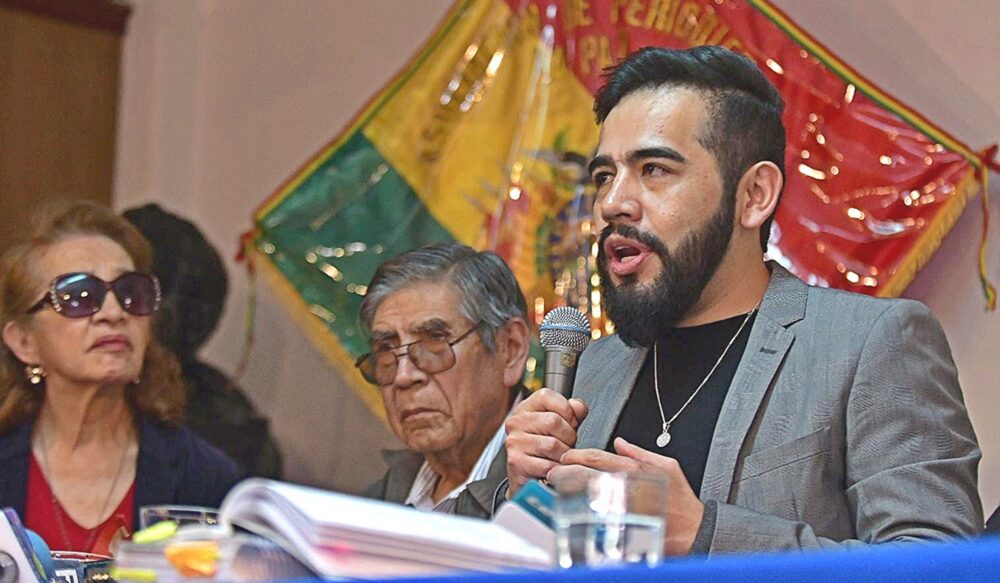
Source: eldeber.com.bo
Systems engineer Edgar Villegas confirmed that he is part of the citizen initiative Let’s Protect the Vote and will serve as an advisor. The proposal is a collective effort to strengthen electoral observation ahead of the 2025 general elections.
“It’s a different beast than what we faced in 2019. This time there’s a large team, and I’m contributing as an advisor,” Villegas said in an interview with EL DEBER Radio. In 2019, the engineer denounced irregularities in the Bolivian electoral process.
Villegas viewed the return of a rapid count system positively, but warned that its effectiveness and credibility will depend on the publication of the voting tally sheets.
“It’s extremely important to publish images of the tally sheets. I’d say that at least half of the system’s importance depends on that (…). It’s much harder to tamper with an image of a tally sheet or the physical document than just the numbers. If we only see numbers, they’re much easier to manipulate,” he said.
He also expressed concern that the Supreme Electoral Tribunal (TSE) has not yet confirmed whether the images of the tally sheets will be made public. “I haven’t yet seen any confirmation from the TSE,” he noted.
Villegas recalled that in 2019, his team detected “serious irregularities” when comparing the preliminary data from the TREP with the official count—findings that, according to him, favored MAS. He also mentioned the report by the Organization of American States (OAS), which warned of tampering in the final stretch of the preliminary count.
“In the last 5%, almost 6%, there were alterations that changed the electoral trend. That revealed a weakness in the system,” he said regarding the Preliminary Electoral Results Transmission system (TREP).
Board member Gustavo Ávila addressed the issue last Saturday on the radio program ¡Qué Semana!, broadcast by EL DEBER Radio, and stated that each polling station president must display each tally sheet for at least five minutes so that the digital registration of the vote can take place.
“This image will be immediately sent to our computing center, where our technicians, international observers, and party delegates will be present, monitoring and overseeing the process,” explained the electoral authority board member.
Proprietary system
The official also highlighted that the new system was entirely developed by technical staff from the electoral body, without contracting external companies, unlike in previous processes. He reported that the system will be tested in a nationwide mock election on July 6.
Ávila emphasized that the TSE is committed to publishing a first report of preliminary results by 8:00 p.m. on election day. The projection is to have 80% of the total votes processed by that time.
Por Erika Segales, El Deber; Eju.tv:
El ingeniero pide que se publiquen las actas de votación para garantizar la transparencia del nuevo sistema preliminar.
Fuente: eldeber.com.bo
El ingeniero de sistemas Edgar Villegas confirmó que forma parte de la iniciativa ciudadana Cuidemos el Voto y que desempeñará un papel de asesor. La propuesta es un esfuerzo colectivo por fortalecer la observación electoral rumbo a las elecciones generales de 2025.
“Es un monstruo distinto al que enfrentamos en 2019. Esta vez hay un equipo grande, y yo estoy aportando como asesor”, manifestó Villegas en una entrevista en EL DEBER Radio. En 2019, el ingeniero denunció irregularidades en el proceso electoral boliviano.
Villegas consideró positivo el retorno de un sistema de conteo rápido, pero advirtió que su efectividad y credibilidad dependerán de la publicación de las actas de votación.
“Es tremendamente importante que se publiquen las imágenes de las actas. Yo diría que al menos la mitad de la importancia del sistema depende de eso (…).Es mucho más difícil alterar una imagen de acta o el acta física que solo las cifras. Si solo vemos números, eso es más fácil de manipular” señaló.
Asimismo, expresó su preocupación porque el Tribunal Supremo Electoral (TSE) aún no confirmó si se harán públicas las imágenes de las actas. “No he visto aún que el TSE haya confirmado si lo hará”, observó.
Villegas recordó que en 2019 su equipo detectó “graves irregularidades” al comparar los datos preliminares del TREP con el cómputo oficial, observaciones que, según dijo, favorecieron al MAS. También mencionó el informe de la Organización de Estados Americanos (OEA), que alertó sobre manipulaciones en el tramo final del conteo preliminar.
“En el último 5%, casi 6%, hubo alteraciones que cambiaron la tendencia electoral. Eso reveló una fragilidad del sistema”, subrayó respecto al sistema de Transmisión de Resultados Electorales Preliminares (TREP).
El vocal Gustavo Ávila se refirió al tema el pasado sábado en el programa radiofónico ¡Qué Semana!, que se transmite por EL DEBER Radio y señaló que cada presidente de mesa debe mostrar cada acta por al menos cinco minutos para que se pueda hace el registro digital de la votación.
“Esta imagen será remitida de inmediato a nuestro centro de cómputo, donde estarán presentes nuestros técnicos, los observadores internacionales y los delegados de los partidos políticos, haciendo control y monitoreo del proceso”, explicó el vocal del Órgano electoral.
Sistema propio
La autoridad también destacó que el nuevo sistema fue desarrollado íntegramente por técnicos del órgano electoral sin contratación de empresas externas, a diferencia de procesos anteriores. Informó que el mismo será puesto a prueba en un simulacro nacional el 6 de julio.
Ávila remarcó que el compromiso del TSE es publicar un primer reporte de resultados preliminares a las 20:00 horas del mismo día de los comicios. La previsión es tener el 80% del total de votos procesados para ese día.
https://eju.tv/2025/06/villegas-se-suma-como-asesor-a-la-iniciativa-cuidemos-el-voto/

 Bolivian Thoughts | Pensamientos Bolivianos (Bilingual/Bilingüe)