
By Leny Chuquimia, Visión 360:
Conflicts in Llallagua reveal the situation
“Little Mexico” is the open secret that reigns in southern Oruro and spreads through the Potosí Altiplano; a corridor for smuggled vehicles, contraband, and drugs.
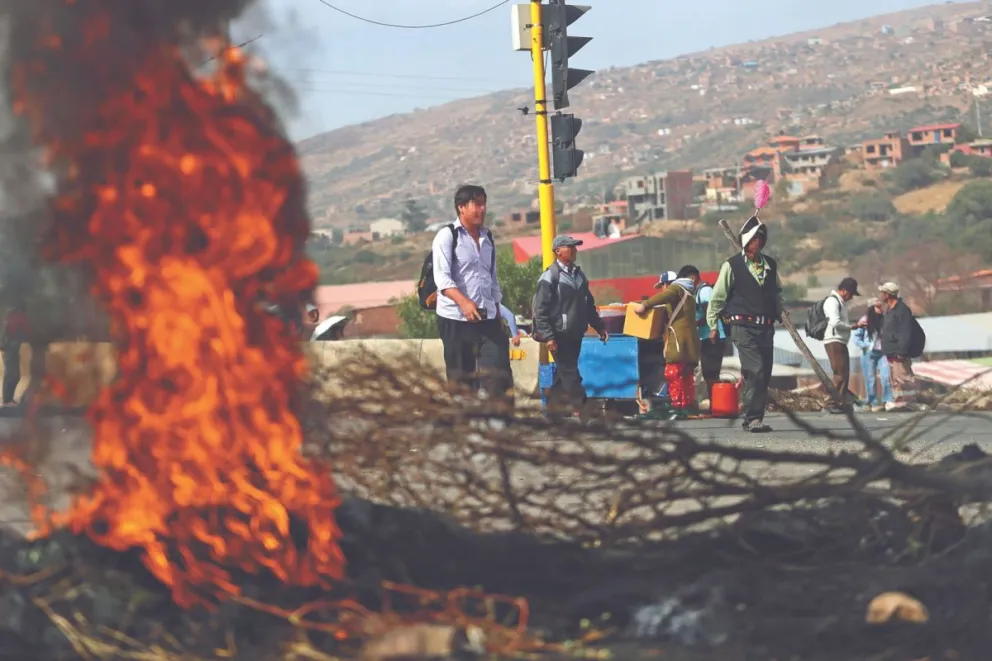
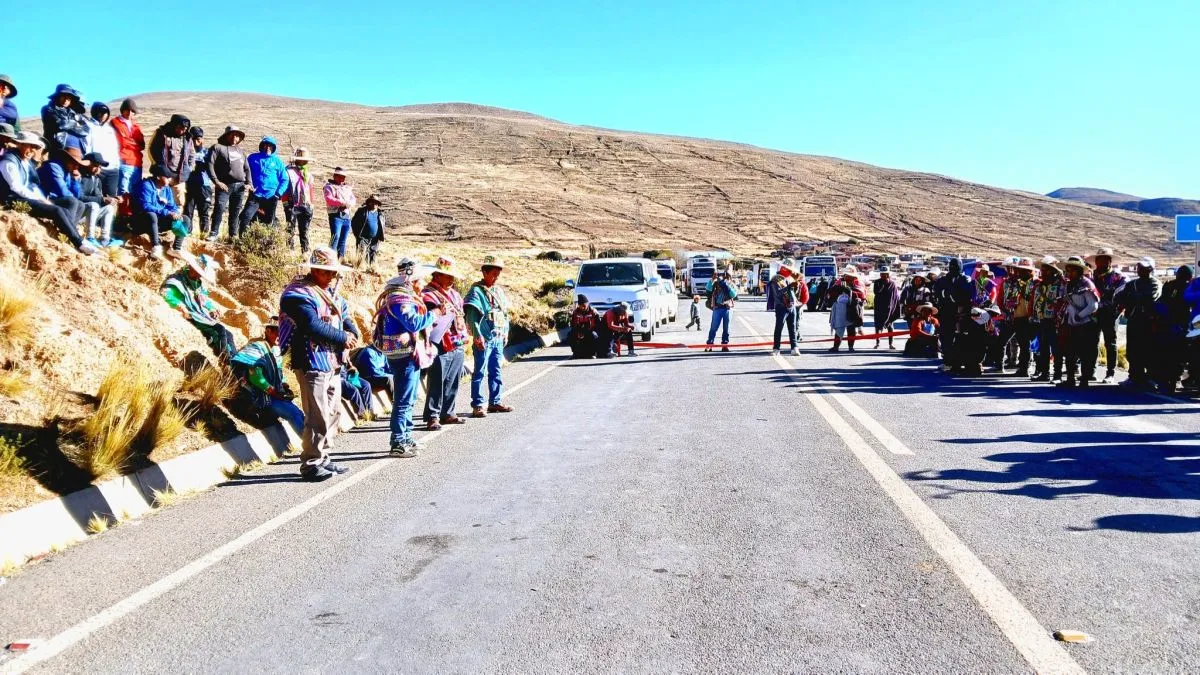
Blockade point with participation of Northern Potosí ayllus. Photo: EFE
“It’s an open secret,” says one of the residents of Northern Potosí who is closely following the conflicts in Llallagua. He prefers to remain anonymous, though what he says is murmured by many. “There have been weapons involved; it’s not just chullpas or sicoyas, it’s the smugglers, the narcos,” he warns.
Networks of drug traffickers, smugglers, and vehicle traffickers are embedding themselves in the warrior ayllus of Northern Potosí, taking advantage of the absence of the State and the region’s hardships. Their reach knows no bounds, as they cross the departmental border into southern Oruro, where another combative ayllu calls its region Little Mexico.
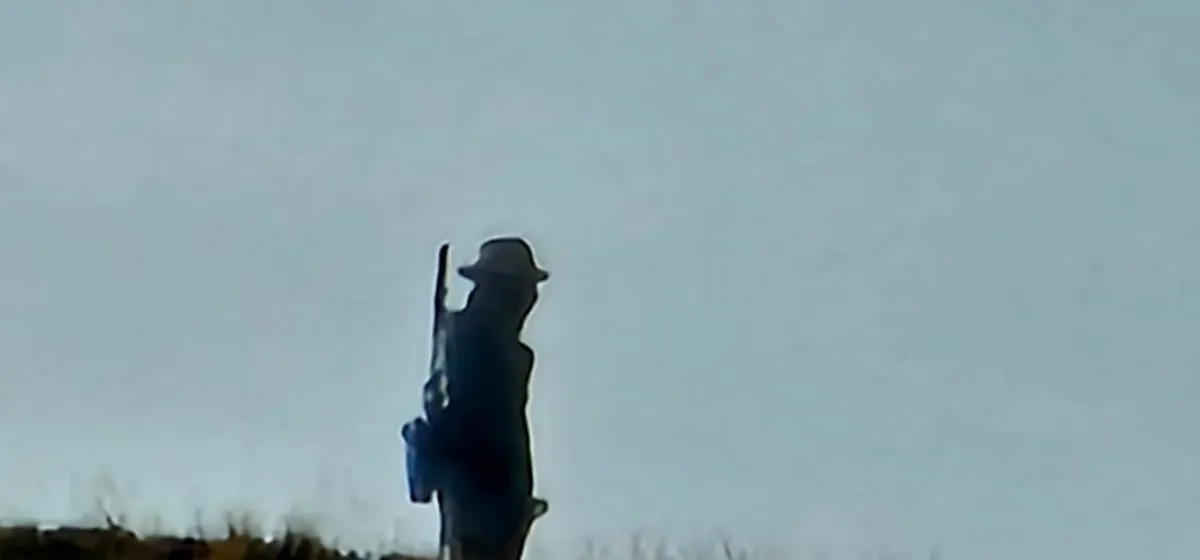
Last Wednesday, June 11, four police officers were killed during an operation to lift the blockade on the road leading into Llallagua. The town had been isolated for ten days due to protests by Northern Potosí ayllus against the central government.
“The conflict in Llallagua is not just about the mobilized ayllus or all ayllus. There is a major component foreign to our ancestors, our ayllus, and our Indigenous peoples: drug trafficking,” explains Azucena Fuertes, departmental assembly member from Potosí.
Among the dead and wounded, bullet wounds were found. Authorities state that long-range weapons were used, requiring precision. They suggest that snipers might have been operating among the protesters and acting in a coordinated manner.
“Our objective was and continues to be to ensure free movement. However, along the way we encountered organized groups that used extreme violence with dynamite, rocks, and firearms handled by snipers,” says the Deputy Minister of Internal Affairs and Police, Jhonny Aguilera.
He adds that the goals of these groups are political, economic, and—in the case of Llallagua—linked to drug trafficking.
“This is an area known to have marijuana plantations and cocaine labs, which is why it’s been dubbed Little Mexico,” explains Bolivian Police Commander Augusto Russo.
He not only points to the area being a hotspot for illicit activity, but also highlights its connections with coca grower leader and former president Evo Morales Ayma, who has promoted mobilizations demanding his candidacy for the 2025 elections.
Fuertes states that this denouncement is not new, that armed groups were already active during the 2019 conflicts and no one did anything.
“It’s not new that there are armed individuals. Some are trained and equipped to face these situations. I fear that the historic and ancestral essence of the ayllus will now, unfortunately, be blended and confused with this armed presence primarily rooted in drug trafficking.”
The “Warrior Ayllus”
The region of Northern Potosí is known for its Indigenous ayllus, structured even before the Colonial era and still active despite various colonization processes. Whether through their participation in the Inca Empire’s army, the Katarist rebellion of 1780, or the Chayanta uprisings during the Republic, they are known as the “Warrior Ayllus of Northern Potosí.”
One only needs to recall the bloody clashes they had with ayllus from southern Oruro up until the 2000s, or observe the tinku ritual—one of their main ceremonies—to recognize their combative nature.
According to the “Atlas of the Ayllus of Northern Potosí, Territory of the Ancient Charka,” there are dozens of ayllus in that region, distributed across five zones. The ones from the Maximo Ayllu Chayanta are the most well-known. Some of them are also currently mobilized in Llallagua.
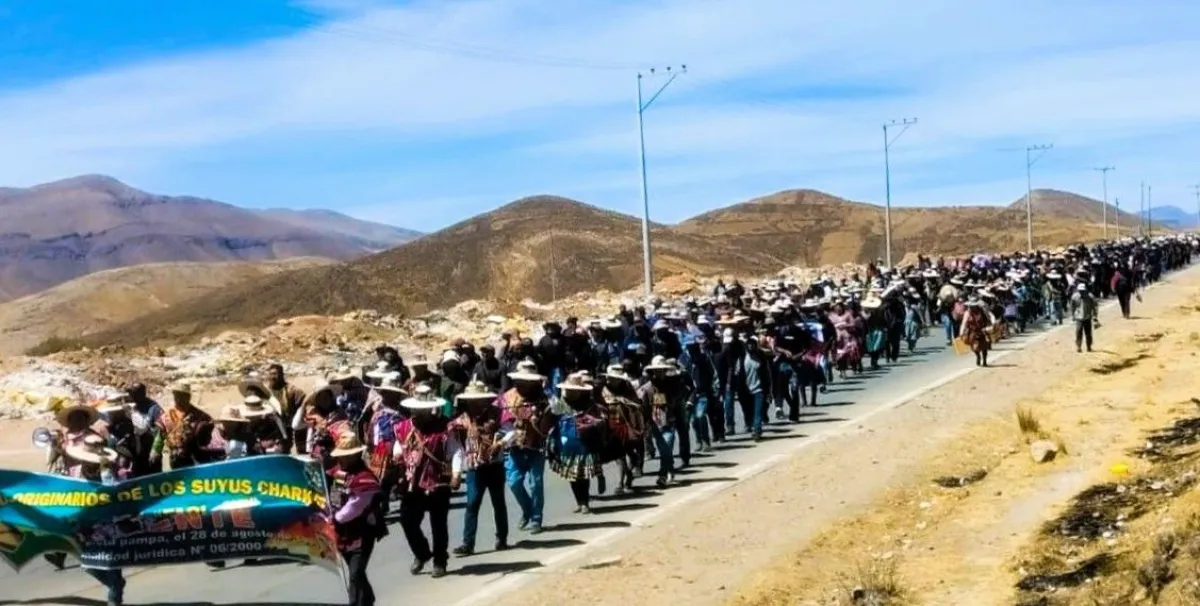
These “Major Ayllus” are nine: Puraka, Chayantaka, Aymaya, Kharacha, Phanakachi, Laymi (Laimes), Jukumani, Chullpa, and Sikuya (Sicoya).
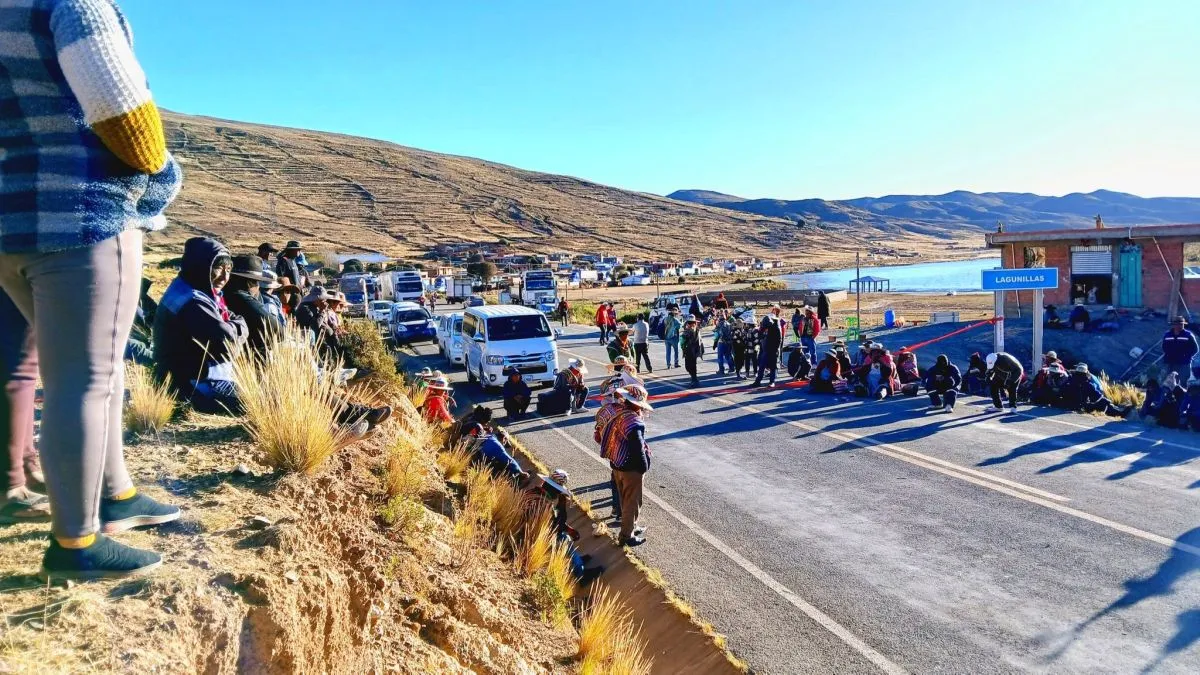
“At this blockade point, the Chullpa and Sikuya Ayllus are mobilized. The Jukumani, Laymi, Chayantaka, and Phanakachi will join. We are firm,” states the spokesperson for the blockade committee in Lagunillas, Northern Potosí.
He claims their protest is not political, but a response to the economic crisis that has left them without food or fuel to work. A crisis, they argue, that cannot go on. But not everyone agrees, as the division affecting the country is also present among the ayllus.
“We, as the Sikuya Ayllu, declare that there was a change of authorities. The new ones held a meeting and there will be a general assembly. We call on the Chullpa Ayllu to enter into peaceful dialogue. Blockades in our own area do not solve the economic problems; they make the situation worse for our brothers,” says Tata Segundo Mayor Hilarión Cruz.
Those mobilized, including some sikuyas and jucumanis according to the list of detainees, claim that territory is theirs, including Llallagua. Their ancestral lands have been overlaid with provincial and later municipal jurisdictions.
“In Northern Potosí there are towns with large populations, such as Llallagua, Catavi, Siglo XX, and Uncía, now surrounded by various ayllus. These in turn border southern Oruro ayllus like the Qaqachacas. The conflicts—even over boundaries—go way back; this is where the Ayllus in Peace projects emerged from,” explains Fuertes.
“Ayllus in Peace” is part of the effort to pacify not only the northern Potosí zone but also southern Oruro. In this border area, steeped in extreme poverty, one of the most violent and long-standing internal struggles was waged for years between the Jukumanis and Laimes of Potosí and the Qaqachacas of Oruro.
Its origins date back centuries, even before Colonial times. For decades, these peoples engaged in bloody battles over fragmented territories that defied the territorial divisions imposed by the Colony and later the Republic.
To pacify and define their boundaries, on January 7, 2014, President Evo Morales enacted the Interdepartmental Delimitation Law between Oruro and Potosí and proclaimed an end to the ayllu wars. However, records show the last clash occurred in January 2000.
One morning, the Qaqachacas of Avaroa Province in southern Oruro left 18 dead and 10 injured in an assault and arson attack on 25 homes in the community of Sora Sora, from the Laimes Ayllu. They carried weapons issued during the Chaco War.
Investigations determined the assault was retaliation for an attack a week earlier by the Laimes, which had left several injured. Up until that year, 2000, such assaults and attacks were frequent.
Although for years authorities announced peace efforts and even initiated disarmament, those attempts failed until the ayllus themselves sought a resolution. Archives from the newspaper El Potosí contain a photograph taken months after this last clash at the foot of Cerro Rico. It shows two ayllu leaders shaking hands in agreement for peace.
To maintain that peace and improve community conditions, many resources were invested and various projects implemented by international cooperation, NGOs, and different levels of government.
“Since 2021 we’ve approved specific projects for the ayllus, naming them directly, even synthetic turf fields and a project promoted by the Governor’s Office. Also, the Departmental Legislative Assembly has a MAS majority,” says the assembly member.
But in most cases, these projects don’t come on their own—they’re used as patronage tools to gain political support from the grassroots.
“In the last 20 years that MAS has been in power, the grassroots of these ayllus have been manipulated by bad leaders, bad Indigenous and peasant authorities. They are blackmailed into joining mobilizations. Their participation has been turned into a clientelist tool. But there are other forms of blackmail too—one based on land ownership,” the authority explains.
Land titling was carried out as TCO (Original Community Land). Families have plots for housing, farming, and raising animals, but the land doesn’t belong to them; it belongs to the community.
“Under the principle that land is communal, it can be used, but if it stops serving a social good, it can be taken back. That was the original principle; however, it’s been distorted into a form of blackmail. To get them into mobilizations, they are told their land will be taken. There are documented cases where this actually happened,” says Fuertes.
Little Mexico?
“There are people with weapons, these are the Qaqachacas, Little Mexico,” says someone in a video taken at a blockade point in Llallagua on 11 June. It is not the only recording.
“This Little Mexico issue is under investigation; of course the Ministry of Government and the legally designated bodies must take the appropriate actions,” says the Minister of the Presidency, Marianela Prada.
Commander Russo stated that these illegal activities will be thoroughly investigated to combat crime and provide security for the population.
“We are cross‑checking information with different state bodies, such as Immigration, to identify people entering irregularly and demand their removal if necessary. We are also verifying the legal status of those who remain in the area to prevent illicit activities,” he said.
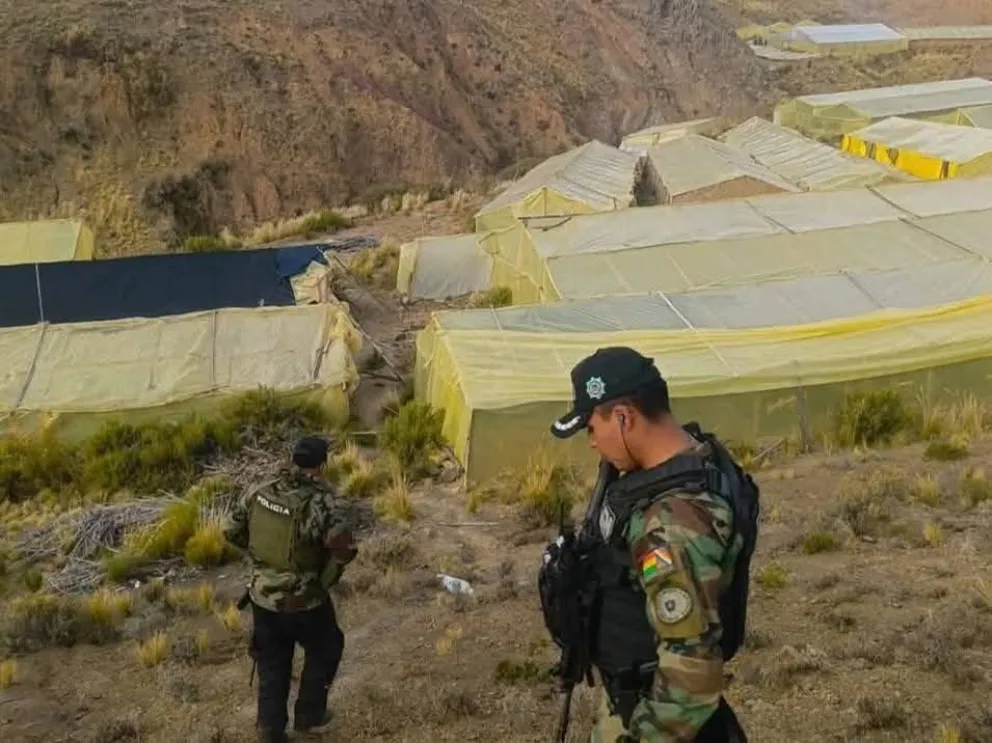
According to preliminary reports, Little Mexico is a settlement near Llallagua with pits for making cocaine and solar tents for growing marijuana—an area dominated by drug traffickers.
The complaint is not new. It is not just about drug trafficking or a single place.
“Little Mexico has existed for years; its illegal activities are no secret, everyone knows. Its patron festivals, invitations, and bands that write songs for it are on social media. It is not in Llallagua (Potosí); it is in Challapata (Oruro), where there are snipers more and more often. But the issue is not confined to one place; it covers an entire region, a sort of corridor for crime,” says a source from the area.
In Qaqachaka territory there is a settlement somewhat removed from the main highway. It is small compared with other towns and controls the entry of outsiders or authorities. Nothing moves without their knowledge.
They are an ayllu from southern Oruro but border the ayllus of northern Potosí. The region’s rugged terrain, yet suitable for bridle paths, creates a corridor for networks dealing in stolen cars, contraband, and drug trafficking.
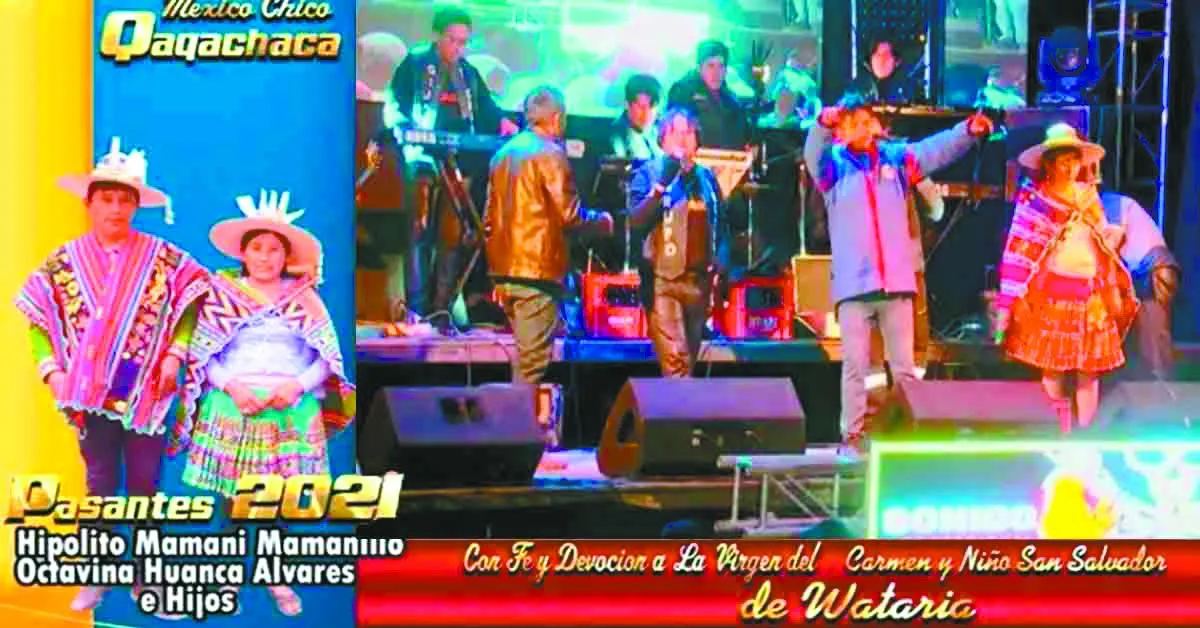
If you look for Little Mexico on social media you will undoubtedly find videos of its festivals. One in particular stands out.
“The mighty morenada of Little Mexico, Marka Qaqachaka, community Cotaña, its sponsors Hipólito Mamani Mamanillo, the popular Scanner, offer their warm greetings and invite all neighbors and relatives living in Bolivia and abroad, especially in Chile, to the festival to be held in the Qaqachaka community, Little Mexico,” says the invitation to the 2021 festival.
The alférez, “the popular Scanner,” is one of the most wanted vehicle traffickers in the country. In 2023 he was identified as a member of an international car‑theft ring. He fled after ambushing a Chilean family who had entered Challapata to recover their tractor‑truck.
At that time Deputy Enrique Urquidi denounced the existence of Little Mexico. He said complaints about smuggled stolen cars dated back to 2021 and that the Qaqachaka community had abandoned farming to produce cocaine, turning the region into a lawless territory.
But the background goes back much further and even extends into Potosí territory, showing how organized crime embeds itself in the region and the ayllus. In 2010 a story shocked the country: Indigenous people from northern Potosí lynched four officers of Oruro’s Directorate for the Prevention and Investigation of Vehicle Theft. Authorities could not even enter the region to recover the bodies.
The incident occurred in an Indigenous community in that region. Local authorities and other Indigenous leaders confirmed the killings and said the bodies had been buried in three different communities.
The then chief of Police for northern Potosí, Orlando Ávila, reported that there were snipers along the road. He said the ayllus, both from southern Oruro and northern Potosí, were heavily armed because they had long been buying and selling undocumented vehicles in the valleys and eastern regions of Bolivia.
It then became clear that it was not only the Qaqachaka community but several similar settlements across the entire region. The incident put the area on the authorities’ radar, and in 2014 they warned that drug trafficking was spreading to Challapata in Oruro and northern Potosí, pointing to the Qaqachakas.
Around that time at least two shoot‑outs occurred in Challapata when vehicles carrying cocaine were intercepted. Since then there have been several reports of ambushes.
“These are poor regions; there are no crops, there is mining pollution, there are droughts… Criminals take advantage of this to draw the inhabitants into activities that generate income for them,” says the source consulted.
Departmental assembly member Herminio Fernández claims that at least ten communities have been involved in drug production since 2023, yet the authorities have taken no action.
Snipers
As assembly member Fuertes says, these kinds of ambushes are not new. On 23 November 2024 a convoy of police patrols was attacked while heading to clear the Oruro–Potosí highway.
As now, groups allied with Morales were blocking the road in defense of the coca‑grower leader, who faces an arrest warrant for trafficking. Political and economic slogans were added to the protest.
The long‑range shots were fired on the Challapata–Ventilla stretch. Five police vehicles were hit by projectiles that left holes in them. Two snipers were identified in the hills.
On 10 November 2019 another ambush occurred in the region, also in defense of Evo Morales. An armed group attacked a caravan of miners and university students traveling from Uyuni (Potosí) to La Paz to support protests against the president. The attack took place in the Playa Verde area on the Challapata–Huancané stretch.
“It is estimated that the shots came from a distance of between 400 and 700 meters in the hills, which suggests that long guns were used. During an on‑site inspection in April 2021 the GIEI found dozens of spent cartridges scattered on one of the hills from which the shots were fired,” states part of the final report of the Interdisciplinary Group of Independent Experts (GIEI) Bolivia on the events of 2019.
According to the technical assessment, the projectiles and casings were compatible with Mauser rifles using 7.65×53 mm Belgian‑made ammunition. However, the use of other war rifles could not be ruled out because the casings found also match other rifle models.
“There were five people wounded by gunfire. At that time we had already denounced the existence of Little Mexico on the stretch between Oruro and Potosí, but no one paid attention. The presence of armed people was warned,” Fuertes said.
The share of power
It may not be as visible as in the case of Andrónico Rodríguez or Leonardo Loza—power quotas of the Six Federations of the Tropics—but that does not mean there is no significant political influence in northern Potosí close to MAS, Luis Arce, or Evo Morales.
In the Departmental Legislative Assembly of Potosí there are 32 members, of whom 24 are from MAS. This large majority of blue seats was won mainly in northern Potosí.
In the Plurinational Legislative Assembly its clout was felt during the tenure of Israel Huaytari, a deputy from Potosí in the “arcista” wing of MAS, who presided over the lower house in 2024. Coming from the FAOI‑NP, he was investigated for illicit enrichment.
His sworn statement listed ten assets, a debt of 2.7 million bolivianos, assets of more than 600 000 bolivianos, and total income of 294 216 bolivianos. Several complaints were filed against him.
Deputy Antonio Colque, also from northern Potosí, said that Huaytari was not recognized by the social organizations in this region, whereas he himself was; he too is a MAS legislator but from the “evista” wing.
Colque was also accused. On 4 October 2022 an audio was circulated in which the deputy allegedly can be heard negotiating positions in the Judicial Branch with former Council of the Magistracy president Marvin Molina. Molina said the recording was made at a 2021 meeting. Colque denied the accusation.
But beyond his seat, Colque is a heavyweight “evista” leader. In 2024, amid the roadblocks by groups allied with Morales, he led and supported the only blockade point in Potosí.
Another important leader in the region is the “evista” jiliri Apu Mallku of the National Council of Ayllus and Markas of Qullasuyu (Conamaq), Ramiro Jorge Cucho, from the Charca Qhara Qhara “Warrior Ayllus.” Last November he was jailed for leading Unity Pact protests that caused a 24‑day roadblock in Cochabamba.
The measure cut off routes to the east and west of the country, causing economic losses of more than 2.2 billion dollars in productive sectors, according to the government. During the mobilizations he threatened to spill blood on the highways if Morales’s candidacy was disqualified.
On 29 April, after Jorge Cucho completed preventive detention, the FAOI‑NP—now mobilized in Llallagua—welcomed him with a delegation, flowers, cheers, celebration, and joy.
Por Leny Chuquimia, Visión 360:
Conflictos en Llallagua develan la situación
“México Chico” es el secreto a voces que reina en el Sur de Oruro y que se abre paso en medio del Altiplano potosino; un corredor para el paso de autos chutos, contrabando y drogas.
Punto de bloqueo en el que participaban ayllus del Norte de Potosí. Foto: EFE
“Es un secreto a voces”, señala uno de los pobladores del Norte de Potosí que sigue de cerca los conflictos ocurridos en Llallagua. Prefiere no ser identificado, aunque lo que dice es algo que muchos murmuran. “Se han manejado armas; no son solo chullpas o sicoyas, son los chuteros, los narcos”, advierte.
Redes de narcotraficantes, contrabandistas y chuteros se enquistan en los ayllus guerreros del Norte Potosí, aprovechando la ausencia del Estado y las carencias de la región. Su alcance no tiene límites, pues cruzan el límite departamental hacia el sur de Oruro, donde otro ayllu combativo llama a su región México Chico.
El pasado miércoles, 11 de junio, cuatro policías murieron en un operativo de desbloqueo de la carretera de ingreso a Llallagua. La población llevaba 10 días aislada por la protesta de los Ayllus del Norte de Potosí en contra del Gobierno central.
“En el conflicto de Llallagua, no solo se trata de los ayllus movilizados ni de todos los ayllus. Hay un alto componente de algo ajeno a nuestros ancestros, a los ayllus y nuestros pueblos indígenas: el narcotráfico”, explica Azucena Fuertes, asambleísta departamental de Potosí.
Entre los fallecidos y heridos se identificaron impactos de bala. Las autoridades afirman que se trata de armas de largo alcance, que requieren precisión. Señalan que podrían ser francotiradores, operando entre los movilizados y actuando de manera coordinada.
“Nuestro objetivo era y sigue siendo garantizar el libre tránsito. Sin embargo, en el trayecto nos hemos encontrado con grupos organizados que han usado la violencia extrema con dinamita, pedradas y armas de fuego usadas por francotiradores”, manifiesta el viceministro de Régimen Interior y Policía, Jhonny Aguilera.
Añade que las finalidades de estos grupos son políticas, económicas y -en el caso de Llallagua- además hay intereses vinculados al narcotráfico.
“Es una zona donde se tiene información de sembradíos de marihuana y fábricas de cocaína, por eso se la ha denominado México Chico”, explica el comandante de la Policía Boliviana, Augusto Russo.
No solo apunta a que es un área roja por la presencia de actividad ilícita, sino a que estas tienen conexión con el dirigente cocalero y expresidente Evo Morales Ayma, impulsor de las movilizaciones que exigen su habilitación como candidato en las elecciones 2025.
Fuertes afirma que la denuncia no es nueva, que los grupos armados ya operaron en los conflictos de 2019 y nadie hizo nada.
“No es novedoso que haya gente armada, hay gente que está preparada y equipada para enfrentarse a este tipo de situaciones. Yo temo que la esencia histórica y ancestral de los ayllus, ahora, va a ser lamentablemente combinada y confundida con esta presencia de grupos armados que tienen su origen principal en el narcotráfico”.
Los “Ayllus Guerreros”
La región del Norte Potosí es conocida por la presencia de ayllus indígenas, estructurados incluso antes de la Colonia y que pese a varios procesos de colonización se mantienen vivos. Ya sea por su participación en el Ejército del Imperio incaico, en la rebelión katarista en 1780, o las sublevaciones de Chayanta durante la República, son conocidos como los “Ayllus guerreros del Norte Potosí”.
Basta con recordar los sangrientos enfrentamientos que protagonizaron con los ayllus del Sur de Oruro, hasta entrados los 2000, o ver el ritual del tinku, una de sus principales ceremonias, para notar su esencia combativa.
Según el “Atlas de los Ayllus del Norte Potosí, territorio de los antiguos Charka”, los ayllus en toda esa región son decenas y están distribuidos en cinco franjas. Los del Máximo Ayllu Chayanta son los más conocidos. Una parte de ellos son también los que se encuentran movilizados en Llallagua.
Estos “Ayllus Mayores” son nueve: Puraka, Chayantaka, Aymaya, Kharacha, Phanakachi, Laymi (Laimes), Jukumani, Chullpa y Sikuya (Sicoya).
“En este punto de bloqueo, estamos movilizados los Ayllus Chullpas y Sikuyas. Se van a sumar los Jukumani, Laymi, Chayantaka y Phanakachi. Estamos firmes”, sostiene el vocero del comité de bloqueo en Lagunillas, Norte Potosí.
Afirma que su protesta no es política, sino que responde a la crisis económica que los ha dejado sin alimentos ni combustible para trabajar. Una crisis que, sostienen, no puede continuar. Pero ojo, no son todos, pues la división que atraviesa el país, también la viven los ayllus.
“Manifestamos, como Ayllu Sikuya, que se realizó el cambio de autoridades. Las nuevas han llevado adelante una reunión y habrá un cabildo. Hacemos un llamado al Ayllu Chullpa para que se entre a un diálogo pacífico. Con bloqueos en nuestro propio lugar no se resuelven los problemas económicos, empeora la situación de nuestros hermanos”, manifiesta el tata Segundo Mayor, Hilarión Cruz.
Los movilizados, entre los que también hay sikuyas y jucumanis, según la lista de detenidos, afirman que ese territorio es suyo, incluyendo Llallagua. Y es que sobre sus territorios ancestrales se han superpuesto los territorios provinciales y luego los municipales.
“En el Norte de Potosí existen poblados con gran concentración de gente, como Llallagua, Catavi, Siglo XX y Uncía que ahora están circundados por varios ayllus. Estos, a la vez, colindan con los del sur de Oruro, como los Qaqachacas. Los conflictos, incluso por límites, tienen una larga data; de ahí surgieron los proyectos para los Ayllus en Paz”, explica Fuertes.
“Ayllus en Paz” es parte de la pacificación de la zona, no solo norpotosina, sino del sur de Oruro. En esta área de límite, sumida en la extrema pobreza, por años se vivió una de las luchas internas más violentas y antiguas, entre los Jukumanis y Laimes de Potosí y los Qaqachacas de Oruro.
Tiene sus antecedentes siglos atrás, antes de la Colonia. Durante décadas, estos pueblos protagonizaron sangrientas batallas por territorios discontinuos que escaparon de las divisiones territoriales impuestas por la Colonia y la República.
Para pacificar y delimitar sus territorios, el 7 de enero de 2014, el presidente Evo Morales promulgó la Ley de Delimitación Interdepartamental Oruro – Potosí y proclamó el fin a la guerra de ayllus. Pero según los registros, el último enfrentamiento se produjo en enero de 2000.
Una madrugada los Qaqachacas de la provincia Avaroa, del sur orureño, dejaron como saldo 18 muertos y 10 heridos en el asalto y quema de 25 casas de la comunidad de Sora Sora, del Ayllu Laimes. Portaban armas dotadas en la Guerra del Chaco.
Según determinaron las investigaciones, el asalto fue una venganza ante un ataque -de una semana antes- protagonizado por los Laimes y que dejó varios heridos. Hasta ese año, el 2000, los asaltos y ataques eran una constante.
Aunque por años, las autoridades anunciaron la pacificación y hasta emprendieron el desarme, los intentos no prosperaron hasta que los mismos ayllus buscaron una salida. En los archivos del periódico El Potosí hay una fotografía tomada meses después de este último enfrentamiento a los pies del Cerro Rico. En ella se ve a dos dirigentes de los ayllus en guerra dándose la mano para acordar el camino a la paz.
Para mantener esta paz y mejorar las condiciones de las comunidades se invirtieron varios recursos y se implementaron diferentes proyectos, tanto desde la cooperación internacional y las ONG, como desde el mismo Estado, en sus diferentes niveles de gobierno.
“Desde 2021 hemos aprobado proyectos específicos para los ayllus, con nombre y apellido, hasta canchas de césped sintético y una obra promovida por la Gobernación. Además, la ALDP tiene una mayoría del MAS”, sostiene la asambleísta.
Pero esas obras, en la mayoría de los casos no vienen solas, sino como una herramienta prebendal para obtener el apoyo político de las bases.
“En los últimos 20 años, en los que el MAS está en el Gobierno, las bases de estos ayllus han sido manejadas por malos dirigentes, malas autoridades originarias y campesinas. Los chantajean para que acudan a las movilizaciones. Se ha prebendalizado su participación. Pero también hay otros chantajes, uno surge a partir de la propiedad de la tierra”, explica la autoridad.
El saneamiento de tierras se hizo como TCO (Tierra Comunitaria de Origen). Las familias tienen terrenos para sus viviendas, el cultivo y la crianza de animales, pero la tierra no les pertenece, porque es de la comunidad.
“Bajo el principio de que la tierra es comunitaria, puede ser usada, pero si deja de cumplir un bien social se revierte. Ese era el principio original; sin embargo, este se desnaturaliza para el chantaje. Para sacarlos a las movilizaciones les dicen que les quitarán su tierra. Hay casos documentados en los que les quitaron”, afirma Fuertes.
¿México Chico?
“Hay personas con armas, estos son los Qaqachacas, México Chico”, señala una persona, en un video tomado en un punto de bloqueo en Llallagua, el 11 de junio. No es el único registro.
“Este tema de México Chico está en investigaciones, por supuesto que deben tomarse las acciones correspondientes, desde el Ministerio de Gobierno y las instancias llamadas por ley”, sostiene la ministra de la Presidencia, Marianela Prada.
Mientras que el comandante Russo afirmó que estas actividades ilegales serán investigadas a fondo para combatir el delito y dar seguridad a la población.
“Estamos cruzando información con diferentes instancias estatales, como Migración, para identificar a las personas que ingresan de manera irregular y exigir su retiro si corresponde. También estamos verificando la legalidad de quienes permanecen en el área para evitar actividades ilícitas”, dijo.
De acuerdo con los reportes preliminares, México Chico sería una localidad cercana a Llallagua en la que existen pozos para la fabricación de cocaína y carpas solares para la plantación de marihuana. Una zona dominada por los narcotraficantes.
La denuncia no es reciente. No se trata solo del narcotráfico o un lugar en específico.
“México Chico existe desde hace años, sus actividades ilícitas no son secretas, todos conocen. En las redes sociales están sus fiestas patronales, sus invitaciones, grupos que le componen canciones. No está en Llallagua (Potosí), está en Challapata (Oruro), donde cada vez hay francotiradores. Pero el tema no está solo en un lugar, sino de toda una región, es una especie de corredor para el crimen”, sostiene una fuente de esta región.
En el territorio Qaqachaka se levanta una población algo alejada de la carretera principal. Es pequeña en comparación con otros pueblos, controla el ingreso de personas extrañas o autoridades. Nada se mueve sin que ellos lo sepan.
Son un ayllu del sur de Oruro, pero colinda con los ayllus del Norte Potosí. Su región, de topografía difícil, pero propicia para los caminos de herradura, hace que cree una especie de corredor para el paso y operación de redes de autos robados, contrabando y narcotráfico.
Si uno busca México Chico en las redes sociales, sin duda verá videos sobre sus fiestas. Hay uno que llama la atención.
“La poderosa morenada de México Chico, Marka Qaqachaka, comunidad Cotaña, sus pasantes Hipólito Mamani Mamanillo, el popular Scanner, saludan muy cordialmente y les invitan a todos los vecinos, familiares residentes en Bolivia y en el exterior, principalmente en Chile, a la fiesta a realizarse en la comunidad Qaqachaca, México Chico”, señala la invitación a la fiesta 2021 del denominado México Chico.
El alférez, “el popular Scanner”, es uno de los “chuteros” más buscados en el país. En 2023 fue identificado como miembro de una red internacional de robo de autos. Huyó tras emboscar a una familia chilena que ingresó a Challapata para recuperar su tractocamión.
Entonces, el diputado Enrique Urquidi denunció la existencia de México Chico. Afirmó que las denuncias de contrabando de autos robados venían desde 2021 y que la comunidad Qaqachaca había dejado el trabajo agrícola para pasar a la producción de cocaína, convirtiendo la región en un territorio sin ley.
Pero los antecedentes vienen incluso desde mucho más atrás y abarcan hasta el territorio potosino, mostrando cómo el crimen organizado se enquista en la región y en los ayllus. En 2010 una noticia daba vuelta al país: Indígenas del Norte Potosí lincharon a cuatro efectivos de la Dirección Nacional de Prevención e Investigación de Robo de Vehículos de Oruro. La situación fue tal que las autoridades no podían ni siquiera ingresar a la región a recuperar los cuerpos.
El hecho se produjo en una comunidad indígena de esa región. Las autoridades locales y otras originarias confirmaron el asesinato y que los cuerpos habrían sido enterrados en tres diferentes comunidades.
El jefe de la Policía del Norte Potosí, de aquel entonces, Orlando Ávila, informó que a lo largo del camino había francotiradores. Sostuvo que los ayllus, tanto del Sur de Oruro como del Norte de Potosí, estaban fuertemente armados, pues desde hace algún tiempo se dedicaban a la compra y a la venta de vehículos indocumentados en las zonas de los valles y el oriente boliviano.
Entonces se supo que no solo se trataba de la comunidad Qaqachaca, sino que había varios poblados similares a lo largo de toda esta región. El hecho puso la zona en la mira de las autoridades y, en 2014, alertaron que el narcotráfico se expandía a Challapata en Oruro y al Norte de Potosí. Apuntaban a los Qaqachacas.
En esos días, habían ocurrido al menos dos balaceras en Challapata cuando se interceptaron vehículos que transportaban cocaína. Desde entonces hay varios reportes de emboscadas.
“Son regiones pobres, no hay cultivos, hay contaminación minera, hay sequías… Los delincuentes se aprovechan de esto para captar a los pobladores en estas actividades que para ellos generan ingresos”, afirma la fuente consultada.
Herminio Fernández, asambleísta departamental, denuncia que hay al menos 10 comunidades vinculadas a la producción de droga desde 2023, pero las autoridades no tomaron acción alguna.
Francotiradores
Como dice la asambleísta Fuertes, este tipo de emboscadas no son novedosas. El 23 de noviembre de 2024, una caravana de patrullas policiales sufrió un ataque armado, cuando se dirigía a desbloquear la carretera Oruro-Potosí.
Al igual que ahora, grupos afines a Morales bloqueaban la vía en defensa del líder cocalero, contra quien pesa una orden de aprehensión por trata. A la protesta se sumaron consignas políticas y económicas.
Los disparos, de largo alcance se dieron en el tramo Challapata y el cruce Ventilla. Cinco vehículos de la Policía fueron alcanzados por proyectiles que dejaron agujeros en los motorizados. Se identificó a dos francotiradores en los cerros.
El 10 de noviembre de 2019, en la región se produjo otra emboscada, también en defensa de Evo Morales. En aquella ocasión, un grupo armado atacó a la caravana de mineros y universitarios que se dirigían desde Uyuni (Potosí) hasta La Paz, para apoyar las protestas en contra del entonces Presidente. El ataque se registró en la zona de Playa Verde, en el tramo Challapata-Huancané.
“Se calcula que los disparos provenían de una distancia entre 400 y 700 metros de los cerros, lo que permite inferir que las armas de fuego empleadas eran largas. En una visita ocular sobre el terreno adelantado durante el mes de abril de 2021, el GIEI encontró decenas de vainas de proyectil dispersas en uno de los cerros desde donde se produjeron los disparos” señala una parte del informe final del Grupo Interdisciplinario de Expertos Independientes (GIEI) Bolivia, sobre los hechos de2019.
Según la evaluación técnica, los proyectiles y las vainas eran compatibles con fusiles Mauser, munición 7,65×53 mm de fabricación belga. Sin embargo, no era posible descartar el uso de otros rifles de guerra, “pues el tipo de vaina encontrada es también compatible con otros modelos de fusiles”.
“Hay un saldo de cinco personas heridas de bala. En ese entonces ya habíamos denunciado la existencia de México Chico, en el tramo entre Oruro y Potosí, pero nadie nos hizo caso. Aquella vez se advirtió la presencia de gente armada”, afirmó Fuertes.
La cuota de poder
Puede que no sea tan visible como en el caso de Andrónico Rodríguez o Leonardo Loza —cuotas de poder de las Seis Federaciones del Trópico—, pero eso no significa que no exista en el norte de Potosí un peso político importante y cercano al MAS, a Luis Arce o a Evo Morales.
En la Asamblea Legislativa Departamental de Potosí, hay 32 asambleístas de los cuales 24 son del MAS. Esta gran mayoría de curules azules fueron ganados principalmente en el Norte de Potosí.
En la Asamblea Legislativa Plurinacional, su peso estuvo en la gestión de Israel Huaytari, diputado por Potosí, del ala “arcista” del MAS, que ocupó la presidencia de la Cámara Baja en 2024. Proveniente de la FAOI-NP, fue investigado por enriquecimiento ilícito.
En su declaración jurada figuraban 10 bienes, una deuda de 2,7 millones de bolivianos, activos por más de 600 mil bolivianos y un total de rentas recibidas de 294.216 bolivianos. En su contra hubo varias denuncias.
El diputado Antonio Colque, también proveniente de Norte Potosí, señaló que Huaytari no era reconocido por las organizaciones sociales de esta región, como lo era él, que también es legislador del MAS, pero del ala “evista”.
Colque también fue denunciado. El 4 de octubre de 2022, se difundió un audio en el que presuntamente se escucha al diputado negociar cargos en el Órgano Judicial con el expresidente del Consejo de la Magistratura, Marvin Molina. Esta última autoridad indicó que el material fue registrado en una reunión de 2021. Colque negó la acusación.
Pero más allá del curul, Colque es uno de los dirigentes “evistas” de peso. En 2024, en medio de los bloqueos de grupos afines a Morales, dirigió y apoyó el único punto de bloqueo en Potosí.
Otro de los dirigentes importantes que lideran esta región es el jiliri Apu Mallku del Consejo Nacional de Ayllus y Markas del Qullasuyu (Conamaq) “evista”, Ramiro Jorge Cucho, proveniente de los Charca Qhara Qhara “Ayllus Guerreros”. En noviembre pasado, el dirigente fue detenido y enviado a un centro penitenciario por encabezar las protestas del Pacto de Unidad, que derivaron en un bloqueo de caminos de 24 días en Cochabamba.
La medida incomunicó las rutas hacia el oriente y occidente del país, causando una pérdida económica superior a los 2.200 millones de dólares en los sectores productivos, según informó el Gobierno. Durante las movilizaciones amenazó con hacer correr sangre en las carreteras si se inhabilitaba la candidatura de Morales.
El 29 de abril pasado, tras que Jorge Cucho cumpliera su detención preventiva, la FAOI-NP, que hoy se encuentra movilizada en Llallagua, recibió al dirigente con una comitiva, flores, vivas, fiesta y algarabía.

 Bolivian Thoughts | Pensamientos Bolivianos (Bilingual/Bilingüe)