
By El Diario:
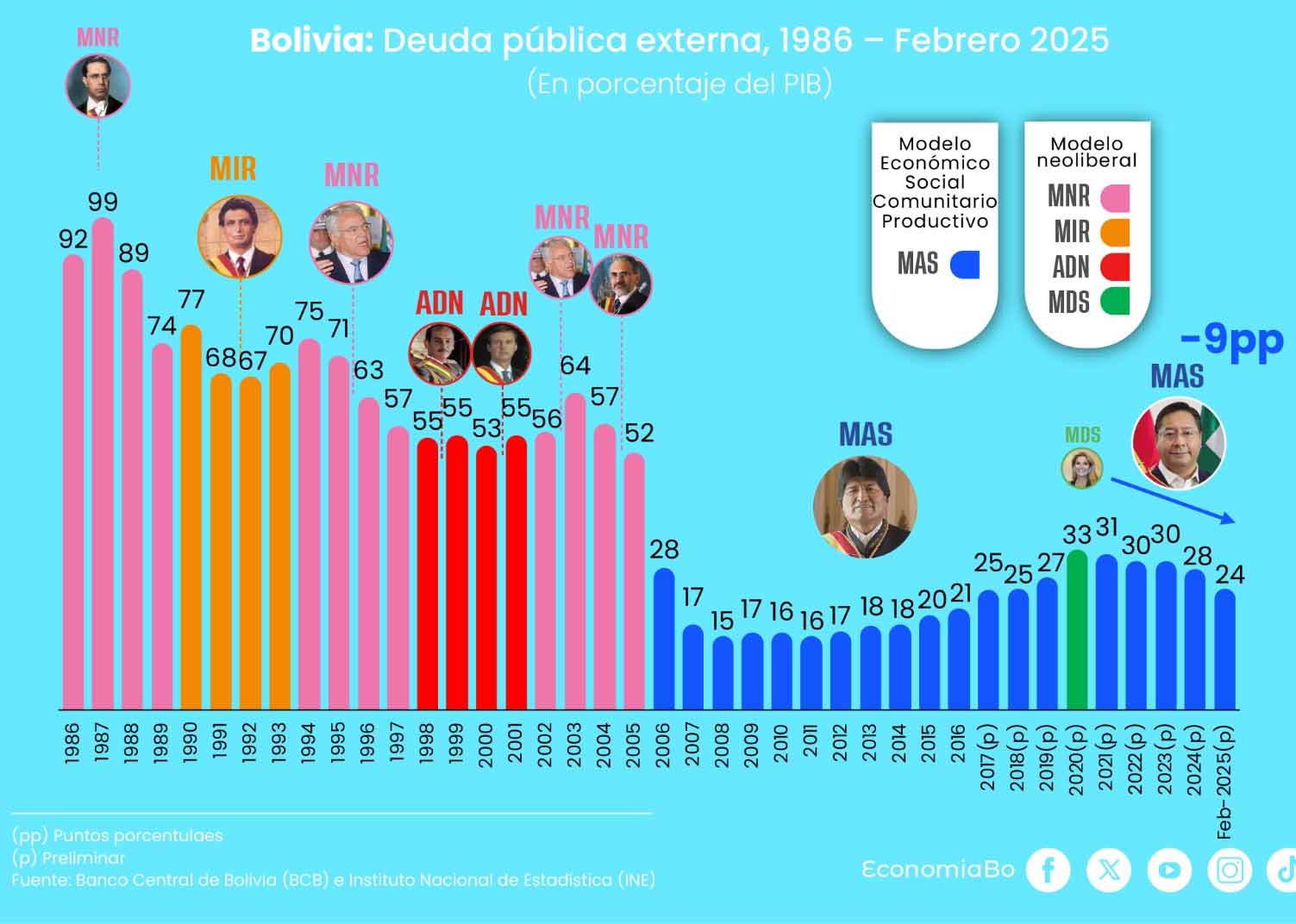
The idea that debt represents a low percentage of the Gross Domestic Product (GDP), compared to other government administrations, does not mean that external debt has decreased; on the contrary, it increased from 2005 to 2024 by more than 150%, from 5 billion dollars to over 13.4 billion. The government is looking at loans stalled in the Plurinational Legislative Assembly (ALP) because it has no other financing alternatives.
According to official data from the Central Bank of Bolivia (BCB), in 2005 external debt amounted to 4.9417 billion dollars, but as of June 2024, the figure rose to 13.364 billion, despite the economic boom of the previous decade.
The government is now looking at the 1.8 billion dollars in loans pending in the ALP, which have not progressed, and is demanding their approval to inject dollars into the national economy.
Recently, the BCB reported that Net International Reserves (NIR) rose to 2.618 billion dollars, but in foreign currency they amount to only 167 million, while gold represents over 1.8 billion.
The government uses the percentage of external debt in relation to GDP, which is lower than in previous administrations, but this does not mean there is less debt—on the contrary, it has increased, just as the national GDP has.
Meanwhile, the Vice Minister of Treasury and Public Credit, Juana Jiménez, stated in a press conference last Tuesday that GDP has grown over time and that this allows them to acquire loans.

Por El Diario:
La idea que la deuda tiene un porcentaje bajo respecto al Producto Interno Bruto (PIB), en comparación de otras gestiones de gobierno no quiere decir que la deuda externa se redujo, sino todo lo contrario ésta subió desde el 2005 al 2024, en más del 150%, de 5.000 millones de dólares a más de 13.400 millones. El Gobierno mira los créditos parados en la Asamblea Legislativa Plurinacional (ALP) debido a que no tiene otras alternativas de financiamiento.
De acuerdo a datos oficiales del Banco Central de Bolivia (BCB), en 2005 la deuda externa alcanzaba a 4.941,7 millones de dólares, pero a junio de 2024 la cifra se incrementó a 13.364 millones, a pesar de la bonanza económica de la pasada década.
Ahora el Gobierno mira los créditos de 1.800 millones de dólares que están en la ALP, que no siguen en tratamiento, y exige la aprobación para inyectar dólares a la economía nacional.
Recientemente el BCB informó que las Reservas Internacionales Netas (RIN) subieron a 2.618 millones de dólares, pero en divisas sólo llega a 167 millones, mientras el oro representa más 1.800 millones.
El Gobierno maneja los porcentajes de deuda externa respecto al PIB, que representa menos a las gestiones pasadas, pero no significa que hay menos deuda, sino todo lo contrario, la misma se incrementó, así como el PIB nacional.
Entre tanto, la viceministra de Tesoro y Crédito Público, Juana Jiménez, en conferencia ofrecida el pasado martes, indicó que el PIB creció en el tiempo y que esto les permite poder adquirir créditos.

 Bolivian Thoughts | Pensamientos Bolivianos (Bilingual/Bilingüe)