
By El Diario:
- It is stated that all members of the Electoral Body and the Constitutional Court have some degree of subordination to the ruling power.
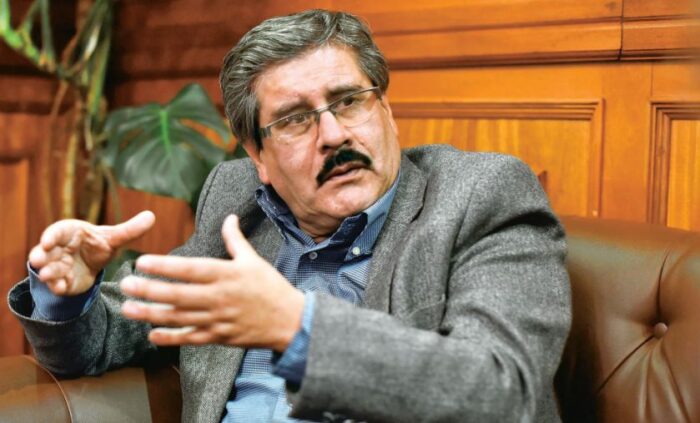
In a situation marked by political campaigns and doubts about the 2025 general elections taking place, former rector of the Universidad Mayor de San Andrés (UMSA), Waldo Albarracín, stated that the subordination of the Electoral Body and the Plurinational Constitutional Court (TCP) to the ruling power prevents the country from guaranteeing the right to vote and transparent elections.
Through his social media, the former head of the Ombudsman’s Office also warned that, under current conditions, it is very difficult for the country to ensure respect for the popular will expressed at the ballot box, as well as the transparency of electoral processes.
“The right to vote and to transparent elections with a guarantee of respecting the will of the people expressed at the polls practically does not exist in Bolivia,” he said.
According to Albarracín, this happens because all members of the Electoral Body and the Constitutional Court have some degree of subordination to the ruling power.
“It is because all members of the Electoral Body and the Constitutional Court are subordinated to political power,” he added.
Last week, following a meeting between members of the Full Chamber of the TSE and the presidency of the Constitutional Court, in which they reaffirmed the agreement signed between both bodies to ensure the holding of general elections, deputy Lissa Claros from Comunidad Ciudadana (CC) expressed her rejection of that meeting, stating that no announcement from a court with extended-term magistrates can be considered valid.
“The general elections are currently at risk; no matter how much they come out and make promises, we don’t believe them because they have proven to be liars all this time,” said the assembly member, recalling what happened during the judicial elections last December.
Por El Diario:
- Afirman que la totalidad de los miembros del Órgano Electoral y del Tribunal Constitucional, tienen algún grado de subordinación al poder de turno.
Ante una coyuntura marcada por campañas políticas y dudas sobre la realización de las elecciones generales 2025, el exrector de la Universidad Mayor de San Andrés (UMSA), Waldo Albarracín, afirmó que la subordinación del Órgano Electoral y el Tribunal Constitucional Plurinacional (TCP), al poder de turno, impiden que en el país esté garantizado el derecho al sufragio y a unas elecciones transparentes.
A través de sus redes sociales, el también extitular de la Defensoría del Pueblo, advirtió que, en las actuales condiciones, es muy difícil que en el país se pueda garantizar el respeto a la voluntad popular expresada en el voto, asimismo la transparencia de los procesos electorales.
“El derecho al sufragio y a elecciones transparentes con garantía de respetar la voluntad del pueblo expresado en las urnas, prácticamente no existe en Bolivia”, expresó.
En criterio de Albarracín, esto sucede debido a que la totalidad de los miembros del Órgano Electoral y del Tribunal Constitucional tienen algún grado de subordinación al poder de turno.
“Es debido a que todos los miembros del Órgano Electoral y el Tribunal Constitucional están subordinados al poder político”, agregó.
La semana pasada, tras la reunión sostenida entre miembros de la Sala Plena del TSE y la presidencia del Tribunal Constitucional, ratificando el acuerdo suscrito entre ambas instancias para garantizar el desarrollo de las elecciones generales, la diputada por Comunidad Ciudadana (CC), Lissa Claros, manifestó su rechazo a dicho encuentro afirmando que no se puede reconocer como válido ningún anuncio que emerja de un tribunal con magistrados prorrogados.
“Las elecciones generales en este momento corren riesgo, por mucho que salgan a decir y prometer, no les creemos porque han demostrado que son unos mentirosos durante todo este tiempo”, manifestó la asambleísta recordando lo ocurrido en los comicios judiciales de diciembre pasado.

 Bolivian Thoughts | Pensamientos Bolivianos (Bilingual/Bilingüe)