
By Marisol Alvarado, Vision 360:
Trade measure
More than 200 Bolivian products entering the United States will have to pay a 10% tariff
According to the Bolivian Institute of Foreign Trade (IBCE), Bolivia exports around 208 products to the United States, including tin, Brazil nuts, quinoa, and other minerals.
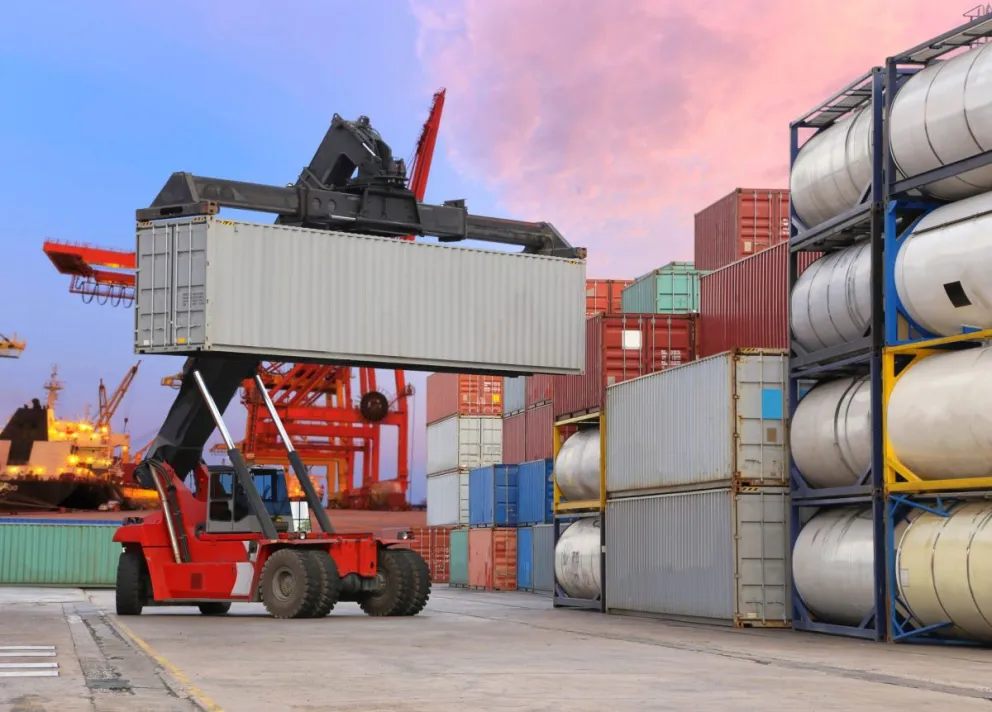
Bolivian exports. Photo: ABI
Starting April 5, Bolivian products entering the U.S. market will be subject to a 10% tariff after the country’s president, Donald Trump, approved a “reciprocal tariff” for Latin American countries, except for Mexico, which is not affected for now. Venezuela and Nicaragua will face higher rates of 15% and 18%, respectively.
During an event at the White House Rose Garden, Trump justified the measure as an action to level the playing field with third countries that, in his view, have benefited for decades from preferential access to the U.S. market without offering similar conditions to American products.
For example, China was hit with a 34% tariff, while products from the European Union face a 20% tariff.
According to the Bolivian Institute of Foreign Trade (IBCE), Bolivia exports around 208 products to the United States, including tin, Brazil nuts, quinoa, and other minerals.
A report from the National Chamber of Exporters (Caneb) also indicates that the United States is the 12th largest destination for Bolivian exports.
Between January and November 2024, exports to the U.S. reached $250.73 million in value and 52,179.04 net tons in volume.
For IBCE manager Gary Rodríguez, quoted by the newspaper El Deber, “the tariff increase will make exports more difficult” and called the measure “sad news.”
Trump’s decision has created uncertainty among U.S. trade partners in Latin America, especially in countries like Brazil, Colombia, and Chile, which maintain close economic ties with Washington.
Venezuela (15%) and Nicaragua (18%) are countries Washington attributes with a lack of democratic cooperation and open hostility toward the United States.
By Brujula Digital:
US imposes 10% tariff on Bolivian products, exporters warn of impact
U.S. President Donald Trump announced this Wednesday the imposition of a 10% tariff on all imports from Bolivia and other Latin American countries, a measure that will take effect on April 5.
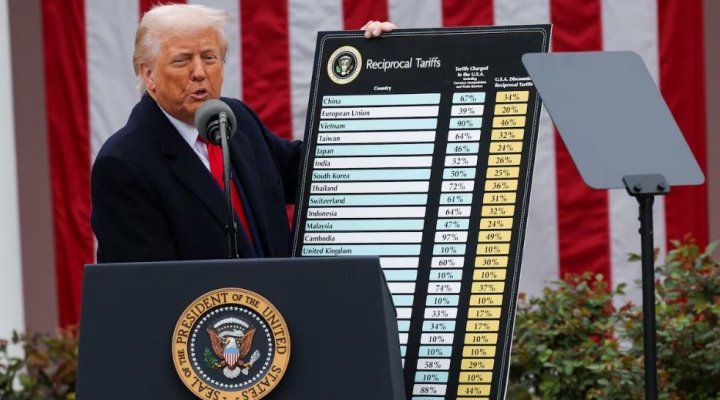
Trump presents new global tariff rates. Photo: Reuters
U.S. President Donald Trump announced this Wednesday the imposition of a 10% tariff on all imports from Bolivia and other Latin American countries, a measure that will take effect on April 5. The decision is part of a new trade strategy that the president described as an act of “reciprocity” in response to what he considers unfair trade barriers imposed against U.S. products.
During a speech at the White House, Trump argued that many countries have treated the U.S. disproportionately, imposing high tariffs on its products, which he compared to “cheating” in international trade. He also declared the day as “Economic Liberation Day” and justified the measure as part of a strategy to strengthen the U.S. economy amid what has been described as a “trade war” against powers like China and the European Union.
The measure applies to all Latin American countries, except Cuba, due to the trade embargo, and Mexico, which is protected under the United States-Mexico-Canada Agreement (USMCA). Among the affected nations, Bolivia will face a 10% tariff, while Nicaragua and Venezuela will be subject to higher tariffs of 18% and 15%, respectively.
The general manager of the Bolivian Institute of Foreign Trade (IBCE), Gary Rodríguez, called the decision a “sad development” for Bolivian exports and warned that it will further hinder the entry of national products into the U.S. market, which is considered one of the most attractive in the world.
Rodríguez recalled that Bolivia lost the benefits of the Andean Trade Promotion and Drug Eradication Act (ATPDEA) in 2008 due to the suspension of anti-drug cooperation with the U.S., severely impacting sectors such as manufacturing and textiles. Currently, Bolivian exports to the United States are covered under the Generalized System of Preferences (GSP), which allows more than 5,000 products to enter duty-free. However, this mechanism expired in 2020, and its renewal remains pending in the U.S. Congress, creating uncertainty among exporters.
According to IBCE data, in 2023, Bolivia exported 264 products to the U.S. worth a total of $224 million, while in 2022, it shipped 258 products valued at $251 million through November. Key exports include tin, Brazil nuts, quinoa, tungsten, silver, antimony oxide, jewelry, sugar, leather products, coffee, and chia, among others.
Economist and analyst Gonzalo Chávez warned that these tariffs would be a “severe blow” to the Bolivian economy and impact strategic sectors such as agribusiness and manufacturing. He also emphasized the need for Bolivia to diversify its markets and promote trade liberalization policies to mitigate the effects of the measure.
BD/RED
Por Marisol Alvarado, Vision 360:
Medida comercial
Más de 200 productos bolivianos que ingresen a Estados Unidos deberán pagar 10 % de arancel
Según el Instituto Boliviano de Comercio Exterior (IBCE), Bolivia exporta a Estados Unidos alrededor de 208 productos, entre los que se incluyen estaño, nuez de Brasil, quinua y otros minerales.
Exportaciones bolivianas. Foto: ABI
A partir del 5 de abril, los productos bolivianos que ingresen al mercado de Estados Unidos (EEUU) deberán pagar un 10 % de arancel, luego de que el presidente de ese país del norte, Donald Trump, aprobó un “arancel recíproco” para los países de América Latina, con excepción de México, que no está afectado por el momento. Venezuela y Nicaragua enfrentarán tasas más elevadas, del 15 % y el 18 %, respectivamente.
Durante un evento en La Rosaleda de la Casa Blanca, Trump justificó la medida como una acción para nivelar el campo de juego con terceros países que en su opinión se han beneficiado durante décadas del acceso preferencial al mercado estadounidense sin ofrecer condiciones similares a los productos estadounidenses.
A China, por ejemplo, impuso el 34 % de arancel, mientras que, a los productos de la Unión Europea, un 20%.
Según el Instituto Boliviano de Comercio Exterior (IBCE), Bolivia exporta a Estados Unidos alrededor de 208 productos, entre los que se incluyen estaño, nuez de Brasil, quinua y otros minerales.
Así también un reporte de la Cámara Nacional de Exportadores (Caneb) refleja que Estados Unidos es el país número 12 a donde se destinan las exportaciones bolivianas.
Entre enero y noviembre de 2024, las exportaciones al país norteamericano alcanzaron $us 250,73 millones, en términos de valor, y 52.179,04 toneladas netas, en lo referido al volumen.
Para el gerente del IBCE, Gary Rodríguez, citado por el diario El Deber, “la subida de aranceles hará cuesta arriba la exportación” y calificó la medida de una “triste noticia”.
La decisión de Trump ha generado incertidumbre entre los socios comerciales de EEUU en América Latina, especialmente en países como Brasil, Colombia y Chile, que mantienen estrechos vínculos económicos con Washington.
Venezuela (15 %) y Nicaragua (18 %) son países a los que Washington atribuye falta de cooperación democrática y una manifiesta hostilidad hacia Estados Unidos.
Por Brújula Digital:
EE.UU. impone arancel del 10% a productos bolivianos y los exportadores advierten impacto
El presidente de Estados Unidos, Donald Trump, anunció este miércoles la imposición de un arancel del 10% a todas las importaciones provenientes de Bolivia y otros países de América Latina, medida que entrará en vigor el 5 de abril.
Trump presenta los nuevos porcentajes de aranceles con el mundo. Foto: Reuters
El presidente de Estados Unidos, Donald Trump, anunció este miércoles la imposición de un arancel del 10% a todas las importaciones provenientes de Bolivia y otros países de América Latina, medida que entrará en vigor el 5 de abril. La decisión forma parte de una nueva estrategia comercial que el mandatario calificó como un acto de “reciprocidad” ante lo que considera barreras comerciales injustas impuestas contra productos estadounidenses.
Durante un discurso en la Casa Blanca, Trump argumentó que muchos países han tratado de manera desproporcionada a EE.UU., imponiendo altos aranceles a sus productos, lo que comparó con “hacer trampa” en el comercio internacional. Además, denominó la jornada como el “Día de la Liberación Económica” y justificó la medida como parte de una estrategia para fortalecer la economía estadounidense en lo que ha sido descrito como una “guerra comercial” contra potencias como China y la Unión Europea.
La medida incluye a todos los países de América Latina, con excepción de Cuba, debido al embargo comercial, y de México, que está protegido por el Tratado entre México, Estados Unidos y Canadá (T-MEC). Entre los países afectados, Bolivia deberá enfrentar un arancel del 10%, mientras que Nicaragua y Venezuela estarán sujetos a aranceles más elevados del 18% y 15%, respectivamente.
El gerente general del Instituto Boliviano de Comercio Exterior (IBCE), Gary Rodríguez, calificó la decisión como una “triste noticia” para las exportaciones bolivianas y advirtió que dificultará aún más la entrada de productos nacionales al mercado estadounidense, el cual es considerado uno de los más atractivos del mundo.
Rodríguez recordó que Bolivia perdió en 2008 los beneficios del programa de preferencias arancelarias ATPDEA debido a la suspensión de la cooperación antidrogas con EE.UU., lo que afectó gravemente sectores como el manufacturero y el textilero. Actualmente, las exportaciones bolivianas a Estados Unidos están amparadas bajo el Sistema Generalizado de Preferencias (SGP), que permite el ingreso libre de aranceles de más de 5.000 productos. Sin embargo, este mecanismo expiró en 2020 y su renovación sigue pendiente en el Congreso estadounidense, lo que genera incertidumbre entre los exportadores.
Según datos del IBCE, en 2023 Bolivia exportó 264 productos a EE.UU. por un total de 224 millones de dólares, mientras que en 2022 se enviaron 258 productos por un valor de 251 millones de dólares hasta noviembre. Entre los principales bienes exportados se encuentran el estaño, la castaña, la quinua, el wólfram, la plata, el óxido de antimonio, la joyería, el azúcar, los productos de cuero, el café y la chía, entre otros.
El economista y analista Gonzalo Chávez advirtió que la imposición de estos aranceles representará un “golpe duro” para la economía boliviana y afectará sectores estratégicos como la agroindustria y la manufactura. Además, subrayó la necesidad de que Bolivia diversifique sus mercados y fomente políticas de apertura comercial para mitigar el impacto de la medida.
BD/RED

 Bolivian Thoughts | Pensamientos Bolivianos (Bilingual/Bilingüe)