
By Jorge Soruco, Vision 360:
The initiative aims to grow with Laja and Arani bread
A marraqueta baked in the traditional style but adapted to the heat is the offering of the company seeking to bring other types of bread to the east.
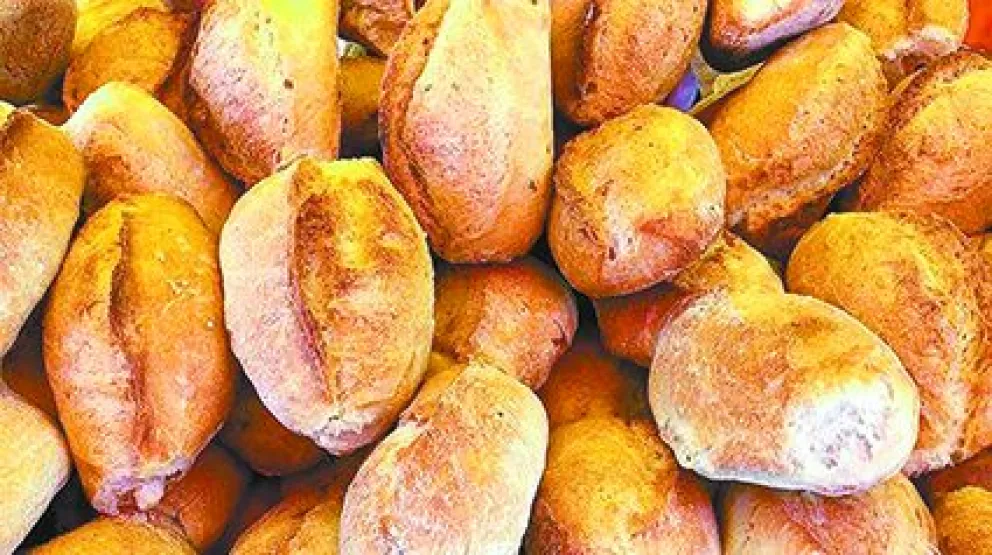
Freshly baked marraquetas. PHOTO: Marraqueta Yaa
Few things are as Bolivian as enjoying tea or coffee with a marraqueta and cheese. Although this type of bread originated in La Paz, it has gained fans throughout the country. However, very few bakers outside the seat of government have managed to replicate its magic—except for Marraquetas Yaa, a Santa Cruz-based initiative aiming to bring breads from across Bolivia to the eastern region.
“Yes, the marraqueta is a symbol of La Paz, but it’s so delicious that it has transcended the department and is now a national favorite. That’s why we saw the opportunity to make it here (Santa Cruz) for people who love it,” Iván Vacaflores, founder of the company, explained to Visión 360.
Currently, Marraquetas Yaa bakes between 1,000 and 7,000 breads daily, depending on the day and demand. Its customers include both cambas and collas, from Plan Tres Mil to Las Colinas del Urubó.
“The marraqueta has no social class or regionalism. People buy it for the magic of its flavor and the charm of its crunch,” said Vacaflores.
Despite this passion, the process of establishing the business took a long time and required extensive studies of the product.
10 bolivianos for seven marraquetas is the official price. It cannot be lowered due to the cost of ingredients and the lack of subsidized flour.
Fair Launch
The entrepreneur acknowledges that the initiative was indirectly driven by the La Paz Municipality. In 2023, the regional government flew these breads to Expocruz, an initiative later replicated by the Governor’s Office and the Federation of Artisan Bakers of La Paz.
In both cases, the public response was very favorable. “That sparked my interest and showed me that the business was viable,” said Vacaflores.
Thus, the company’s first version involved “importing” marraquetas to Santa Cruz. Initially, this was done through Boliviana de Aviación.
However, they quickly switched to Ecojet. “There was no business with BoA because the freight was too expensive. At first, Ecojet brought me 20 boxes, but that also failed since they didn’t always have space for the number of boxes I needed,” he recalls.

From there, they switched to land transport, which turned out to be even more disastrous. “We’re talking about at least an 18-hour trip in the best-case scenario, since a single roadblock would ruin everything, leaving me with stale marraquetas that no one likes.”
Thus, transport was ruled out—not only because renting space in trucks or planes was unsustainable, but also due to the unpredictability of Bolivian transport: roadblocks, delayed departures, and weather conditions. Everything worked against that model.
That’s why Iván decided to bet on another idea: baking marraquetas directly in Santa Cruz de la Sierra.
But how could he do it without ending up with a low-quality version?
Learning the Craft
This wasn’t the first time someone attempted to make this type of bread in Santa Cruz. Few efforts managed to reproduce the traditional style, and even fewer succeeded in producing large quantities for a mass audience.
“It’s neither easy nor cheap. Unlike everyday bakers, we don’t have access to subsidized flour. Nor are we family-run businesses that can negotiate payment terms with workers,” Vacaflores explained.
For this reason, more than a year ago, the businessman traveled to La Paz to learn directly from bakers in the city and in El Alto. In addition to mastering the recipe and baking techniques, he also spoke with experts to convince them to work in the eastern region.
“You wouldn’t believe it, but it wasn’t easy. Many were suspicious, to the point of calling their friends right in front of me to arrange safety measures in case I ‘tried to steal their organs’ or if it was some kind of scam. Some even turned around and went back to La Paz at the slightest delay in picking them up from the terminal.”
The company bakes between 1,000 and 7,000 loaves of bread daily. The amount depends largely on the day. The leftovers are used for other products.
In this process, he understood that one of the main keys to the marraqueta is the oven. It has to be traditional, made with special bricks, black earth, and other elements.
There is also the recipe. Although it may seem simple at first – the ingredients are wheat flour, yeast, salt, and water – the kneading, the oven temperature, and the cooking time also play a significant role.
In fact, its preparation blurs the lines between industrial production and artisanal methods, science, art, and, why not, magic.
“It’s as temperamental as a Paceño when protesting,” Vacaflores assured. “Even the most experienced baker can ruin tons by accident.”
One of the secrets is the water. Studies from the Universidad Mayor de San Andrés (UMSA) have determined, several times, that the water in La Paz is different from that in other regions of Bolivia, both in mineral content and temperature.
At Marraquetas Yaa, they work to replicate the conditions of La Paz by adjusting its temperature.
They also studied the type of salt to be used: the company chose salt from the Salar de Uyuni, which they say makes the bread crispier.
After baking, Marraquetas Yaa’s bakers place the loaves in a special cold chamber. This is done to replicate the conditions in which bread is made in El Alto and La Paz, ensuring it maintains its characteristic crispiness.
This has allowed the company to establish itself. After eight months of operation, sales are growing, which in turn allows them to expand their product offering.
However, the price is not the same as the standard bread in La Paz. Vacaflores admits he can’t sell the bread for 50 cents, even though he would like to.
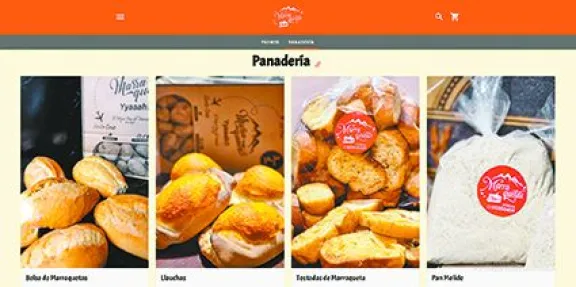
The company’s website indicates that seven marraquetas are sold for 10 bolivianos. This is the base price, although there is the possibility of special offers on occasion.
The reason for the price is not only the cost of the flour but also the other supplies, the wages for the more than 25 employees, and the shipping cost of the product. These breads are not only sold in Marraquetas Yaa’s stores, but there is also a home delivery service. The freshness of the product is guaranteed, as “it is forbidden to sell yesterday’s bread.”
Although the businessman acknowledged that not all the bread baked is sold, the surplus is used in another way. In addition to the fresh units, they also sell breadcrumbs, which helps recover the investment for the day, and marraqueta toast.
One of their latest offerings is the Llauchas Paceñas. For this, they hired a llauchera from the Rodríguez market to share her secrets with the bakers, an initiative that promises more products in the near future.
The marraqueta is on its way to becoming a bread for everyone
The most visible initiative was carried out by the La Paz City Hall, with the sale of this type of dough at the main fair in Santa Cruz. However, other ventures are aiming to take this bread to other countries.
It is well known that Bolivian migrants often carry frozen marraquetas to their destination countries, a technique that Marraquetas Yaa replicates by sending their products to Brazil.
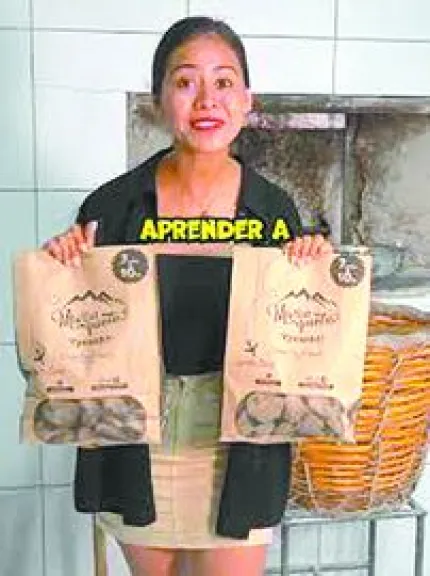
Another way to make the product universal is through training. In fact, as part of their advertising campaign, Marraquetas Yaa prepared a series of videos, shared on TikTok, showing the bread-making process.
Simultaneously, online courses are being prepared, which will be aimed at Bolivians residing in the United States. The first one will take place on February 24 and will be taught by one of the master bakers working at the Santa Cruz company.
“It will last the entire preparation time so that those interested can see everything clearly. Our goal is to give other people the opportunity to have a piece of the country abroad and succeed in their businesses,” said Iván Vacaflores.
In addition to the marraqueta, the company’s bakers are studying the famous breads from Laja and Arani. Similarly, they plan to expand the offer to include the traditional sarnita with cheese and cauquitas. If all goes according to plan, Marraquetas Yaa will open in other cities.
Por Jorge Soruco, Vision 360:
La iniciativa busca crecer con el pan de Laja y el de Arani
Una marraqueta horneada al estilo tradicional, pero adaptada para el calor es la oferta de la empresa que busca llevar otros panes al oriente.
Marraquetas recién horneadas. FOTO: Marraqueta Yaa
Pocas cosas hay tan bolivianas como tomar el té o café con una marraqueta con queso. Aunque nació en La Paz, este tipo de pan tiene sus adeptos en todo el territorio; pero, muy pocos panaderos fuera de la sede de Gobierno lograron replicar la magia de su preparación, excepto Marraquetas Yaa, una iniciativa con sede en Santa Cruz, que busca llevar los panes del resto del país al oriente.
“Sí, la marraqueta es un símbolo paceño, pero es tan rica que trascendió el departamento y ahora es nacional. Por eso, vimos la oportunidad de prepararla aquí (Santa Cruz) para la gente a la que le gusta”, explicó a Visión 360 Iván Vacaflores, fundador de la empresa.
Actualmente, Marraquetas Yaa hornea entre mil y siete mil panes diarios, de acuerdo con el día y con la demanda. Los compradores son tanto cambas como collas, del Plan Tres Mil o de Las Colinas del Urubó.
“La marraqueta no tiene clase social ni regionalismo. La gente la compra por la magia de su sabor y el encanto de su crocante”, manifestó Vacaflores.
Pese a esa pasión, el proceso para poder establecer el negocio tomó mucho tiempo y no menos estudios del producto.
10 bolivianos
por siete marraquetas es el precio oficial. No puede rebajarse debido a los insumos y a que no cuentan con harina subvencionada.
Inicio ferial
El empresario reconoce que la iniciativa fue impulsada indirectamente por la Alcaldía de La Paz. En 2023 el gobierno regional llevó, por avión, estos panes a la Expocruz, iniciativa que fue reproducida por la Gobernación y la Federación de Panificadores Artesanos de La Paz.
En ambos casos la respuesta del público fue muy favorable. “Eso despertó mi interés y me mostró que el negocio era posible”, dijo Vacaflores.
Fue así que la primera versión de la empresa consistía en “importar” marraquetas a Santa Cruz. Lo hizo, en un inicio, mediante Boliviana de Aviación.
Pero rápidamente cambiaron de compañía a Ecojet. “No había negocio con BoA, ya que era muy caro el flete. Al principio, Ecojet me traía 20 cajas; pero también eso fracasó, ya que no siempre tenían espacio para la cantidad de cajas que necesitaba”, recuerda.
De ahí pasaron al transporte por tierra, que fue aún más desastroso. “Estamos hablando de, por lo menos, 18 horas de viaje, en el mejor de los casos, ya que un solo bloqueo me arruinaba todo, con marraquetas pasadas que no gustan a nadie”.
Entonces, el transporte quedó descartado. No solo no era sostenible por el precio del alquiler del espacio en camiones o aviones, sino también por la incertidumbre que genera el transporte boliviano: bloqueos, retrasos en las salidas, condiciones climáticas. Todo conspiraba contra ese modelo.
Por eso, Iván decidió apostar por otra idea: el hornear la marraqueta en la misma ciudad de Santa Cruz de la Sierra.
Pero, ¿cómo hacerlo sin que lo que se produzca sea una versión de baja calidad?
Aprendiendo el arte
No es la primera vez que alguien intenta preparar este tipo de pan en Santa Cruz. Pocos esfuerzos lograron reproducir el estilo de estos panes y, menos aún, de hacerlo en grandes cantidades para un público masivo.
“No es algo fácil ni barato. A diferencia de los panaderos de batalla, nosotros no tenemos acceso a la harina subvencionada. Tampoco somos negocios familiares en los que podamos negociar el pago a los trabajadores”, explicó Vacaflores.
Fue por eso que el empresario viajó a La Paz hace más de un año para aprender junto a los panaderos de esa ciudad y El Alto. Además de conocer la receta y los trucos del horneado, también habló con los expertos para que estos se animen a trabajar en el oriente.
“Aunque no crea, no fue tan sencillo. Muchos tenían desconfianza, hasta el punto de hablar con sus amigos, delante mío, para establecer medidas de seguridad por si yo ‘trataba de quitarle los órganos’ o si se trataba de una estafa. Incluso tuve gente que, al mínimo retraso al recogerlos en la Terminal, terminaban regresando a La Paz”.
De 1.000 a 7.000
panes diarios hornea la empresa. La cantidad depende mucho del día. Los saldos son aprovechados para otros productos.
En este proceso comprendió que una de las principales claves de la marraqueta es el horno. Este tiene que ser tradicional, hecho con ladrillos especiales, tierra negra y otros elementos.
También está la receta. Aunque a primera vista puede ser simple -los ingredientes son harina de trigo, levadura, sal y agua- el amasado, la temperatura del horno y el tiempo de cocción también influyen mucho.
De hecho, su preparación tantea las líneas de la producción industrial, con la de tipo artesanal, la ciencia, el arte y, por qué no, la magia.
“Es un pan tan temperamental como un paceño a la hora de protestar”, aseguró Vacaflores. “Incluso el maestro más experimentado puede arruinar quintales por accidente”.
Uno de los secretos es el agua. Estudios de la Universidad Mayor de San Andrés (UMSA) determinaron, en varias ocasiones, que el líquido en La Paz es diferente del de otras regiones de Bolivia, tanto por su contenido mineral como temperatura.
En Marraquetas Yaa se trabaja para reproducir las condiciones de La Paz, ajustando su temperatura.
También se estudió el tipo de sal para usarse: la empresa se decantó por la del Salar de Uyuni, que, asegura, produce un pan más crocante.
Después del horneado, los panaderos de Marraquetas Yaa colocan las unidades en una cámara de frío especial. Esto tiene el objetivo de reproducir las condiciones en las que se prepara el pan en El Alto y La Paz, logrando que se mantenga el crocante característico.
Esto logró que la empresa ya se haya establecido. Con ocho meses de funcionamiento, las ventas van creciendo y eso, a su vez, le permite ampliar su oferta de productos.
Eso sí, el precio no es el mismo que el del pan de batalla en La Paz. Vacaflores reconoce que no puede vender los panes a 50 centavos, aunque quisiera.
La página de la empresa indica que se venden siete marraquetas por 10 bolivianos. Ese es el precio base, aunque hay la posibilidad de organizar ofertas especiales en alguna ocasión.
El motivo del precio no solo se debe al costo de la harina, sino también depende de los otros insumos, el pago de salarios a los más de 25 empleados y el costo del envío del producto, porque estos panes no solo se venden en las tiendas de Marraquetas Yaa, sino que se tiene un servicio de entrega a domicilio. Eso sí, hay garantía de lo fresco del producto, ya que “está prohibido vender el pan de ayer”.
Aunque el empresario reconoció que no se vende todo lo que se hornea, el saldo se aprovecha de otra manera. Además de las unidades frescas, también se oferta pan molido, que ayuda a recuperar la inversión del día, y tostadas de marraqueta.
Una de sus últimas opciones son las llauchas paceñas. Para ello se contrató a una llauchera del mercado Rodríguez, para que comparta sus secretos con los panaderos, iniciativa que augura más productos en un futuro próximo.
La marraqueta está en camino a ser un pan para todo el mundo
La iniciativa más visible la realizó la Alcaldía de La Paz, con la venta de este tipo de masa en la principal feria cruceña. Pero otros emprendimientos buscan llevar este pan a otros países.
Es sabido que los migrantes bolivianos suelen llevar marraquetas congeladas a sus países de destino, una técnica que Marraquetas Yaa reproduce, enviando sus productos a Brasil.
Otra manera de universalizar el producto es mediante la formación. De hecho, como parte de su campaña publicitaria, Marraquetas Yaa preparó una serie de videos, difundidos en TikTok, de cómo es el preparado del pan.
Paralelamente, se están alistando cursos en línea, los cuales estarán dirigidos a bolivianos residentes en Estados Unidos. El primero se realizará el 24 de febrero y será dictado por uno de los maestros panaderos que trabajan en la empresa cruceña.
“Va a durar el tiempo de preparación completo, para que los interesados puedan ver todo con claridad. Nuestro objetivo es lograr que otras personas tengan la oportunidad de tener un pedacito del país en el exterior y triunfar en sus negocios”, aseguró Iván Vacaflores.
Además de la marraqueta, los panaderos de la empresa están estudiando los famosos panes de Laja y Arani. De igual forma se planea expandir la oferta a la tradicional sarnita con queso y las cauquitas. De ir todo según los planes, Marraquetas Yaa abrirá en otras ciudades.

 Bolivian Thoughts | Pensamientos Bolivianos (Bilingual/Bilingüe)