
By EFE, Vision 360:
Promotion and Tradition
The shows offered by the cholita wrestlers, or “wrestling cholitas” as they are called by foreigners, began at the beginning of this century in the city of El Alto, neighboring La Paz.
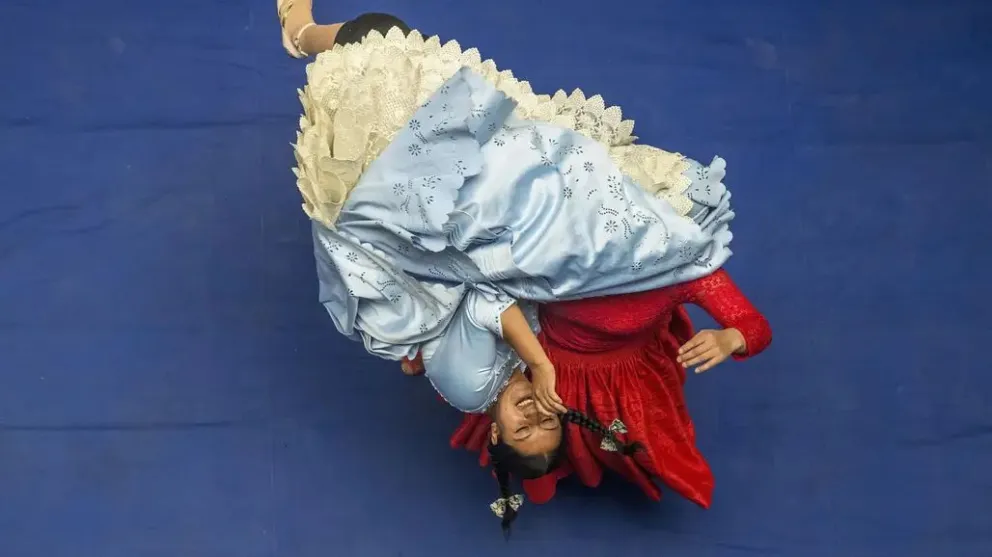
Cholitas in Action. Photo: Efe
Bolivian Roberto Mamani Mamani and a group of cholita wrestlers joined forces to bring the sport to an old colonial house that hosts a cultural center led by the renowned Aymara visual artist, located on one of the most touristy streets in the historic center of La Paz.
The colonial Jaén Street, full of history and mysticism, is home to the city’s main municipal museums and also to Mamani Mamani’s cultural center. The artist is known both inside and outside Bolivia for his paintings that reflect a vibrant Aymara world full of strong colors and symbolism, in contrast to the predominance of ochres in the Altiplano.
With his characteristic mantra “All the energy of the Andes,” the artist mentioned that the center has been operating for over a decade, featuring a gallery, a store, a pub, and offering classes in painting, drawing, and dance, among other artistic expressions.
Mamani Mamani saw that the main patio of the house needed “something that could catch the attention” of tourists who frequent Jaén Street, “an emblematic street” in La Paz.
“We made a great encounter with these ladies in pollera who have already been in the sport for 20 years. They told me, ‘We want to show (the sport) here because the place seems fantastic,'” he said.
The shows offered by the cholita wrestlers, or “wrestling cholitas,” as foreigners call them, began in the early 2000s in the city of El Alto, neighboring La Paz.
The idea of bringing cholita wrestling to La Paz came together with Veraluz Cortez, known in the ring as Yolanda ‘la Amorosa,’ who, together with her sister Raquel Cortez, Sarita ‘la Romántica,’ and eight other Aymara women, performs shows from Friday to Sunday at the Mamani Mamani cultural center.
Yolanda ‘la Amorosa’ is the oldest of the three cholitas from the “Cortez Dynasty” who practice the sport following in the footsteps of their father, who was known as ‘Lotario,’ the wrestler told EFE.
“We’re starting to get more recognition, not just from people who pass by, but also reaching different tourism agencies that help us spread the word that cholita wrestlers are also in La Paz innovating new things at the Mamani Mamani Foundation,” she mentioned.
Show and Art
At the main door of the center, a mannequin displays the cholita outfit consisting of a wide pollera, petticoats, blouse, and manta, but instead of the typical bowler hat, it wears a wrestling mask.
There is also a sign that reads “The Mamani’s Cholitas Wrestling Show,” with an interpretation by Mamani Mamani of one of the wrestlers’ faces.
To attract the attention of tourists, the cholitas sometimes step outside the center and take photos with them, even carrying those brave enough on their backs, wrestling style.
When called to fight, they enter dancing a Bolivian folk dance and invite the audience to join in.
The ring is set up in an old courtyard surrounded by arches and balconies where the public cheers for their favorite wrestler.
Mamani Mamani shared that sometimes he himself joins the show to take photos with tourists or sign autographs.
The artist is currently working on a series of paintings dedicated to the cholita wrestlers, “a tribute” to these women because his mother and grandmother also wore polleras.
“Moreover, it’s an important connection with women. Most of my series are dedicated to women and how not to open the doors and collaborate with these women,” he said.
The painter plans to present this series in 2025, when Bolivia will celebrate its bicentennial of independence.
Por EFE, Visión 360:
Promoción y tradición
Los espectáculos ofrecidos por las cholitas luchadoras, o “wrestling cholitas”, como les llaman los extranjeros, nacieron a principios de este siglo en la ciudad de El Alto, vecina de La Paz.
Cholitas en acción. Foto: Efe
El boliviano Roberto Mamani Mamani y un grupo de cholitas luchadoras unieron fuerzas para llevar ese deporte a una antigua casona colonial que acoge un centro cultural liderado por el afamado artista plástico aimara en una de las calles más turísticas en el centro histórico de La Paz.
La colonial calle Jaén, llena de historia y misticismo, es la casa de los principales museos municipales de la ciudad y también del centro cultural de Mamani Mamani, que es conocido dentro y fuera de Bolivia por sus pinturas que reflejan un mundo aimara lleno de colores fuertes y simbología, en contraste con los ocres predominantes en el Altiplano.
Con su característico mantra “Toda la energía de los Andes”, el artista comentó que el centro funciona desde hace más de una década con una galería, una tienda, un pub y la oferta de clases de pintura, dibujo y danza, entre otras manifestaciones artísticas.
Mamani Mamani vio que en el patio principal de la casona se necesitaba “algo que pueda llamar la atención” de los turistas que frecuentan la Jaén, “una calle emblemática” de La Paz.
“Hicimos un gran encuentro con estas señoras de pollera que tienen ya 20 años de trayectoria. Me dijeron ‘queremos mostrar (el deporte) acá porque el lugar nos parece fantástico'”, comentó.
Y es que los espectáculos ofrecidos por las cholitas luchadoras, o “wrestling cholitas”, como les llaman los extranjeros, nacieron a principios de este siglo en la ciudad de El Alto, vecina de La Paz.
La idea de llevar la lucha libre de cholitas a La Paz se gestó junto a Veraluz Cortez, conocida en el cuadrilátero como Yolanda ‘la Amorosa’, quien junto a su hermana Raquel Cortez, Sarita ‘la Romántica’ y otras ocho mujeres aimaras realizan presentaciones de viernes a domingo en el centro cultural de Mamani Mamani.
Yolanda ‘la Amorosa’ es la mayor de las tres cholitas de la “Dinastía Cortez” que practican el deporte siguiendo los pasos de su padre, que fue conocido como ‘Lotario’, contó la luchadora a EFE.
“Estamos empezando a darnos a conocer más, no solamente a la gente que pasa por acá, también llegar a diferentes agencias de turismo que nos ayudan a transmitir que las cholitas luchadoras también estamos en la ciudad de La Paz innovando nuevas cosas en la Fundación Mamani Mamani”, mencionó.
Espectáculo y arte
En la puerta principal del centro se exhibe un maniquí con la vestimenta de las cholitas consistente en una amplia pollera, enaguas, blusa y manta, pero en vez del típico sombrero bombín, lleva una máscara de lucha libre.
También hay un cartel que reza “The Mamani’s Cholitas Wrestling Show”, con una interpretación de Mamani Mamani del rostro de una de las mujeres luchadoras.
Para llamar la atención de los turistas, a veces las mismas cholitas salen a la puerta del centro y se toman fotografías con ellos, incluso cargando a cuestas a quienes se animen, al estilo de la lucha libre.
Cuando las llaman para la lucha, entran bailando alguna danza folclórica boliviana e invitan al público a unirse al baile.
El cuadrilátero se encuentra en un antiguo patio rodeado de arcos y balcones desde donde el público alienta a su luchadora preferida.
Mamani Mamani contó por su parte que en ocasiones él mismo se suma al espectáculo para hacerse fotografías con los turistas o firmar autógrafos.
El artista trabaja actualmente una serie de pinturas dedicadas a las cholitas luchadoras, “un homenaje” a esas mujeres porque su madre y su abuela también vistieron polleras.
“Además es como una conexión importante con la mujer. La mayoría de mis series están dedicadas a la mujer y cómo no abrir las puertas y colaborar a estas mujeres”, indicó.
El pintor prevé presentar esta serie en 2025, cuando se celebrará el bicentenario de la independencia de Bolivia.

 Bolivian Thoughts | Pensamientos Bolivianos (Bilingual/Bilingüe)