
By Javier Viscarra, Brujula Digital:
Two years after the ruling in The Hague, negligence and ineffectiveness define Bolivian diplomacy and its technical management. Diremar has proposed three strategies, but Foreign Minister Celinda Sosa remains unresponsive.
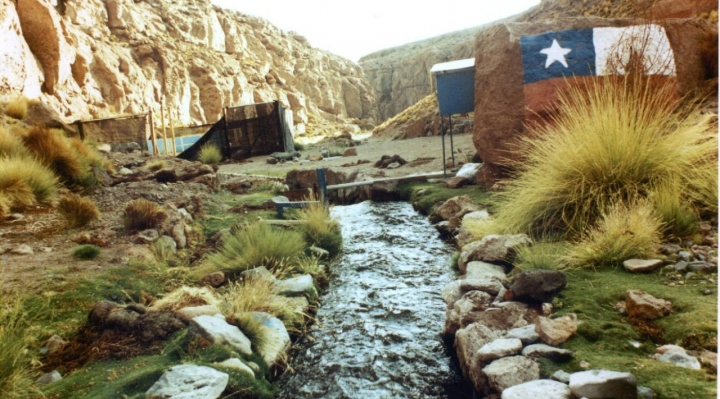
The Silala: Waters Without Use Flowing Towards Chile
This December 1 marks two years since the International Court of Justice (ICJ), based in The Hague, Netherlands, issued its ruling on the dispute raised by Chile over the “status and use of the Silala waters.” However, Bolivia has yet to implement concrete actions to address the ruling, while 160 liters per second of this transboundary resource continue flowing to Chile without a serious attempt, not even a draft project, to utilize these waters for the benefit of Potosí.
The Silala is a hydrological system composed of surface and groundwater originating from springs located in the Southern (Oriental) and Northern (Cajones) wetlands of Potosí, Bolivia, flowing toward Chile. These waters, situated at an altitude of 4,300 meters above sea level, consist of fossil waters over 10,000 years old, according to technical studies.
The history of the Silala spans over a century of concessions and missteps. In 1906, Bolivia granted the first concession for these waters to the Antofagasta (Chile) and Bolivia Railway Company Limited, and in 1908, their use was formalized to supply steam locomotives on the Antofagasta-La Paz railway. What began as a functional agreement soon evolved into a series of misguided decisions and governmental neglect.
In contemporary times, the ICJ dispute defined the Silala as an international watercourse under customary international law, which comprises rules and practices derived from customs that acquire legal force. However, more than the ruling itself, the concern lies in the future, where Bolivia’s lack of initiatives to assert its interests is evident.
Dismantling the Canals?
Bolivia holds the decision to dismantle the canals that enhance the flow of Silala waters toward Chile. Such a mandate, however, requires a coherent plan that does not cause significant harm to the other riparian state and the political will to execute it.
Bolivia’s first counterclaim before the ICJ sought to affirm this sovereign right to construct, maintain, or dismantle the canal infrastructure within its territory. With no objection from Chile, the Court deemed this counterclaim moot, a ruling interpreted as implicit consent to exercise that right.
This is one of the three strategies proposed by the Strategic Directorate for Maritime Reclamation, Silala, and International Water Resources (Diremar) to Foreign Minister Celinda Sosa, which remains unanswered.
Institutional Disconnect
Communication between Diremar and the Ministry of Foreign Affairs is poor and characterized by an absurd institutional disconnect. This dysfunction has led to questions about the continuity of these offices at higher political levels. During an interinstitutional meeting this year convened by Diremar to address the Silala issue, disagreements with the Foreign Ministry over roles and responsibilities hindered progress.
Sources close to the Ministry of Foreign Affairs claim that Diremar’s three strategies or scenarios, presented nearly a year ago, remain virtually shelved. Diremar officials also did not actively participate in the latest bilateral meetings with Chile on shared water resources. Meanwhile, the Ministry of Environment and Water, which should technically lead any potential dismantling and restoration process, has remained silent.
Dismantling the canals must be executed carefully to allow subsequent restoration of the wetlands, as the Silala is a site protected by the Ramsar Convention on Wetlands of International Importance. According to conclusions from a Ramsar mission before the 2022 ruling, immediate mitigation actions and a restoration program were recommended. This task could take several years and incur high costs, which remain uncalculated.
The Three Proposals by Diremar
Last year, Diremar presented three strategies or scenarios:
- Exercising Sovereign Rights over the Silala
This involves restoring wetlands after dismantling the canals. According to the Danish Hydraulic Institute (DHI), contracted by Bolivia, water flow without the canals could decrease by 11% to 30%, although Chile claims the reduction would be minimal (1% to 3%). - Integrated Management of Shared Waters
This proposal entails a joint approach to the Silala, Lauca, and other shared water resources. Institutional coordination failures have stalled discussions on this approach. - Comprehensive Water Governance
Based on international models of cooperation, this strategy could pave the way for a mutually beneficial agreement. It could also mark the beginning of a shift in relations with Chile, stagnant for nearly half a century.
Mistakes and Setbacks
While looking forward is essential, reviewing past mistakes is crucial. Two particularly serious missteps stand out:
- Initial Denial of the Silala’s International Nature
During David Choquehuanca and Juan Carlos Alurralde’s tenures at the Foreign Ministry, Bolivia insisted that the Silala was not an international watercourse, a position lacking technical basis that undermined Bolivia’s defense before the ICJ. - Evo Morales’ Arrogance
In 2016, former President Morales claimed the flow to Chile was controllable and exclusively Bolivian, contradicting technical studies showing the transboundary nature of the Silala. That same year, in March, he threatened Chile with a lawsuit before the ICJ. In response, Chilean Foreign Minister Heraldo Muñoz secretly visited the Silala, hired a team of experts, and filed the lawsuit over the Silala waters within three months, preempting Bolivia.
Costs and a Censurable Omission
Two years after the ruling, clarifying and making transparent the expenses associated with the process, including the costs of international technical studies, remains imperative. It is also crucial to identify who was responsible for Bolivia’s inaction in 2019 when Chile proposed withdrawing the lawsuit under terms that essentially aligned with the eventual ruling.
Who decided to ignore the note sent by then-Chilean Vice Foreign Minister Carolina Valdivia to her Bolivian counterpart Carmen Almendras? Answering this question is vital, not only due to the economic impact that could have been avoided but also because of the missed opportunities for Potosí and Bolivia.
Actions on the Silala
Recently, without Foreign Ministry guidance, Diremar has focused on monitoring the Silala area to verify water flow to Chile and prevent unauthorized actions by local communities against the drainage canals.
In these local efforts, the only visible and insignificant activity has been the grazing of camelids near the wetlands—a routine practice carried out before, during, and after the lawsuit over Silala waters.
A New Era
In recent weeks, Bolivia and Chile have resumed dialogue covering various topics on their extensive bilateral agenda, highlighting the management of transboundary water resources. These shared resources, crossing the common border at nearly 20 points, represent both a challenge and an opportunity for both countries.
The upcoming meeting, scheduled for early December, raises expectations, though the lack of disclosure about the topics—excluding Silala and Lauca—leaves room for speculation and undisclosed strategies.
Meanwhile, Chile is advancing its own water agenda with a $250 million World Bank-financed “Fair Water Transition Program.” This ambitious project aims to address water stress through 2029 by combining environmental, social, and economic objectives, presenting a governance model Bolivia could consider during this rapprochement phase.
Conclusion
The history between Bolivia and Chile is marked by disputes that have shaped decades of mistrust. From early disagreements after the republics’ founding, the War of the Pacific, to ICJ litigation, the joint path has been rocky. However, even in the darkest moments, the will to dialogue has found instances of light.
The ICJ ruling left an open door: negotiation in the spirit of good neighborliness. The Silala case symbolizes the complexities of this relationship. Beyond each nation’s defended rights, the ICJ ruling did not resolve all technical aspects of these shared waters. There remains a space to be filled, one where negotiation tables could become bridges.
For this to happen, both nations must shed old suspicions and embrace dialogue that seeks long-term, mutual benefits rather than immediate gains.
Perhaps, in this new exercise of shared governance, a different era is on the horizon—one where Bolivia and Chile can finally sit as neighbors looking forward, free from the shadows of their past.
Javier Viscarra is a journalist and diplomat.
Por Javier Viscarra, Brujula Digital:
A dos años del fallo en La Haya, la negligencia y la inoperancia marcan la diplomacia boliviana y su gestión técnica. Diremar ha puesto en la mesa tres estrategias, pero la canciller Celinda Sosa no reacciona.
Este 1 de diciembre se cumplen dos años desde que la Corte Internacional de Justicia (CIJ), con sede en La Haya, Países Bajos, emitiera su fallo sobre la controversia planteada por Chile en torno al “estado y uso de las aguas del Silala”. Sin embargo, Bolivia sigue sin implementar acciones concretas para responder al fallo, mientras los 160 litros por segundo de este recurso transfronterizo continúan fluyendo hacia Chile, sin que exista un intento serio, ni siquiera un proyecto en borrador, para aprovechar estas aguas en beneficio de Potosí.
El Silala es un sistema hídrico compuesto por aguas superficiales y subterráneas que se originan en manantiales ubicados en los humedales Sur (Orientales) y Norte (Cajones) del departamento de Potosí, Bolivia, que fluyen hacia Chile. Estas aguas, situadas a una altitud de 4.300 metros sobre el nivel del mar, están conformadas por aguas fósiles con una antigüedad superior a los 10.000 años, según los estudios técnicos.
La historia del Silala se remonta a más de un siglo de concesiones y desaciertos. En 1906, Bolivia otorgó la primera concesión de estas aguas a la Antofagasta (Chile) and Bolivia Railway Company Limited, y en 1908 se formalizó su uso para abastecer las locomotoras de vapor del ferrocarril Antofagasta-La Paz. Lo que comenzó como un acuerdo funcional pronto derivó en una secuencia de decisiones erradas y abandonos gubernamentales.
En la etapa contemporánea, la disputa en la CIJ definió al Silala como un curso de agua internacional, en el marco del derecho consuetudinario que es un conjunto de normas y prácticas derivadas de la costumbre que adquieren fuerza jurídica. Sin embargo, más que el fallo en sí, preocupa la mirada hacia adelante, en la que es notoria la ausencia de iniciativas para hacer valer los intereses bolivianos.
¿Desmantelar los canales?
Bolivia tiene en sus manos la decisión de desmantelar los canales que mejoran el flujo de las aguas del Silala hacia Chile. Un mandato así, sin embargo, requiere un plan coherente que no cause daño significativo al otro Estado ribereño y la voluntad política del gobierno para ejecutarlo.
La primera contrademanda que Bolivia interpuso ante la CIJ buscaba confirmar ese derecho soberano de construir, mantener o desmantelar la infraestructura de canales en territorio nacional. Al no encontrar rechazo por parte de Chile, la Corte declaró sin objeto esta reconvención, un fallo que se ha interpretado como un asentimiento implícito para ejecutar ese derecho.
Esta es precisamente una de las tres estrategias que la Dirección Estratégica de Reivindicación Marítima, Silala y Recursos Hídricos Internacionales (Diremar) ha planteado a la canciller Celinda Sosa, pero que hasta ahora no ha tenido respuesta.
La comunicación entre Diremar y la Cancillería es deficiente y está marcada por un absurdo desencuentro institucional. Tanto es así, que en las altas esferas políticas se cuestiona la continuidad de estas oficinas. En una reunión interinstitucional este año, convocada por Diremar para abordar el tema Silala, emergieron desacuerdos con Cancillería por los roles a cumplir, que frenaron el avance.
Fuentes próximas al Ministerio de Relaciones Exteriores aseguran que las tres estrategias o escenarios presentados por Diremar hace casi un año permanecen virtualmente archivados. Los funcionarios de Diremar tampoco participaron activamente en las últimas reuniones bilaterales con Chile sobre recursos hídricos binacionales. Desde el Ministerio de Medio Ambiente y Agua, que técnicamente debería liderar un eventual proceso de desmantelamiento y restauración, tampoco se ha emitido ninguna señal.
El desmantelamiento de los canales debe ser ejecutado cuidadosamente para dar curso posterior a la restauración de los bofedales, dado que el Silala es un sitio protegido por la Convención Ramsar sobre Humedales de Importancia Internacional. Según las conclusiones de una misión Ramsar, previa al fallo de 2022, se recomendó priorizar acciones inmediatas de mitigación y un programa de restauración. Es una tarea que puede llevar varios años y un alto costo que aún no se ha calculado.
Las tres propuestas de Diremar
Diremar presentó el año pasado tres estrategias, propuestas o escenarios:
1. Efectivizar los derechos soberanos sobre el Silala.
Este planteamiento incluye la restauración de los bofedales después del desmantelamiento de los canales. Según el Instituto de Hidráulica Danés (DHI), institución contratada por Bolivia, el flujo de agua sin los canales podría reducirse entre un 11% y un 30%, aunque Chile sostiene que la disminución sería mínima (entre 1% a 3%).
2. Manejo integral de las aguas compartidas.
Esta propuesta incluye un enfoque conjunto sobre el Silala, el Lauca y otros recursos hídricos compartidos. La absurda falta de coordinación entre instituciones ha frenado su posible discusión.
3. Gobernanza integral de las aguas.
Basada en modelos internacionales de cooperación que hoy son la línea de manejo de recursos compartidos, esta estrategia puede encaminarse hacia un acuerdo mutuamente beneficioso. También puede ser el inicio de un giro en las relaciones con Chile, estancadas por casi medio siglo.
Los tropiezos
Aunque es esencial mirar hacia el futuro, no se puede avanzar sin revisar los errores del pasado y en esto hay dos desaciertos especialmente graves:
1. La negación inicial de la naturaleza internacional del Silala.
Durante los mandatos de David Choquehuanca y Juan Carlos Alurralde en la Cancillería, Bolivia insistió en que el Silala no era un curso de agua internacional, posición que carecía de sustento técnico y que debilitó la seriedad la defensa boliviana ante la CIJ.
2. La soberbia de Evo Morales.
En 2016, el expresidente Morales afirmó que el flujo hacia Chile era controlable y exclusivo de Bolivia, contradiciendo estudios técnicos que mostraban el carácter transfronterizo del Silala. Ese mismo año, en marzo, amenazó a Chile con un juicio ante la CIJ. En respuesta, el entonces canciller de Chile, Heraldo Muñoz viajó secretamente al Silala, contrató un equipo de expertos y en menos de tres meses se adelantó a Bolivia e interpuso la demanda por las aguas del Silala.
Gastos y una omisión censurable
A dos años del fallo, sigue siendo imprescindible esclarecer y transparentar los gastos asociados al proceso, incluidos los costos de los estudios técnicos internacionales. Igualmente, es prioritario identificar responsabilidades por la inacción de Bolivia en 2019, cuando Chile propuso retirar el juicio bajo términos que, en esencia, coincidieron con los resultados posteriores del fallo.
¿Quién decidió ignorar la nota enviada por la entonces vicecanciller chilena Carolina Valdivia a su par boliviana Carmen Almendras? Responder a esta pregunta es imperativo, no solo por el impacto económico que pudo haberse evitado, sino por las oportunidades perdidas para Potosí y Bolivia.
Acciones en el Silala
En el último tiempo y sin una dirección de Cancillería, Diremar ha empleado sus esfuerzos en realizar trabajos de monitoreo en la zona del Silala, tanto para verificar el flujo del agua que escurre a Chile, como para evitar que los comunarios de la región realicen acciones no autorizadas contra los canales de drenaje.
En ese trabajo que se realiza en el lugar, lo único visible y poco relevante fue el pasteo de camélidos cerca de los bofedales, una rutina habitual que se ha realizado antes, durante y después del juicio por las aguas del Silala.
Un nuevo tiempo
En las últimas semanas, Bolivia y Chile han reanudado un diálogo que abarca diversos temas de su extensa agenda bilateral, destacando el tratamiento de los recursos hídricos transfronterizos. Estos cursos, que atraviesan la frontera común en cerca de una veintena de puntos, representan tanto un desafío como una oportunidad para ambos países. La próxima reunión, prevista para inicios de diciembre, despierta expectativas, aunque el silencio sobre los temas a tratar –excluyendo Silala y Lauca– deja espacio para especulaciones y estrategias aún no reveladas.
Mientras tanto, Chile avanza con paso firme en su propia agenda hídrica, respaldada por un financiamiento del Banco Mundial de 250 millones de dólares para su ambicioso “Programa de Transición Hídrica Justa”. Este proyecto, que busca enfrentar el estrés hídrico hasta el año 2029, combina objetivos ambientales, sociales y económicos, planteando un modelo de gobernanza que Bolivia podría observar con interés en esta etapa de aproximación.
La historia entre Bolivia y Chile está marcada por desencuentros que han modelado décadas de desconfianza. Desde las primeras disputas tras la fundación de las repúblicas, pasando por la Guerra del Pacífico, hasta los litigios en la Corte Internacional de Justicia, el camino conjunto ha sido sinuoso. Sin embargo, incluso en los momentos más oscuros, la voluntad de diálogo ha encontrado instantes de luz, y la CIJ, con todo y sus estrictos estándares, dejó una puerta abierta: la negociación en el marco de la buena vecindad.
El caso del Silala simboliza las complejidades de este vínculo. Más allá de los derechos que cada nación defiende, el fallo de la CIJ no resolvió todos los aspectos técnicos que implican estas aguas compartidas. Queda, por tanto, un espacio por llenar, uno donde las mesas de negociación podrían transformarse en puentes. Pero para que esto ocurra, ambos países deben desprenderse de viejos recelos y apostar por un diálogo que no busque ganancias inmediatas.
Tal vez, en este nuevo ejercicio de gobernanza compartida, se vislumbra un tiempo distinto. Un tiempo donde Bolivia y Chile puedan, al fin, sentarse como vecinos que miran hacia adelante, sin las sombras de su pasado.
Javier Viscarra es periodista y diplomático.

 Bolivian Thoughts | Pensamientos Bolivianos (Bilingual/Bilingüe)