
By Gina Baldivieso, EFE, Brujula Digital:
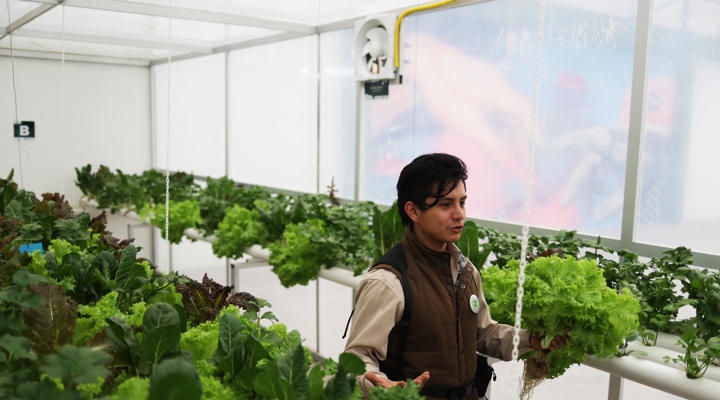
On October 3, 2024, a photograph was taken of Félix Angulo, the general manager of “Huerto Smart Educativo,” in La Paz. Photo credit: EFE
Lettuce, basil, celery, and other crops are part of the sustainable production at Bolivia’s first “Huerto Smart Educativo,” a project initiated by young people from the Propacha movement that combines hydroponic farming with technology and education. The aim is to contribute to local food security and aid climate change adaptation.
The idea was conceived through a partnership between the Movimiento Propacha organization and the technology development company Cruz Verde La Paz Srl., both composed of young people under 33 years old, explained Guillermo Mallea, executive director of Movimiento Propacha, to EFE.
Their collaboration has enabled them to create a model that seeks to transform educational units into production centers with very positive results.
The young team applied to the Citizen Initiatives Fund (FIC) of the World Wildlife Fund (WWF) in 2022, securing support to install the first prototype garden at Felipe II school in La Paz.
Impact and International Recognition
In 2023, they were recognized among the top 50 youth-led climate solutions worldwide under the Youth4Climate initiative, driven by the United Nations Development Program (UNDP) and the Government of Italy.
The call attracted 1,100 proposals from 63 countries, and the winners received funding, allowing the Bolivian team to establish a second garden at Hugo Dávila school in La Paz, with plans to inaugurate a third one soon in the peri-urban neighborhood of Callapa.
The support from the La Paz City Hall, one of their “strategic partners” along with the UNDP, was also crucial.
Vegetable patch 2.0
The top floor of one of the buildings at Hugo Dávila school hosts ‘Huerto Smart 2.0,’ which has the capacity to produce around 1,500 plants, including mature and “baby” plants, with the participation of 350 students aged 12 and 13, Mallea noted.
The greenhouse features an area for mixing nutrients to be added to the irrigation water, as well as a packaging section.
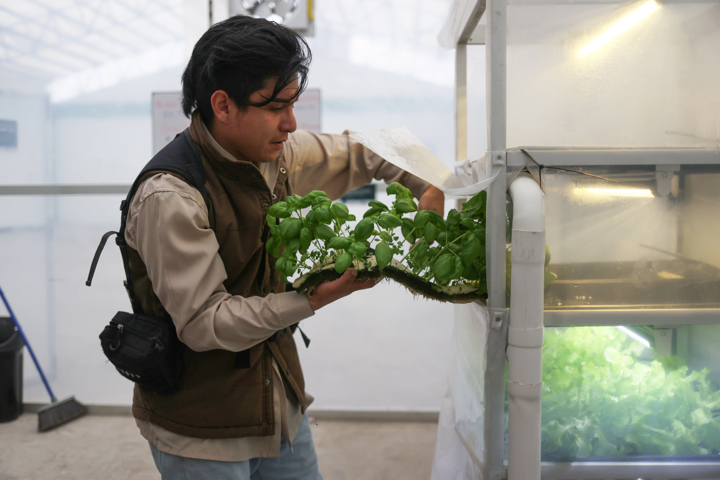
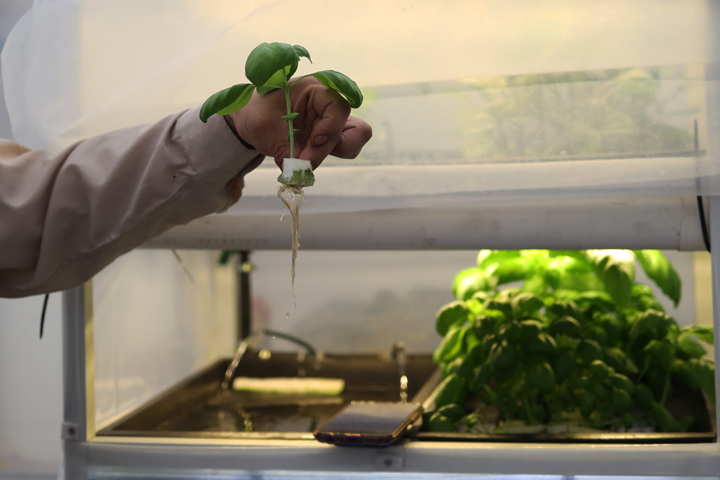
The larger areas are used for seed germination and plant development using hydroponics, a soil-free cultivation method within a structure that contains fortified water.
Advanced Technology in “Huerto Smart 2.0”
The garden incorporates technologies developed by Cruz Verde, such as the “Cerebelum,” described as “an intelligent brain that can connect a greenhouse and all its machines to an app for remote control,” Félix Angulo, the company’s general manager, explained to EFE.
With this technology, it is possible to control the germination lights, fans, and water pumps from a mobile phone, requiring only a weekly visit to ensure everything is in order.
This version of the “Cerebelum” can also “suggest certain schedules for daily repetition to achieve successful production,” and a second version in development will feature “sensors and other types of alarms” to prevent losses or water leaks and “monitor production in real-time,” he added.
There is also the “Baby Plant,” a four-tier germinator capable of sprouting “more than a thousand plants at once in less than one square meter.”
Further Goals
Students visit the garden once a week, and they had their first harvest a few days ago. The sale of the products ensures the project’s self-sustainability, as the earnings are used to restart the production cycle.
Mallea emphasized that the aim is to offer “better quality, safer food within reach of parents,” who are the buyers, to also reduce La Paz’s food dependency.
The goal is to reach a hundred smart gardens in schools, nursing homes, or orphanages, among other places, to “double the amount of food currently produced in the municipality,” he indicated.
Angulo highlighted that the project also seeks to transform Bolivian agriculture, which is currently lagging technologically.
“Taking these leaps with the support of the internet and institutions allows us to bring technology to our population more quickly, without having to wait ten years for prices to drop, but rather developing it ourselves with the parts available to us here,” he stated.
BD/
Por Gina Baldivieso, EFE, Brujula Digital:
Fotografía del 3 de octubre de 2024 de Félix Angulo, gerente general de “Huerto Smart Educativo”, en La Paz. Foto: EFE
Lechugas, albahaca y apio, entre otros, son parte de la producción sostenible del primer “Huerto Smart Educativo” de Bolivia, un proyecto creado por jóvenes del movimiento Propacha que une el cultivo hidropónico con la tecnología y educación para contribuir a la seguridad alimentaria local y aportar a la adaptación al cambio climático.
La idea fue gestada mediante una alianza entre la organización Movimiento Propacha y la empresa desarrolladora de tecnología Cruz Verde La Paz Srl., ambas integradas por jóvenes menores de 33 años, dijo a EFE Guillermo Mallea, director ejecutivo de la primera entidad.
La unión entre ambos “ha permitido hacer un modelo que busca transformar a las unidades educativas en centros de producción con muy buenos resultados”, señaló.
Los jóvenes se postularon en 2022 al Fondo de Iniciativas Ciudadanas (FIC) del Fondo Mundial para la Naturaleza (WWF en inglés), consiguiendo el apoyo para instalar un primer prototipo del huerto en el colegio Felipe II en La Paz.
Impacto y reconocimientos internacionales
En 2023 fueron reconocidos entre las 50 mejores ideas de soluciones climáticas lideradas por jóvenes en el mundo, dentro de la iniciativa Youth4Climate que impulsan el Programa de Naciones Unidas para el Desarrollo (PNUD) y el Gobierno de Italia.
A esa convocatoria se presentaron 1.100 propuestas de 63 países, y los ganadores recibieron financiación que, en el caso de los bolivianos, les permitió montar un segundo huerto en el colegio Hugo Dávila, también en La Paz, e inaugurar próximamente el tercero en el barrio periurbano de Callapa.
También fue importante el apoyo de la Alcaldía de La Paz, uno de sus “aliados estratégicos” junto al PNUD.
Huerto 2.0
El último piso de uno de los bloques del colegio Hugo Dávila acoge al ‘Huerto Smart 2.0’, con una capacidad para producir unas 1.500 plantas, entre grandes y “bebés”, con la intervención de 350 escolares de 12 y 13 años, indicó Mallea.
El invernadero tiene un área para mezclar los nutrientes que se echarán al agua para el riego de las plantas y otra de empaque.
Los espacios mayores se usan para germinar las semillas y para el desarrollo de las plantas con el método de la hidroponía, el cultivo sin suelo en una estructura que contiene el agua fortificada.
Tecnología avanzada en el “Huerto Smart 2.0”
El huerto incluye tecnologías desarrolladas por Cruz Verde, como el “Cerebelum”, “un cerebro inteligente que puede conectar un invernadero y todas las máquinas a una aplicación para ser controlado” remotamente, explicó a EFE Félix Angulo, el gerente general de la empresa.
Con esta tecnología es posible controlar desde un teléfono móvil las luces del germinador, los ventiladores y las bombas de agua, por lo que sólo se requiere una visita semanal para revisar que todo esté en orden.
Esta versión del “Cerebelum” también permite “sugerir ciertos horarios para que se repitan cada día y conseguir una producción exitosa”, y una segunda que está en desarrollo tendrá “sensores y otro tipo de alarmas” para prevenir pérdidas o fugas de agua, y “monitorear en tiempo real la producción”, agregó.
También está el “Baby Plant”, un germinador de cuatro pisos capaz de hacer brotar “en menos de un metro cuadrado más de mil plantas a la vez”.
Más objetivos
Los escolares visitan el huerto una vez por semana y tuvieron su primera cosecha hace unos días. La venta de los productos permite la autosostenibilidad del proyecto, pues con lo recaudado se reinicia el ciclo de producción.
Mallea destacó que se apunta a ofrecer alimentos “de una mejor calidad, con una mejor inocuidad y al alcance de los padres”, que son los compradores, con el fin también de disminuir la dependencia alimentaria de La Paz.
La meta es llegar al centenar de huertos inteligentes en escuelas, hogares de ancianos u orfanatos, entre otros, para “duplicar la cantidad de alimentos que se producen actualmente en el municipio”, indicó.
Angulo resaltó que también se busca transformar la agricultura boliviana, que actualmente tiene rezagos tecnológicos.
“Dar estos saltos con el apoyo del internet y de instituciones nos permite hacer llegar tecnología de una manera más veloz a nuestra población y no tener que esperar diez años a que estas tecnologías bajen de precio, sino desarrollarlas nosotros mismos desde aquí con las piezas que están a nuestro alcance”, afirmó.
BD/

 Bolivian Thoughts | Pensamientos Bolivianos (Bilingual/Bilingüe)