
By Juan Carlos Veliz, Eju.tv:
How did Bolivia’s so-called “Revolution of the Pititas” end up in a terrorism trial?
The oral trial that was to begin today in a court in the city of La Paz was postponed until October 17 because the Penitentiary Regime did not transfer the main defendants in the case.
The judiciary in Bolivia is handling one of the most complex cases in its history. For the Prosecutor’s Office and President Luis Arce’s government, it was a “coup d’état” against former President Evo Morales in November 2019, while for the opposition and human rights activists, it is a “political trial” that will end up in international courts to seek redress for the rights of the “persecuted.”
The origin of the oral trial in the so-called “Coup d’État I” case, which was postponed this morning to October 17, is the citizen mobilization known as the “revolution of the pititas” that began in September and culminated with the resignation of then-President Evo Morales on November 10, 2019.
But how did a massive citizen mobilization end up in a trial for terrorism, criminal association, and other crimes?
“This is a political trial; the one who should have been present as the accused is Mr. Evo Morales, the author of the most massive fraud in democracy,” said former President Carlos Mesa this morning, who was summoned to testify as a witness on the first day of the trial.

Citizen platforms, mainly composed of young people, took to the streets after the October 20, 2019, elections when the Organization of American States (OAS) audit revealed deliberate manipulation of the election results, favoring Evo Morales, who was then seeking a third reelection.
The former president intended to run for a third term despite the State’s Constitution allowing only one reelection, and a February 21, 2016, referendum establishing that Morales could not run for the presidency again.
Carlos Mesa, the candidate aiming for a runoff against Morales, denounced a “monumental fraud.”
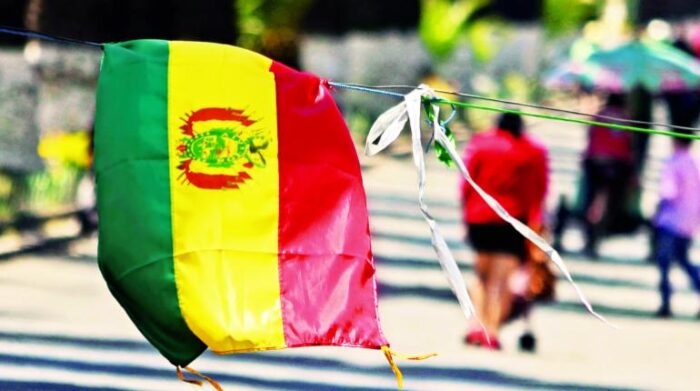
Citizen mobilizations grew, particularly in capital cities, with main roads being blocked using ropes, chairs, or Bolivian flags, hence the term “pititas.”
Morales mocked this unprecedented citizen mobilization on several occasions. “Two or three people are blocking roads with little ropes, what kind of strike is that? I could give workshops or a seminar on how to organize marches properly,” he said defiantly on October 24, as the protests began.
However, the fraud allegations gained momentum, with Santa Cruz becoming the epicenter of discontent, holding mass rallies led by then-civic leader Luis Fernando Camacho, who is now facing charges related to the “coup d’état” case.
Despite the fraud accusations, the Supreme Electoral Tribunal declared Evo Morales the winner of the 2019 general elections in the first round, which escalated tensions. Protesters went from denouncing electoral fraud to demanding Morales’ resignation by early November.
On November 2, Bolivian civic committees issued a 48-hour ultimatum for Morales to resign, with Camacho tasked with delivering the resignation letter in La Paz.
On November 4, Camacho was blocked at El Alto International Airport by police and Morales supporters but finally reached La Paz on the night of November 5, under police escort, evading loyalists’ blockades.
During those days, clashes between civilians led to fatalities in Montero (Santa Cruz) and Cochabamba, and there were attacks on MAS authorities, such as Vinto’s mayor (Cochabamba), Patricia Arce, who was humiliated and beaten by opposition groups.
On November 7, violence reached La Paz, with Evo Morales’ supporters, including thousands of public employees, clashing with university students and citizen platforms. The unrest extended to the gates of the Casa Grande del Pueblo.
The government closed Plaza Murillo with police and groups to prevent protesters from reaching the political center.
On November 8, Morales declared from Desaguadero (La Paz) that he would not resign: “The right says, and I want you all to know, Evo must resign. I want to tell you all, my brothers and sisters, across Bolivia and the world: I will not resign. We were elected by the people; we respect the Constitution, and we will defend our process,” he stated.
Nevertheless, from that afternoon until Saturday, November 9, police mutinies occurred in Cochabamba, La Paz, and Santa Cruz, with officers retreating to their barracks, leaving citizens unprotected. This weakened the defense of the political center, and the “self-defense” groups, later labeled as “irregular groups,” accessed the political hub of Bolivia, showing support for the police entrenched at UTOP.
On November 10, 2019, the OAS published its electoral audit report, revealing irregularities in vote counting, falsified records, and forged signatures.
The damning results precipitated Morales’ downfall. That Sunday, he announced new elections, nullified the previous election results, and dismissed the Supreme Electoral Tribunal members, but these measures failed to quell the citizen protests, which intensified, with increased attacks on government officials’ properties.
That day, allies such as the Bolivian Workers’ Center (Central Obrera Boliviana), the Office of the Ombudsman, and the Armed Forces distanced themselves from the government and called for Morales’ resignation to “pacify” the country. The “suggestion” from the Armed Forces, then commanded by Williams Kalimán, a military leader loyal to Evo Morales, strengthened the argument that a “coup d’état” was underway.
That Sunday afternoon, unusual activity was observed at El Alto Airport and in the Cochabamba tropics region. Morales and his then-Vice President, Álvaro García Linera, announced their resignations in a press conference.
Two days later, both Morales and García Linera left the country on a Mexican Air Force plane with political asylum, while Bolivia experienced a power vacuum due to the resignation of all the authorities in the constitutional line of succession provided for in the Constitution.
Áñez, who at that time was the second vice president of the Senate, assumed the presidency for one year until Luis Arce took office.
During the early phase of Luis Arce’s administration, former MAS deputy Lidia Patty filed a complaint against former Santa Cruz civic leader Luis Fernando Camacho, alleging a “coup d’état” against former president Evo Morales.
The complaint was accepted by the Prosecutor’s Office and supported by President Luis Arce’s government, to the extent that the oral, public, and contradictory trial was set to begin today. However, the proceedings were postponed because the Penitentiary Regime did not bring the main defendants to court: former president Jeanine Áñez, former Santa Cruz civic leader Luis Fernando Camacho, and former Potosí civic leader Marco Antonio Pumari.
The main political leaders of the citizen mobilizations were arrested and prosecuted and now face the court as they await the judicial decision. They are charged with crimes such as terrorism, which carries a sentence of 20 years in prison.
For former president Carlos Mesa, the trial is political because it does not address the “biggest fraud” in the country’s democratic history, referring to the manipulation of the 2019 general election results.
Por Juan Carlos Veliz, Eju.tv:
¿Cómo la llamada “revolución de las pititas” en Bolivia acabó en un juicio por terrorismo?
El juicio oral que debía instalarse hoy en un tribunal de justicia de la ciudad de La Paz se postergó hasta el 17 de octubre debido a que Régimen Penitenciario no trasladó a los principales acusados del caso.
La justicia en Bolivia tiene en sus expedientes uno de los casos más complejos de su historia. Para la Fiscalía y el gobierno del presidente Luis Arce fue “golpe de Estado” en contra del expresidente Evo Morales en noviembre de 2019 mientras para la oposición y activistas de derechos humanos se trata de un “juicio político” que terminará en cortes internacionales para que se reparen derechos de los “perseguidos”.
El origen del juicio oral del llamado caso “Golpe de Estado I, que esta mañana fue suspendido para el 17 de octubre, es la movilización ciudadana conocida como la “revolución de las pititas” que comenzó en septiembre y culminó con la renuncia del entonces presidente Evo Morales el 10 de noviembre de 2019.
¿Pero, cómo es que una masiva movilización ciudadana acabó en un juicio por terrorismo, asociación delictuosa y otros delitos?
“Este es un juicio político, quien debió estar presente como acusado es el señor Evo Morales, autor del más gigantesco fraude de la democracia” afirmó esta mañana el expresidente Carlos Mesa, quien fue citado a declarar como testigo en el primer día del juicio.
Plataformas ciudadanas integradas fundamentalmente por jóvenes salieron a las calles después de las elecciones del 20 de octubre de 2019 después de que la Organización de Estados Americanos (OEA) mediante una auditoría evidenció una manipulación dolosa de los resultados electorales y que favorecieron al candidato a la tercera reelección de entonces, Evo Morales.
El entonces mandatario pretendía una tercera reelección pese a que la Constitución Política del Estado prevé una sola reelección presidencial y el referéndum del 21 de febrero de 2016 estableció que Morales no puede postular una vez más a la presidencia.
Mesa, quien era el postulante que pugnaba para lograr una segunda vuelta con Morales, denunció un “fraude monumental”.
Las movilizaciones ciudadanas se fueron incrementando principalmente en las ciudades capitales, las vías principales fueron cerradas con pitas, sillas o banderas de Bolivia. De ahí el denominativo de “pititas”.
El entonces Presidente se burló en más de una ocasión de esta inédita movilización ciudadana. “Dos o tres personas están bloqueando amarrando pititas ¿Qué paro es ese?, soy capaz de dar talleres o un seminario de cómo se hacen las marchas, para que aprendan”, dijo desafiante el 24 de octubre cuando empezaba la protesta.
No obstante, las denuncias de fraude cobraron más fuerza y Santa Cruz nucleó el descontento ciudadano con cabildos masivos convocados por el entonces presidente cívico Luis Fernando Camacho, ahora procesado por el caso «golpe de Estado».
Pese a las denuncias de fraude, el Tribunal Supremo Electoral proclamó que Evo Morales ganó las elecciones generales de 2019 en primera vuelta. Esta acción aumenta la tensión de los movilizados, de denunciar un fraude electoral pasan a exigir a principios del mes de noviembre la renuncia de Morales.
Los comités cívicos de Bolivia, el 2 de noviembre, dieron un ultimátum de 48 horas para que el entonces presidente Evo Morales renuncie a su cargo y Luis Fernando Camacho tiene la misión de entregar la carta de renuncia personalmente en La Paz.
El 4 de noviembre de 2019, Camacho fue bloqueado en el Aeropuerto Internacional de El Alto por la Policía y sectores sociales leales a Evo Morales, pero la noche del 5 de noviembre finalmente llega a La Paz en medio de una custodia policial y elude los cercos instalados por los leales al Mandatario.
Durante esas jornadas se registraron enfrentamientos entre civiles que dejaron muertos en Montero (Santa Cruz) y Cochabamba, y se registraron ataques a autoridades del MAS como la alcaldesa de Vinto (Cochabamba), Patricia Arce, quien fue humillada y golpeada por los grupos de choque.
El 7 de noviembre de 2019, la violencia se trasladó a La Paz cuando seguidores de Evo Morales, entre ellos miles de funcionarios públicos, se enfrentaron con universitarios e integrantes de plataformas ciudadanas. El descontento llega a las mismas puertas de la Casa Grande del Pueblo.
El Gobierno cerró la plaza Murillo con policías y grupos de choque para evitar que los movilizados lleguen hasta el centro del poder.
El 8 de noviembre de 2019, desde Desaguadero (La Paz) Evo Morales afirma que no renunciará a la presidencia. «La derecha qué dice, y quiero sepan ustedes presentes y oyentes, Evo tiene que renunciar. Quiero decirles hermanas y hermanos, a ustedes, a toda Bolivia, el mundo: no voy a renunciar, somos electos con el pueblo, respetamos la Constitución, vamos a defender nuestro proceso», afirmó entonces.
Sin embargo, esa tarde y hasta el sábado 9 de noviembre se registran motines policiales en Cochabamba, La Paz y Santa Cruz. Los uniformados se replegaron a sus cuarteles y dejaron sin custodia a la ciudadanía. Se debilitó la defensa del centro del poder y los grupos de «autodefensa» que luego fueron catalogados como «grupos irregulares» pudieron acceder al centro político de Bolivia, y dieron su apoyo a los policías atrincherados en la UTOP.
El 10 de noviembre de 2019, la OEA publicó su informe de auditoría electoral y reveló que hubo irregularidades en el cómputo de votos, falsificación de actas y firmas electorales.
Los resultados lapidarios precipitaron la caída de Evo Morales. Ese día, domingo, anunció nuevas elecciones y la anulación de los resultados de los comicios, y destituyó a los vocales del Tribunal Supremo Electoral, pero ninguna de sus medidas logró aplacar las protestas ciudadanas y se incrementaron los ataques contra propiedades de autoridades gubernamentales.
Esa jornada, aliados como la Central Obrera Boliviana, la Defensoría del Pueblo y las Fuerzas Armadas toman distancia del Gobierno y piden la renuncia de Morales para «pacificar» el país. La «sugerencia» de las Fuerzas Armadas, comandada entonces por Williams Kalimán, un militar leal a Evo Morales, potenció el argumento de que se gestó un «golpe de Estado».
La tarde de ese domingo se observaron movimientos inusuales en el Aeropuerto de El Alto y en la región del trópico de Cochabamba. Morales y su vicepresidente de entonces, Álvaro García Linera, presentaron sus renuncias en una rueda de prensa.
Dos días después, ambos salieron del país en un avión de la Fuerza Aérea de México con asilo político mientras en Bolivia se vivía un vacío de poder debido a la renuncia de todas las autoridades de la línea de sucesión constitucional previstas en la Constitución.
Añez, quien en ese momento era segunda vicepresidenta de la cámara de Senadores, asumió el mandato presidencial durante un año hasta la llegada de Luis Arce.
Durante la primera etapa del gobierno de Luis Arce, Lidia Patty -exdiputada del MAS- presentó una denuncia contra el exlíder cívico de Santa Cruz, Luis Fernando Camacho por un «golpe de Estado» en contra del expresidente Morales.
Esta denuncia fue admitida por la Fiscalía y fue respaldada por el gobierno del presidente Luis Arce hasta el punto de que hoy debía comenzar el juicio oral, público y contradictorio; sin embargo, este procedimiento se postergó debido a la Régimen Penitenciario no traslado a los tribunales a los principales acusados: Jeanine Añez, expresidenta; Luis Fernando Camacho, expresidente cívico de Santa Cruz y Marco Antonio Pumari, exdirigente cívico de Potosí.
Los principales líderes políticos de las movilizaciones ciudadanas fueron detenidos y procesados, y ahora afrontan están en el banquillo de los acusados a la espera de la determinación judicial. Son acusados de delitos como terrorismo que tiene una pena de 20 años de cárcel.
Para el expresidente Carlos Mesa, el juicio es político porque no está juzgando a los autores del “fraude más grande” de la historia democrática del país en referencia a la adulteración de los resultados de las elecciones generales de 2019.

 Bolivian Thoughts | Pensamientos Bolivianos (Bilingual/Bilingüe)