
El Deber:
The ‘blue dollar’ does not exist in Bolivia, but something similar should be applied, suggests economist
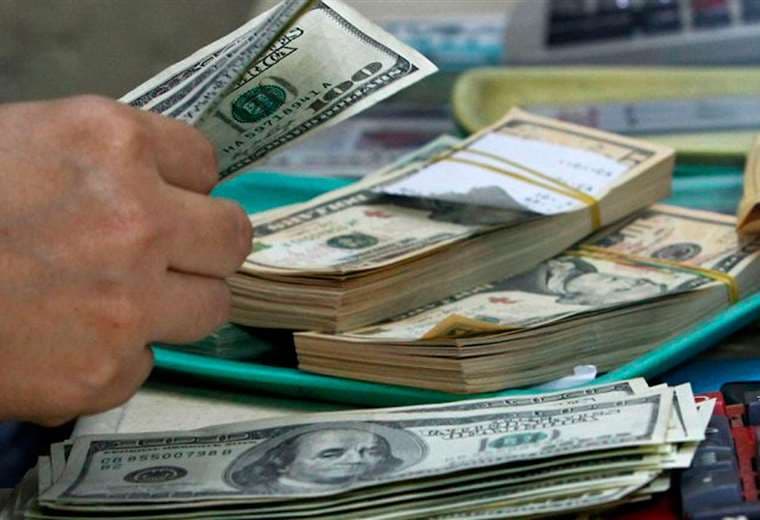
The measure would prevent the black dollar from continuing to rise, with an extraordinary market price that increasingly raises prices in general, especially for basic family goods.
Due to the scarcity of dollars, its price in the black or parallel market has experienced extraordinary increases, now exceeding Bs 11 in some regions of the country, while the government maintains an official exchange rate (Bs 6.96) that only appears in the Bank of Bolivia’s (BCB) quotation for the national territory and accuses some sectors of “speculating” with the currency.
Economist Fernando Romero explained that the ‘blue dollar’ does not exist in Bolivia and is specific to Argentina. However, he suggested applying something similar in the country as it standardizes its cost and facilitates transactions, at least in the informal market.
Romero noted that the term ‘blue dollar’ originated in Argentina, referring to the dollar traded in the parallel, black, or informal market. The nickname was given due to the blue security band on $100 bills. “Therefore, one should not believe that there is a special or different dollar because of the ‘blue’ label; it’s the same dollar but acquired outside the financial system, irregularly,” Romero emphasized.
In recent months, the website bolivianblue.com has gained popularity for quoting, in supposed real-time, the rate of the “Bolivian Blue” and is being used as a reference for purchases of products like vehicles and electronics, according to finance expert lawyer Salomón Eid.
However, Eid warned that the site’s quotation uses an algorithm based on cryptocurrency prices, which does not reflect the reality of the supply and demand for the US dollar in the country, but rather in international virtual markets.
Fernando Romero recommended applying something similar to the ‘blue dollar’ “so that the black dollar in our economy does not continue its upward course, with an extraordinary market price that increasingly raises prices in general, especially for the basic family basket.”
The economist said that one should wait for a public-private initiative or, alternatively, one solely from the private or academic sector (universities) to ensure that the generated information has greater public expectation and trust.
In Argentina, Romero added, the blue or free dollar, along with other freely traded dollars in the economy (wholesale, tourist, card, etc.), although not regulated or endorsed by their monetary or financial authorities, have established a collection and quotation mechanism that has practically standardized its cost to avoid greater distortions in the informal market, obtain a reference price, and thus prevent unfounded speculation about the currency.
“For example, today the sale of the ‘blue dollar’ is at 1,445 pesos (Argentine), and it can practically be bought at that price anywhere in Argentina,” he noted.
Why Is It Higher in Oruro?
While the price of the parallel dollar was quoted between Bs 10.15 and Bs 10.50 in several cities across the country, in the city of Oruro, it exceeded Bs 11.30 on Tuesday.
Romero stated that “it could simply be a market coincidence,” but it is most likely due to the pressing need to buy dollars for economic activities, due to the significant commercial movement in that region.
“However, that higher demand for dollars and, consequently, the higher quotation of this currency in the black market is due to the great requirement for American currency for smuggling various types of goods, from white goods to vehicles, clothing, and more. Therefore, merchants, both formal and informal, continuously demand dollars for their economic activity and are willing to pay a higher price, considering that Oruro is the epicenter of smuggling in our country,” he stated.
El Deber:
El ‘dólar blue’ no existe en Bolivia, pero se debería aplicar algo similar, sugiere economista
La medida evitaría que el dólar negro no siga su curso hacia arriba, con un precio en el mercado extraordinario que encarezca cada vez más los precios en general, sobre todo de la canasta básica familiar
A raíz de la escasez de dólares, su precio en el mercado negro o paralelo experimentó subidas extraordinarias que ahora sobrepasan los Bs 11 en algunas regiones del país, mientras que el Gobierno mantiene un tipo de cambio oficial (Bs 6,96) que solo figura en la cotización del Banco Central de Bolivia (BCB) para el territorio nacional y, a la vez acusa a algunos sectores de “especular” con la divisa.
El economista Fernando Romero explicó que el ‘dólar blue’ no existe en Bolivia y es propio de Argentina. Sin embargo, sugirió que se aplique algo similar en el país, ya que estandariza su costo y facilita las transacciones, por lo menos en el mercado informal.
Romero indicó que el denominativo ‘dólar blue’ se originó y es propio de Argentina, el cual se refiere al dólar que se comercializa en el mercado paralelo, negro o informal. El sobrenombre se le otorgó por la banda azul de seguridad que tienen los billetes de $us 100. “Por lo tanto, no se debe creer que hay un dólar especial o diferente por ese calificativo de ‘blue’, es el mismo dólar, pero que se adquiere fuera del sistema financiero, de manera irregular”, puntualizó Romero.
En los últimos meses, la página de internet, bolivianblue.com , se ha popularizado por cotizar, en supuesto tiempo real, la cotización del “Boliviano Blue” y estaría siendo usada como referencia para compras de productos como vehículos y electrónicos de línea negra, indicó el abogado experto en finanzas, Salomón Eid.
Sin embargo, Eid advirtió que la cotización de la página usa un algoritmo que toma precios de criptomonedas, lo que no refleja la realidad de la oferta y demanda de la moneda estadounidense en el país, sino en los mercados virtuales internacionales.
Fernando Romero recomendó aplicar algo similar al ‘dólar blue’ “para que el dólar negro en nuestra economía no siga su curso hacia arriba, con un precio en el mercado extraordinario que encarezca cada vez más los precios en general, sobre todo de la canasta básica familiar”.
El economista dijo que se debe esperar que nazca una iniciativa público-privada o, en su defecto, únicamente del sector privado o académico (universidades), para que la información generada tenga mayor expectativa y confianza por parte del público.
En el caso de la Argentina, agregó Romero, el dólar blue o libre, al igual que los diferentes dólares que se cotizan libremente en economía (mayorista, turista, tarjeta, otros), si bien no están regulados o avalados por sus autoridades monetarias o financieras de ese país, han establecido un mecanismos de recopilación y cotización que prácticamente ha estandarizado su costo, para evitar distorsiones mayores en el mercado informal, obtener un precio referencial y así no se llegue a especulaciones infundadas sobre la divisa.
“Por ejemplo, al día de hoy la venta del ‘dólar blue’ está a 1.445 pesos (argentinos), y prácticamente se puede comprar a ese precio en cualquier parte de la Argentina”, señaló.
¿Por qué en Oruro está más alto?
Mientras el precio del dólar paralelo se cotizaba entre Bs 10,15 y Bs 10,50 en varias ciudades del país, en la ciudad de Oruro sobrepasaba los Bs 11,30 este martes.
Romero manifestó que “podría ser simplemente una casualidad de mercado”, pero lo más probable es que sea por la necesidad imperante de comprar dólares para realizar actividades económicas, debido al gran movimiento comercial que existe en esa región.
“Sin embargo, esa mayor demanda de dólares y, por ende, la mayor cotización de esta divisa en el mercado negro, se da por el gran requerimiento de la moneda americana para el contrabando de diferentes tipos de mercancías, desde línea blanca, vehículos, ropa y otros. Por esto, los comerciantes, formales o no, demandan continuamente dólares para su actividad económica y están dispuestos a pagar un precio más elevado, considerándose que Oruro es el epicentro del contrabando en nuestro país”, señaló.

 Bolivian Thoughts | Pensamientos Bolivianos (Bilingual/Bilingüe)