
Agencia AFP, El Deber:
Indigenous Luthiers Offering Their Violins to Bolivia from the Amazon
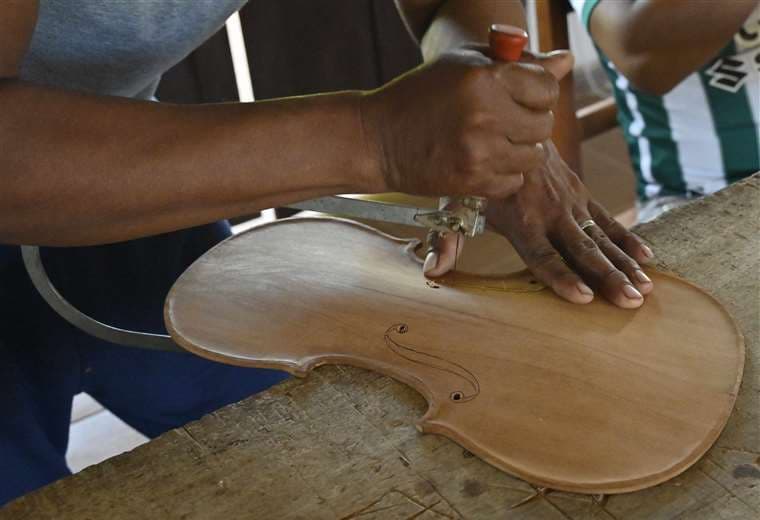
Urubichá, a town with 8,000 inhabitants, is primarily made up of indigenous people who speak Guarayo, one of the 37 officially recognized dialects in Bolivia. According to Waldo Papu, there are between 40 and 50 recognized luthiers in this area.
With its mud or wooden houses and dirt roads, Urubichá might seem like just another indigenous village. However, this predominantly Guarayo town harbors a secret: its luthiers have turned it into the largest violin workshop in Bolivia.
“I haven’t seen a place where so many violins are made” as here, notes Waldo Papu, rector of the Institute of Artistic Training, Choir, and Orchestra of Urubichá.
Located in the Amazon, in the central eastern part of the country, Urubichá has 8,000 inhabitants, most of whom are indigenous and speak Guarayo, one of Bolivia’s 37 officially recognized dialects.
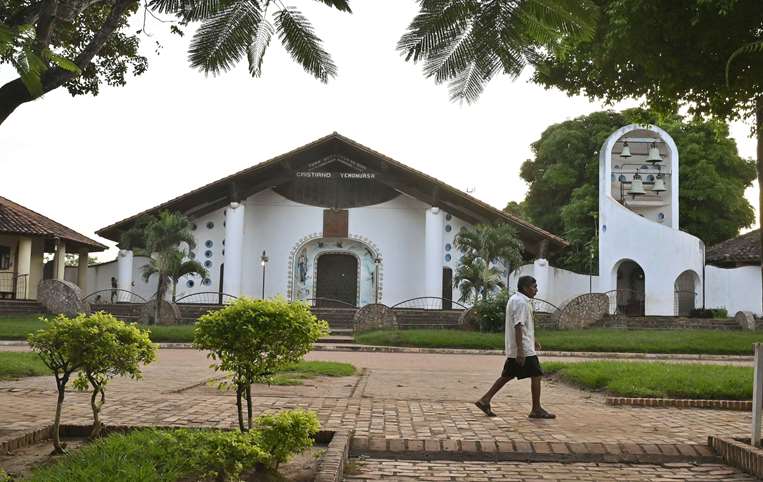
There are between 40 and 50 recognized luthiers, says Waldo Papu. Although there is no formal census, his estimate suggests an average of one luthier for every 200 inhabitants.
The school he heads is one of the most recognized in baroque music in Bolivia. It has 600 students, and among them, about twenty are learning to make violins. The small town also boasts a symphony orchestra.
But the craft remains more a tradition than a formal education.
– A Memorable Virtue –
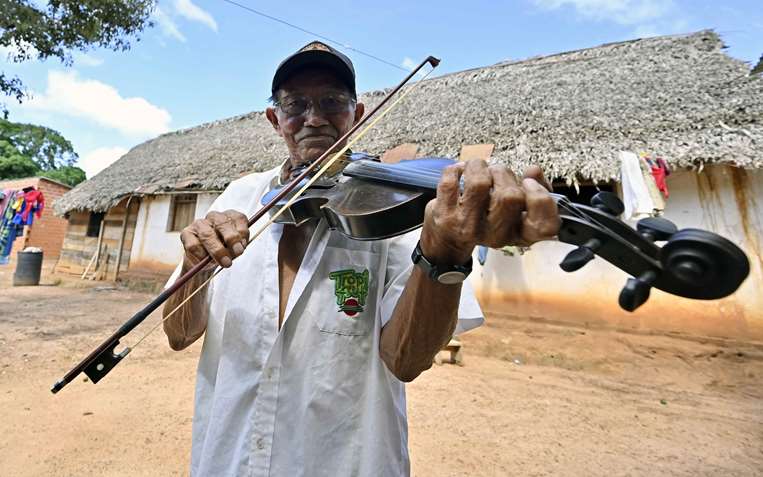
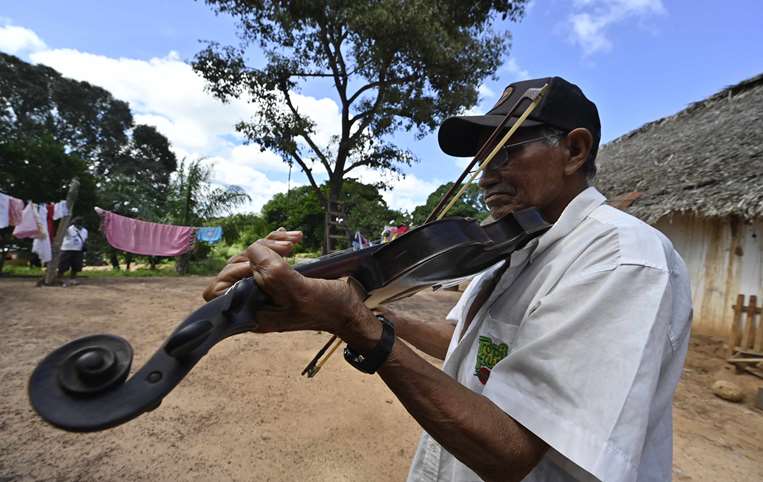
Hildeberto Oreyai became a luthier through his father. Now 76 years old, he is a renowned master craftsman, who takes two weeks to make a classic four-string instrument.
“I work all week because you have to work with the instrument. Patience is needed to get the sound right,” he tells AFP in a mix of Guarayo and Spanish.
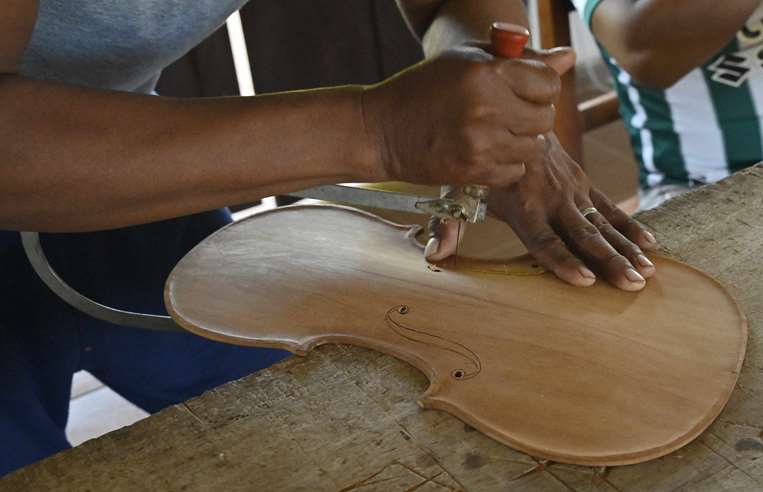
Each violin he makes from cedar or mara—two types of resilient wood—sells for the equivalent of about $580, according to his family.
Widowed, with five children and several grandchildren, Oreyai speaks little. He has been suffering from hearing problems for some time. With his luthier’s ear diminished, he practically tunes from memory.
“I really like to play,” repeats this elderly man with glasses, sitting outside his wooden plank workshop.
Unlike other master craftsmen, Hildeberto Oreyai has not managed to get any of his descendants to continue the luthier craft he first learned from his grandfather.
– The origin –
The village of violins can only be accessed by a 300 km road that connects it with Santa Cruz, the capital of the department of the same name.
In the early 19th century, Franciscan missionaries arrived at this Guarayo village—which in Spanish means “where the waters meet”—and noticed that the indigenous people were skilled artisans, but above all, they observed their inclination for music.
A tendency that, according to anthropologists, is rooted in their idea of death. For the Guarayo soul to reach the grandfather, as they refer to their god, it must sing and play the “tacuara” or bamboo flute, explains Urubichá’s indigenous historian Juan Urañavi.
The soul rides on a caiman to meet the grandfather, but if it doesn’t know how to play the tacuara well, “due to some neglect in life,” the caiman overturns it into the river to devour it, he adds.
Taking advantage of this musical sensitivity, the Franciscans used the violin as a means of evangelization.
Initially, these instruments could only be played in church, but then “the natives themselves learned from the missionaries” how to make and play them, adds Papu.
This is the origin of the deep-rooted prestige surrounding the luthiers in Urubichá, whose craft is now learned not only in family workshops but also in the town’s institute classrooms.
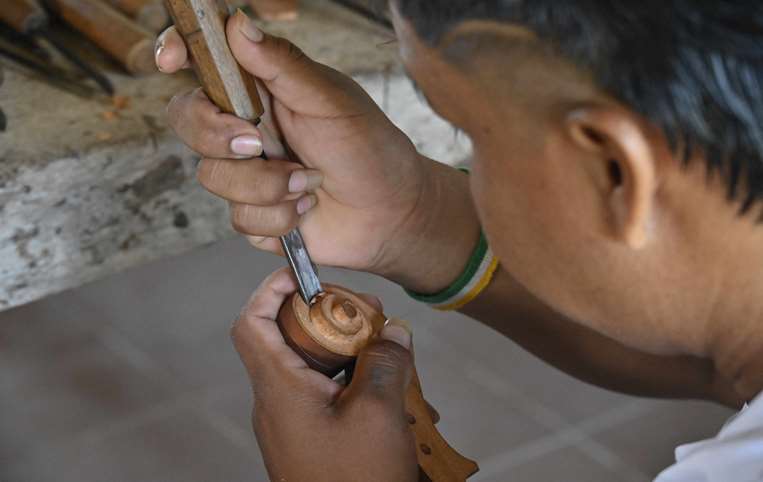
Hernán Yarita, 38, is about to graduate as a luthier. Keeping an eye on the national market, he wants his violins to reach his fellow villagers first to keep the tradition alive: “There are children who don’t have violins, and we have this vision of making them for ourselves, for our relatives.”
Agencia AFP, El Deber:
Los lutieres indígenas que ofrecen sus violines a Bolivia desde la Amazonía
Urubichá tiene 8.000 pobladores, en su gran mayoría indígenas que hablan guarayo, uno de los 37 dialectos acreditados oficialmente en Bolivia. Allí hay entre 40 y 50 lutieres reconocidos, comenta Waldo Papu.
Con sus casas de barro o madera y calles de tierra, Urubichá podría pasar por una aldea indígena más. Pero este poblado de mayoría guaraya esconde un secreto: sus lutieres lo han convertido en el mayor taller de violines de Bolivia.
“No he visto un lugar donde se fabriquen tantos violines” como aquí, constata Waldo Papu, rector del Instituto de Formación Artística, Coro y Orquesta Urubichá.
Enclavado en la Amazonía, en el centro este del país, Urubichá tiene 8.000 pobladores, en su gran mayoría indígenas que hablan guarayo, uno de los 37 dialectos acreditados oficialmente en Bolivia.
Hay entre 40 y 50 lutieres reconocidos, comenta Waldo Papu. Aunque no existe un censo formal, su estimación supondría en promedio un lutier por cada 200 habitantes.
La escuela que dirige es una de las más reconocidas en música barroca de Bolivia. Tiene 600 alumnos y entre ellos una veintena está aprendiendo a elaborar violines. El pequeño poblado también cuenta con una orquesta sinfónica.
Pero el oficio recae aún en la tradición más que en la escuela.
– Una virtud memoriosa –
Hildeberto Oreyai se convirtió en lutier por su padre. Hoy tiene 76 años y es un reputado maestro artesano, a quien le toma dos semanas fabricar un instrumento clásico de cuatro cuerdas.
Toda “la semana yo trabajo, porque hay que trabajar con el instrumento. Con paciencia se hace, para que salga bien (como) el sonido”, dice a la AFP en una mezcla de guarayo y español.
Cada violín que elabora partir del cedro o la mara -dos tipos de madera resistente- se vende por el equivalente de unos 580 dólares, según su familia.
Viudo, con cinco hijos y varios nietos, Oreyai habla poco. Desde hace un tiempo arrastra problemas auditivos. Diezmado su oído de lutier, prácticamente afina de memoria.
“Me gusta mucho tocar”, repite este anciano de lentes sentado a las afueras de su taller de tablones.
A diferencia de otros maestros artesanos, Hildeberto Oreyai no logró que ninguno de sus descendientes continuara con el oficio de lutier que conoció primero por su abuelo.
– El origen –
Al pueblo de los violines se puede acceder únicamente por una carretera de 300 km que lo conecta con Santa Cruz, capital homónima del mismo departamento.
A principios del siglo XIX, los franciscanos llegaron en misión hasta este poblado guarayo -que en español significa “donde se juntan las aguas”- y notaron que los indígenas eran hábiles artesanos pero, sobre todo, se fijaron en su inclinación por la música.
Una tendencia que según antropólogos está enraizada en su idea de la muerte. El alma de los guarayos, para llegar al abuelo, como identifican a su dios, debe cantar y tocar la “tacuara” o flauta de bambú, explica el historiador indígena de Urubichá, Juan Urañavi.
El alma se monta sobre un caimán camino a su encuentro con el abuelo, pero si no sabe tocar bien la tacuara, “por algún descuido en su vida”, el caimán lo vuelca sobre el río para devorarlo, añade.
Aprovechando esa sensibilidad musical, los franciscanos emplearon el violín como medio de evangelización.
En principio esos instrumentos solo podían ser tocados en la iglesia, pero luego “los propios nativos aprendieron de los misioneros” a fabricarlos e interpretarlos, añade Papu.
De ahí proviene el arraigo y prestigio que envuelve a los lutieres en Urubichá, cuyo oficio hoy no solo se aprende en los talleres familiares, sino también en las aulas del instituto del pueblo.
Hernán Yarita, de 38 años, está próximo a graduarse de lutier. Sin perder de vista el mercado nacional, quiere que sus violines lleguen primero a sus coterráneos para no dejar morir la tradición: “Hay niños que no tienen violín y tenemos esa visión de fabricar para nosotros mismos, para nuestros parientes”.

 Bolivian Thoughts | Pensamientos Bolivianos (Bilingual/Bilingüe)