
Vision 360:
Salary Increase: Entrepreneurs assert that no dialogue is legitimate if it excludes an involved actor
For this year, the COB proposed to the national Government an 8% increase in the national minimum wage and a 7% increase in the basic wage.
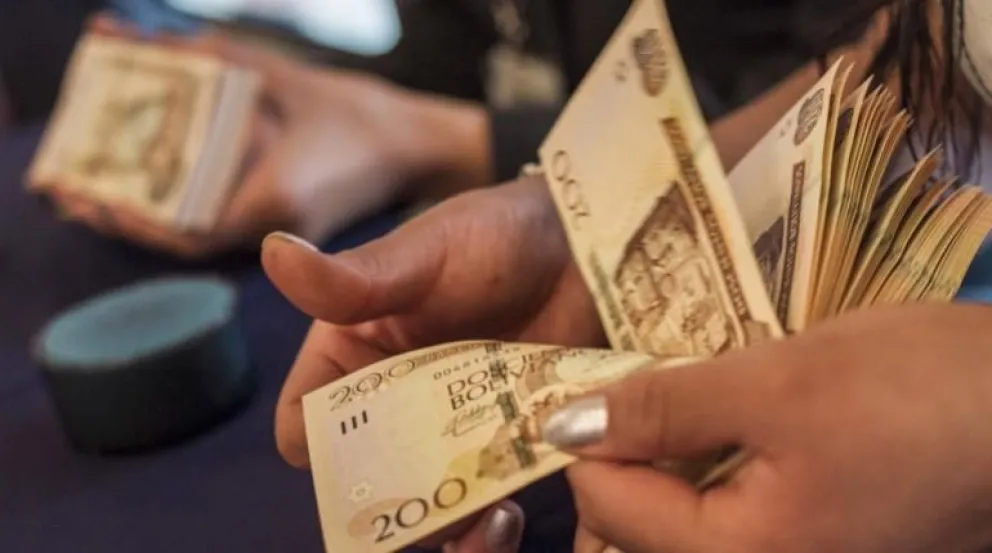
A woman counts money in denominations of 200 bolivianos. Photo: ABI
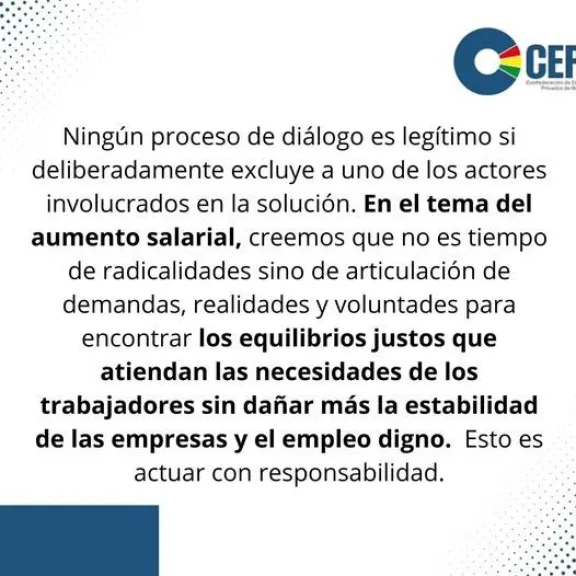
“No dialogue process is legitimate if it deliberately excludes one of the involved actors in the solution,” asserted the Confederation of Private Entrepreneurs of Bolivia (CEPB) on Monday, referring to the negotiation of the salary increase between the Government and the Central Obrera Boliviana (COB).
The entrepreneurs’ confederation considered it is not the time for radicalism, but to articulate demands, realities, and wills to find fair balances that address the needs of workers without harming the stability of companies.
For this year, the COB proposed to the Government an 8% increase in the national minimum wage and a 7% increase in the basic wage. This is despite the fact that the accumulated inflation in 2023 only reached 2.12%, according to the National Institute of Statistics (INE).
According to the Minister of Labor, Verónica Navia, both sectors were supposed to resume negotiations on the salary increase on Monday.
Meanwhile, the president of the Federation of Private Entrepreneurs of Cochabamba, Luis Laredo, preemptively rejected any salary increase agreed upon by the Government and the main workers’ organization until his sector is called to participate.
“Other people cannot decide on the salary increase for us,” Laredo told RTP.
The demand of the private sector to establish a tripartite table – Government, entrepreneurs, and COB – to negotiate the salary increase dates back many years. However, to date, the request has not been taken into account.
Aumento salarial: empresarios aseguran que ningún diálogo es legítimo si excluye a un actor involucrado
Para este año, la COB planteó al Gobierno nacional un incremento de 8% al salario mínimo nacional y un 7% al haber básico.
Una mujer cuenta dinero en corte de 200 bolivianos. Foto: ABI
“Ningún proceso de diálogo es legítimo si deliberadamente excluye a uno de los actores involucrados en la solución”, aseguró este lunes la Confederación de Empresarios Privados de Bolivia (CEPB), en referencia a la negociación del incremento salarial entre el Gobierno y la Central Obrera Boliviana (COB).
La confederación de empresarios consideró que no es tiempo de radicalidades, sino de articular demandas, realidades y voluntades para encontrar equilibrios justos que atiendan las necesidades de los trabajadores, pero sin dañar la estabilidad de las empresas.
Para este año, la COB planteó al Gobierno un incremento de 8% al salario mínimo nacional y un 7% al haber básico. Esto a pesar de que la inflación acumulada en 2023 sólo llegó al 2,12%, según el Instituto Nacional de Estadística (INE).
De acuerdo con la ministra de Trabajo, Verónica Navia, este lunes, ambos sectores debían retomar las negociaciones sobre el aumento salarial.
Por su parte, el presidente de la Federación de Empresarios Privados de Cochabamba, Luis Laredo, rechazó, de manera anticipada, cualquier aumento salarial que acuerden el Gobierno y el ente matriz de los trabajadores, hasta que su sector sea convocado.
“Otras personas no pueden decidir por nosotros el incremento salarial”, dijo Laredo a RTP.
La demanda de los privados de instalar una mesa tripartita -Gobierno, empresarios y COB- para negociar el incremento salarial, data de hace muchos años. Sin embargo, hasta la fecha, el pedido no fue tomado en cuenta.

 Bolivian Thoughts | Pensamientos Bolivianos (Bilingual/Bilingüe)