
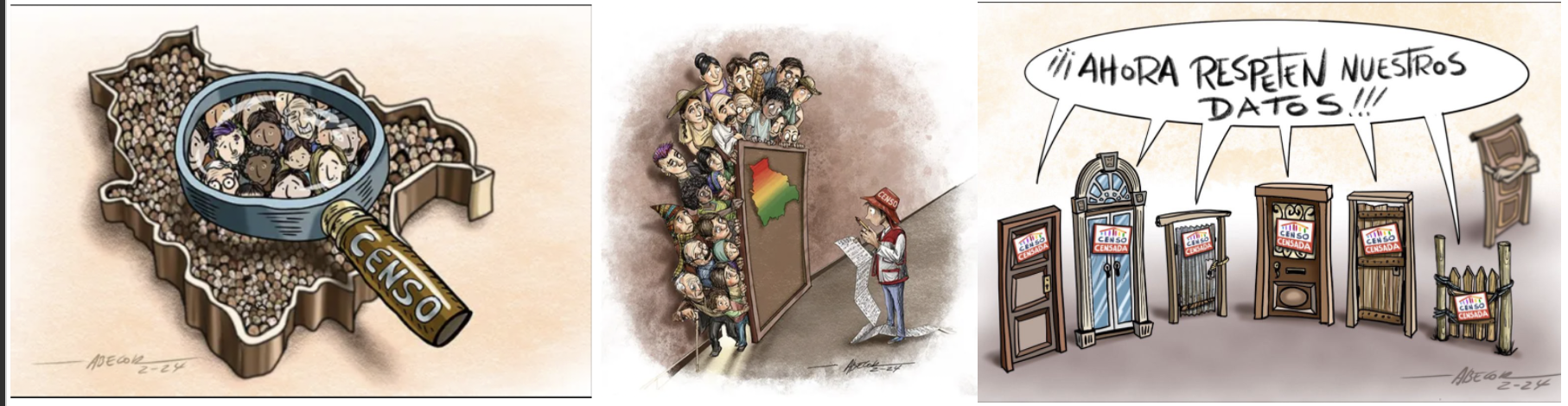
Agustin Echalar. Los Tiempos:
Yesterday the national census took place, an important practice to know how many of us there are and where we live, something that should allow for a more adequate distribution of our resources to address the needs of the population, and which can also redistribute power, namely the presence in parliament in a more equitable manner from each region.
The idea is good and important and can help, through certain questions, to identify other types of problems or shortcomings in our society, even though there may be more effective methods. For example, to know about the school population, it is sufficient to analyze the number of students each school has to find out, and a specific census would be useful to know the distances children have to travel to get to their schools.
The same could be done with healthcare, based on user registration in the SUS.
However, beyond other types of societal measurements, the census could be very useful if the population were honest when answering the questions, and therein lies a serious problem. We know that a certain percentage of the population has left their usual homes to be counted in places where they have their origins or property interests, mainly because they were forced to do so, in some cases with threats of fines or other very burdensome punishments, by local authorities.
That is the great weakness of this instrument, and there is a certain responsibility on the central government that should have deployed more propaganda and actions to neutralize the criminal actions of local, municipal, or community authorities who, abusing their power, promoted this movement of people from one municipality to another.
Those who have moved to a place far from where they live to be counted have somehow committed ideological falsehood, even if they did so intimidated by abusive authorities.
It is possible that the Government not only did not react in a timely manner to the possibility of this variant but also encouraged these actions that help consolidate its (false) vision of the country.
If huge anomalies are found in the count, the census could be challenged, and this would imply conducting a new census. Let us remember that based on its results, the political administration and a large part of the economic administration of the country are at stake.
Acknowledging the results of this census or challenging them implies a huge cost for the country. Avoiding that specific population movement for the census was a very important detail that has not been taken into account to give credibility to this tremendous effort.
For Bolivia to truly progress, we must set aside the tricks and acts of cunning, and embrace a more honest behavior.
Thanks to yesterday’s tremendous effort, which comes with a great economic cost, we will know how many we are, but not where we truly live. And if many are willing to travel long distances to lie, it suggests they are willing to lie about many more details. What a pity!
Beyond that, it remains a tremendous absurdity that the circulation of vehicles was prohibited for 24 hours, a real and unnecessary detriment to the country’s economy (this prohibition is understandable for 12 or 16 hours at most).
And it still shows our authoritarian streak, perhaps of Hispanic-Andalusian origin, that the sale of alcoholic beverages is prohibited for several days. The State insists on treating citizens as minors.
However, we must salute and applaud the volunteers, especially those who did it solely out of their great civic commitment to the country. I have two classmates from school, sixty-somethings like me, who have signed up to support this effort without even seeking a small advantage in some note or a few points to access a place of study. I admire and appreciate them.
The author is a tourism operator
Ayer tuvo lugar el censo nacional, una práctica importante para saber cuántos somos y dónde vivimos, algo que debería permitir una distribución más adecuada de nuestros recursos para atender las necesidades de la población, y que puede también redistribuir el poder, vale decir la presencia en el parlamento de una manera más equitativa de cada región.
La idea es buena e importante y puede ayudar, a partir de ciertas preguntas, a identificar otro tipo de problemas o falencias en nuestra sociedad, más allá de que posiblemente haya métodos más eficaces. Por ejemplo, para saber sobre la población escolar, basta analizar el número de alumnos que tiene cada escuela para poder averiguarlo, y sí valdría un censo concreto para saber las distancias que los niños deben recorrer para ir a su centro de estudios.
Lo mismo se podría hacer con la atención médica, a partir de la inscripción de los usuarios en el SUS.
Ahora bien, más allá de otros tipos de medición de la sociedad, el censo podría ser muy útil si la población fuese honesta a la hora de responder las preguntas, y ahí estamos con un serio problema. Sabemos que un cierto porcentaje de la población ha dejado sus hogares habituales para censarse en los lugares donde tiene su origen o intereses propietarios, sobre todo porque ha sido obligado, en algunos casos con amenazas de multas u otro tipo de castigos muy onerosos, por parte de las autoridades locales.
Esa es la gran debilidad de este instrumento y existe una cierta responsabilidad en el gobierno central que debió haber hecho un despliegue mayor de propaganda y de acciones que neutralicen las acciones criminales de autoridades locales, municipales o comunitarias que, haciendo abuso de poder, promovieron este movimiento de personas de un municipio a otro.
Quienes se han trasladado a un lugar lejos de donde viven para ser censados han cometido de alguna manera una falsedad ideológica, más allá de que lo hayan hecho amedrentados por autoridades abusivas.
Es posible que el Gobierno no sólo no hubiera reaccionado oportunamente a la posibilidad de esta variante, sino también fomentado estas acciones que ayudan a consolidar su (falsa) visión de país.
Es posible que, si se encuentran enormes anomalías en el recuento, el censo pudiera resultar impugnado, y esto implicaría hacer un nuevo censo. Recordemos que en base a sus resultados se juega la administración política y buena parte de la administración económica del país.
Reconocer los resultados que dé este censo o impugnarlos implica un enorme costo para el país. El evitar ese movimiento poblacional específicamente para el censo era un detalle muy importante que no ha sido tomado en cuenta para dar credibilidad a este tan grande esfuerzo.
Para que Bolivia realmente progrese, se deben dejar de lado las mañas y actos de viveza criolla, y se debe abrazar un comportamiento más honesto.
Gracias al enorme esfuerzo de ayer, que tiene un gran costo económico, sabremos cuántos somos, pero no dónde verdaderamente vivimos. Y si muchos están dispuestos a viajar grandes distancias para mentir, algo hace pensar que están dispuestos a mentir en muchos más detalles. ¡Una pena!
Más allá de eso, sigue siendo un tremendo absurdo el que se hubiera prohibido la circulación de vehículos por 24 horas, un real e innecesario perjuicio para la economía del país (esta prohibición es entendible durante 12 o 16 horas cuando más).
Y no deja de mostrar nuestra hilacha autoritaria, de origen hispano-andaluz tal vez, que se prohíba la venta de bebidas alcohólicas por varios días. El Estado insiste en tratar a los ciudadanos como a menores de edad.
Eso sí, toca saludar y aplaudir a los voluntarios, ante todo a los que lo fueron sólo por su gran compromiso cívico con el país. Tengo dos compañeros de curso de la escuela, sesentones como yo, que se han inscrito para apoyar en este esfuerzo sin buscar ni siquiera una pequeña ventaja en alguna nota o algunos puntos para acceder a algún lugar de estudio. Los admiro y agradezco.
El autor es operador de turismo
https://www.lostiempos.com/actualidad/opinion/20240324/columna/censo-estado-plurinacional

 Bolivian Thoughts | Pensamientos Bolivianos (Bilingual/Bilingüe)