By Milenka Parisaca, ABI:
Rock Paintings Discovered in the Area Surrounding Kaa-Iya National Park in Santa Cruz
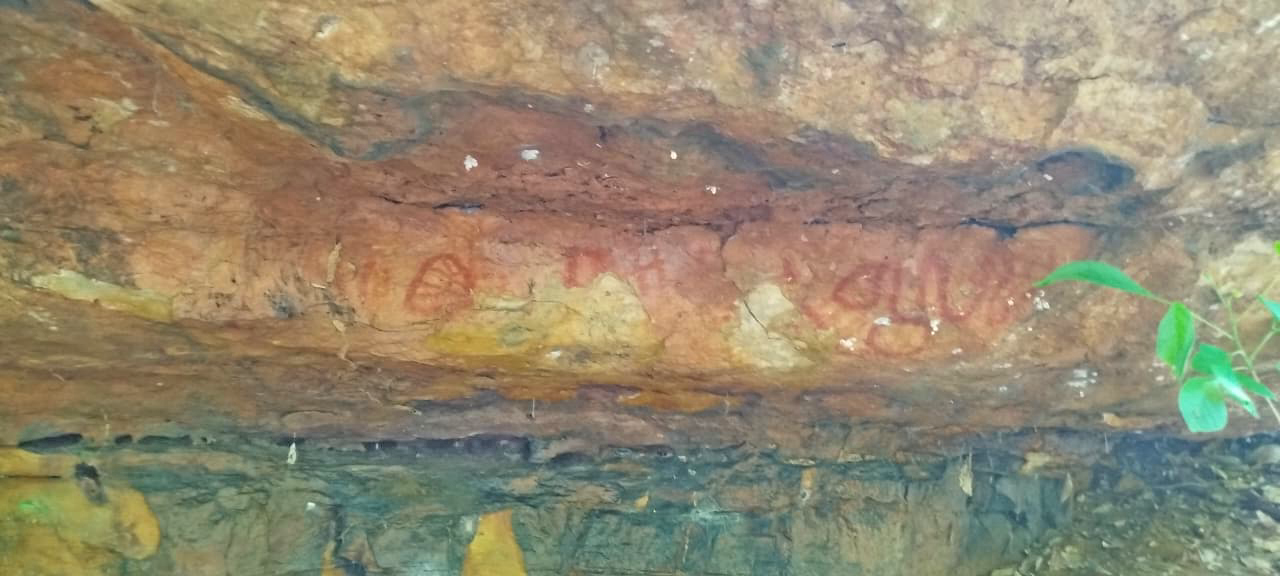
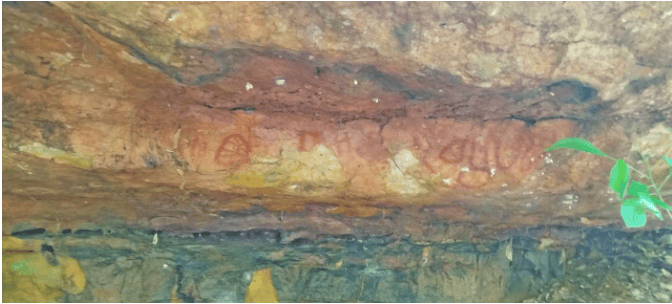
Red markings on the rocks caught the explorers’ attention, prompting a specialized inspection to determine their origin and archaeological significance. | Photo: Courtesy of Mario Luis Gil Egüez.
Santa Cruz, November 5, 2026 (ABI).- A reddish stain on a rock turned an ordinary hike into a journey into the past. Mario Luis Gil Egüez, acting head of Protection for the Kaa-Iya del Gran Chaco National Park and Integrated Natural Management Area (ANMI), discovered a collection of rock paintings in the forest of San José de Chiquitos. The discovery came as a complete surprise to the exploration team, whose original plan had simply been to assess an ecotourism trail in the area.
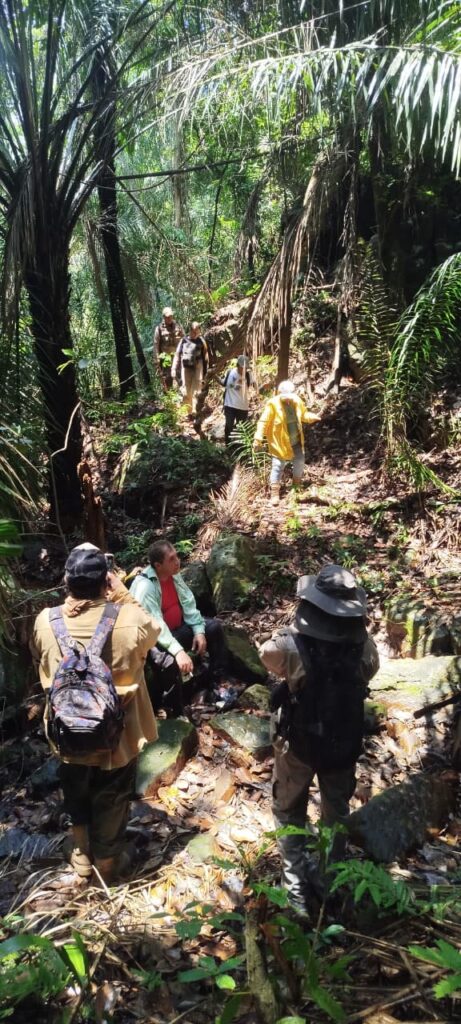
The discovery took place on September 26. In addition to park ranger Gil Egüez, those who reached the rock formations included Emilio Vaca, from the community of Cristo Rey; Mario Salas, from San Juan del Norte; Malité Schmitter and René Arzabe, from the RAMA Foundation; and Kathia Garrido, communications officer for Kaa-Iya National Park.
“I managed to spot a symbol about five meters away, a reddish mark, some lines. When we got closer, the pigmentation was already very clear,” the park ranger told ABI. He explained that his attention was focused not only on plants and animals but also on the traces left by those who had inhabited the territory.
Before entering the forest, the group performed a ritual asking the “owner of the forest” for protection, a practice rooted in the traditions of local communities. The hike also involved installing camera traps at three locations identified by community members because of the presence of wildlife.
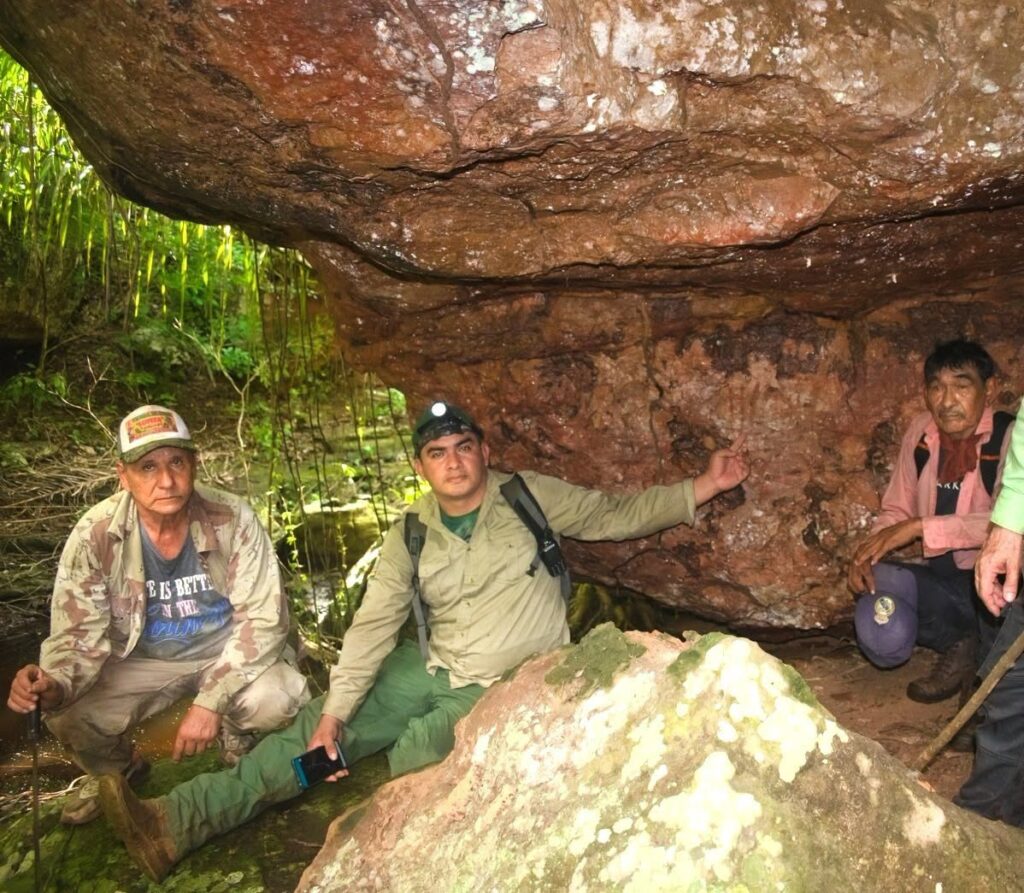
As he explored the rock formations, Gil Egüez examined caves, trees, and any signs that might reveal the history of the area. Upon reaching a natural shelter, a space beneath a large rock where visitors could sit and observe the surrounding formations, he noticed the first marking. He called his companions over to show them what he had found. At first, some could not see it, but after approaching, they too recognized the reddish lines.
“I am not an archaeologist. I told them these were lines, pigment figures, and that a specialist needed to come and certify what they were,” the park ranger recalled.
After spotting the first figure, he explored other sections of the rock formation and discovered additional paintings. The team took photographs and recorded the coordinates to identify the locations.
The excitement was immediate. “Everyone was going crazy, everyone was happy, delighted, because this was such a significant discovery in a place where nobody had ever been,” Gil Egüez said.
During the hike, they also found a large natural cavity capable of accommodating approximately 50 people sitting down. In honor of Malité Schmitter, who encouraged them to continue exploring, they named the site “Malité’s Whim” (El Capricho de Malité).
The discovery attracted attention because of the clarity of some of the markings, but also because of the fragility of the rocks. One of the surfaces shows signs of detachment, and part of the material could fall away, potentially causing the paintings to disappear. In another section, a whitish area can be seen which, according to the explanation Gil Egüez received from the archaeologist, is associated with moisture and a lack of exposure to sunlight.
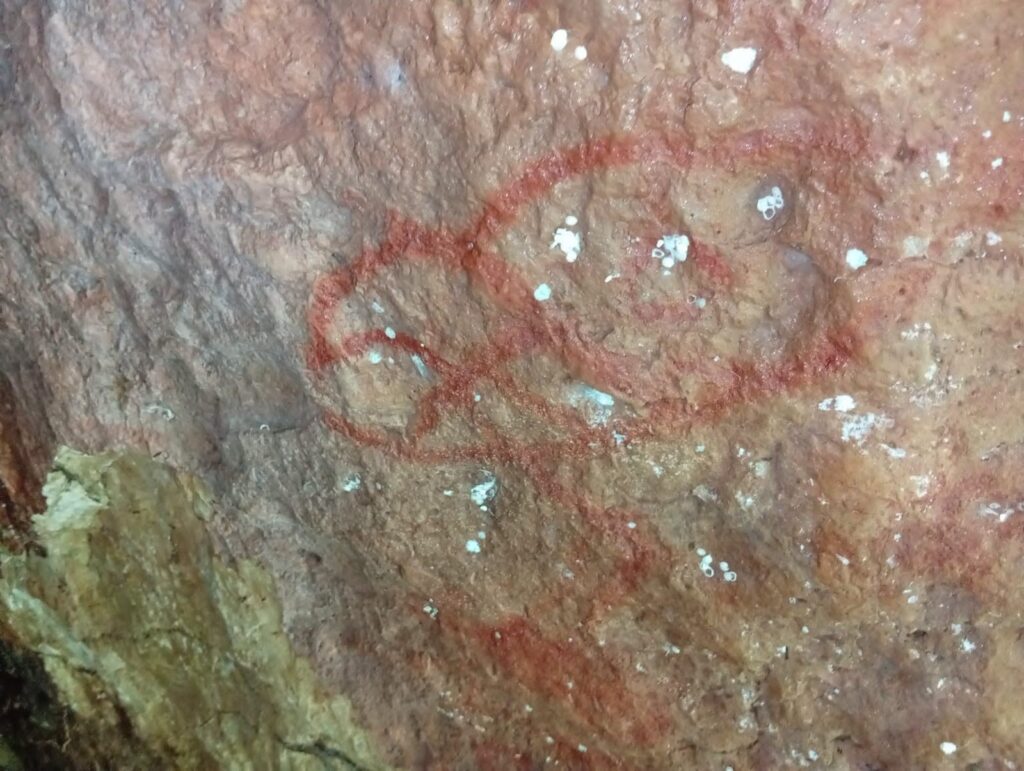
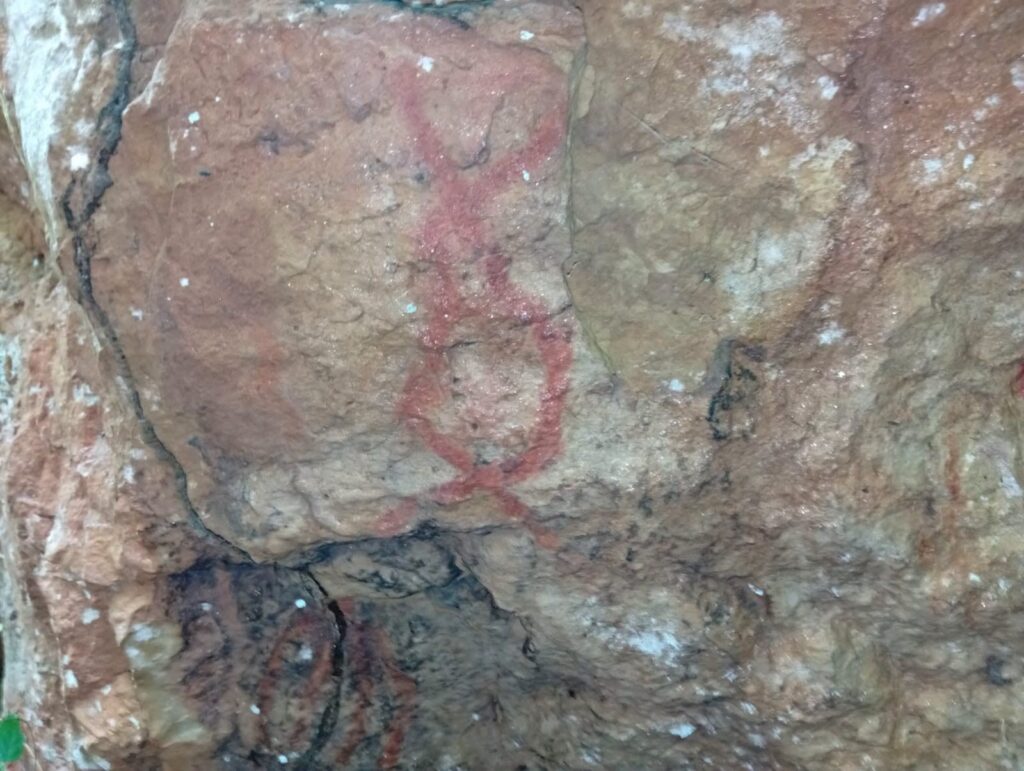
Reddish pigment markings on the rock formations. | Photos: Sernap.
A second inspection was conducted on Saturday, October 31, to verify the discovery. Participants included Zora Taborga, president of the Kaa-Iya Park Management Committee and vice president of the Central Organization of Indigenous Communities of Chiquitos Turubó; Danilo Drakic, an archaeologist with the Santa Cruz Departmental Government; Alan Javier Poquiviqui Suárez, director of Tourism and Culture for San José de Chiquitos; representatives of the RAMA Foundation; park rangers; and an official from the Santa Cruz la Vieja Natural Heritage Conservation Unit (UCPN).
During that visit, the archaeologist verbally confirmed that the figures were indeed rock paintings.
Gil Egüez explained that the specialist had committed to providing a written report to support the identification, but the document is still pending.
“It is no longer just about nature; it is part of history,” the park ranger said, expressing his belief that the site combines natural and cultural values that local communities want to protect.
Poquiviqui Suárez also described what they observed during the inspection. “We went to the site and were able to see the remains of the rock paintings,” he stated.
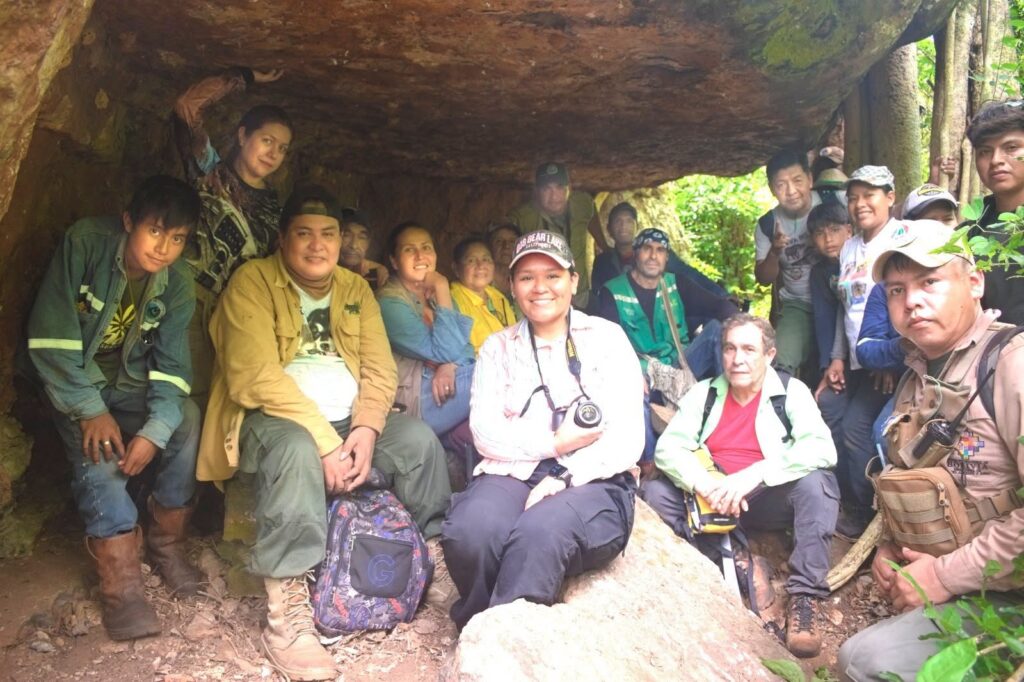
The municipal director explained that the municipality is supporting the process of identifying, cataloging, and classifying the heritage site. It is also assessing its potential for adventure, rural, and community-based tourism.
The second visit revealed another mystery. Participants found an opening in the rock, approximately the width of a person, with an entrance covered by stones roughly the size of bricks. The way these stones had been arranged caught the group’s attention.
The archaeologist removed some of them and illuminated the interior with a flashlight. According to Gil Egüez’s description, the cavity widened inward and continued in a curve to the left, with enough room for a person to sit and even stand up.
The specialist plans to return to the site in mid-January 2027 with a professional team to examine the area and determine whether fossils or other traces of human presence can be found. Any discoveries will be documented and left in place, without removing any materials.
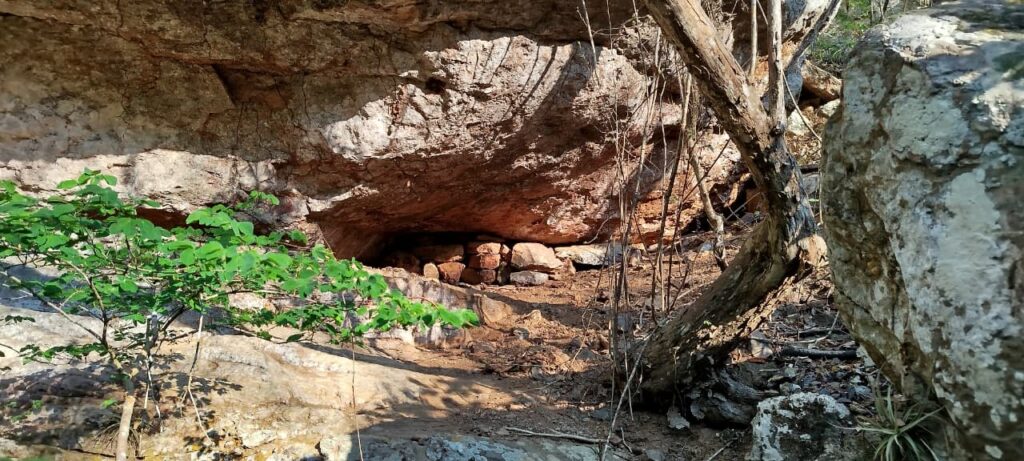
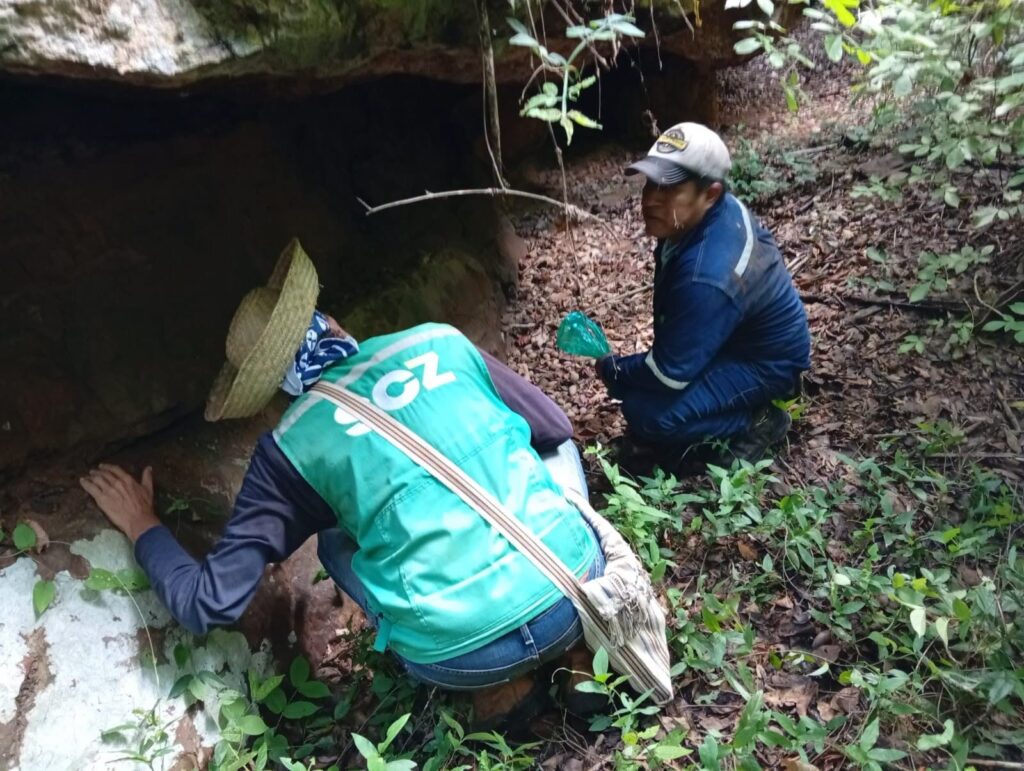
The surrounding area includes the El Carmen ravine, spring-fed sections, and large natural pools. During the hike, participants also identified a rock formation they described as “the devil’s face with his pitchfork.” These features add to the area’s natural appeal.
The site is located approximately four kilometers from the communities of San Juan del Norte and Cristo Rey. The route includes a freshwater river that accompanies part of the hike and serves as an important water source for the area.
Community members intend to first establish a community-protected area and later seek its recognition as a municipal protected area. The proposal aims to conserve water sources, flora, and fauna, while maintaining the ecological connection between the communities, Kaa-Iya National Park, and the Santa Cruz la Vieja Natural Heritage Conservation Unit.
Gil Egüez emphasized that camera traps make it possible to document the presence of different wildlife species in the territory. In his view, protecting the site must involve not only the paintings but also the surrounding forest, springs, and natural corridors connecting the conservation areas.
For the park ranger, the participation of communities, authorities, and specialists will be essential to preserving this heritage. The rock paintings, the cavities that still hold unanswered questions, and the water sources that sustain local communities all reveal that the area explored by San Juan del Norte and Cristo Rey has a value that goes far beyond its natural wealth.
//MPC/EO
Por Milenka Parisaca Carrasco, ABI:
Hallan pinturas rupestres en el área de influencia del parque Kaa-Iya en Santa Cruz
Las marcas sobre la roca despertaron la curiosidad de los exploradores y dieron paso a una inspección especializada para establecer su origen y valor arqueológico. | Foto: Gentileza Mario Luis Gil Egüez.
Santa Cruz, 5 de noviembre de 2026 (ABI).- Una mancha rojiza en la roca transformó una caminata rutinaria en un viaje al pasado. El jefe de Protección a.i. del Parque Nacional y Área Natural de Manejo Integrado (ANMI) Kaa-Iya del Gran Chaco, Mario Luis Gil Egüez, descubrió un conjunto de pinturas rupestres en el bosque de San José de Chiquitos. El hallazgo sorprendió por completo al grupo explorador, cuyo único plan original era evaluar un circuito de ecoturismo en el área.
El descubrimiento ocurrió el 26 de septiembre. Además del guardaparque Gil Egüez, entre quienes llegaron hasta las formaciones rocosas estuvieron Emilio Vaca, de la comunidad Cristo Rey; Mario Salas, de San Juan del Norte; Malité Schmitter y René Arzabe, de Fundación RAMA, y Kathia Garrido, comunicadora del parque Kaa-Iya.
“Logré visualizar a unos cinco metros un símbolo, una marca rojiza, unos trazos. Al acercarse, la pigmentación ya era bien nítida”, relató a la ABI el guardaparques, quien explicó que su atención no estaba puesta únicamente en las plantas y los animales, sino también en las huellas de quienes habitaron ese territorio.
Antes de internarse en el monte, el grupo realizó un ritual para pedir protección al “dueño del monte”, una práctica que forma parte de las costumbres de las comunidades. La caminata incluyó la instalación de cámaras trampa en tres puntos que los comunarios identificaron por la presencia de animales silvestres.
Mientras recorría las formaciones rocosas, Gil Egüez observaba cuevas, árboles y cualquier señal que pudiera revelar la historia del lugar. Al llegar a una especie de refugio natural, un espacio bajo una gran piedra donde era posible sentarse y contemplar las formaciones rocosas, distinguió la primera marca. Llamó a sus compañeros para mostrarles el hallazgo. Al principio, algunos no lograron verla; después se acercaron y reconocieron los trazos rojizos.
“Yo no soy arqueólogo. Les dije que eran trazos, figuras de pigmentación y que tenía que venir un especialista a certificar esto”, recordó el guardaparque.
Después de advertir la primera figura, recorrió otros sectores de la formación rocosa y encontró más pinturas. El equipo tomó fotografías y registró las coordenadas para ubicar los puntos.
La emoción fue inmediata. “Todos locos, todos contentos, felices, porque es un descubrimiento de esa magnitud en ese lugar donde nadie había ido”, contó Gil Egüez.
Durante el recorrido también encontraron una gran cavidad natural con capacidad para albergar a unas 50 personas sentadas. En honor a Malité Schmitter, quien los animó a continuar la caminata, bautizaron el sitio como “El Capricho de Malité”.
El hallazgo llamó la atención por la nitidez de algunos trazos, pero también por la fragilidad de las rocas. Una de las superficies presenta desprendimientos y parte del material podría caer, con el riesgo de que las pinturas se pierdan. En otro sector se observa una zona blanquecina que, según la explicación que recibió Gil Egüez del arqueólogo, está relacionada con la humedad y la falta de exposición al sol.
Trazos de pigmentación rojiza sobre las formaciones rocosas. | Fotos: Sernap.
El sábado 31 de octubre se efectuó una segunda inspección para verificar el hallazgo. Participaron Zora Taborga, presidenta del Comité de Gestión del Parque Kaa-Iya y vicepresidenta de la Central de Comunidades Indígenas de Chiquitos Turubó; Danilo Drakic, arqueólogo de la Gobernación de Santa Cruz; Alan Javier Poquiviqui Suárez, director de Turismo y Cultura de San José de Chiquitos; representantes de Fundación RAMA, guardaparques y la autoridad de la Unidad de Conservación del Patrimonio Natural (UCPN) Santa Cruz la Vieja.
Durante esa visita, el arqueólogo confirmó de forma verbal que las figuras corresponden a pinturas rupestres.
Gil Egüez explicó que el especialista comprometió un informe escrito para respaldar la identificación, documento que todavía está pendiente.
“Ya no es solo naturaleza, es parte de la historia”, expresó el guardaparque, quien considera que el lugar reúne valores naturales y culturales que las comunidades quieren proteger.
Por su parte, Poquiviqui Suárez también dio cuenta de lo que observaron durante la inspección. “Fuimos hasta el lugar y pudimos evidenciar los vestigios de pintura rupestre”, afirmó.
El director municipal explicó que el municipio acompaña el proceso para identificar, inventariar y categorizar el patrimonio. Además, evalúa su potencial para el turismo de aventura, rural y comunitario.
La segunda visita dejó otra incógnita. Los participantes encontraron una abertura en la roca, de aproximadamente el ancho de una persona, cuyo acceso estaba cubierto con piedras de tamaño similar a ladrillos. Estas piezas estaban acomodadas de una forma que llamó la atención del grupo.
El arqueólogo retiró algunas y alumbró el interior con una linterna. Según la descripción de Gil Egüez, la cavidad se ensanchaba hacia adentro y continuaba en una curva hacia la izquierda, con espacio para que una persona pudiera sentarse e incluso ponerse de pie.
El especialista prevé regresar al lugar a mediados de enero de 2027 con un equipo profesional para examinar el sitio y determinar si existen fósiles u otros rastros de presencia humana. Cualquier hallazgo será documentado y permanecerá en el lugar, sin extracción de materiales.
En el entorno se encuentran la quebrada El Carmen, sectores de vertientes y grandes pozas naturales. Durante el recorrido, los participantes identificaron una formación rocosa que describieron como “la cara del diablo con su trinche”. Estas características se suman al atractivo natural de la zona.
El sitio se encuentra a unos cuatro kilómetros de las comunidades de San Juan del Norte y Cristo Rey. El trayecto incluye un río de agua dulce que acompaña parte de la caminata y constituye una fuente importante para la zona.
Los comunarios tienen la intención de impulsar primero un área protegida comunal y, más adelante, gestionar su reconocimiento como área protegida municipal. La propuesta busca conservar las fuentes de agua, la flora y la fauna, además de mantener la conexión ecológica entre las comunidades, el parque Kaa-Iya y la UCPN Santa Cruz la Vieja.
Gil Egüez destacó que las cámaras trampa permiten registrar la presencia de distintas especies silvestres en el territorio. A su juicio, la protección del lugar debe considerar tanto las pinturas como el bosque que las rodea, las vertientes y los corredores naturales que conectan los espacios de conservación.
Para el guardaparque, la participación de las comunidades, las autoridades y los especialistas será clave para conservar este patrimonio. Las pinturas rupestres, las cavidades que aún guardan preguntas y las fuentes de agua que sostienen la vida de los habitantes revelan que el recorrido de San Juan del Norte y Cristo Rey guarda un valor que trasciende su riqueza natural.
//MPC/EO
https://abi.bo/hallan-pinturas-rupestres-en-el-area-de-influencia-del-parque-kaa-iya-en-santa-cruz/


Leave a Reply