By Francesco Zaratti:
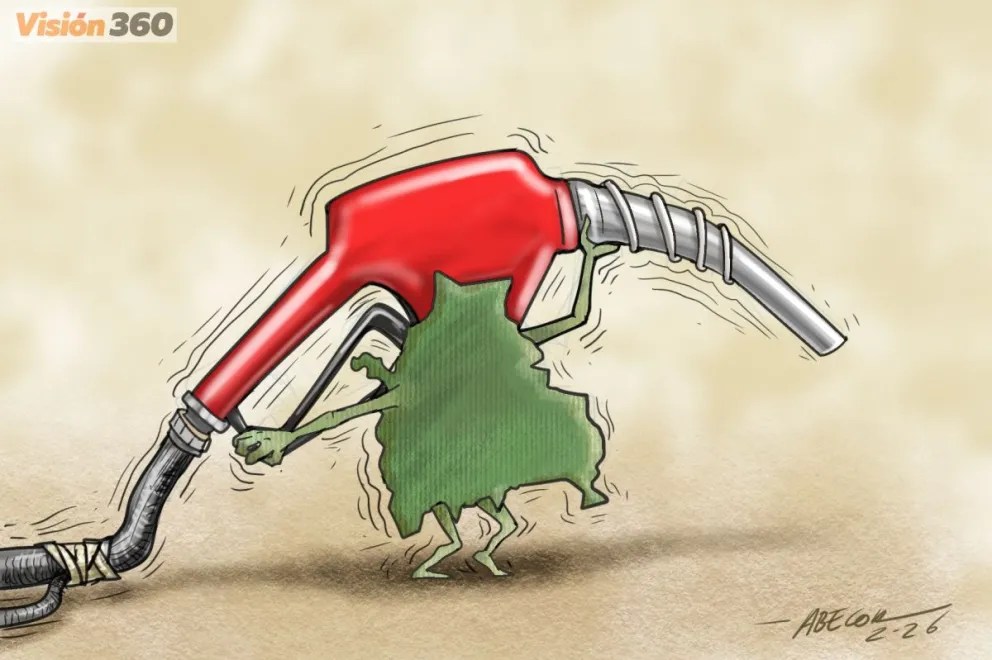
La Paz, August 24, 2026 – Amid the country’s persistent diesel supply crisis, there are two structural causes that must be kept in mind in order to understand the magnitude of the problem:
1. The consumption matrix: Diesel consumption in Bolivia is distributed mainly among three sectors: transportation (more than 80%), agribusiness (~15%), and mining (~5%). This clearly shows that passenger and freight transportation is by far the dominant source of demand.
2. The absence of domestic diesel production: Bolivia has traditionally been a natural gas-producing country rather than an oil-producing one, and Law 3058 has strongly discouraged the exploration and production of liquid hydrocarbons through the application of excessive, fixed, and indiscriminate taxes (IDH).
As a result, despite being a historic gas exporter, Bolivia is forced to import nearly 95% of the diesel needed to supply its domestic market. In principle, this is not a tragedy in the global economy: many countries import fuels they do not produce, including Chile and Uruguay in the region, as well as nearly all European nations.
However, this situation becomes highly burdensome and painful for a country’s economy when it lacks sufficient foreign currency reserves to guarantee a continuous supply and, to make matters worse, artificially keeps consumer prices low.
This is precisely what is happening in Bolivia today: the State does not have enough foreign currency—it spends more importing fuels than it earns from gas exports to Brazil—and maintains a diesel subsidy that acts as a perverse incentive for fuel smuggling to neighboring countries, where prices can be twice as high. If we add the sustained increase in international oil prices driven by conflicts in the Middle East, we find ourselves facing the ideal conditions for a perfect storm.
In light of this diagnosis, it is evident that Supreme Decree 5676—which establishes (thanks to a “clarification” by the relevant ministry) two differentiated diesel markets, one for “large consumers” and another for transportation in general—does nothing to prevent that storm. On the one hand, it does not stop the hemorrhage of foreign currency because it maintains the subsidy for the bulk of consumers (the transportation sector). On the other hand, it continues to encourage fuel leakage through smuggling. In fact, the protests by sectors affected by DS 5676 stem less from the price increase itself than from the discrimination they feel the decree imposes upon them.
Given this situation, there are only two paths forward:
- The road to collapse: Continue applying transfusions to a patient suffering constant hemorrhaging, increasing public debt day after day.
- The road to the operating room: Fully align fuel prices with reality once and for all, while mitigating social impacts through smart, targeted subsidies.
Looking ahead, it is imperative to address the root causes of this crisis by encouraging new investment in exploration and production, liberalizing the commercialization of imported fuels, and reducing dependence on diesel wherever it is technically and economically feasible. Mining provides a clear example: it could replace the diesel it consumes with electricity by expanding transmission lines to processing plants and remote mining centers.
Regards and good health,
Francesco
Por Francesco Zaratti:
La Paz, 24 de agosto de 2026 – En medio de la perenne crisis de abastecimiento de diésel que atraviesa el país, existen dos causas estructurales que es imperativo tener presentes para comprender la magnitud del problema:
1. La matriz de consumo: El consumo de diésel en Bolivia se reparte principalmente entre tres sectores: el transporte (más del 80%), la agroindustria (~15%) y la minería (~5%). Esto evidencia que el sector dominante en la demanda es el transporte de pasajeros y carga.
2. La nula producción nacional de diésel: Bolivia es tradicionalmente un país gasífero y no petrolero, y la Ley 3058 ha desincentivado fuertemente la exploración y explotación de hidrocarburos líquidos mediante la aplicación de impuestos (IDH) excesivos, fijos y ciegos.
En consecuencia, Bolivia, a pesar de ser un exportador histórico de gas, se ve obligada a importar volúmenes cercanos al 95% de diésel para abastecer el mercado interno. En principio, esto no representa un drama en la economía global: muchos países importan los combustibles que no producen, como Chile y Uruguay en la región, o casi la totalidad de las naciones europeas.
Sin embargo, esta situación resulta altamente gravosa y dolorosa para la economía de los Estados cuando el país carece de divisas suficientes para garantizar el suministro continuo y, para empeorar el panorama, mantiene artificialmente bajo el precio al consumidor.
Exactamente esto es lo que sucede hoy en Bolivia: el Estado no cuenta con divisas suficientes —gasta más en importar combustibles de lo que percibe exportando gas al Brasil— y sostiene una subvención al precio del diésel que actúa como un incentivo perverso para el contrabando del carburante hacia los países limítrofes, donde el precio llega a duplicarse. Si a esto añadimos el incremento sostenido del precio internacional del barril de petróleo debido a los conflictos en el Medio Oriente, nos encontramos ante las condiciones ideales para una tormenta perfecta.
A la luz de este diagnóstico, resulta evidente que el Decreto Supremo 5676 —que establece (gracias a una “aclaración” del ministerio del ramo) dos mercados diferenciados para el diésel, uno para los “grandes consumidores” y otro para el transporte en general— no logra evitar en lo absoluto dicha tormenta. Por un lado, no frena la hemorragia de divisas, ya que mantiene la subvención para el grueso de los consumidores (el transporte) y, por el otro, continúa alentando la fuga del carburante mediante el contrabando. De hecho, la protesta de los sectores afectados por el DS 5676 se debe, más que por el incremento del precio, a la discriminación de que se sienten objeto por el decreto de marras.
Ante este panorama, solo hay dos caminos:
– El camino al colapso: Seguir aplicando transfusiones a un paciente que sufre hemorragias constantes, incrementando el endeudamiento público día a día.
– El camino al quirófano: Sincerar de una vez por todas los precios de los combustibles y mitigar los impactos sociales mediante subsidios inteligentes y focalizados.
Mirando hacia el futuro, es imperativo remover las causas de esta crisis impulsando nuevas inversiones en exploración y explotación, liberalizando la comercialización de carburantes importados y disminuyendo la dependencia del diésel en todos los nichos donde sea técnica y económicamente viable. Un claro ejemplo es la minería, que podría reemplazar perfectamente el diésel que consume mediante el uso de electricidad, ampliando las líneas de transmisión hacia los ingenios y los centros mineros alejados.
Saludos y salud,
Francesco


Leave a Reply