By Correo del Sur; Eju.tv:
Population in Employment Falls by 205,000 in the First Half
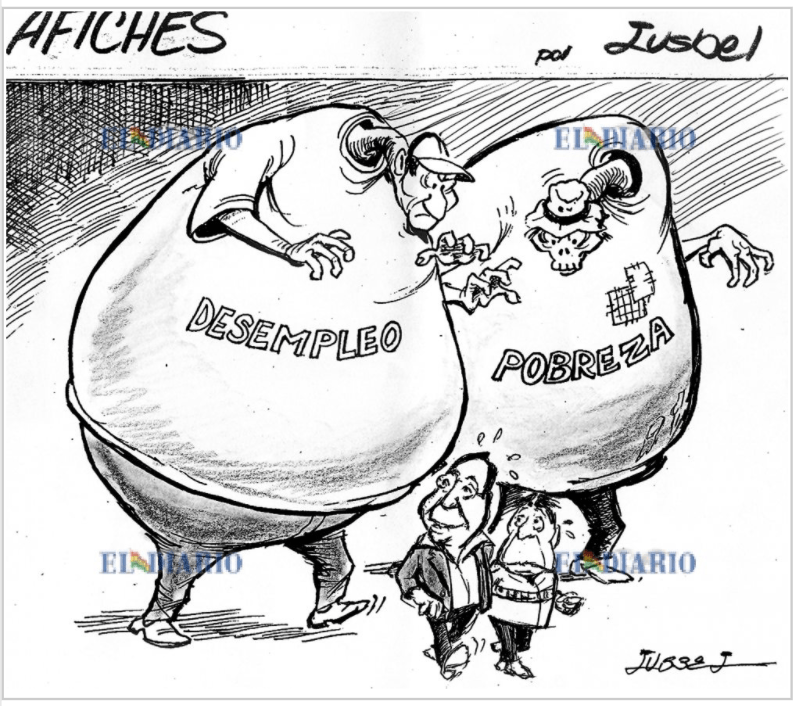
“Monetary poverty” could reach 5.7 million people by the end of 2026
EMPLOYMENT DECLINES
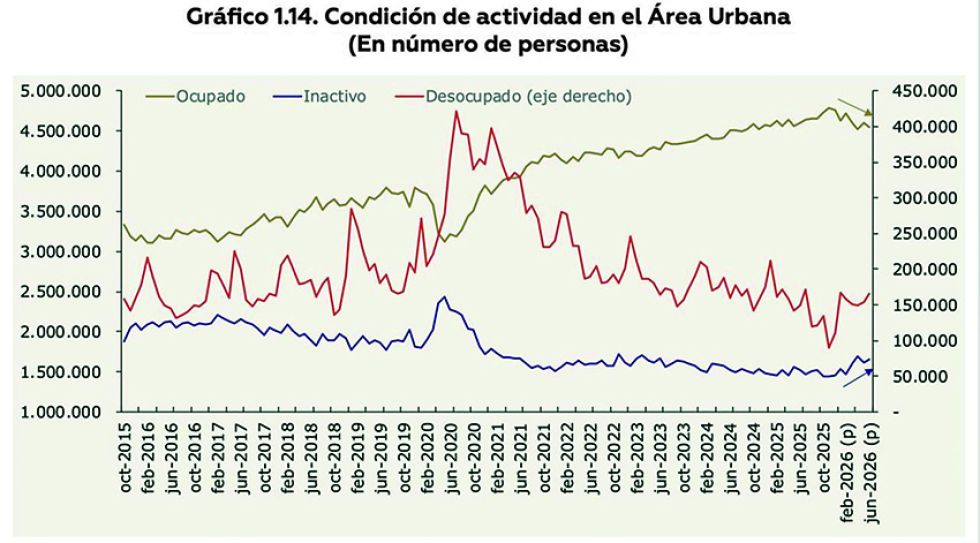
The employed population in Bolivia fell by approximately 205,000 people between the end of 2025 and June 2026, according to the Central Bank of Bolivia’s (BCB) Inflation and Monetary Policy Report. The document links the decline to the contraction of Gross Domestic Product (GDP), largely driven by the collapse of sectors such as construction, and to rising “monetary poverty,” which could reach 5.7 million people by the end of 2026.
MENOS EMPLEO
The BCB attributes the decline in employment to weaker economic activity, which reduced job opportunities and pushed people into inactivity. “The lower dynamism of economic activity reduced employment, with a transition toward inactivity,” the report states, noting that the deterioration in the labor market has persisted since the end of the COVID-19 pandemic.
The contraction in employment was consistent with declines across several sectors of the economy. At the same time, the underemployment rate — people working fewer hours than they want — rose to 8.21% of the employed population, or approximately 374,000 people. When unemployment and underemployment are combined, the labor underutilization rate reached 11.43% in June 2026.
The BCB expects these indicators to remain unfavorable through the end of the year. Underemployment could reach 8.6% of the employed population, while labor underutilization could rise to 11.6%. The report links this forecast to an expected increase in informality, in a scenario in which, according to the document, “households must engage in this type of activity.”
MORE INFORMAL EMPLOYMENT
The number of people employed in the informal sector in urban areas reached 3.2 million in June 2026, representing 69.7% of the employed population — an alarming figure. The BCB says the increase in informality has intensified since 2024, in line with periods of negative economic growth, and notes that this type of employment is characterized by lower productivity and labor income.
INCOME
Labor income has also failed to recover over the past five years, according to the report. Before the pandemic, average monthly labor income stood at 3,000 bolivianos. By October 2025, it had fallen to 2,847 bolivianos. “Although the increases in November and December 2025 are favorable, consolidating these improvements will depend on the full recovery of the real sector,” the report states.
POVERTY RISES
The report links the deterioration in the labor market to the evolution of monetary poverty — people whose income is insufficient to cover a basic basket of goods and services.
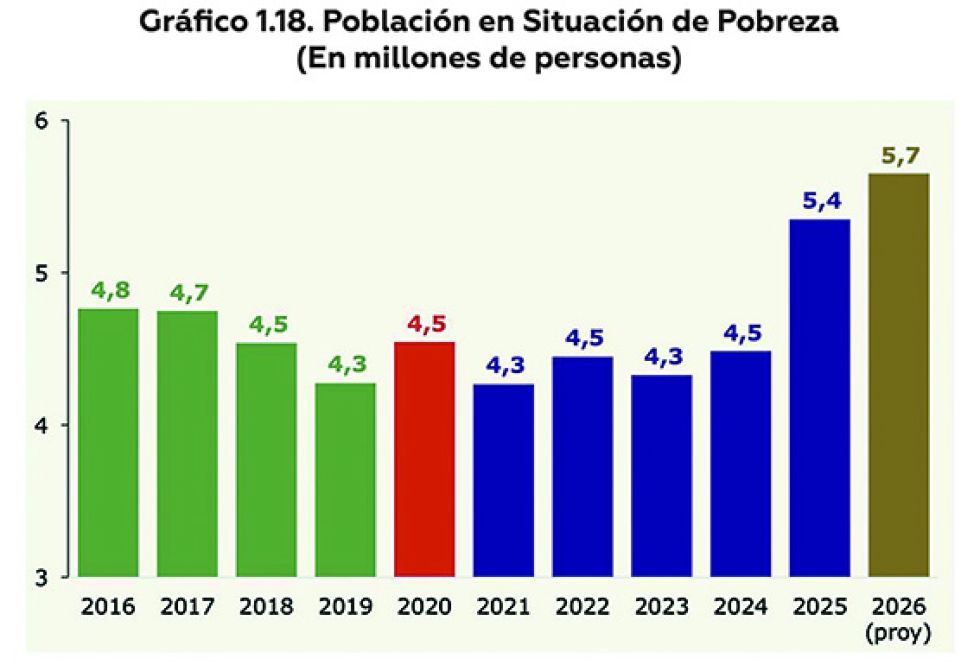
According to the BCB’s microsimulations, in 2025, 44.7% of the population, or 5.4 million people, were below the poverty line, compared with 4.5 million in 2024. The increase was attributed to inflation, which reached 20.4% in 2025.
For 2026, the BCB estimates that the number could rise to 5.7 million people if the projected inflation scenario materializes. The report specifies that “the impact of inflation is concentrated in households that allocate a larger share of their spending to food.”
GDP IN THE RED
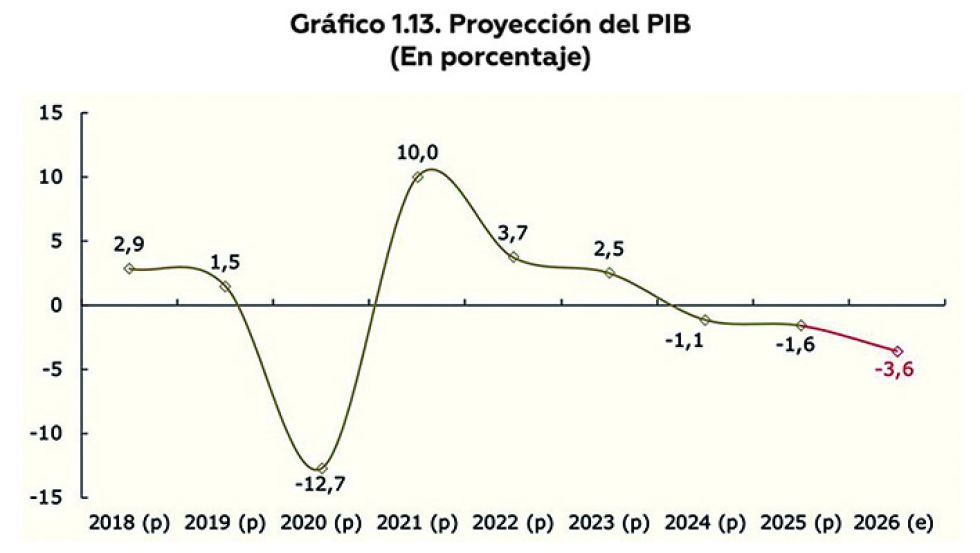
The deterioration in the labor market is occurring amid a prolonged economic contraction. The report says Bolivia’s economic activity continues “the path of deterioration that began over the past five years, a period that recorded ten quarters of decline and two consecutive years of recession.” By June 2026, GDP had accumulated a 3.34% contraction, following a slight 0.06% increase in the first quarter.
One factor behind the deterioration, according to the BCB, was “the intensification of social conflicts, which paralyzed the country’s main economic corridor” for more than 50 days in May and June — the attempted overthrow of Rodrigo Paz — disrupting supply chains. Combined with fuel shortages, this affected transportation and the distribution of goods.
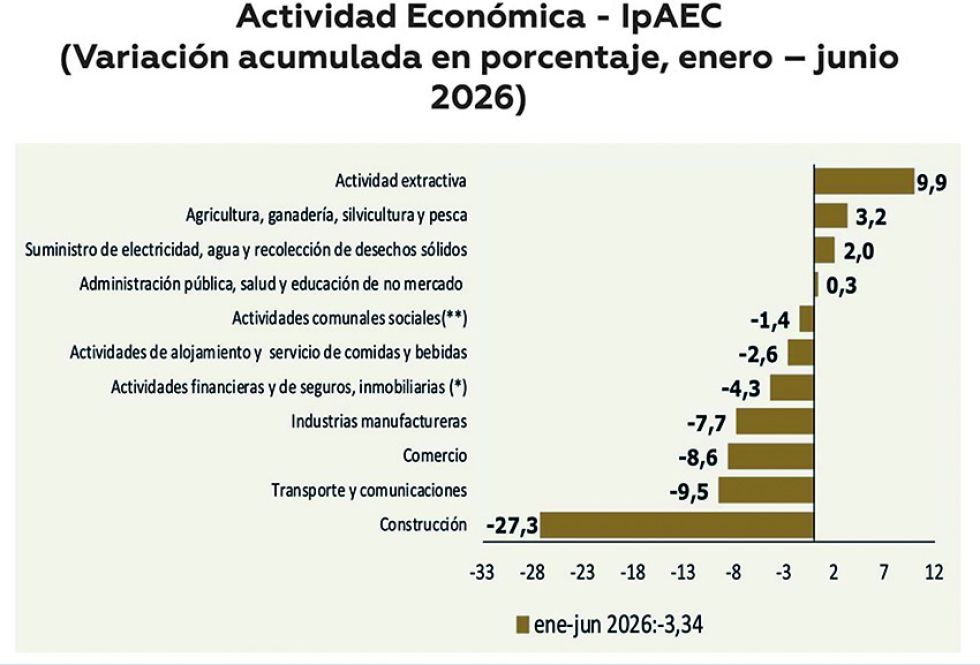
Among the sectors, construction recorded the largest decline during the first half of the year, falling 27.3% due to adjustments in public investment and difficulties supplying construction projects during the blockades. Commerce fell 8.6%, while transportation and communications contracted 9.5%.
By contrast, extractive activities — mining and hydrocarbons — were the main support for the economy, growing 9.9%, driven by favorable international prices for gold, silver and tin, despite the partial suspension of cooperative mining activity during the May and June conflicts.
Based on these factors, the BCB projects that GDP will end 2026 at around -3.6%, “as a result of the contraction in the construction sector, higher costs for imported inputs, weather-related effects and the deterioration of households’ real incomes, which has accelerated in recent years.”
INFLATION
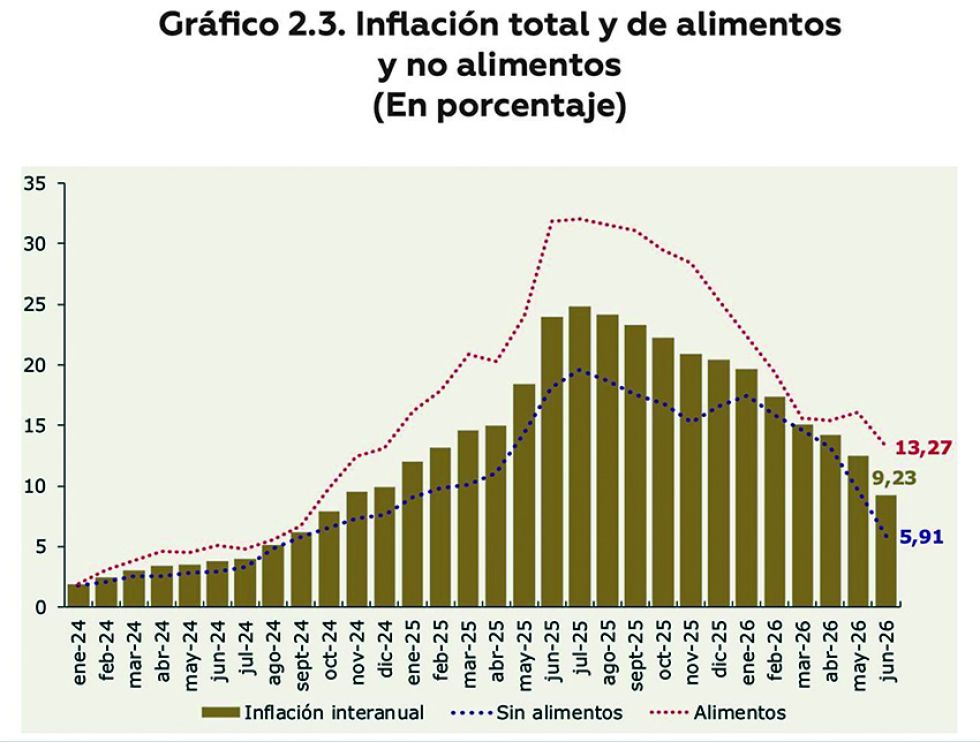
The report also records a slowdown in inflation, which fell from 20.4% at the end of 2025 to 9.23% year-on-year in June 2026. However, food inflation stood at 13.27%, above the overall rate, while inflation excluding food reached 5.91%, showing that price pressures were concentrated mainly in the food basket.
According to the BCB, the downward trend continued despite food supply shocks caused by the May and June blockades, as tight monetary policy — which reduces the amount of money circulating in the economy — contained second-round effects. “Second-round effects were moderate,” the report says, attributing this to the fact that price pressures did not spread broadly across the rest of the basket of goods and services.
The central bank projects that inflation will end 2026 at 9.22%, below its initial forecast for the year. However, it warns of upward risks associated with the exchange rate, international interest rates, weather conditions and maritime freight costs.
Source: Correo del Sur
Por Correo del Sur; Eju.tv:
Población ocupada cae en 205 mil personas en el primer semestre
La “pobreza monetaria” podría llegar a 5,7 millones de personas hacia el cierre de 2026
La población ocupada en Bolivia disminuyó en cerca de 205 mil personas entre el cierre de 2025 y junio de 2026, de acuerdo con el “Reporte de Inflación y Política Monetaria” del Banco Central de Bolivia (BCB). El documento vincula esta caída con la contracción del Producto Interno Bruto (PIB), explicada en gran medida por el desplome de sectores como en de la construcción, y con un aumento de la “pobreza monetaria”, que podría llegar a 5,7 millones de personas hacia el cierre de 2026.
MENOS EMPLEO
El BCB atribuye la caída de la ocupación al menor dinamismo de la actividad económica, que redujo las plazas de trabajo y generó una transición hacia la inactividad. “El menor dinamismo de la actividad económica redujo la ocupación, con una transición hacia la inactividad”, señala el informe, que precisa que este deterioro del mercado laboral se mantiene desde el fin de la pandemia del covid-19.
La contracción de la ocupación fue consistente con la caída registrada en distintos sectores de la economía. Junto con ello, la tasa de subocupación (personas que trabajan menos horas de las que desean) subió a 8,21% de la población ocupada, unas 374 mil personas. Al sumar desocupación y subocupación, la tasa de subutilización de la mano de obra llegó a 11,43% a junio de 2026.
El BCB proyecta que estos indicadores continúen en terreno desfavorable hacia fin de año. La subocupación llegaría a 8,6% de la población ocupada y la subutilización, a 11,6%. El informe vincula este pronóstico con un previsible aumento de la informalidad, en un escenario en el que, según el documento, “los hogares deben emplearse en este tipo de actividades”.
MÁS INFORMALIDAD
La población ocupada en el sector informal del área urbana llegó a 3,2 millones de personas en junio de 2026, el 69,7% de la población ocupada, una cifra alarmante. El BCB indica que el aumento de la informalidad se acentuó desde 2024, en línea con los periodos de crecimiento económico negativo, y recuerda que este tipo de empleo se caracteriza por una productividad y unos ingresos laborales menores.
INGRESOS
El ingreso laboral tampoco se recuperó en los últimos cinco años, de acuerdo con el informe. Antes de la pandemia, los ingresos laborales promedio se ubicaban en 3.000 bolivianos mensuales. Hacia octubre de 2025 habían caído a 2.847 bolivianos. “Si bien los repuntes de noviembre y diciembre de 2025 son favorables, la consolidación de estas mejoras dependerá de la recuperación plena del sector real”, señala el informe.
SUBE LA POBREZA
El reporte vincula el deterioro laboral con la evolución de la pobreza monetaria (personas cuyo ingreso no alcanza para cubrir una canasta básica de bienes y servicios). Según las microsimulaciones del BCB, en 2025 el 44,7% de la población, 5,4 millones de personas, se encontraba por debajo de la línea de pobreza, frente a 4,5 millones en 2024. El salto responde, según el informe, a que la inflación llegó a 20,4% en 2025. Para 2026, el BCB estima que la cifra podría subir a 5,7 millones de personas si se cumple el escenario de inflación previsto. El documento precisa que “el impacto de la inflación se concentra en hogares que destinan una mayor proporción de su gasto al consumo de alimentos”.
EL PIB, EN ROJO
El deterioro del mercado laboral ocurre en un escenario de contracción económica prolongada. El informe señala que la actividad económica boliviana continúa “la senda de deterioro iniciada en el último lustro, periodo que registró diez trimestres de decrecimiento y dos años de recesión continuos”. A junio de 2026, el PIB acumuló una caída de 3,34%, luego de un leve avance de 0,06% en el primer trimestre.
Uno de los factores detrás de este deterioro fue, según el BCB, “la intensificación de los conflictos sociales, que paralizaron el eje troncal del país” por más de 50 días en mayo y junio –el intento de derrocamiento contra Rodrigo Paz–, lo que interrumpió las cadenas de abastecimiento y, sumado a la escasez de combustible, afectó el transporte y la distribución de mercadería.
Entre los sectores, la construcción registró la mayor caída del semestre (-27,3%), por el ajuste de la inversión pública y la dificultad para abastecer obras durante los bloqueos. El comercio (-8,6%) y el transporte y las comunicaciones (-9,5%) también se contrajeron de forma significativa. En sentido contrario, la actividad extractiva (minería e hidrocarburos) fue el principal sostén del semestre, con un crecimiento de 9,9%, impulsado por el favorable comportamiento de las cotizaciones internacionales del oro, la plata y el estaño, pese a la paralización parcial de la actividad cooperativista por los conflictos de mayo y junio.
El BCB proyecta, con esos antecedentes, que el PIB cierre 2026 en torno a -3,6% “como resultado de la contracción en el sector de construcción, mayores costos en los insumos importados, efectos climatológicos y el deterioro de los ingresos reales de los hogares, el cual se vino acelerando en los últimos años”.
INFLACIÓN
El informe también reporta una desaceleración de la inflación, que pasó de 20,4% al cierre de 2025 a 9,23% interanual en junio de 2026. Al desagregar por componentes, sin embargo, la inflación de alimentos se ubicó en 13,27%, por encima del promedio general, mientras que la inflación sin alimentos llegó a 5,91%, muestra de que las presiones de precios se concentraron principalmente en la canasta alimentaria.
Según el BCB, esta trayectoria a la baja se sostuvo pese a los choques de oferta en alimentos generados por los bloqueos de mayo y junio, ya que la política monetaria contractiva (que retira dinero de circulación) contuvo los efectos de segunda vuelta. “Los efectos de segunda vuelta fueron moderados”, indica el reporte, que atribuye este resultado a que las presiones no se generalizaron al resto de la canasta de bienes y servicios.
El ente emisro proyecta que la inflación cierre 2026 en 9,22%, cifra menor a la prevista al inicio de la gestión. No obstante, advierte sobre riesgos al alza vinculados al tipo de cambio, las tasas de interés internacionales, el clima y los fletes de transporte marítimo.
Fuente: Correo del Sur
https://eju.tv/2026/08/poblacion-ocupada-cae-en-205-mil-personas-en-el-primer-semestre/


Leave a Reply