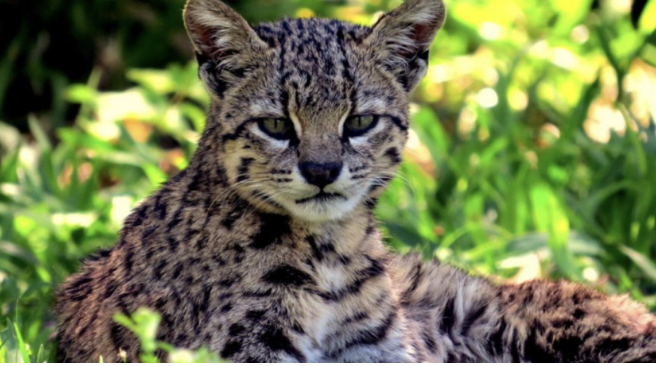
By Iván Paredes, Mongabay; El País:
Domestic Cats Are Spreading a Deadly Disease to Bolivia’s Wild Cats
Feline panleukopenia, a highly contagious virus that can kill young cats, is emerging as a new threat to wildlife as domestic animals increasingly encroach on natural habitats
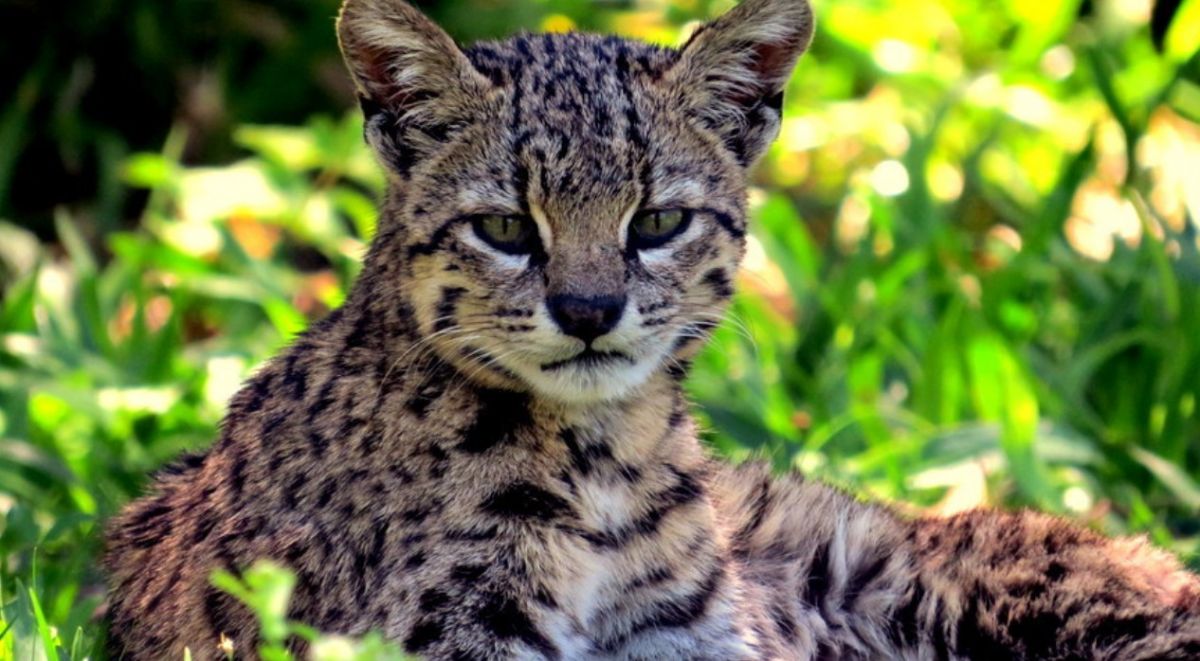 Geoffroy’s cat
A disease commonly associated with household cats is becoming a concern for wildlife conservation in Bolivia, where increasing contact between domestic animals and wild felines is creating new opportunities for infection.
Feline panleukopenia is caused by a highly resistant virus that spreads through infected bodily fluids and contaminated surfaces. It does not infect people or dogs, but it can be deadly to cats, particularly young animals.
Conservationists are now warning that unvaccinated domestic cats may be transmitting the disease to wild felines, including the Geoffroy’s cat (Leopardus geoffroyi), known locally as gato montés.
One case illustrates the risk.
In 2023, a young wild cat was taken from its den in Cochabamba and brought into an urban home as a potential pet. During the four weeks it spent outside its natural habitat, it contracted feline panleukopenia, likely after coming into contact with domestic cats.
The animal was eventually transferred to the Senda Verde wildlife refuge in La Paz. It was already severely malnourished, and the infection had progressed too far. Despite veterinary treatment, it died.
For conservation specialists, the case highlights a broader problem: the boundaries between domestic animals and wildlife are becoming increasingly blurred.
“Wild animals are being exposed to pathogens against which they have no defenses,” said Paola Nogales, coordinator of the Bolivian Feline Research Program, or PIF Bolivia.
The risk is particularly high in rural areas, where domestic cats and dogs can move freely between settlements, farms and natural ecosystems.
A disease moving across the wildlife boundary
Enzo Aliaga-Rossel, a researcher at the Institute of Ecology of the Universidad Mayor de San Andrés and a member of PIF Bolivia, describes the phenomenon as a “zoonotic spillover” linked to growing interaction between domestic animals and wildlife as ecosystems are altered.
The problem is difficult to measure.
There is significant underreporting of diseases among Bolivia’s wild felines, researchers say. Monitoring populations in remote areas requires specialized equipment, funding and permits, while sick or dead wild animals may never be examined by veterinarians.
That leaves researchers with only a partial picture of how widely the virus may already have spread.
For the Geoffroy’s cat, the disease adds another pressure to a species already facing human-driven threats.
The species occurs across several regions of Bolivia, including the southern Andes, the Chaco, the Chiquitania and the inter-Andean valleys. Its range also extends through Argentina, Paraguay, Brazil, Uruguay and Chile.
Globally, the International Union for Conservation of Nature classifies the species as Least Concern. In Bolivia, however, it is considered Near Threatened.
Illegal wildlife trafficking, hunting, roadkill and habitat loss are among its established threats. Disease transmitted by domestic animals could now add another.
Vaccinating pets could protect wildlife
Researchers say one of the simplest ways to reduce that risk is also one of the most overlooked: vaccinating domestic cats.
The feline combination vaccine protects against panleukopenia, but vaccination coverage remains limited in many rural parts of Bolivia, where veterinary services and public vaccination campaigns are scarce.
Veterinarian Freddy Verástegui says the virus attacks white blood cells and tissues where cells reproduce rapidly. The resulting disease can cause severe illness and high mortality, particularly in kittens.
Nogales says rural communities also need access to free vaccination and sterilization programs.
The lack of veterinary care in these areas, she says, is often not a matter of neglect by pet owners. Many families simply cannot afford veterinary services, while clinics and public programs may be far away or unavailable.
Keeping domestic animals healthy, researchers argue, is therefore also a conservation measure.
“Every protected domestic cat is a life saved in the wild,” Nogales said.
Wild cats are not pets
The death of the young cat at Senda Verde also illustrates another danger: removing wild kittens from their habitat.
Vicky Ossio, director of the refuge, said the animal had been separated from its natural environment for weeks before arriving at the center.
A kitten found alone in a forest is not necessarily abandoned. In most cases, its mother may simply be nearby searching for food.
Taking the animal home can interfere with its development and expose it to domestic pathogens that it would not normally encounter.
The researchers say the same principle applies to dogs and cats allowed to roam freely through forests and other natural areas. Their movement increases the number of opportunities for pathogens to pass between domestic and wild populations.
Why Tarija should pay attention
No cases of feline panleukopenia have so far been documented in wild cats in Tarija. But the department contains Chaco and valley ecosystems inhabited by the species, making prevention important even in the absence of confirmed infections.
Conservation specialists recommend keeping domestic cats and dogs vaccinated, preventing them from roaming freely near forests and never taking wild feline kittens home.
Anyone who encounters a sick or injured wild animal should avoid handling it and notify environmental authorities. Municipal Zoonosis services and organizations involved in wildlife and environmental management can assist with the response.
For Bolivia’s wild cats, conservation may increasingly depend not only on protecting forests and stopping illegal hunting, but also on controlling what domestic animals carry into those forests.
Por Iván Paredes Tamayo, Mongabay; El País:
El gato montés en Bolivia enfrenta una nueva amenaza
La panleucopenia felina, transmitida principalmente por gatos domésticos sin vacunar, amenaza también al gato montés en Bolivia. Los expertos alertan sobre un creciente contacto entre fauna silvestre y animales domésticos
Gato Montés
El avance de la panleucopenia felina en áreas rurales y suburbanas de Bolivia ha encendido las alarmas entre los especialistas en conservación. La enfermedad, ampliamente conocida en gatos domésticos, está alcanzando a los felinos silvestres debido al contacto con animales sin vacunar, poniendo en riesgo la supervivencia del gato montés (Leopardus geoffroyi).
Uno de los casos más emblemáticos ocurrió en Cochabamba. En 2023, un cachorro de gato montés fue extraído de su madriguera para convertirlo en mascota. Durante el tiempo que permaneció en una vivienda urbana contrajo panleucopenia, probablemente por contacto con gatos domésticos. Posteriormente fue trasladado al refugio Senda Verde, en La Paz, donde murió pese a los esfuerzos veterinarios.
Paola Nogales, coordinadora del Programa de Investigación de Félidos de Bolivia (PIF Bolivia), advierte que el tráfico y la captura de fauna silvestre no solo representan una amenaza por el cautiverio, sino porque exponen a estos animales a patógenos frente a los cuales no tienen defensas. Según explica, perros y gatos domésticos comparten hábitat con los felinos silvestres, especialmente en zonas rurales, favoreciendo el contagio de enfermedades.
Ubicación El gato montés habita en los Andes del sur de Bolivia, la región del Chaco, la Chiquitania y los valles interandinos
Enzo Aliaga-Rossel, investigador del Instituto de Ecología de la Universidad Mayor de San Andrés (UMSA) y miembro del PIF Bolivia, señala que este fenómeno responde a un “salto zoonótico”, provocado por la creciente interacción entre fauna silvestre y animales domésticos debido a la alteración de los ecosistemas.
La panleucopenia felina se transmite por contacto con fluidos o superficies contaminadas y es un virus extremadamente resistente. Aunque no afecta a los seres humanos ni a los perros, resulta altamente letal para diversas especies de felinos, incluidos los gatos monteses.
Los especialistas coinciden en que existe un importante subregistro de casos en Bolivia. El monitoreo de poblaciones silvestres requiere recursos, tecnología y permisos especiales, por lo que todavía se conoce poco sobre la verdadera magnitud del problema.
Una especie vulnerable
El gato montés habita en los Andes del sur de Bolivia, la región del Chaco, la Chiquitania y los valles interandinos. También se distribuye por Argentina, Paraguay, Brasil, Uruguay y Chile. Aunque la Unión Internacional para la Conservación de la Naturaleza (UICN) lo clasifica globalmente como una especie de Preocupación Menor, en Bolivia está considerado Casi Amenazado.
A las amenazas tradicionales —como el tráfico ilegal, la caza, los atropellos y la pérdida de hábitat— ahora se suma la transmisión de enfermedades provenientes de animales domésticos.
La prevención está en las mascotas
Aliaga-Rossel sostiene que la medida más efectiva es la vacunación de los gatos domésticos, especialmente en las áreas rurales donde las campañas sanitarias son prácticamente inexistentes. La vacuna triple felina ofrece una protección eficaz frente a la panleucopenia.
El veterinario Freddy Verástegui coincide en que la inmunización resulta fundamental. Explica que la enfermedad ataca los glóbulos blancos y órganos donde las células se multiplican rápidamente, provocando una elevada mortalidad, especialmente en ejemplares jóvenes.
Nogales añade que también son necesarias campañas públicas de esterilización y vacunación gratuita en comunidades rurales. En muchas de ellas, afirma, los animales no reciben atención veterinaria no por falta de interés de sus propietarios, sino por limitaciones económicas y ausencia de servicios.
Un problema que puede evitarse
La directora del refugio Senda Verde, Vicky Ossio, recuerda que el cachorro fallecido pasó cuatro semanas fuera de su hábitat antes de llegar al centro de rehabilitación. Cuando fue rescatado ya estaba desnutrido y el virus había avanzado demasiado.
Su mensaje es claro: los gatos monteses no son mascotas. Si una persona encuentra una cría en el bosque, lo más probable es que la madre esté cerca buscando alimento. Llevarla a casa no solo altera su desarrollo, sino que puede condenarla a contraer enfermedades mortales.
Los investigadores alertan de que el libre desplazamiento de perros y gatos domésticos por ecosistemas naturales incrementa el riesgo de nuevos contagios. Como resume Paola Nogales: “Cada gato doméstico protegido es una vida silvestre salvada”. Vacunar, desparasitar y esterilizar a las mascotas no solo protege su salud, sino que también constituye una de las principales herramientas para conservar la fauna silvestre boliviana.
Tarija, también debe tomar precauciones
Aunque hasta el momento no se han documentado casos de panleucopenia en gatos monteses de Tarija, el departamento comparte ecosistemas de Chaco y valles donde habita esta especie.
La presencia de gatos y perros domésticos en áreas rurales puede favorecer el contacto con fauna silvestre. Por ello, la prevención pasa por mantener vacunadas a las mascotas, evitar que deambulen libremente cerca de bosques y no recoger ni convertir en mascotas a crías de felinos silvestres.
Ante un animal enfermo o herido, lo recomendable es avisar a las autoridades ambientales y no manipularlo. Para ello se puede contactar con Zoonosis municipal u otras ONG relacionadas a la gestión ambiental.
https://elpais.bo/tarija/20260809_el-gato-montes-en-bolivia-enfrenta-una-nueva-amenaza.html


Leave a Reply