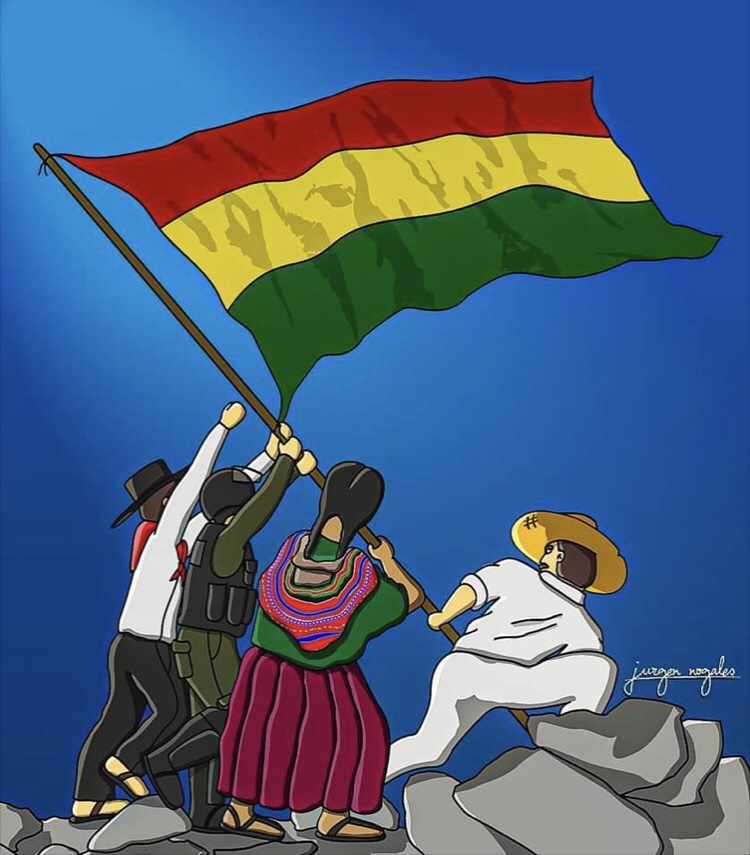
By Carlos Corz, Vision 360:
Bolivia will mark its 201st anniversary on Aug. 6 facing many of the same political, regional and social divisions that overshadowed last year’s bicentennial celebrations, as President Rodrigo Paz seeks support for a national reconciliation pact.
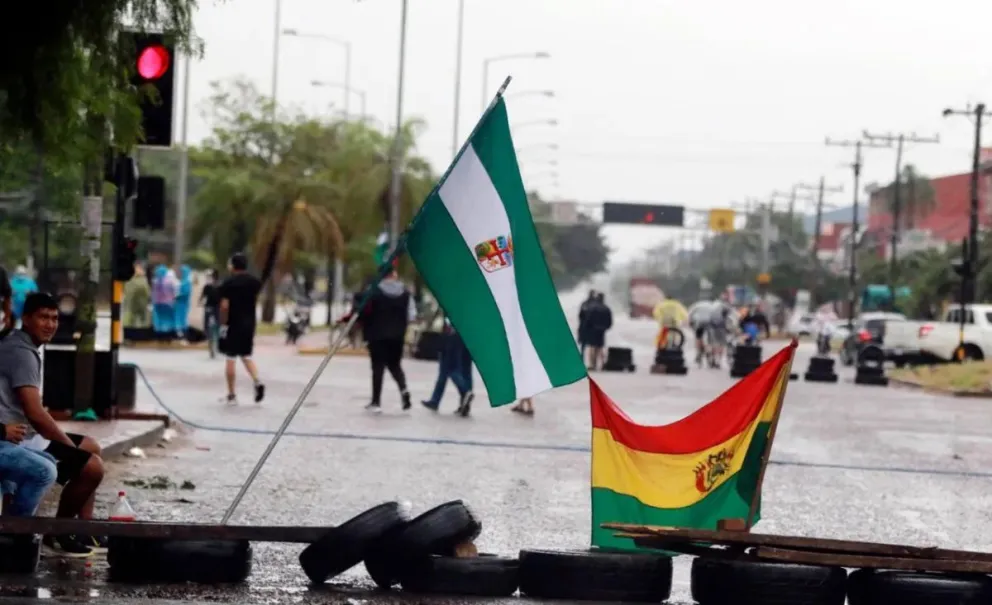
In Santa Cruz, there was a 36-day strike against Luis Arce in 2022, demanding that the census be brought forward. Ultimately, the process was not expedited. Photo: ABI
The official ceremony will take place in Sucre, the country’s constitutional capital, with little of the fanfare that typically accompanies national milestones. Instead, attention remains focused on deep-rooted tensions between eastern and western Bolivia, urban and rural populations, and competing visions of the country’s future.
“The wounds that run through the country today did not emerge recently. Bolivia carries historical tensions,” political analyst and former La Paz councilman Jorge Dulon said.
Those divisions stem from longstanding disputes over centralization, regional inequalities, social exclusion and the challenge of forging a shared national identity in one of Latin America’s most diverse countries, analysts say.
The debate intensified during the nearly two decades of rule by the Movement Toward Socialism (MAS), the political movement led by former President Evo Morales and later by Luis Arce. That period transformed Bolivia from a republic into a Plurinational State, expanding political representation for historically marginalized groups while also deepening regional and political rivalries.
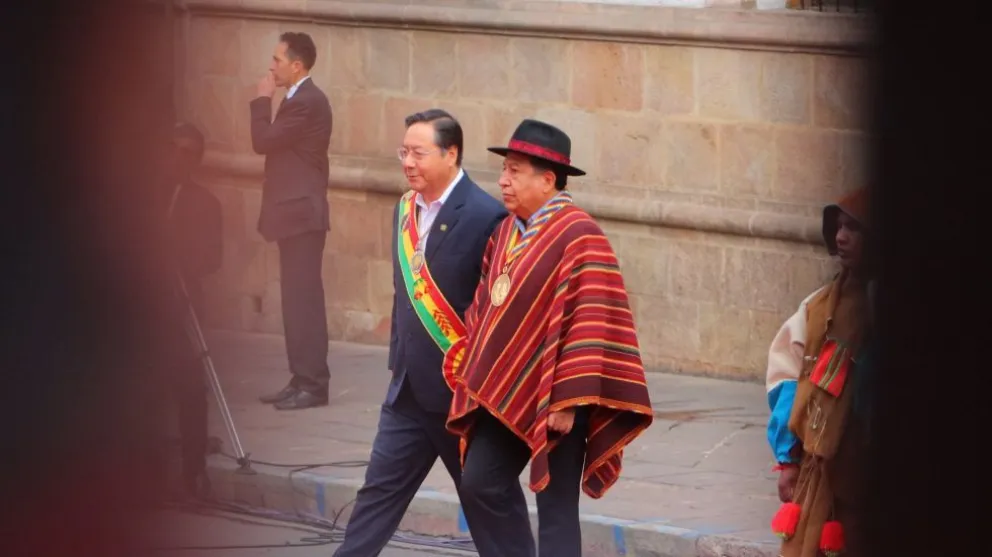
Analyst Erika Brockmann describes the country’s fractures as territorial, ethnic-cultural and socioeconomic in nature, arguing that several political processes “instead of contributing to the repair of these tensions, have actually deepened them.”
Economic disparities remain evident. According to official data, extreme poverty in 2025 reached 31.5% in rural areas, compared with 10.2% in urban centers.
Regional tensions have also resurfaced despite more than a decade of decentralization efforts. Yet recent events highlighted the country’s economic interdependence. A 53-day blockade disrupted supply chains, isolated major cities including La Paz and El Alto, and curtailed export routes, exposing the dependence of both eastern and western regions on one another.
“This notion of east versus west has been distorted by recent conflicts because we have realized that we are interdependent,” Brockmann said.
For lawmaker Lissa Claros, Bolivia must move beyond regionalist rhetoric if it hopes to overcome its divisions.
“The only vision of statehood, the only vision of country, the only vision of development is one in which we move forward together,” she said. “If we maintain only a regionalist vision, a vision of selfishness, we will never be able to develop or overcome the gaps that have caused us so much harm.”
Paz, who ended a 19-year political cycle dominated by MAS governments, has made national reconciliation a central objective of his administration. Shortly after taking office, he faced protests led by peasant groups, labor leaders and Morales himself, underscoring the fragility of the political environment.
“After years marked by permanent confrontation, Bolivia needs to replace the logic of defeating an adversary with the logic of jointly building the state,” Dulon said.
The government has outlined plans to pursue constitutional reforms and legislation aimed at attracting investment in strategic sectors including hydrocarbons, energy and mining. It is also seeking greater cooperation with regional governments as part of a broader discussion on autonomy and federalism.
Analysts say the success of those initiatives will depend on the administration’s ability to build political consensus in a fragmented landscape.
“He has to build a pact,” Brockmann said. “Democratic institutions are essential, but they become much weaker in the absence of political parties.”
As Bolivia enters its third century as an independent nation, many observers argue that the country’s future will depend less on political leaders than on its ability to bridge long-standing divisions.
“Bolivia’s future will depend less on who governs and much more on our ability to reconnect as free citizens, diverse yet equal in dignity, capable of debating without destroying one another and of building a common project that transcends political circumstances,” Dulon said.
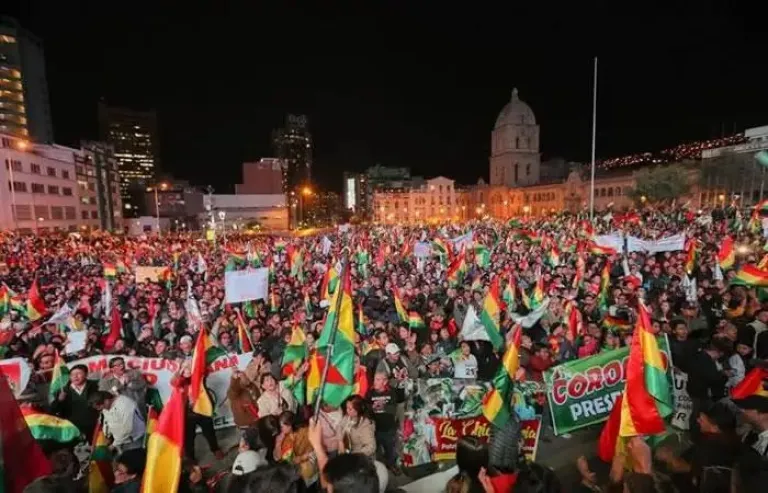
Por Carlos Corz Portillo, Vision 360:
El sentimiento regionalista es una constante y cobró mayor fuerza, aunque el conflicto por los 53 días de bloqueo demostró que oriente y occidente se necesitan y complementan.
En Santa Cruz hubo un paro de 36 días en contra de Luis Arce, en 2022, exigiendo adelantar el censo. Al final, no se adelantó el proceso. Foto: ABI
El Bicentenario de Bolivia pasó casi desapercibido, eclipsado por un feroz cerco político y de polarización en contra del ocasional inquilino del poder, Luis Arce. Un año después, poco ha cambiado: en puertas de los 201 años, resurgen esas viejas heridas de la división campo-ciudad, del regionalismo latente y de la desconfianza, ahora en medio de un intento de pacto o reconciliación nacional.
No se anuncia nada extraordinario para celebrar los 201 años del nacimiento de Bolivia, aquel 6 de agosto de 1825. El acto central será en Sucre, en la Casa de la Libertad, el histórico testigo de los primeros pasos de la República, con los libertadores Simón Bolívar y Antonio José de Sucre, frente a un devenir que ahora se identifica como Estado Plurinacional.
A lo largo de su historia, el país tuvo 19 constituciones y unos 66 presidentes, que fueron responsables de ir construyendo, con sus yerros y aciertos, la nación que conocemos. Rodrigo Paz es el actual mandatario, quien al llegar al poder terminó con un ciclo político de 19 años que inauguró Evo Morales y concluyó Arce de la mano del ahora debilitado Movimiento Al Socialismo (MAS).
Justamente este período marcó el paso de la República al Estado Plurinacional, lo cual reanimó en la historia reciente las viejas heridas regionalistas y de campo-ciudad.
“Las heridas que hoy atraviesan al país no nacieron recientemente. Bolivia arrastra tensiones históricas”, aseguró el analista político y exconcejal de La Paz, Jorge Dulon.
A decir del analista, esas fisuras están relacionadas con el centralismo, las desigualdades regionales, la exclusión de amplios sectores sociales, las brechas entre el mundo urbano y rural y la dificultad para construir una identidad nacional que integre plenamente su enorme diversidad, pese a su reconocimiento constitucional.
Y no es una lectura aislada; es más, puede resumirse en tres dimensiones: “fisura o tensión territorial”, “étnico-cultural” y “socioeconómico-productiva”, como lo plantea la analista Erika Brockmann, para quien, contrariamente a lo que se pudiera pensar, hubo “procesos políticos que, en lugar de contribuir a la reparación de estas (tensiones), han contribuido más bien a la profundización de las mismas”.
Según datos del Instituto Nacional de Estadística (INE), la pobreza extrema golpea más al área rural que a la urbana. En 2025, la pobreza extrema en el área rural fue de 31,5% y de 10,2% en el área urbana; es decir, el campo triplica a la ciudad. En números absolutos, de casi 2 millones de personas en situación de pobreza extrema en 2025, 1,15 millones viven en el área rural y 845.000 en la urbana.
Mientras tanto, el sentimiento regionalista es una constante y ha cobrado mayor fuerza en los últimos años, aunque el conflicto por los 53 días de bloqueo demostró que oriente y occidente se necesitan y complementan. La Ley de Autonomías de 2010 no terminó de cerrar este debate que alimentó los conflictos políticos y que hoy se perfila como un factor de unidad de las regiones contra el gobierno por la consigna del “50/50”.
Las sombras del pasado
La llegada al poder de Morales se debió a un profundo descontento de la población frente a la clase política tradicional; ganó las elecciones con más del 50% de la preferencia electoral, algo poco usual. Las tensiones fueron una característica de su gobierno en sus primeros años hasta el referéndum revocatorio de 2008, el cual ganó, logrando frenar temporalmente la resistencia regional.
Durante su administración, utilizó el discurso de “indígenas-campesinos versus q’aras (blancos)” para confrontar a sus detractores y justificar la crisis de 2019, cuando terminó renunciando en medio de denuncias de fraude electoral. Para la diputada Lissa Claros, el expresidente profundizó el regionalismo oriente-occidente por intereses políticos de permanencia en el poder.
“(La división en la sociedad) se ha ahondado muchísimo más en la época de Evo Morales, donde se ha intentado dividir con una discriminación contra aquellos que puedan ser, por ejemplo, del oriente. Entonces, este sentimiento ha conllevado a la respuesta errónea de muchos líderes políticos también del oriente en contra del occidente”, advirtió la legisladora.
Por su parte, Dulon considera que esta compleja situación de polarización no es responsabilidad de un solo actor político, “sino que también fue alimentada por distintos sectores de la oposición, por discursos maximalistas, por el uso intensivo de las redes sociales para amplificar el enfrentamiento y por una cultura política que premió la confrontación antes que la deliberación”.
Cuando Bolivia llegó a sus 200 años de independencia, estas tensiones estaban al límite y se canalizaron en una feroz oposición al gobierno de Arce, tanto en las calles como en el Legislativo. La oposición política le cerró cualquier acceso a créditos internacionales o leyes que pudieran mitigar la crisis, principalmente económica, que enfrentaba y que aún persiste.
A esa complicada situación contribuyó también Morales, tras el rompimiento de sus relaciones con Arce debido a pugnas por el poder. Las tensiones políticas y regionales terminaron por minar el ciclo político que inauguró el líder del MAS junto a los indígenas, campesinos y la clase trabajadora, dando paso a una nueva etapa bajo la presidencia de Paz.
Un nuevo escenario
Ni bien empezó el nuevo gobierno, tuvo que enfrentar un conflicto social liderado por campesinos, dirigentes de la Central Obrera Boliviana (COB) y el propio Evo Morales, lo que refleja la persistente tensión con la que Bolivia entra en sus 201 años. El conflicto fue conjurado y Paz ofreció construir un gran pacto nacional de reconciliación.
“Después de años marcados por la confrontación permanente, Bolivia necesita reemplazar la lógica de la victoria sobre el adversario por la lógica de la construcción compartida del Estado”, reflexionó Dulon sobre la importancia de sentar las bases de esta reconciliación nacional con una mirada de Estado, unidad y desarrollo.
Un elemento que contribuye a este desafío es la constatación práctica de que el oriente sin el occidente poco podrá hacer, al igual que el occidente sin el oriente. Los 53 días de bloqueo aislaron a ciudades como La Paz y El Alto y cortaron las vías de exportación e importación a través del Pacífico, lo que frenó gran parte del aparato productivo del oriente y evidenció la interdependencia regional.
Justamente, Brockmann se detiene en este aspecto y destaca su importancia para encauzar la historia hacia una reconciliación:
“Esto de oriente y occidente se ha desvirtuado en los últimos conflictos, porque nos hemos dado cuenta de que somos interdependientes”, aseguró, añadiendo que se deben sumar valores como la empatía, la proactividad y la creatividad.
Mientras la diputada Claros ve necesario despojarse de los discursos regionalistas y de “la visión de egoísmo” para empezar a construir esta nueva unidad en la que, afirmó, desempeña un papel clave el gobierno de Paz, el cual se ha trazado la tarea de fundar un nuevo Estado y un modelo económico que reemplace al del MAS.
Desafíos pendientes en lo político y territorial
Por el momento, no hay nada definido sobre la construcción de este nuevo pacto o reconciliación que anunció el presidente Paz tras el prolongado conflicto. Sin embargo, su primer gran desafío radica en la construcción de consensos políticos indispensables para aprobar leyes y atraer inversiones a sectores estratégicos de la economía.
En el ámbito territorial y autonómico, el Ejecutivo tiene prevista una reunión con los gobernadores de los nueve departamentos el 5 de agosto, con el fin de iniciar este camino orientado a profundizar las autonomías bajo una perspectiva federal.
“(Paz) tiene que hacer un pacto; creo que se ha dado cuenta de que la representación política en el Parlamento y en la actuación es muy importante. Las instituciones democráticas son muy importantes, pero se debilitan mucho ante la ausencia de partidos políticos. Hay que asegurar la presencia de organizaciones que canalicen también la representación de lo popular”, consideró Brockmann.
Sucre volverá a ser sede de la celebración de los 201 años de fundación de Bolivia, en un acto que se perfila estrictamente protocolar y distante del tenso escenario que cobijó al Bicentenario, marcado entonces por incidentes e insultos contra el expresidente Arce.
Hubo avances en Bolivia y los próximos pasos deben depender más de la sociedad
Bolivia nació a la vida independiente el 6 de agosto de 1825 con una Constitución Política del Estado caracterizada por una visión republicana que se mantuvo por 184 años. El punto de inflexión se dio con la aprobación, en medio de tensiones, de la nueva Constitución en 2009, que declaró a Bolivia como un Estado Plurinacional.
Este cambio generó condiciones para la incorporación de actores históricamente marginados en la política y en las decisiones del Estado, pero también reavivó tensiones político-regionales. El analista y exconcejal Jorge Dulon consideró que en la historia reciente hubo avances importantes y que el cambio no solo depende de los gobiernos, sino de la misma sociedad.
“Bolivia ha logrado avances importantes en materia de inclusión social, reconocimiento de la diversidad cultural, descentralización y ampliación de derechos”, destacó, sin dejar de mencionar que, de forma paralela, se agudizaron las diferencias políticas como producto de la narrativa de los actores del sector.
El nuevo pacto social sobre el que descansan los andamiajes del Estado reconoció por primera vez en la historia a 36 pueblos indígenas, aunque limitándose a hacer referencia a su lengua. Evo Morales fue el artífice de este proceso y consideró que aquello le otorgaba el derecho de construir un nuevo Estado, el cual hoy es cuestionado y señalado de aparatoso y corrupto.
Sin embargo, las tensiones generadas persisten y, ahora, bajo el gobierno del presidente Rodrigo Paz, se habla de reformas a la Constitución, aunque sin precisar mayores detalles.
“El futuro de Bolivia dependerá menos de quién gobierne y mucho más de nuestra capacidad para reencontrarnos como ciudadanos libres, diversos e iguales en dignidad, capaces de debatir sin destruirnos y de construir un proyecto común que trascienda las coyunturas políticas”, reflexionó sobre las condiciones indispensables para encarar el futuro.
Dentro del plan o proyecto de reconciliación que plantea la actual administración figura la reforma constitucional, acompañada de un paquete de leyes orientadas a introducir cambios en la estructura jurídica vigente, con el propósito de atraer inversiones hacia sectores estratégicos como hidrocarburos, energía y minería.
Para la diputada Lissa Claros, la unidad resulta determinante a la hora de concebir una Bolivia alejada de sus viejas heridas políticas, regionales y étnicas.
“La única visión de Estado, visión de país, visión de desarrollo es si vamos unidos. Si vamos a mantener la visión únicamente regionalista, la visión de egoísmo, jamás vamos a poder desarrollar y superar estas brechas que nos han hecho tanto daño”, afirmó.


Leave a Reply