
By Carlos Corz, Vision 360:
Doria Medina Calls on Government to Curb Dollar Surge and Prevent It from “Disrupting” the Economy
The exchange rate of the U.S. dollar has been rising steadily since the introduction of the “flexible” exchange-rate policy.
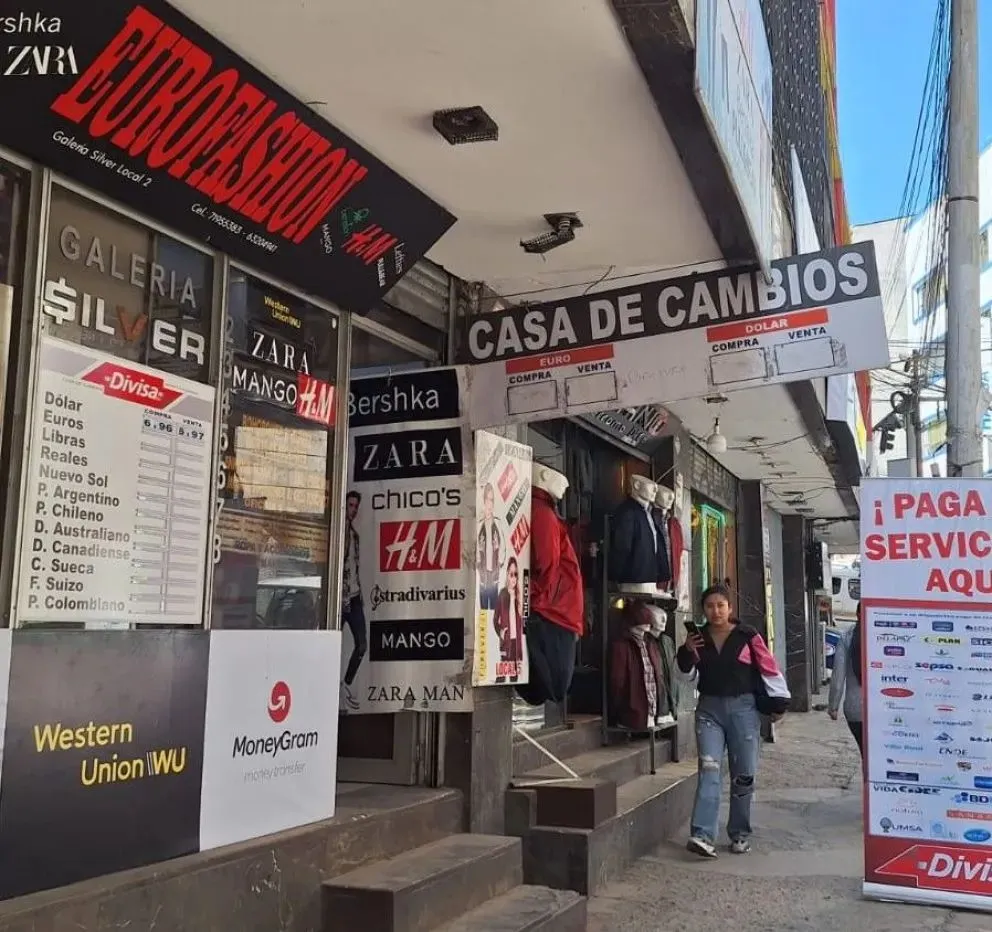
A currency exchange office in the city of La Paz. File photo
The sustained increase in the dollar’s exchange rate is “too sharp and too rapid,” and the government should introduce measures to “moderate the trend” and prevent it from affecting and disrupting the cost structure of the broader economy, businessman and politician Samuel Doria Medina said.
“The Central Bank does not have the resources to deal with this behavior. It is urgent for the government to reconsider the exchange-rate system and introduce mechanisms to moderate the market’s upward trend,” he insisted.
As of Wednesday, the U.S. dollar exchange rate had risen to Bs 11, breaking through the Bs 10 threshold and accumulating an increase of Bs 1.27 since the implementation of the new economic policy.
Since June 29, Bolivia has operated under a “flexible” exchange-rate regime for the U.S. dollar; that is, a system in which the currency fluctuates daily according to market supply and demand.
Started at Bs 9.73
The measure took effect with an initial exchange rate of Bs 9.73. Since then, the rate has risen steadily and, at its peak, recorded daily increases of up to 14 centavos.
“We must prevent this price from disrupting the costs of the rest of the economy,” Doria Medina demanded, referring to the fact that the prices of various products—especially imported goods—are increasingly being adjusted in line with the dollar’s continual rise.
Por Carlos Corz Portillo, Vision 360:
Doria Medina pide al Gobierno frenar el alza del dólar y evitar que “desordene” la economía
La cotización de la divisa estadounidense experimenta una subida constante desde la vigencia de la política cambiaria “flexible”.
Una casa de cambios en la ciudad de La Paz. Foto archivo
El alza sostenida en la cotización del dólar es “demasiado aguda y rápida”, por lo que el Gobierno debe introducir mecanismos para “moderar la tendencia” y evitar que afecte y desordene la estructura de costos del resto de la economía, afirmó el empresario y político Samuel Doria Medina.
“El Banco Central no tiene recursos para enfrentar este comportamiento. Es urgente que el Gobierno se replantee el sistema cambiario e introduzca mecanismos para moderar la tendencia alcista del mercado”, insistió.
Para este miércoles, la cotización de la divisa estadounidense subió a Bs 11, rompiendo la barrera de los Bs 10 y acumulando un incremento de Bs 1,27 desde la aplicación de la nueva política económica.
Desde el 29 de junio rige en Bolivia una cotización “flexible” de la divisa estadounidense; es decir, un esquema en el que la moneda fluctúa diariamente en función de la oferta y la demanda del mercado.
Comenzó con Bs 9,73
La medida entró en vigencia con un tipo de cambio inicial de Bs 9,73. Desde entonces, la cotización ha registrado un incremento constante que, en su punto más alto, alcanzó alzas diarias de hasta 14 centavos.
“Hay que evitar que este precio desordene los costos del resto de la economía”, exigió Doria Medina, en alusión a que los precios de varios productos —principalmente los importados— se están indexando al constante incremento del dólar.


Leave a Reply