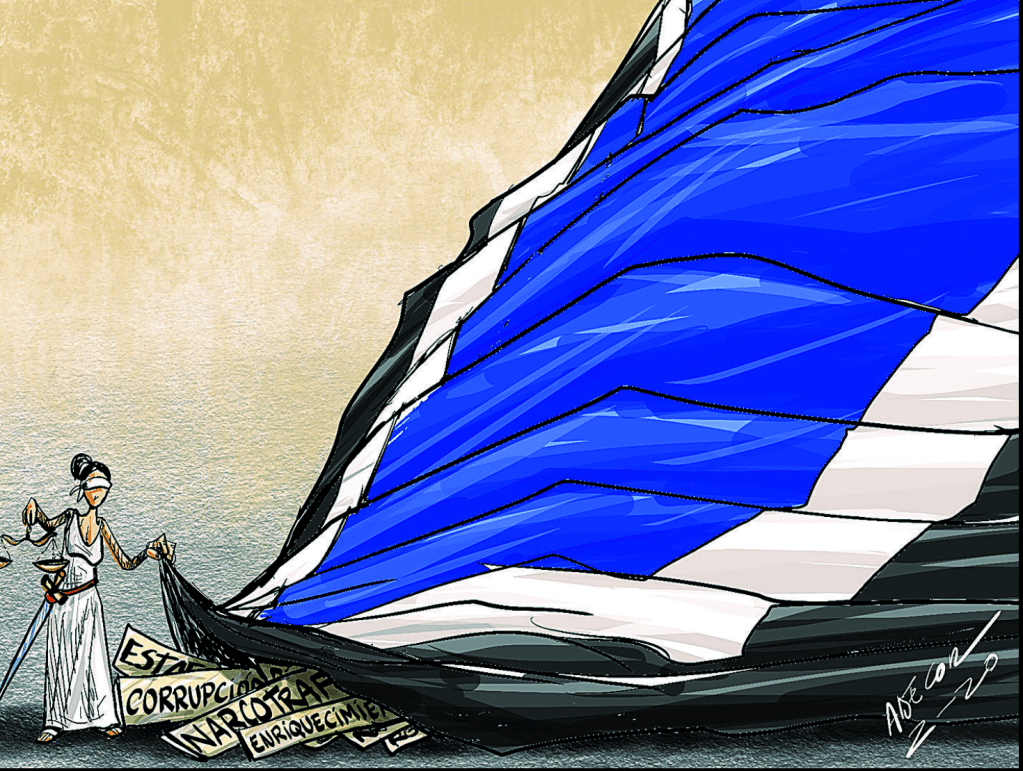
By Álvaro Ríos, Brujula Digital:
During the 50 days of the recent criminal blockades in Bolivia, I came to understand that the cultural battle waged by the so-called anti-capitalist left remains as relevant as ever and continues to hold an unchallenged hegemony. Rodrigo Paz won political power, but he did not win the battle of ideas—the narrative—and that is why his effort to rescue the country from the deep energy and economic collapse he inherited will be an uphill struggle and may ultimately become his downfall.
During those fateful 50 days, I observed that, beyond demands for the government’s resignation, the Bolivian Workers’ Center (COB) and other social movements aligned with former president Evo Morales promoted a series of slogans that have shaped Bolivia’s political narrative over the past 25 years. These ideas deserve examination.
The most significant—and the one that struck me the most—was the claim that the current government is moving toward handing over Bolivia’s natural resources to be plundered. Among the resources mentioned were lithium, rare earth minerals, hydrocarbons, and others. In practical terms, the narrative amounts to a categorical rejection of new mining, lithium, and hydrocarbon legislation designed to attract private investment.
This argument is deeply cynical. During the 20 years of MAS rule, approximately 12 TCF (trillion cubic feet) of natural gas and about 360 million barrels of oil and condensates were extracted. These reserves had been discovered during the final decade of the 1990s, thanks to an investment-friendly model that successfully attracted capital to the country.
Unfortunately, under the state-led model, Bolivia’s natural gas reserves had fallen by the end of 2025 to an estimated 2.3 TCF, while liquid hydrocarbon reserves stood at just 8 million barrels. Natural gas production declined from 61 million cubic meters per day in 2015 to 24 million in 2025, and by 2029 the country is expected to begin importing gas.
In 2026, domestic demand for liquefied petroleum gas (LPG) has already overtaken supply, making imports necessary from now on, despite the fact that Bolivia once exported millions of tons of the fuel. Gas and liquid hydrocarbons were depleted, reserves were not replenished through new investment, and the country was left energy bankrupt—dependent on imports and short of foreign currency.
What is even more difficult to comprehend about this rhetoric from the self-proclaimed left is its disregard for how the revenues were spent. Between 2005 and 2025, Bolivia earned approximately $65 billion from exports of natural gas, LPG, and reconstituted crude oil. The gas wealth simply vanished in the country of gas. At the current pace, unless major reforms are implemented to attract new investment, Bolivia could be importing around $5.5 billion worth of energy annually by 2035.
Another narrative frequently heard during the blockades concerned the supposed “sell-off” or privatization of the many state-owned companies created over the past two decades. The reality is that YPFB was plundered in virtually every possible way during the MAS years. The company was forced to drill “patriotic wells” and build all kinds of facilities without feasibility studies—plants that were unnecessary, poorly located, lacking raw materials, awarded without proper bidding processes, and often accompanied by kickbacks.
Political interference and corruption have left YPFB in an unsustainable position. Yet there are still demands to preserve these enterprises, even though most operate at a loss and are effectively unmanageable. ENDE has not escaped this reality either. The government now finds itself trapped, unsure of how to proceed, because the narrative has prevailed over reality.
A third major theme in the narrative is the claim that energy subsidies are being removed to make ordinary people suffer. What is conveniently forgotten is that former president Evo Morales once raised fuel prices himself, only to reverse the decision. Fortunately for him, he still had substantial gas and condensate reserves that provided the foreign currency needed to support the subsidies. Later, Luis Arce sought to hold a referendum on removing subsidies. Once again, the narrative prevailed, and energy subsidies remain politically untouchable.
A fourth element of the narrative is the demand that there be no fuel shortages while simultaneously insisting that Bolivia should neither turn to the IMF nor seek financing from other international institutions to secure energy supplies. During the MAS administrations, Bolivia’s internal and external debt rose from $7 billion in 2005 to $46 billion in 2025, despite the enormous revenues generated by hydrocarbon exports.
Unless President Paz’s government gains the political strength to overturn this deeply entrenched left-wing narrative—that it is always the political right that plunders natural resources, removes subsidies, and closes money-losing state enterprises—it will find it extremely difficult to implement reforms, attract investment, and revive the economy. In the meantime, energy shortages will continue.
Álvaro Ríos is a former Minister of Hydrocarbons of Bolivia and currently Managing Partner of Gas Energy Latin America.
Por Álvaro Ríos, Brujula Digital:
Durante los 50 días de los recientes criminales bloqueos en Bolivia comprendí que la batalla cultural en Bolivia de la denominada izquierda anticapitalista sigue tan vigente y mantiene su hegemonía intacta. Rodrigo Paz ganó el poder, pero no ganó la batalla de las ideas; es decir, el relato, y por eso su gestión para salvar al país del profundo colapso energético y económico que recibió se le hará cuesta arriba y, tal vez, sea su tumba.
En esos fatídicos 50 días pude darme cuenta de que desde la COB y otros movimientos sociales, establecidos en el país a la cabeza del expresidente Evo Morales, surgían fuera del pedido de renuncia una serie de consignas que marcaron el relato de los últimos 25 años en Bolivia, y que me permito exponer y analizar a continuación.
La más importante, y la que más me impactó, fue la fuerte idea de que el gobierno actual estaba camino a entregar los recursos naturales para que sean saqueados. Entre los recursos naturales se mencionaban litio, tierras raras, hidrocarburos y otros. Es decir, en el relato, un rotundo no a nuevas leyes en minería, litio, hidrocarburos y otros para traer inversión privada al país.
Esto es tremendamente cínico, debido a que durante los 20 años de gobierno del MAS se saquearon aproximadamente 12 TCF (trillones americanos de pies cúbicos) y cerca de 360 millones de barriles (MMBBLS) de petróleo y condensado. Estas reservas fueron descubiertas durante la última década de los 90, merced al modelo de apertura a inversiones que se logró en el país.
Lastimosamente, con el modelo estatista, a finales de 2025 las reservas de gas natural se estiman en 2,3 TCF y 8 MMBBLS las de líquidos. La producción de gas natural ha caído de 61 MMMCD, el 2015, a 24 MMMCD, el 2025, y el 2029 el país comenzará a importar el energético.
Este 2026 ya la oferta/demanda de GLP se ha cruzado y se necesitará importar este producto de ahora en adelante, cuando antes se exportaron millones de toneladas. Se saqueó el gas y los líquidos, no se repusieron reservas con nuevas inversiones y dejaron un país quebrado energéticamente, dependiente de la importación y sin dólares.
Lo que resulta más inconcebible de esta retórica cultural de la supuesta izquierda es que se olvidan del despilfarro de los ingresos recibidos. Entre 2005 y 2025 se recibieron por exportaciones de gas natural, GLP y crudo reconstituido, aproximadamente $us 65.000 millones (MMUSD). El gas se hizo gas en el país del gas. Al paso que vamos, si no hacemos cambios profundos para nuevas inversiones, el 2035 el país necesitará importar cerca de 5.500 MMUSD de energía.
Otro relato que se escuchó con mucha fuerza fue sobre la enajenación y privatización de las numerosas empresas estatales creadas. Lo cierto es que, durante los 20 años del MAS, se saqueó a YPFB de todas las formas posibles. Se la hizo perforar pozos patrióticos, se la hizo construir plantas de todo tipo sin estudios de factibilidad, innecesarias, mal ubicadas, sin materia prima, sin licitaciones y con el diezmo de por medio.
El manejo político y corrupto ha dejado a YPFB en una situación insostenible. Pero se exige mantenerlas a pesar de que la generalidad pierde plata y son inmanejables. ENDE tampoco escapa a esta triste realidad. Ahora el gobierno está atrapado sin salida y no sabe qué hacer porque relato gana a realidad.
Vamos por el tercer tema. Van a quitar los subsidios a la energía para hacer sufrir al pueblo. Se olvidan de que el expresidente Evo Morales subió los precios, pero se retractó. Felizmente tenía enormes reservas de gas y condensado que le dieron los dólares para respaldarse. Arce Catacora quería hacer un referéndum para quitar los subsidios. Bueno, ganó el relato y ahora no se pueden quitar los subsidios a la energía.
Vamos por un cuarto tema del relato. Exigen que no exista desabastecimiento de hidrocarburos pero que no se deba acudir al FMI ni a otros organismos internacionales para endeudarse y abastecer al país. En el gobierno del MAS, la deuda interna y externa creció de 7.000 MMUSD, en 2005, a 46.000 MMUSD en 2025, aun teniendo los dantescos ingresos por exportaciones de hidrocarburos.
Mientras el gobierno del presidente Paz no tenga fuerza y no dé vuelta a esta deprimente retórica cultural de la izquierda, en sentido de que la derecha es la que saquea los recursos naturales, elimina subsidios y cierra empresas deficitarias, le será muy difícil hacer reformas para traer inversiones y recuperar la economía. Que siga el desabastecimiento de energía.
Álvaro Ríos fue ministro de Hidrocarburos de Bolivia y es actual socio director de Gas Energy Latin America.
https://brujuladigital.net/opinion/la-batalla-cultural-y-el-saqueo-del-gas-en-bolivia


Leave a Reply