Editorial, Bolivian Thoughts:
Political Roadblocks Destroy Jobs, Food Supplies, and Millions of Dollars While the Country Pays the Price
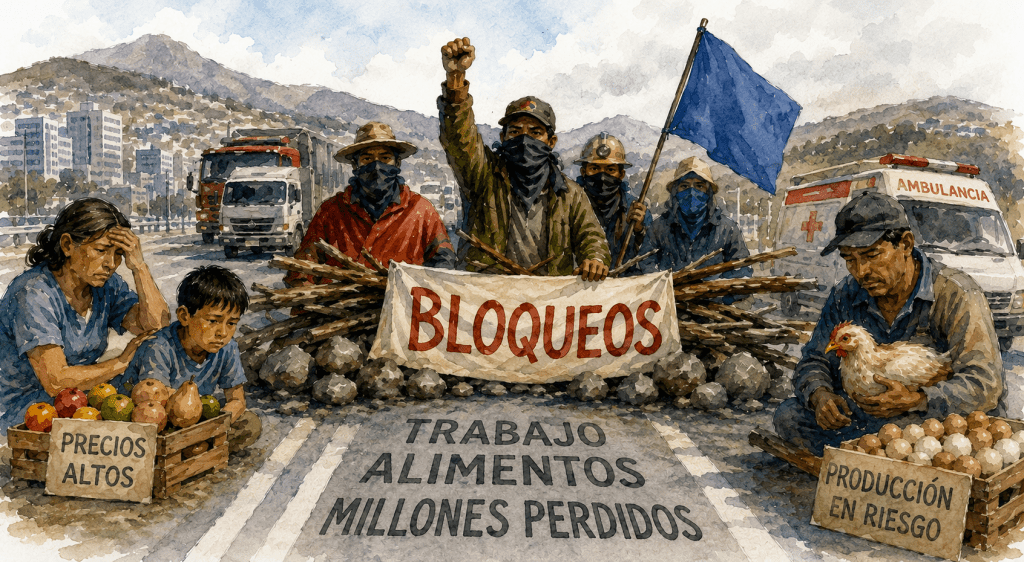
Roadblocks driven by a radicalized minority are destroying the national economy and punishing, above all, the Bolivians who work and produce. While groups tied to the Evo movement, Chapare coca growers, sectors of the “ponchos rojos,” bartolinas, and some mining unions keep the country under siege to pressure for political power, thousands of families are losing income, food, and opportunities. The economic damage has already surpassed $500 million, according to business reports and national media.
The consequences are devastating and concrete. In Lake Titicaca, around 500,000 trout — representing an investment close to $1 million — are on the verge of being lost because the roadblocks are preventing the transport of fish feed. Producers who spent years building legal and productive businesses now see their survival threatened by political decisions made by groups that do not produce, but instead destroy.
In La Paz, fruit vendors report that transportation costs have tripled due to the roadblocks and the collapse of supply chains. The result is inflation, shortages, and a direct blow to the population’s purchasing power. Ordinary people end up paying abusive prices while those organizing the blockades speak of “social struggle” from positions of union and political privilege.
The poultry sector is also reporting massive losses. In just three weeks, producers estimate damages exceeding Bs 300 million. Many small poultry farmers are close to bankruptcy, unable even to cover their basic production costs. Beyond the economic damage, the roadblocks are creating the risk of nationwide shortages of chicken and eggs, directly affecting the nutrition of millions of Bolivians.
All of this is happening while highways are seized, ambulances are stopped, cities are besieged, and political violence becomes normalized. Bolivia cannot continue to be held hostage by groups that use blockades as a permanent weapon against the rest of the country.
This cycle must end. The State has the obligation to enforce the law and protect the majority of citizens who want to work and live in peace. The Political Constitution of the State guarantees freedom of movement and the right to work. Article 21 recognizes the right of Bolivians to move freely throughout the national territory, while Article 46 protects the right to decent work. In addition, the Bolivian Penal Code includes crimes related to obstructing public services, attacks against transportation security, and harm to the national economy. When roadblocks destroy food supplies, prevent medical attention, paralyze commerce, and generate violence, those responsible must answer before justice, without political or union privileges.
Editorial, Pensamientos Bolivianos:
Bloqueos políticos destruyen empleos, alimentos y millones de dólares mientras el país paga el costo
Los bloqueos impulsados por una minoría radicalizada están destruyendo la economía nacional y castigando, sobre todo, a los bolivianos que trabajan y producen. Mientras grupos ligados al evismo, cocaleros del Chapare, sectores de ponchos rojos, bartolinas y algunos sindicatos mineros mantienen al país cercado para presionar por poder político, miles de familias pierden ingresos, alimentos y oportunidades. El daño económico ya supera los $us 500 millones, según reportes empresariales y medios nacionales.
Las consecuencias son devastadoras y concretas. En el lago Titicaca, unas 500.000 truchas, equivalentes a una inversión cercana a $us 1 millón, están al borde de perderse porque los bloqueos impiden el traslado de alimento para los peces. Productores que durante años levantaron emprendimientos legales y productivos hoy ven amenazada su supervivencia por decisiones políticas tomadas por grupos que no producen, pero sí destruyen.
En La Paz, comerciantes de frutas denuncian que los costos de transporte se triplicaron debido a los bloqueos y al colapso del abastecimiento. El resultado es inflación, escasez y golpe directo al bolsillo de la población. La gente humilde termina pagando precios abusivos mientras quienes organizan los cercos hablan de “lucha social” desde privilegios sindicales y políticos.
El sector avícola también reporta pérdidas gigantescas. Solo en tres semanas, los productores calculan daños superiores a Bs 300 millones. Muchos pequeños avicultores están cerca de la quiebra, incapaces siquiera de cubrir sus costos básicos de producción. Además del daño económico, los bloqueos generan riesgo de desabastecimiento nacional de pollo y huevo, afectando directamente la alimentación de millones de bolivianos.
Todo esto ocurre mientras carreteras son tomadas, ambulancias son detenidas, ciudades quedan sitiadas y la violencia política se normaliza. Bolivia no puede seguir secuestrada por grupos que usan el bloqueo como arma permanente contra el resto del país.
Este ciclo debe terminar. El Estado tiene la obligación de aplicar la ley y proteger a la mayoría de los ciudadanos que quiere trabajar y vivir en paz. La Constitución Política del Estado garantiza la libre circulación y el derecho al trabajo. El artículo 21 reconoce el derecho de los bolivianos a circular libremente por el territorio nacional, mientras el artículo 46 protege el derecho al trabajo digno. Además, el Código Penal boliviano contempla delitos vinculados a la obstaculización de servicios públicos, atentados contra la seguridad de los transportes y perjuicios a la economía nacional. Cuando los bloqueos destruyen alimentos, impiden atención médica, paralizan el comercio y causan violencia, sus responsables deben responder ante la justicia, sin privilegios políticos ni sindicales.


Leave a Reply