
By El Diario:
Speeches Continue, but No Action
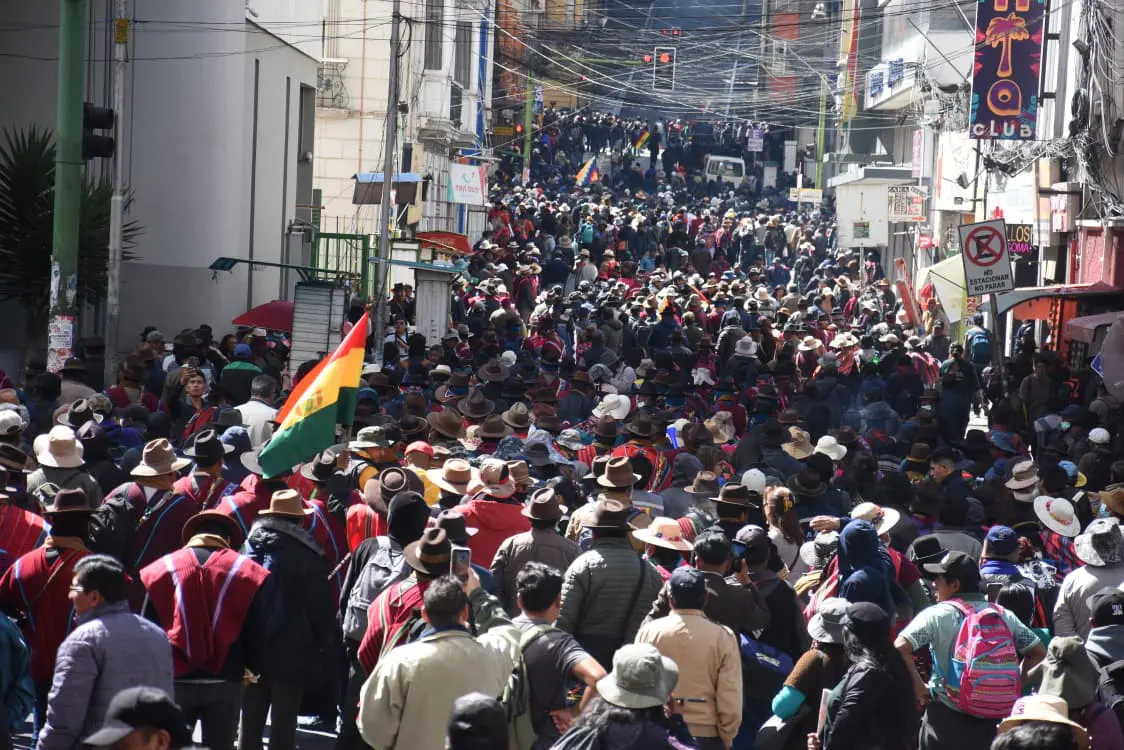
The prolonged blockades restricting access to and from La Paz and El Alto have intensified public frustration and opened a new front of demands toward the Government. Residents, transport workers, merchants, and health-related sectors are demanding that the Executive move from public statements to concrete actions to restore circulation and guarantee the supply of essential products.
The pressure measure continues to affect the routes connecting the cities with the rest of the country and limits the transport of food, fuel, medicines, medical oxygen, and other supplies needed by the population. The situation is also hitting interdepartmental transportation, small businesses, and families who depend on the daily arrival of merchandise for their economic activities.
Amid this scenario, calls are growing for the Government to use the existing legal instruments, including constitutional mechanisms and judicial provisions that protect free movement, health, food access, and public safety. Citizens argue that social protest cannot translate into the isolation of two cities or the interruption of basic services.
Urban sectors question why, despite official announcements and calls for dialogue, the blockades continue to generate shortages, rising prices, and harm to people who are not part of the conflict.
In hospitals and medical centers, concern is focused on the timely arrival of medical oxygen and medical supplies considered essential for patient care.
The demand also extends to law enforcement forces, judicial authorities, and the institutions responsible for guaranteeing compliance with the law.
For the affected sectors, the State has the obligation to preserve the right to protest, but also to prevent pressure measures from blocking food, healthcare, and mobility for millions of inhabitants.
As the conflict persists, La Paz and El Alto face an increasingly tense situation. Citizens are demanding an institutional response that combines dialogue, legal enforcement, and restoration of transit in order to prevent the isolation from turning into a larger supply and healthcare crisis.
CITIZENS REMOVE BLOCKADES
Residents from different areas of El Alto yesterday took to the streets to remove blockade points installed throughout the city and demand the restoration of free transit in response to the economic damage caused by the pressure measures.
Neighborhood actions took place in sectors such as Villa Adela, Cruce Villa Adela, Ciudad Satélite, Villa Dolores, Faro Murillo, and Mercedario, where residents expressed their rejection of the road closures.
In Villa Adela, neighbors staged a protest march to express their exhaustion over the blockades. During the demonstration, they defended their right to work and demanded that daily activities in the area not be paralyzed.
A similar situation occurred in Cruce Villa Adela, where residents and passersby removed groups that had kept roads closed. Residents stated that the street interruptions directly affect merchants, transport workers, and families who depend on daily income.
In Faro Murillo and Villa Dolores, residents also organized to reopen roads, mainly near the Purple Line station of Mi Teleférico. There, they questioned why outsiders were preventing circulation and generating tension among residents.
The protest also spread to Mercedario–Cosmos, where citizens expressed concern about possible security problems and rejected the presence of blockaders in their neighborhood.
Residents demanded respect for the right to work and free movement during a day marked by growing public frustration over the blockades affecting different areas of El Alto.
PRESIDENTIAL SPEECH
President of the State, Rodrigo Paz Pereira, yesterday announced a restructuring of his cabinet and the creation of an economic and social council as part of the government’s response to the protests and blockades affecting the country for the past 20 days.
The President stated that Bolivia is going through a moment of political and social tension that requires changes in the way the State is managed.
During a press conference, Paz admitted that the Executive needs a ministerial team with greater capacity to respond to social and regional demands. He said the president cannot personally address every conflict and that such tasks must be handled more effectively by ministers.
Within that framework, he announced a cabinet reorganization aimed at having authorities closer to the population, with greater territorial presence and better ability to listen to mobilized sectors.
One of the main announcements was the formation of an Economic and Social Council, which, according to Paz, will bring together social organizations, productive sectors, trade groups, transport workers, and regional representatives. Its purpose will be to directly discuss public policies and legislative proposals with the Government.
Paz clarified, however, that sectors linked to illicit activities would not be invited. With that statement, the president sought to differentiate between organizations with social demands and groups that, according to the Government, operate outside the law.
The head of state also rejected reports of a possible privatization of strategic companies. He assured that his administration will not push privatizations or measures leading to tariff increases, and attributed part of the conflict to the circulation of false information during the crisis.
Facing complaints about shortages and difficulties in transporting food, medicines, and medical oxygen, Paz requested the establishment of a humanitarian corridor. To do so, he appealed for the participation of institutions such as the Catholic Church, the Red Cross, medical organizations, and human rights institutions.
Although he reaffirmed that dialogue would remain a central tool of his administration, the president drew limits regarding groups demanding his resignation or engaging in acts of violence. On that point, he stated that he would not negotiate with those resorting to vandalism or seeking to disrupt democratic order.
Paz stated that Bolivia is at a turning point that forces a redefinition of the relationship between the State, politics, democracy, and social coexistence. According to the president, the current crisis demands not only immediate responses, but also a new way of public management in dealing with conflicts.
MARCH
The Central Obrera Boliviana called on its affiliated organizations and social sectors to participate in a march today in the city of El Alto amid the political and social tension affecting the country due to protests and blockades.
The gathering was scheduled for 8:00 a.m. near the Multinacional area in the Ceja district of El Alto and along Naciones Unidas Avenue. According to the call issued by the COB, the march will begin at 9:00 a.m. under the slogan of unity and struggle.
The workers’ federation issued the call after the president’s press conference, in which the head of state stated that he would continue dialogue with social sectors but distanced himself from groups that, according to him, promote violence or seek his removal from power.
The mobilization takes place in a context of high conflict, with protests, blockades, and criticism of the Government from various union, peasant, and social sectors. In recent weeks, the demonstrations have led to difficulties in vehicular circulation, supply distribution, and the normal development of activities in La Paz and El Alto.
The COB requested the participation of affiliated and non-affiliated institutions, and a large mobilization is expected from one of El Alto’s busiest areas toward strategic sectors of the city. The protest adds to the pressure measures that different groups continue to maintain against Paz’s government.
Por El Diario:
Siguen los discursos y no hay acciones
La prolongación de los bloqueos que restringen el ingreso y salida de La Paz y El Alto elevó el malestar ciudadano y abrió un nuevo frente de exigencia hacia el Gobierno. Vecinos, transportistas, comerciantes y sectores vinculados a la salud demandaron que el Ejecutivo pase de los mensajes públicos a acciones concretas para restablecer la circulación y garantizar el abastecimiento de productos esenciales.
La medida de presión mantiene afectadas las rutas de conexión con el resto del país y limita el traslado de alimentos, combustible, medicamentos, oxígeno medicinal y otros insumos necesarios para la población. La situación también golpea al transporte interdepartamental, al comercio minorista y a familias que dependen del ingreso diario de mercadería para sus actividades económicas.
En medio de este escenario, crecen los pedidos para que el Gobierno utilice los instrumentos legales vigentes, incluidos los mecanismos constitucionales y las disposiciones judiciales que protegen el libre tránsito, la salud, la alimentación y la seguridad de la población. El reclamo ciudadano apunta a que la protesta social no puede traducirse en el aislamiento de dos ciudades ni en la interrupción de servicios básicos.
Sectores urbanos cuestionan que, pese a los anuncios oficiales y llamados al diálogo, los bloqueos continúen generando desabastecimiento, incremento de precios y perjuicios a personas que no forman parte del conflicto.
En hospitales y centros de atención, la preocupación se concentra en el ingreso oportuno de oxígeno medicinal e insumos médicos, considerados indispensables para la atención de pacientes.
La demanda también alcanza a las fuerzas del orden, a las autoridades judiciales y a las instancias encargadas de garantizar el cumplimiento de la ley.
Para los sectores afectados, el Estado tiene la obligación de preservar el derecho a la protesta, pero también de impedir que una medida de presión bloquee alimentos, salud y movilidad para millones de habitantes.
Mientras el conflicto persiste, La Paz y El Alto enfrentan una situación cada vez más tensa. La ciudadanía exige una respuesta institucional que combine diálogo, control legal y restitución del tránsito, con el objetivo de evitar que el aislamiento derive en una crisis mayor de abastecimiento y atención sanitaria.
CIUDADANOS DESBLOQUEAN
Vecinos de distintas zonas de El Alto ayer salieron a las calles para retirar puntos de bloqueo instalados en la ciudad y exigir la restitución del libre tránsito, ante los perjuicios económicos ocasionados por las medidas de presión.
Las acciones vecinales se registraron en sectores como Villa Adela, Cruce Villa Adela, Ciudad Satélite, Villa Dolores, Faro Murillo y Mercedario, donde pobladores expresaron su rechazo al cierre de vías.
En Villa Adela, los vecinos protagonizaron una marcha de protesta para manifestar su cansancio por los bloqueos. Durante la movilización, reclamaron su derecho a trabajar y pidieron que no se paralicen las actividades cotidianas en la zona.
Una situación similar ocurrió en el Cruce Villa Adela, donde vecinos y transeúntes retiraron a grupos que mantenían cerrado el paso. Los pobladores señalaron que la interrupción de calles afecta directamente a comerciantes, transportistas y familias que dependen de sus ingresos diarios.
En Faro Murillo y Villa Dolores, los vecinos también se organizaron para habilitar las vías, principalmente en inmediaciones de la estación de la Línea Morada de Mi Teleférico. En el lugar, cuestionaron que personas ajenas al sector impidan la circulación y generen tensión entre los habitantes.
La protesta se extendió además a Mercedario–Cosmos, donde los ciudadanos expresaron preocupación por posibles hechos de inseguridad y rechazaron la presencia de bloqueadores en su barrio.
Los vecinos pidieron que se respete el derecho al trabajo y al libre tránsito, en medio de una jornada marcada por el malestar ciudadano frente a los bloqueos que afectan a diferentes puntos de El Alto.
DISCURSO PRESIDENCIAL
El presidente del Estado, Rodrigo Paz Pereira, anunció ayer una reestructuración de su gabinete y la creación de un consejo económico y social como parte de la respuesta gubernamental a las protestas y bloqueos que afectan al país desde hace 20 días.
El Primer Mandatario aseguró que Bolivia atraviesa un momento de tensión política y social que exige cambios en la forma de gestión del Estado.
Durante una conferencia de prensa, Paz admitió que el Ejecutivo necesita un equipo ministerial con mayor capacidad de respuesta frente a las demandas sociales y regionales. Señaló que el presidente no puede atender personalmente todos los conflictos y que esa tarea debe ser asumida con mayor eficacia por sus ministros.
En ese marco, anticipó un reordenamiento del gabinete con el objetivo de contar con autoridades más cercanas a la población, con mayor presencia territorial y capacidad de escuchar a los sectores movilizados.
Uno de los principales anuncios fue la conformación de un Consejo Económico y Social, instancia que, según explicó, reunirá a organizaciones sociales, sectores productivos, gremiales, transportistas y representantes regionales. La finalidad será discutir políticas públicas y proyectos de ley de manera directa con el Gobierno.
Paz aclaró, sin embargo, que no serán convocados sectores vinculados a actividades ilícitas. Con esa precisión, el mandatario buscó diferenciar entre las organizaciones con demandas sociales y los grupos que, según el Gobierno, actúan al margen de la ley.
El jefe de Estado también rechazó las versiones sobre una posible privatización de empresas estratégicas. Aseguró que su administración no impulsará privatizaciones ni medidas que deriven en incrementos tarifarios, y atribuyó parte del conflicto a la circulación de información falsa en medio de la crisis.
Frente a las denuncias por desabastecimiento, dificultades en el traslado de alimentos, medicamentos y oxígeno medicinal, Paz pidió habilitar un corredor humanitario. Para ello, apeló a la participación de instituciones como la Iglesia Católica, la Cruz Roja, organizaciones médicas y entidades de derechos humanos.
Aunque ratificó que el diálogo será una herramienta central de su gestión, el mandatario marcó límites frente a los grupos que exigen su renuncia o protagonizan hechos de violencia. En ese punto, afirmó que no dialogará con quienes recurran al vandalismo o busquen interrumpir el orden democrático.
Paz sostuvo que Bolivia se encuentra ante un punto de inflexión que obliga a redefinir la relación entre el Estado, la política, la democracia y la convivencia social. Según el mandatario, la actual crisis no solo demanda respuestas inmediatas, sino también una nueva forma de gestión pública frente a los conflictos.
MARCHA
La Central Obrera Boliviana convocó a sus organizaciones afiliadas y sectores sociales a una marcha para hoy en la ciudad de El Alto, en medio de la tensión política y social que atraviesa el país por las protestas y bloqueos.
La concentración fue fijada para las 08:00 en inmediaciones de la Multinacional, en la Ceja de El Alto, y sobre la avenida Naciones Unidas. Según la convocatoria difundida por la COB, la movilización comenzará a las 09:00 bajo la consigna de unidad y lucha.
El llamado del ente matriz de los trabajadores se produce después de la conferencia de prensa del Jefe de Estado, en la que el mandatario afirmó que mantendrá el diálogo con los sectores sociales, pero marcó distancia con grupos que, según dijo, promueven hechos de violencia o buscan su salida del poder.
La convocatoria se da en un escenario de alta conflictividad, con protestas, bloqueos y cuestionamientos al Gobierno desde distintos sectores sindicales, campesinos y sociales. En las últimas semanas, las movilizaciones han derivado en dificultades para la circulación vehicular, el abastecimiento y el desarrollo normal de actividades en La Paz y El Alto.
La COB pidió la participación de instituciones afiliadas y no afiliadas, por lo que se prevé una movilización amplia desde uno de los puntos más concurridos de El Alto hacia sectores estratégicos de la ciudad. La protesta se suma a las medidas de presión que distintos grupos mantienen activas contra el gobierno de Paz.
 Bolivian Thoughts | Pensamientos Bolivianos (Bilingual/Bilingüe)
Leave a comment