By Germaine Barriga, Vision 360:
Conflicts
Union Leaders Lash Out at Journalists, Accuse Them of Lying and Tell Them What They Should Report
The executive secretary of the Departmental Workers’ Central (COD) of La Paz, Cecilio Gonzales, described the media as “bribe-taking press,” while the former executive secretary of the Bolivian Workers’ Central (COB), Jaime Solares, called on journalists to talk about poverty and misery: “that also has to be talked about, comrades of the press, right? Plain and simple,” he responded.
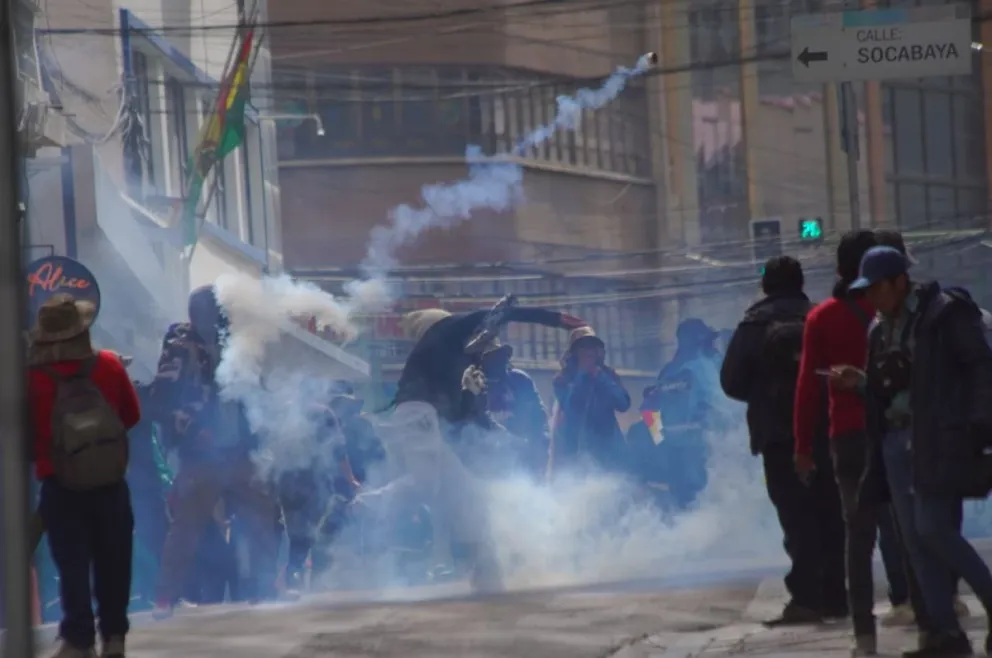
Mobilized sectors carried out violent acts in downtown La Paz. Photo: APG
The executive secretary of the Departmental Workers’ Central of La Paz, Cecilio Gonzales, accused journalists of lying and described the profession as “bribe-taking press,” because, from his point of view, the media did not report that one of the demonstrators received a gunshot wound and not an accident caused by the mishandling of a firecracker.
Meanwhile, the former executive secretary of the Bolivian Workers’ Central (COB), Jaime Solares, stated that journalists are doing their job, although he asked them to report on what is happening in the country.
Gonzales referred to what happened yesterday, when it was reported that among the demonstrators there were two injured people, one of them due to the mishandling of explosives.
“We want to debunk the traditional bribe-taking press (a person who receives bribes) that yesterday, regarding the events, the accident, once again lied to society, saying that comrade Achaya — who was shot by the Police — supposedly suffered from the mishandling of a firecracker or explosive by the comrade himself; completely untrue, false,” he stated.
He argued that, as workers, they were at the scene when they saw that, from above, the National Police “mercilessly fired at our fellow workers.” He claimed that Achaya suffered a serious accident, as did another comrade named Samuel.
Likewise, he stated that “this traditional press lies to the country, it does not show the injured; up to now, for example, there are two deaths among our peasant brothers, there are a hundred injured and more than 90 detainees,” he claimed.
The leader referred to the deaths of Alfredo Cruz, who lost his life on May 16, according to the report by Vice Minister of Government Hernán Paredes, when he fell into one of the trenches opened by the groups blocking the streets of El Alto and the highways connecting La Paz with Oruro, and not during a confrontation with police and military officers who carried out the “Humanitarian Corridor” operation to clear the roads.
Meanwhile, Rubén Callisaya lost his life on May 9, according to the report provided by the Ministry of Health, as a result of an underlying illness and not during the conflicts, as mobilized leaders had claimed.
Gonzales stated that the leaders of both the COD of La Paz and the Bolivian Workers’ Central (COB) are upset by the information spread by journalists. He warned that a national and international complaint would be filed so that entities defending human rights could act ex officio.
He said it is unacceptable for this kind of repression to be taking place, because this struggle is in defense of the national interest, state-owned companies, and natural resources.
Solares, who took part in the mobilizations against the government of former president Gonzalo Sánchez de Lozada in 2003, is actively participating in the protests demanding the resignation of Paz. Asked about the attacks suffered by journalists, he stated that the press has every right to work.
“Another matter are the big front men who are running the media outlets, such as the Kuljis, Monasterios, and others you know, but the rank-and-file journalist comrades are fulfilling their duty,” he told Red Yungas.
He stated that the press is respected because they are allies of the workers, but he also asked that the truth about what is happening in the country be told: there is poverty, there is misery; “I have always said, those at the top are doing very well, that also has to be talked about, comrades of the press, right? Plain and simple.”
These viewpoints from the two union leaders became known after complaints from journalists who were victims of attacks by mobilized sectors, including peasants, miners, factory workers, and others demanding the resignation of President Rodrigo Paz.
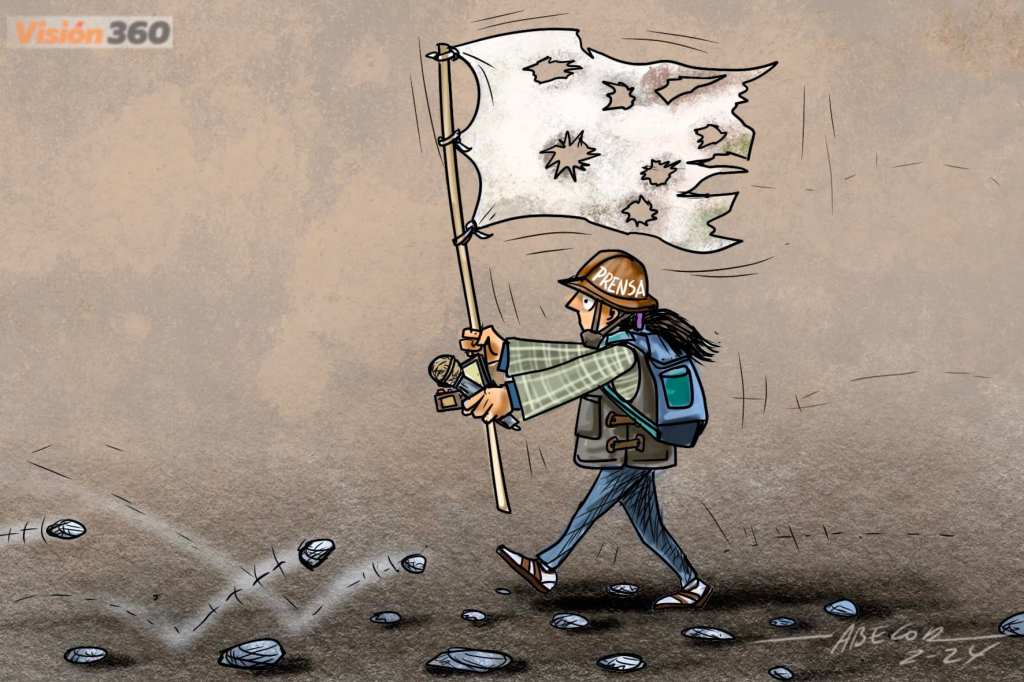
During the demonstrations, at least three journalists were attacked yesterday by protesters; two women lost consciousness and one man was injured by the explosion of a stick of dynamite.
In addition, the Association of International Press Correspondents (ACPI) denounced attacks suffered the previous day by two photojournalists from international agencies: one was hit by a rock and another was chased, harassed, and kicked by a group of demonstrators while returning to his office in downtown La Paz, SWI reported.
Joining the complaint was the former president of the Association of Journalists of Bolivia, Zulema Alanes, who denounced, based on the testimony of a cameraman from an international media outlet, that “there is an order among the demonstrators to mark journalists with white paint and instruct attacks against their lives,” something the complainant allegedly suffered on Monday.
The Ombudsman’s Office reported that it has records of 15 cases of attacks against journalists and four against press equipment during coverage of the conflicts between May 12 and 18.
Por Germaine Barriga Velarde, Vision 360:
Conflictos
Dirigentes sindicales arremeten contra los periodistas, los acusan de mentir y les recomiendan qué informar
El secretario ejecutivo de la Central Obrera Departamental (COD) de La Paz, Cecilio Gonzales, calificó al gremio como “prensa mermelera”, mientras que el exsecretario ejecutivo de la Central Obrera Boliviana (COB), Jaime Solares, pidió hablar de la pobreza y la miseria: “de eso también hay que hablar, compañeros de la prensa, ¿verdad? Así de claro”, respondió.
Sectores movilizados realizaron actos violentos en el centro de la ciudad de La Paz. Foto: APG
El secretario ejecutivo de la Central Obrera Departamental de La Paz, Cecilio Gonzales, acusó a los periodistas de mentir y calificó al gremio como “prensa mermelera”, porque, desde su punto de vista, no se informó que uno de los manifestantes recibió un disparo de arma de fuego y no un accidente por mala manipulación de un petardo.
Por su parte, el exsecretario ejecutivo de la Central Obrera Boliviana (COB), Jaime Solares, sostuvo que los periodistas cumplen su trabajo, aunque les pidió que informen sobre lo que pasa en el país.
Gonzales se refirió a lo sucedido el día de ayer, cuando se reportó que entre los manifestantes se registraron dos heridos, uno de ellos debido al mal manejo de explosivos.
“Queremos desvirtuar la prensa tradicional mermelera (persona que recibe sobornos) que ayer de los hechos, del accidente, realmente ha mentido nuevamente a la sociedad, indicando que el compañero Achaya — al que le ha disparado la Policía — supuestamente ha sido mala manipulación de petardo o de explosivo que haya realizado el compañero; totalmente mentira, falso”, manifestó.
Argumentó que, como trabajadores, se encontraban en el lugar cuando vieron que, desde la parte de arriba, la Policía Nacional “sin compasión ha disparado a nuestros compañeros trabajadores”. Afirmó que Achaya sufrió un accidente grave, al igual que otro compañero de nombre Samuel.
Asimismo, afirmó que “esta prensa tradicional miente al país, no muestra lo que son los heridos; hasta el momento, por ejemplo, existen dos bajas de nuestros hermanos campesinos, hay un centenar de heridos y 90 y tantos detenidos”, aseguró.
El dirigente se refirió a los decesos de Alfredo Cruz, quien perdió la vida el 16 de mayo, según el informe del viceministro de Gobierno, Hernán Paredes, cuando cayó a una de las zanjas abiertas por los sectores que bloquean las calles de El Alto y las carreteras que comunican a La Paz con Oruro, y no en un enfrentamiento con efectivos policiales y militares que ejecutaron el operativo “Corredor Humanitario” para dejar expeditas las carreteras.
Mientras que Rubén Callisaya perdió la vida el pasado 9 de mayo, según el informe proporcionado por el Ministerio de Salud, a consecuencia de una enfermedad de base y no en los conflictos, como difundieron los dirigentes movilizados.
Gonzales afirmó que los dirigentes tanto de la COD de La Paz como de la Central Obrera Boliviana (COB) están molestos por las informaciones difundidas por los periodistas. Advirtió que se hará una denuncia nacional e internacional para que las entidades que defienden los derechos humanos puedan actuar de oficio.
Dijo que no es posible que de esta manera se esté reprimiendo, porque esta lucha es en defensa del interés nacional, de las empresas estatales y de los recursos naturales.
Solares, quien fue parte de las movilizaciones en contra del Gobierno del expresidente Gonzalo Sánchez de Lozada en 2003, participa activamente en las protestas que exigen la renuncia de Paz. Consultado sobre las agresiones que sufrieron los periodistas, sostuvo que la prensa tiene todo el derecho de trabajar.
“Otra cosa son los grandes testaferros que están manejando los medios de comunicación, como Kuljis, Monasterios y otros que conocen, pero los compañeros periodistas de base están cumpliendo con su deber”, manifestó a Red Yungas.
Afirmó que se respeta a la prensa, porque son aliados de los trabajadores, pero también pidió que se diga la verdad de lo que hay en el país: hay pobreza, hay miseria; “siempre he dicho, los de arriba están muy bien, de eso hay que hablar también compañeros de la prensa, ¿verdad? Así de claro”.
Estos puntos de vista de los dos dirigentes sindicales se conocen después de las denuncias de periodistas que fueron víctimas de agresiones de parte de sectores movilizados, entre ellos campesinos, mineros, fabriles y otros, que exigen la renuncia del presidente Rodrigo Paz.
Durante las movilizaciones, al menos tres periodistas fueron agredidos en la jornada de ayer por los manifestantes, dos mujeres perdieron el conocimiento y un varón resultó herido por la explosión de un cachorro de dinamita.
Además, la Asociación de Corresponsales de Prensa Internacional (ACPI) denunció ataques sufridos en la víspera por dos fotoperiodistas de agencias internacionales: uno recibió una pedrada y otro fue perseguido, hostigado y atacado a patadas por un grupo de manifestantes cuando regresaba a su oficina en el centro de La Paz, informó SWI.
A la denuncia se sumó la expresidenta de la Asociación de Periodistas de Bolivia, Zulema Alanes, quien denunció, con base en el testimonio de un camarógrafo de un medio internacional, que “hay la consigna entre los manifestantes de marcar con pintura blanca a los periodistas y ordenar que se atente contra sus vidas”, algo que sufrió el denunciante el lunes.
La Defensoría del Pueblo informó que tiene registro de 15 casos de agresiones contra periodistas y cuatro contra equipos de prensa durante la cobertura de los conflictos entre el 12 y 18 de mayo.


Leave a Reply