
By El Diario:
Holy Week
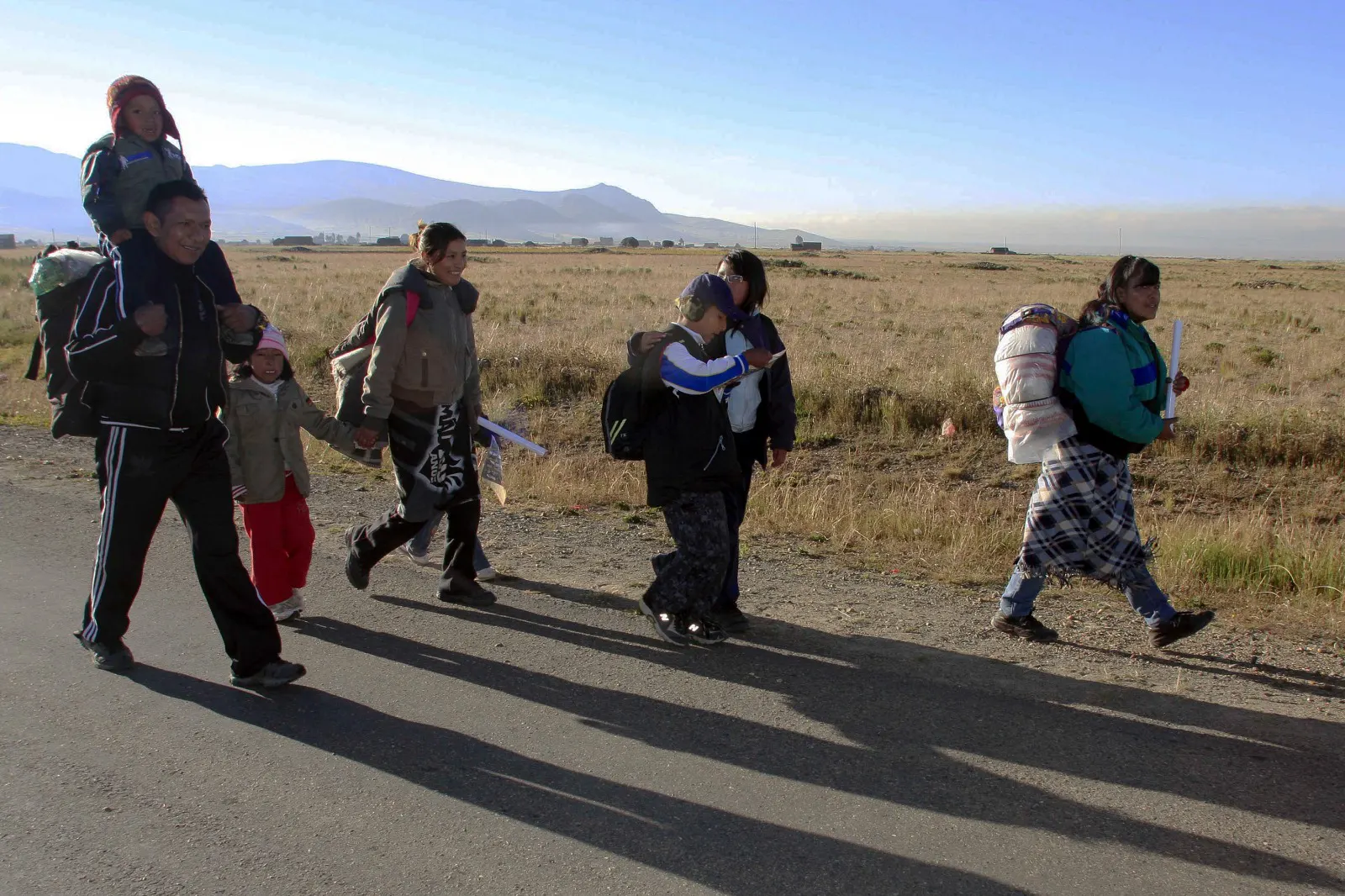
With faith and great determination, dozens of pilgrims began their journey toward the Sanctuary of the Virgin of Copacabana, located in the town of the same name, more than 100 kilometers away. Authorities and experts are providing recommendations to avoid problems during the walk.
Participants are of different ages, ranging from children, teenagers, and young people to adults and even the elderly. It is recommended not to bring pets.
The president of the Red Cross volunteers, La Paz branch, Sofía Dips, provided a series of recommendations for undertaking the journey, the first being proper preparation to ensure a safe experience without physical complications.
“There are pilgrims who do not prepare correctly; they carry inappropriate backpacks, heavy clothing, or footwear that is not suitable for long walks, which can cause injuries,” she said.
The backpack should not be heavy and should contain only the essentials. “It is important to carry water, rehydration salts, a change of clothes, extra socks, a sleeping bag with insulation, and sunscreen.”
The type of shoes is also important, as they should be well-worn sneakers or trekking footwear. On the contrary, brand-new shoes of any kind should be avoided.
Wearing heavy or rigid garments such as leather jackets and inflexible pants is uncomfortable, so it is better to wear comfortable clothing, preferably thermal (for afternoons and nights) and lightweight.
Bring a jacket for the cold, a hat, sunscreen, and long-sleeve shirts.
ADVICE
During the walk, it is important to stay on the side of the road facing oncoming traffic so that vehicles can be seen head-on and not approach from behind unexpectedly. Care should be taken when using headphones, as they prevent pilgrims from being aware of their surroundings and potential risks on the road.
In general, the walk to Copacabana can last between two and three days, depending on each person’s physical condition. Several set out on Tuesday, but the majority began on Wednesday, with the idea of arriving at the Sanctuary on Friday.
MEDICAL TENTS AND POLICE
The Red Cross set up medical care posts for pilgrims who need them, in strategic locations such as Peñas, the turnoff to Huarina, and the Tiquina strait.
Likewise, the Bolivian Police will install six multidisciplinary care tents, where assistance will be provided to pilgrims. “We will not only have 110 and 120 available, but also six multidisciplinary tents that will serve as rest points and first aid stations for pilgrims,” said the departmental commander of the La Paz Police, Juan Amílcar Sotopeña.
In addition, he detailed that 2,300 officers have been deployed along the routes to Copacabana, Yungas, and Oruro. “The departmental command is deploying, over these five days of pilgrimage, 2,300 police officers distributed along the main route to Copacabana, Oruro, and Los Yungas,” he stated.
Patrols will be carried out using pickup trucks, bicycles, and quad bikes for five days. There will also be “ambulances that will allow us to provide a prompt and timely response to medical emergencies,” Sotopeña added.
Por El Diario:
Semana Santa
Con fe y muchas ganas, decenas de peregrinos iniciaron su peregrinaje rumbo al Santuario de la Virgen de Copacabana, ubicado en la población del mismo nombre, son más de 100 kilómetros. Autoridades y expertos dan recomendaciones para evitar problemas durante su caminata.
Los participantes son de diferentes edades, desde niños, adolescentes, jóvenes, adultos y hasta adultos mayores. Lo recomendable es no llevar a las mascotas.
La presidenta de los voluntarios de la Cruz Roja filial La Paz, Sofía Dips, brindó una serie de recomendaciones para realizar la travesía, siendo la primera: una adecuada preparación que permita tener una experiencia segura y sin complicaciones físicas.
“Hay peregrinos que no se preparan correctamente, llevan mochilas inadecuadas, ropa pesada o calzado que no es apto para largas caminatas, lo que puede provocar lesiones”, indicó.
La mochila no debe ser pesada y debe contener lo necesario. “Es importante llevar agua, sales de rehidratación, ropa de recambio, medias adicionales, un sleeping con aislante y protector solar”.
El tipo de zapatos también es importante, pues deben ser zapatillas ya usadas o calzado de trekking. Por el contrario, se debe evitar estrenar calzados de ningún tipo.
El uso de prendas pesadas o rígidas como chamarras de cuero y pantalones poco flexibles, resultan incomodos, por eso es mejor vestir ropa cómoda, en lo posible térmica (para la tarde y noches) y ligera.
Llevar una chamarra para el frío, sombrero y protector solar, poleras de manga larga,
CONSEJO
Durante la caminata es importante ir por la carretera en sentido contrario al de los vehículos para ver de frente los coches y no ser sorprendidos por detrás. Se debe tener cuidado en el uso de audífonos, pues impiden a los peregrinos estar atentos al entorno y a posibles riesgos en la carretera.
Por lo general, la caminata hacia Copacabana puede durar entre dos y tres días, dependiendo de la condición física de cada persona. Varios partieron el martes, pero una gran mayoría la jornada del miércoles, con la idea de llegar el viernes al Santuario.
CARPAS MÉDICAS Y POLICÍA
La Cruz Roja instaló puestos de atención médica para peregrinos que la requieran, en sectores estratégicos como Peñas, el desvío a Huarina y en el estrecho de Tiquina.
De igual manera, la Policía boliviana instalará seis carpas de atención multidisciplinaria, donde se brindará asistencia a los peregrinos. “No solo vamos a tener habilitados el 110 y 120. Sino seis carpas multidisciplinarias que serán puntos de descanso y de primera atención a los peregrinos”, apuntó el comandante departamental de la Policía de La Paz, Juan Amílcar Sotopeña.
Además, detalló que se desplegó 2.300 efectivos en las rutas hacia Copacabana, Yungas y Oruro. “El comando departamental está desplazando en estos cinco días que tenemos de peregrinación 2.300 policías distribuidos en la ruta principal a Copacabana, Oruro y Los Yungas”, señaló.
El patrullaje será en camionetas, bicicletas y cuadratracks, durante cinco días, también habrá “ambulancias que nos van a permitir una pronta y oportuna respuesta a emergencia médica”, apuntó Sotopeña.
https://www.eldiario.net/portal/2026/04/02/creyentes-peregrinan-al-santuario-de-copacabana-2/

 Bolivian Thoughts | Pensamientos Bolivianos (Bilingual/Bilingüe)