
Claiming rights and territories through a new maritime lawsuit before the Permanent Court of Arbitration, Bolivia could recover sovereign access to the sea, according to an analyst.
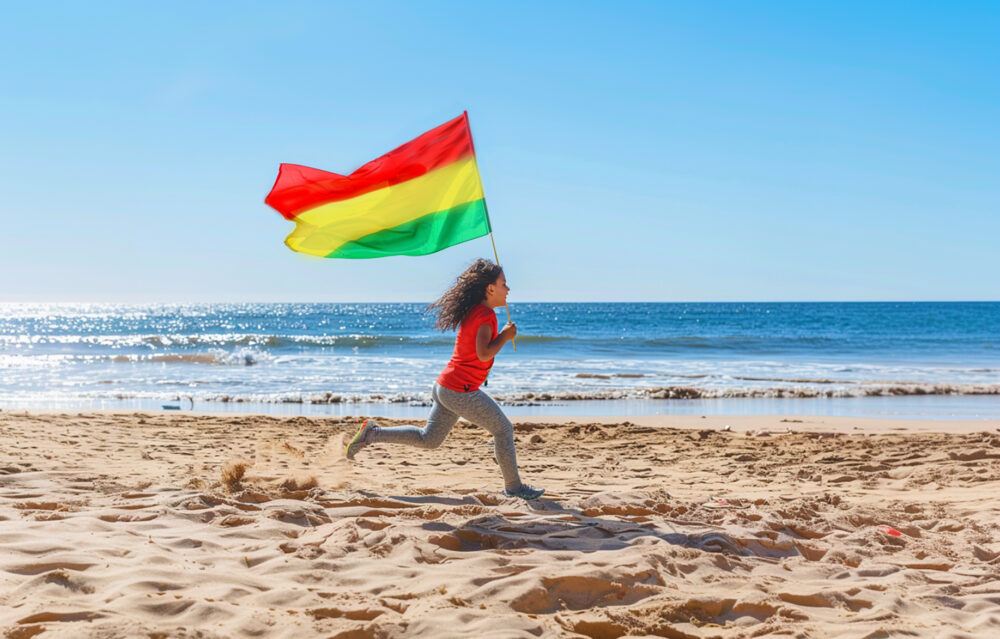
Reference photo: unifranzedo.bo
SOURCE: EL DIARIO
Lawyer and university professor Víctor Hugo Chávez Serrano stated in an exclusive interview with EL DIARIO that Bolivia has not lost its right to sovereign access to the Pacific Ocean; rather, the 2018 ruling by the International Court of Justice (ICJ) in The Hague represented the failure of an incorrect legal strategy in how the claim was presented.
“The court said that Chile has no obligation to negotiate because that was Bolivia’s rejected request, but Bolivia never went to court to demand any maritime issue,” he noted. In that context, Chávez maintained that the maritime claim remains valid in legal and constitutional terms.
On this new commemoration of the Day of the Sea, the country not only recalls the loss of its coastline to Chile in 1879 during the War of the Pacific, but also the ruling from The Hague, which determined that the neighboring country has no legal obligation to negotiate sovereign access to the Pacific Ocean. As a result, the analyst affirms that Chile now has neither the obligation “nor the will to negotiate.”
Since the Treaty of Peace and Friendship of 1904 to the present, Bolivia has made various attempts to negotiate with Chile: the League of Nations (1921), diplomatic exchange notes of commitment (1950), the Charaña Agreement (1975), the Fresh Approach of Montevideo (1987), and the Gas for Sea proposal (2004), as cited by the interviewee, who asserted that “the path of negotiation has failed.”
“How can we achieve our aspiration (sovereign access to the sea) and also our right?” Chávez questioned, reaffirming that returning to sovereignty over a Pacific coastline is an “inalienable and unyielding” right of the Bolivian State.
In this context, the analyst assured that there is still a jurisdictional arbitration mechanism that Bolivia has not used and that would be enabled by another complementary treaty with Chile.
“On April 16, 1907, Chile and Bolivia signed a pact, an agreement, under which any issue related to the 1904 Treaty must be addressed by the Permanent Court of Arbitration (PCA) in The Hague,” he added.
Chávez explained that this court is different from the ICJ, where Bolivia’s request was rejected, since the lawsuit sought to force Chile to negotiate rather than presenting a direct maritime claim before this other international court.
“For that reason, Bolivia cannot renounce its claim, because there is an international arbitral argument that allows it to file an arbitration case claiming rights and territories not ceded in the 1904 Treaty, which would have to be addressed by the Court of Arbitration in The Hague,” he stated.
FAILED SITUATION IN THE HAGUE
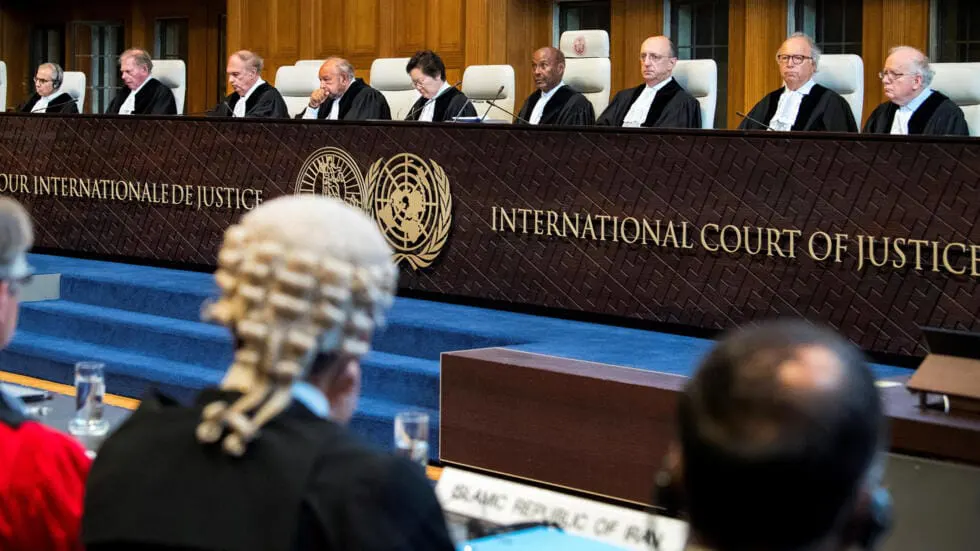
Photo: Despite the ruling in The Hague, Chile is not entirely freed from responsibility toward Bolivia regarding the maritime issue.
In his analysis of the defeat at the ICJ in The Hague, Chávez stated that from the governments of Hugo Bánzer and Jorge Quiroga through to Evo Morales, the idea of going to international courts had been proposed and encouraged.
“During Morales’s time, it took quite a while for the idea of going to international courts to take shape, and it was in the March 23, 2011 speech that the idea was immediately adopted and poorly handled by the then President of the Chamber of Deputies, later the State Attorney General, and finally the Minister of Justice,” the analyst stated, pointing to then-ambassador to the Organization of American States (OAS), Héctor Arce Zaconeta, as a possible responsible party.
“He said, ‘we are not going to file an arbitrary claim; we must file a claim over pending obligations,’” he recounted.
In this way, he identifies Zaconeta as primarily responsible for the defeat in The Hague. He argued that although the idea of going to an international court was adopted, the negotiation strategy was unfavorable for Bolivia because not “a single square centimeter of coastline or even a drop of sea” was demanded.
However, the ICJ ruling in The Hague does not free Chile from maritime responsibility toward Bolivia. “It is not a ruling that says Bolivia has no access to the sea, not at all, because the possibility of going to arbitration clearly remains,” the expert noted.
According to Chávez, the claim filed by Héctor Arce was questionable and, in point 34 of it, arbitration is mentioned: “The arbitration route is the possibility that can resolve Bolivia’s landlocked condition based on the same 1904 Treaty. The treaty has inconsistencies and territories that were not ceded.”
In the expert’s view, the non-ceded territories are between parallels 24 and 23, which are not mentioned in the 1874 treaty. “These are aspects that have never been brought to international debate before any court and that the current government became aware of last year,” he explained.
THE CLAIM MUST NOT BE ABANDONED
Following recent meetings between the President of the State, Rodrigo Paz, and the new President of Chile, José Antonio Kast, statements were heard from the Bolivian leader suggesting that Bolivians should “break free” from the idea of returning to the Pacific Ocean in order to improve bilateral relations with the neighboring country.
In response to these statements, the criminal lawyer said: “Fortunately, these were only statements by the President, because the constitutional mandate of Article 267 of the supreme law tells us that it is an inalienable, unrenounceable, and imprescriptible right.”
In conclusion, Chávez reaffirmed that in order to move forward, restore relations, and view Chile as a “good friend,” the maritime issue must be resolved: “It is a latent, valid issue and a continuing claim by Bolivia.”
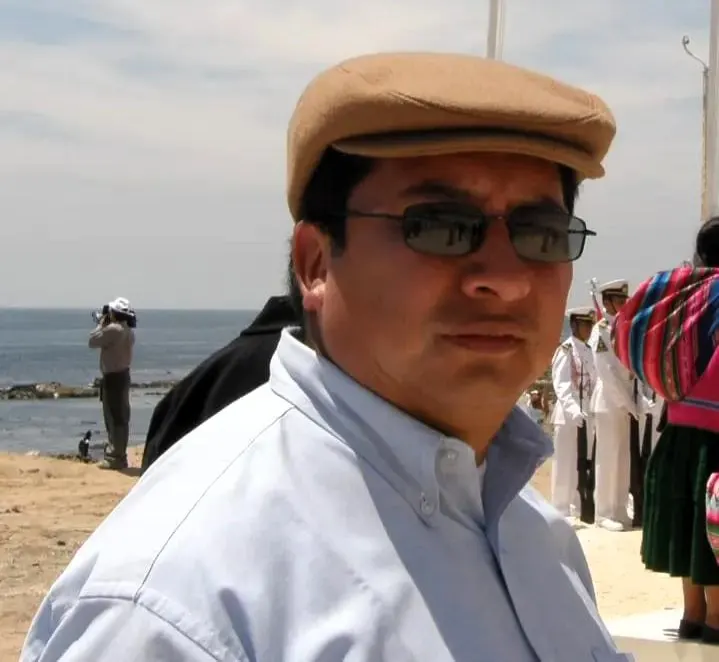
Lawyer and professor, Victor Hugo Chávez Serrano.
by Luz Mendoza
Por El Diario, Eju,tv:
Reclamando derechos y territorios a través de una nueva demanda marítima ante la Corte Internacional de Arbitraje, Bolivia podría recuperar acceso soberano al mar, según analista.
Foto referencial: unifranzedo.bo
FUENTE: EL DIARIO
El abogado y docente universitario, Víctor Hugo Chávez Serrano, afirmó en entrevista exclusiva con EL DIARIO que Bolivia no ha perdido su derecho a una salida soberana al Océano Pacífico, sino que el fallo de la Corte Internacional de Justicia (CIJ) de La Haya de 2018 significó el fracaso de una estrategia equivocada en el planteamiento de la demanda.
“La corte dijo que Chile no tiene obligación de negociar porque ese fue el pedido rechazado de Bolivia, pero Bolivia jamás acudió para demandar cuestión marítima alguna” señaló. En ese contexto, Chávez sostuvo que se mantiene vigente la reivindicación marítima en el ámbito jurídico y constitucional.
En esta nueva conmemoración del Día del Mar, el país no solo recuerda la pérdida del Litoral ante Chile en 1879 durante la Guerra del Pacífico, sino también el fallo de La Haya, donde se determinó que el país vecino no tiene la obligación legal de negociar un acceso soberano al Océano Pacífico. Como consecuencia, el analista afirma que ahora el país chileno no tiene ni la obligación “ni tampoco la voluntad de negociar”.
El país boliviano, desde el Tratado de Paz y Amistad de 1904 hasta el presente, tuvo diversos intentos de negociación con Chile: la Sociedad de Naciones (1921), notas reversales diplomáticas de compromiso (1950), el Acuerdo de Charaña (1975), el Enfoque Fresco de Montevideo (1987) y la propuesta Gas por Mar (2004), según ejemplificó el entrevistado, tras afirmar que “el camino de la negociación es fallido”.
“¿Cómo llegar a cumplir nuestro anhelo (una salida soberana al mar) y además nuestro derecho?”, cuestionó Chávez al reafirmar que el retorno a la soberanía a la costa pacífica es un derecho “irrenunciable e inclaudicable” del Estado boliviano.
En este contexto, el analista aseguró que aún existe un mecanismo jurisdiccional de arbitraje que no ha utilizado Bolivia y que estaría siendo habilitado por otro tratado complementario que se tiene con Chile.
“El 16 de abril de 1907, Chile y Bolivia firmaron un pacto, un acuerdo, por el que cualquier cuestión del Tratado de 1904 debe ser atendida por la Corte Permanente de Arbitraje (CPA) de La Haya”, agregó.
Chávez informó que esta corte es diferente a la CIJ, donde se rechazó el pedido del país, ya que la demanda fue para obligar a Chile a negociar y no se acudió a una petición marítima en esta otra corte internacional.
“Por eso no se puede renunciar a la demanda boliviana, porque existe argumento internacional arbitral para poder acudir a una demanda arbitral reclamando derechos y territorios no cedidos en el Tratado de 1904, que tendrían que ser atendidos en la Corte de Arbitraje de la Haya”, afirmó.
SITUACIÓN FALLIDA EN LA HAYA
Foto: Pese a fallo de La Haya, Chile no se libera de total responsabilidad con Bolivia en el tema marítimo.
En su análisis de la derrota en la CIJ de La Haya, Chávez sostuvo que, desde los gobiernos de Hugo Bánzer y Jorge Quiroga hasta llegar a Evo Morales, se planteó y sugirió la necesidad de acudir a tribunales internacionales.
“En la época de Morales, tardó bastante en ‘cuajar’ la idea de acudir a tribunales internacionales, y fue en el discurso de 23 de marzo del 2011 que inmediatamente se tomó la idea y mal condujo el entonces Presidente de la Cámara de Diputados, luego el Procurador del Estado y por último el Ministro de Justicia”, afirma el analista y señala como posible responsable al entonces embajador de la Organización de los Estados Americanos (OEA), Héctor Arce Zaconeta.
“Él dijo ‘no vamos a hacer una demanda arbitraria, tenemos que hacer una demanda sobre obligaciones pendientes’”, relató.
De esta manera, señala como el mayor responsable a Zaconeta por la derrota en La Haya. Sostuvo que, si bien tomó la idea de acudir al tribunal internacional, la estrategia de negociar no fue favorable para Bolivia ya que no se demandó “un centímetro cuadrado de costa o una gota siquiera de mar.
Sin embargo, el fallo de la CIJ de La Haya no libera a Chile de responsabilidad marítima con Bolivia. “No es un fallo que le dice a Bolivia que no tiene acceso al mar, ni mucho menos, porque claramente queda pendiente la posibilidad de acudir al arbitraje” señaló el experto.
Según Chávez, la demanda interpuesta por Héctor Arce fue dudosa y, en el punto 34 de la misma, se anuncia el arbitraje: “La vía del arbitraje es la posibilidad que puede solucionar la cuestión de enclaustramiento de Bolivia sobre la base del mismo tratado de 1904. El tratado tiene inconsistencias y territorios no cedidos”.
En criterios del experto, los territorios no cedidos son entre los paralelos 24 y 23 que no estarían mencionados en el tratado de 1874. “Entonces, son estos los aspectos que jamás se han llevado al debate internacional ante tribunal alguno y que el gobierno actual ha tomado conocimiento de esta iniciativa el pasado año”, explicó.
NO SE DEBE RENUNCIAR
Tras los recientes encuentros entre el presidente del Estado, Rodrigo Paz, y el nuevo presidente de Chile, José Antonio Kast, se oyó declaraciones por parte del mandatario boliviano, sobre que los bolivianos deben “desenclaustrar” el pensamiento de un posible retorno al Océano Pacífico para mejorar relaciones bilaterales con el vecino país.
Ante estas manifestaciones del Jefe de Estado, el abogado penalista afirma: “Afortunadamente, solo fueron declaraciones del Presidente, porque el mandato constitucional del artículo 267 de la norma suprema nos indica que es un derecho inclaudicable, irrenunciable e imprescriptible”.
Para finalizar, Chávez reafirmó que, para mirar adelante, restablecer relaciones y mirar como “buen amigo” a Chile, debe solucionarse el tema marítimo: “Es un tema latente, vigente y de reclamación por parte de Bolivia”.
Abogado y docente, Victor Hugo Chávez Serrano.
por Luz Mendoza
https://eju.tv/2026/03/derecho-al-mar-sigue-intacto-para-bolivia-pese-al-fallo-de-la-haya/

 Bolivian Thoughts | Pensamientos Bolivianos (Bilingual/Bilingüe)