
By The Bolivia Brief:
Bolivia – An Emerging Superfood Superpower
Bolivia Brief Market Snapshot
CASEY CAGLEY AND MARIA-TERESA NOGALES
Maria Teresa Nogales is an Independent Food Security Advisor and former Executive Director, Fundación Alternativas, Bolivia
For decades, centuries even, the narrative of the Bolivian economy has been written in minerals and gas. From the Cerro Rico silver of Potosí to the gas fields of Tarija, finite, raw resources extracted from the earth and shipped abroad in their most basic forms have powered the economy. In a global context defined by renewed geopolitical competition and global green energy transition, lithium, Bolivia’s “white gold,” shows similar promise and peril for the country’s development. However, as we move through 2026, a new opportunity is emerging: a suite of superfoods including quinoa, Brazil nuts, chia, acai, and others.
These products could play a key role in Bolivia’s needed transition to a high-value bio-economy. And they represent a potentially lucrative investment opportunity. To truly thrive, Bolivia must pivot from being the world’s supplier of raw materials to a direct provider of finished, high-value products. The conditions exist—farmers and producers are rapidly improving their ability to navigate changing climate and markets. What is missing is the right investment in processing infrastructure and technical training.
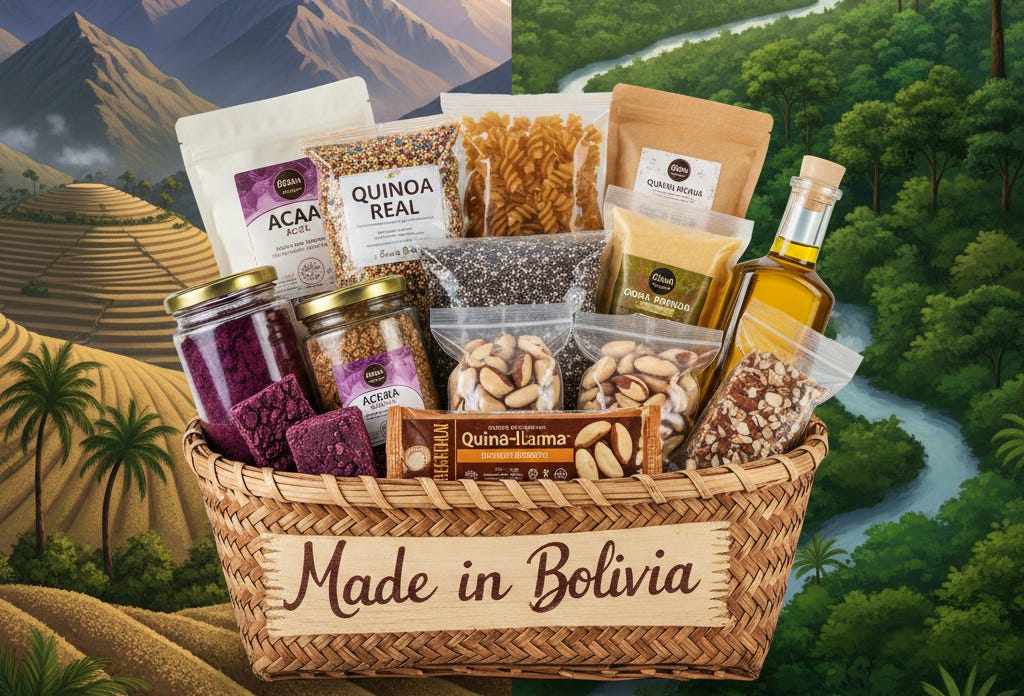
Bolivia’s Pantry
In many ways, Bolivia’s geography is a challenge, especially when it comes to export logistics. With agriculture, its geographical diversity is perhaps its greatest competitive advantage. Quinoa is one key growth opportunity. While Peru outpaces Bolivia in the growing multi billion-dollar Quinoa export market, the Quinoa Real (Royal Quinoa), a larger grain with a nutritional profile superior to almost any other variety on earth, thrives in Bolivia’s high-altitude southern altiplano, in conditions that would kill most crops. Market analysis has shown a 12 percent growth in demand over the past decade and a projected 7.5 percent compound annual growth rate (CAGR) through 2030. Much of that is destined for North American and European markets where health conscious and gluten free consumer demand continues to grow.
The northern lowlands of Pando and Beni make up South America’s Brazil nut powerhouse. The country maintains a strong hold on the world’s Brazil nut supply, accounting for over 70 percent of the global shelled trade. While the market is smaller (estimated at US$373 million in 2023) than the quinoa market and the producing tree is sensitive to ecological variation, awareness around Brazil nuts’ nutritional value and potential use cases in everything from baking and confections to cosmetics points to a high potential upside: 4.8 percent CAGR between 2024-2030. The nut (technically, it’s a seed) offers important value to small-scale local producers, including many indigenous communities, where harvests from largely wild trees represent a key source of income that can only happen if forests are healthy and intact.
Chia and acai berry production is also surging. South America’s chia seed exports were valued at about US$ 108 million in 2025. After Paraguay, the world’s largest producer, is Bolivia, which has been expanding its cultivation area in recent years. In both countries, as well as Argentina, chia cultivation is increasing due to its resilience as a crop, its usefulness in rotation with soy harvests, and the growing export demand. As with quinoa and Brazil nuts, chia seeds figure prominently in plant-based and whole-food diets, given their nutrient density, dietary fiber, protein, and vitamins and minerals–contributing to an estimated 11 percent CAGR between 2025-2030. Acai berries, meanwhile, offer a similar array of health, wellness, and cosmetic applications, the market for which has soared in recent years. Well known as a smoothie and health staple, Brazil–the world’s largest producer–has seen exports increase by 14,000 percent in its leading state, Pará, and a 51 percent growth between 2019 and 2020 alone. But there is a downside that illustrates the resource trap risks for all of these superfoods. Acai trees thrive in lowland floodplains in the Amazon basin. With exploding growth, harvesters have slashed other plant and tree species to make way for more acai palms, contributing to higher overall yields, but damaging the forest’s biodiversity and productivity. The tension between expansion and productivity for acai illustrates a key need and opportunity to move Bolivia up the value chain.Subscribe
Moving Up the Chain
The global surge in “food as medicine” thinking and the 2025 opening of the Chinese market for chia present a historic opening for Bolivia to transition from a bulk supplier to a high-value provider. While traditional sectors like hydrocarbons have faced declines, non-traditional exports such as superfoods have shown remarkable growth. According to the Inter-American Development Bank (IDB), exports from the region grew by 6.4 percent in 2025, driven largely by agro-industrial strength. Despite its dominance in production of key superfood commodities, Bolivia’s value add is limited. For example, research into the Quinoa value chain reveals that while Bolivia is a top global exporter, only about 3 percent of that Quinoa is exported as processed goods. This disparity represents a classic commodity trap that has long plagued Bolivia and many South American countries. When Bolivia exports raw quinoa or bulk Brazil nuts, it essentially outsources the most lucrative stages of the market—branding, secondary processing, and packaging—to firms in Europe or North America. A pound of raw acai berries might fetch a few cents when harvested, yet that same pound of frozen puree can retail for over US$ 7 in health food stores from Berlin to San Francisco.
Investors should look to local federations of acai or Brazil nut or chia seed harvesters as partners. By establishing more local processing and transformation plants, investors could cut out expensive middle men and transport costs and capture the margins currently lost to foreign processors. For example, rather than handing off perishable berries to brokers at the moment of harvest (berries spoil quickly, often within 48 hours), installing processing and freeze-drying facilities for acai in the producing communities in Pando would allow business and their local cooperative partners to export a shelf-stable, nutrient-dense powder that retails for a premium in global health markets.
Similarly, producing communities’ contribution to Brazil nuts is often limited to manual shelling. Investments in cold-press oil extraction or milling processers closer to the source would position investors and their community partners to sell directly to gluten free bakers or cosmetics producers. Storage, drying, and roasting facilities are also in high need. In the case of Quinoa, investments in sorting, classification, or wet-extraction facilities would facilitate the production of ready-to-eat products at a fraction of the current price, as well as highly valuable high-purity protein powders. Improved access to facilities to more efficiently extract and purify the saponins, an often discarded byproduct of the quinoa seed, would help capture the returns for use in pharmaceuticals, cosmetics, and other applications.
The country’s political moment, defined by President Paz’s opening to foreign investment and cooperation, may provide the legal and institutional security needed to unleash the potential of the sector. Scaling this vision requires an ecosystem of advanced infrastructure and digital traceability. Investment must target secondary processing technology, such as specialized milling, processing, and purification discussed above, alongside technical training to meet strict international “clean label” standards. Furthermore, as the EU Deforestation Regulation (EUDR) takes effect, implementing blockchain-based traceability for wild-harvested Brazil nuts is no longer optional; it is a strategic tool to secure ethical pricing that mass-produced commodities cannot reach.
For Bolivia—and investors—this shift offers a potential win on three fronts: bolstering economic resilience through diversified foreign exchange, incentivizing environmental conservation by valuing standing forests, and driving social inclusion for thousands of smallholder families. Moving up the value chain now is the only sustainable way to dismantle the volatile resource curse and replace the boom-bust cycles of minerals with a stable, bio-diverse future.
Casey Cagley is a specialist in Latin American and Bolivian politics, society, and development, bringing over a decade of deep experience to The Bolivia Brief. The Bolivia Brief leverages this expertise alongside a nationwide network of key experts like Maria Teresa Nogales to inform its essential analysis. Casey serves as Senior Advisor, Americas at Red Telescope Global, a strategic advisory firm. If you are interested in knowing more about investment and other strategic opportunities in Superfoods and beyond, let’s talk!
https://boliviabrief.substack.com/p/bolivia-an-emerging-superfood-superpower
Por Erbol:
Bolivia: Una superpotencia emergente de superalimentos
Por: Casey Cagley
Durante décadas, e incluso siglos, la narrativa de la economía boliviana se ha escrito en minerales y gas. Desde la plata del Cerro Rico de Potosí hasta los campos de gas de Tarija y más allá, los recursos naturales finitos, extraídos de la tierra y enviados al extranjero en sus formas más básicas, han impulsado la economía. En un contexto global definido por una renovada competencia geopolítica y la transición hacia energías verdes, el litio —el “oro blanco” de Bolivia—ha cobrado mucha atención pues, presenta promesas y peligros similares para el desarrollo del país. Sin embargo, a medida que avanzamos en este 2026, surge una nueva oportunidad: un conjunto de superalimentos que incluye la quinua, la castaña (nuez de Brasil), la chía, el açaí y otros.
Estos productos podrían desempeñar un papel fundamental en la necesaria transición de Bolivia hacia una bioeconomía de alto valor, representando una oportunidad de inversión potencialmente lucrativa. Para prosperar verdaderamente, Bolivia debe dejar de ser un simple proveedor mundial de materias primas para convertirse en un proveedor directo de productos terminados de alto valor. Las condiciones existen: los agricultores y productores están mejorando rápidamente su capacidad para navegar los cambios climáticos y los mercados. Lo que falta es la inversión adecuada en infraestructura de procesamiento y capacitación técnica.
La Despensa de Bolivia
En muchos aspectos, la geografía de Bolivia es un desafío, especialmente en lo que respecta a la logística de exportación. No obstante, en la agricultura, su diversidad geográfica es quizás su mayor ventaja competitiva. La quinua es una oportunidad clave de crecimiento. Aunque Perú supera a Bolivia en el creciente mercado de exportación de quinua (valorado en miles de millones de dólares), la Quinua Real—un grano más grande con un perfil nutricional superior a casi cualquier otra variedad en el planeta—prospera en el altiplano sur de Bolivia, en condiciones que matarían a la mayoría de los cultivos. Los análisis de mercado han mostrado un crecimiento del 12% en la demanda durante la última década y proyectan una tasa de crecimiento anual compuesta (CAGR) del 7,5% hasta 2030. Gran parte de esto se destina a los mercados de América del Norte y Europa, donde la demanda de consumidores conscientes de la salud y libres de gluten sigue aumentando.
Las tierras bajas del norte, en Pando y Beni, constituyen la potencia de la castaña en América del Sur. El país mantiene un sólido control sobre el suministro mundial de este producto, representando más del 70% del comercio mundial de castaña pelada. Aunque el mercado es más pequeño (estimado en 373 millones de dólares en 2023) que el de la quinua y el árbol productor es sensible a las variaciones ecológicas, la concienciación sobre su valor nutricional y sus posibles usos—desde la repostería y confitería hasta la cosmética—apunta a un alto potencial de crecimiento: un estimado 4,8% entre 2024 y 2030. Esta nuez (técnicamente una semilla) ofrece un valor importante a los pequeños productores locales, incluidas muchas comunidades indígenas, donde las cosechas de árboles mayoritariamente silvestres representan una fuente de ingresos clave que solo es posible si los bosques se mantienen sanos e intactos.
La producción de chía y bayas de açaí también está en auge. Las exportaciones de semillas de chía de América del Sur se valoraron en unos 108 millones de dólares en 2025. Después de Paraguay, el mayor productor mundial, se encuentra Bolivia, que ha estado ampliando su área de cultivo en años recientes. En ambos países, así como en Argentina, el cultivo de chía está aumentando debido a su resiliencia como cultivo, su utilidad en la rotación con las cosechas de soja y la creciente demanda de exportación. Al igual que la quinua y la castaña, las semillas de chía ocupan un lugar destacado en las dietas basadas en plantas y alimentos integrales, dada su densidad de nutrientes, fibra dietética, proteínas, vitaminas y minerales, contribuyendo a un crecimiento estimado del 11% entre 2025 y 2030.
Por su parte, las bayas de asaí ofrecen una gama similar de aplicaciones en salud, bienestar y cosmética, mercado que se ha disparado en los últimos años. Muy conocido como un elemento básico de los batidos y la salud, Brasil—el mayor productor del mundo—ha visto aumentar las exportaciones en un 14.000% en su principal estado productor, Pará, y un crecimiento del 51% solo entre 2019 y 2020. Pero hay un lado negativo que ilustra los riesgos de la “trampa de los recursos” para todos estos superalimentos. Los árboles de asaí prosperan en las llanuras aluviales de la cuenca amazónica. Con el crecimiento explosivo, los recolectores han talado otras especies de plantas y árboles para dar paso a más palmeras de açaí, lo que contribuye a mayores rendimientos generales, pero daña la biodiversidad y la productividad del bosque.
La tensión entre la expansión y la productividad del açaí ilustra una necesidad y oportunidad clave para que Bolivia suba en la cadena de valor.
Subiendo en la Cadena de Valor
El auge mundial del concepto “el alimento como medicina” y la apertura del mercado chino para la chía en 2025 representan una oportunidad histórica para que Bolivia pase de ser un proveedor a granel a un proveedor de alto valor. Mientras sectores tradicionales como los hidrocarburos han enfrentado declives, las exportaciones no tradicionales como los superalimentos han mostrado un crecimiento notable. Según el Banco Interamericano de Desarrollo (BID), las exportaciones de la región crecieron un 6,4% en 2025, impulsadas en gran medida por la fortaleza agroindustrial.
A pesar de su dominio en la producción de materias primas clave, el valor añadido de Bolivia es limitado. Por ejemplo, las investigaciones sobre la cadena de valor de la quinua revelan que, si bien Bolivia es uno de los principales exportadores mundiales, solo alrededor del 3% de esa quinua se exporta como producto procesado. Esta disparidad representa una clásica trampa de productos básicos que ha afectado durante mucho tiempo a Bolivia y a muchos países sudamericanos. Cuando Bolivia exporta quinua cruda o castañas a granel, esencialmente subcontrata las etapas más lucrativas del mercado—marca, procesamiento secundario y envasado—a empresas en Europa o América del Norte. Una libra de bayas de asaí crudas puede valer unos pocos centavos al ser cosechada, pero esa misma libra de puré congelado puede venderse por más de 7 dólares en tiendas de alimentos saludables desde Berlín hasta San Francisco.
Los inversores extranjeros y bolivianos deberían considerar a las federaciones locales de recolectores de açaí, castaña o chía como socios. Al establecer más plantas locales de procesamiento y transformación, los inversores podrían eliminar intermediarios costosos y gastos de transporte, capturando los márgenes que actualmente se pierden ante los procesadores extranjeros. Por ejemplo, en lugar de entregar bayas perecederas a los intermediarios en el momento de la cosecha (el açaí se echa a perder rápidamente, a menudo en 48 horas), la instalación de plantas de procesamiento y liofilización en las comunidades productoras de Pando permitiría a las empresas y a sus socios cooperativos locales exportar un polvo denso en nutrientes y estable para el almacenamiento que se vende a un precio premium en los mercados de salud globales.
Del mismo modo, la contribución de las comunidades productoras a la castaña suele limitarse al pelado manual. Las inversiones en extracción de aceite prensado en frío o procesadores de molienda más cercanos a la fuente posicionarían a los inversores y sus socios comunitarios para vender directamente a panaderos sin gluten o productores de cosméticos. Las instalaciones de almacenamiento, secado y tostado también son muy necesarias. En el caso de la quinua, las inversiones en instalaciones de clasificación o extracción húmeda facilitarían la producción de productos listos para el consumo a una fracción del precio actual, así como polvos de proteína de alta pureza y gran valor. Un mejor acceso a instalaciones para extraer y purificar más eficientemente las saponinas, un subproducto de la semilla de quinua que a menudo se desecha, ayudaría a capturar beneficios para su uso en productos farmacéuticos, cosméticos y otras aplicaciones.
El momento político del país, definido por la apertura del Presidente Paz a la inversión extranjera y la cooperación, si se logra, puede proporcionar la seguridad jurídica e institucional necesaria para desatar el potencial del sector. Escalar esta visión requiere un ecosistema de infraestructura avanzada y trazabilidad digital. La inversión debe dirigirse a la tecnología de procesamiento secundario, junto con la capacitación técnica para cumplir con los estrictos estándares internacionales de “etiqueta limpia” (clean label). Además, con la entrada en vigor del Reglamento de la UE sobre la deforestación (EUDR), implementar la trazabilidad basada en blockchain para las castañas de recolección silvestre ya no es opcional; es una herramienta estratégica para asegurar precios éticos que los productos básicos producidos en masa no pueden alcanzar.
Para Bolivia, este cambio ofrece una victoria potencial en tres frentes: reforzar la resiliencia económica mediante la diversificación de divisas, incentivar la conservación ambiental al valorar los bosques en pie y fomentar la inclusión social de miles de familias de pequeños agricultores. Subir en la cadena de valor ahora es la única forma sostenible de desmantelar la volátil “maldición de los recursos” y reemplazar los ciclos de auge y caída de los minerales con un futuro estable y biodiverso.
Casey Cagley es politólogo y consultor de la firma Red Telescope Global, con sede en Seattle, Estados Unidos.
La versión original de este artículo fue redactado en colaboración con María Teresa Nogales, Asesora Independiente en Seguridad Alimentaria y ex Directora Ejecutiva de la Fundación Alternativas, Bolivia. Apareció en inglés en https://boliviabrief.substack.com/p/bolivia-an-emerging-superfood-superpower

 Bolivian Thoughts | Pensamientos Bolivianos (Bilingual/Bilingüe)